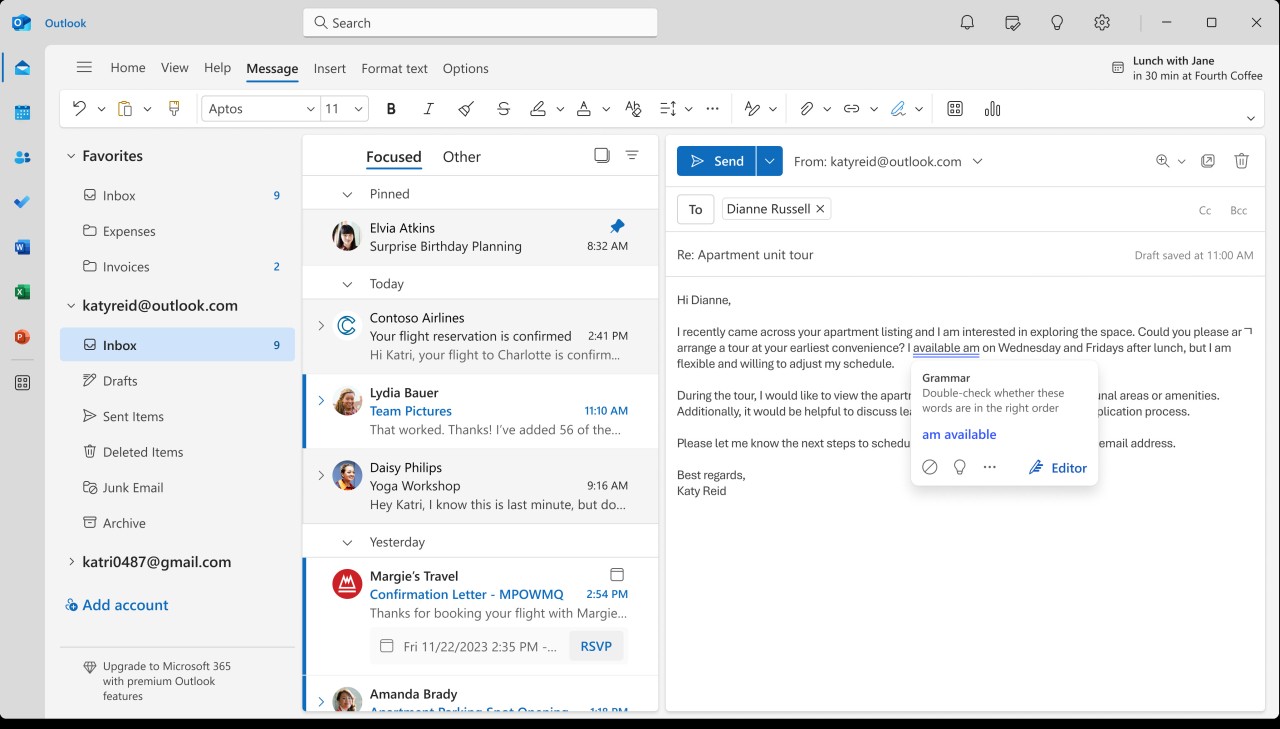
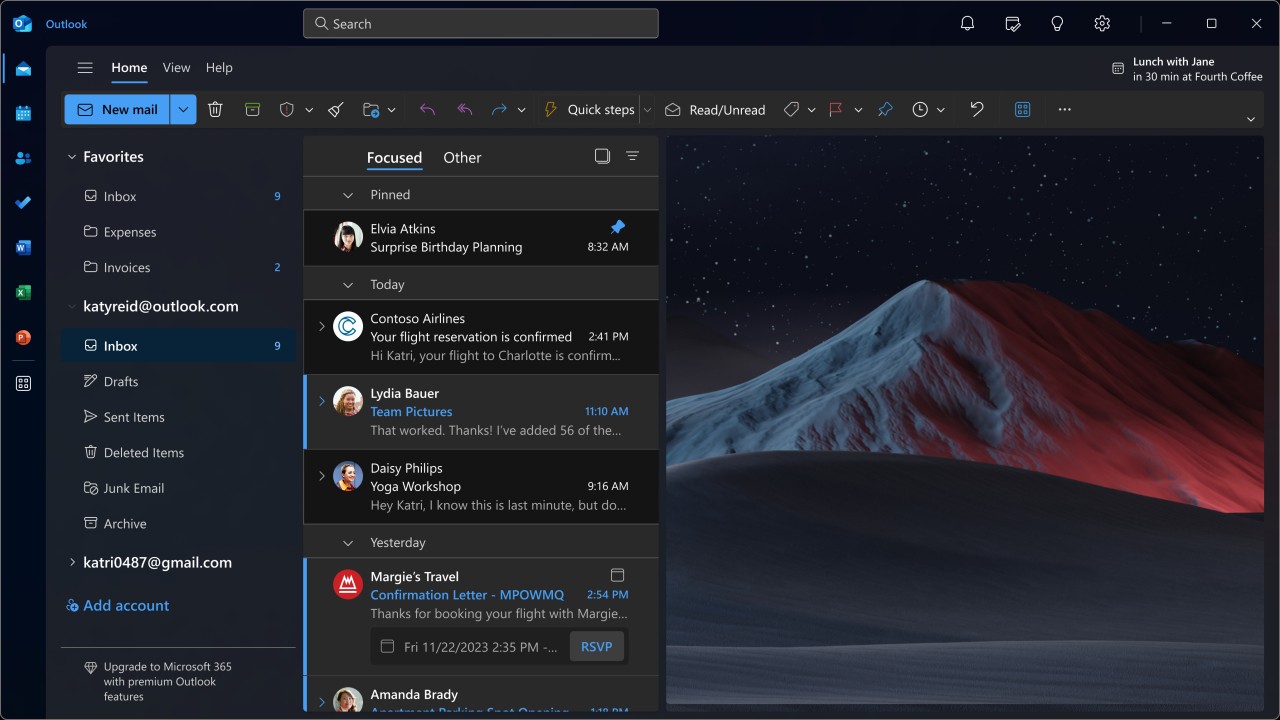
Outlook is a Microsoft mail and calendar management program. People use it to communicate and receive messages, manage schedules, save contacts, and connect many accounts in a single mail. Outlook is not only an inbox but also a communication center. It allows individuals to control emails, appointments, reminders, files, and meeting invitations without having to use multiple applications. The long-term use of Outlook in business has seen a significant number of people using it as a way of combining personal and business mail.
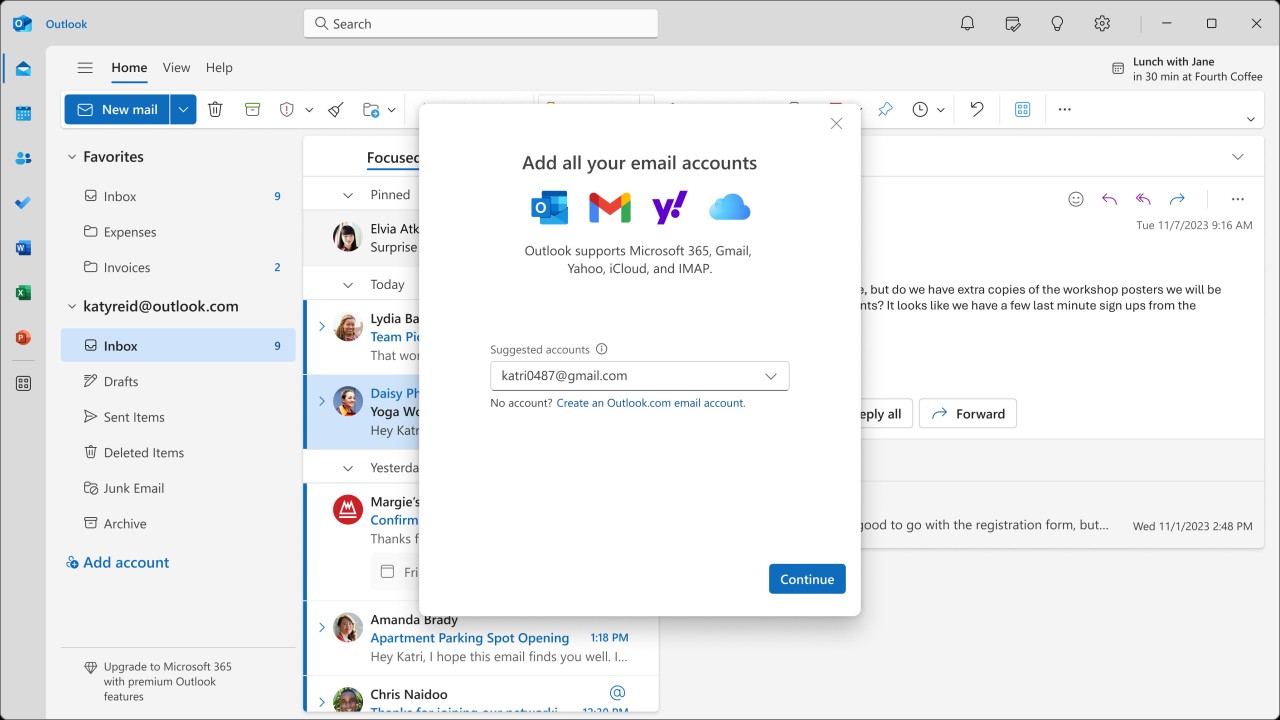
Outlook is frequently provided as part of Microsoft 365 and can be used independently, along with Android and iOS mobile apps. Outlook is not simply a mail reader; it offers the chance to look at the inbox, calendar, attachments, and meetings. It is like a desktop that contains all things in a single window. The user is given an option of adding Gmail, Yahoo Mail, iCloud, Microsoft Exchange, and others in case they wish to leave one service. Outlook is the default option when one is stepping into the workplace or university due to its professional integration, scheduling, and flexibility.
What Are the Key Features of Outlook?
One of the key features that arose in the outlook is the focused inbox. It isolates significant emails among others that are time-sensitive to ensure that the emails are seen. This enables the user not to browse through irrelevant messages.
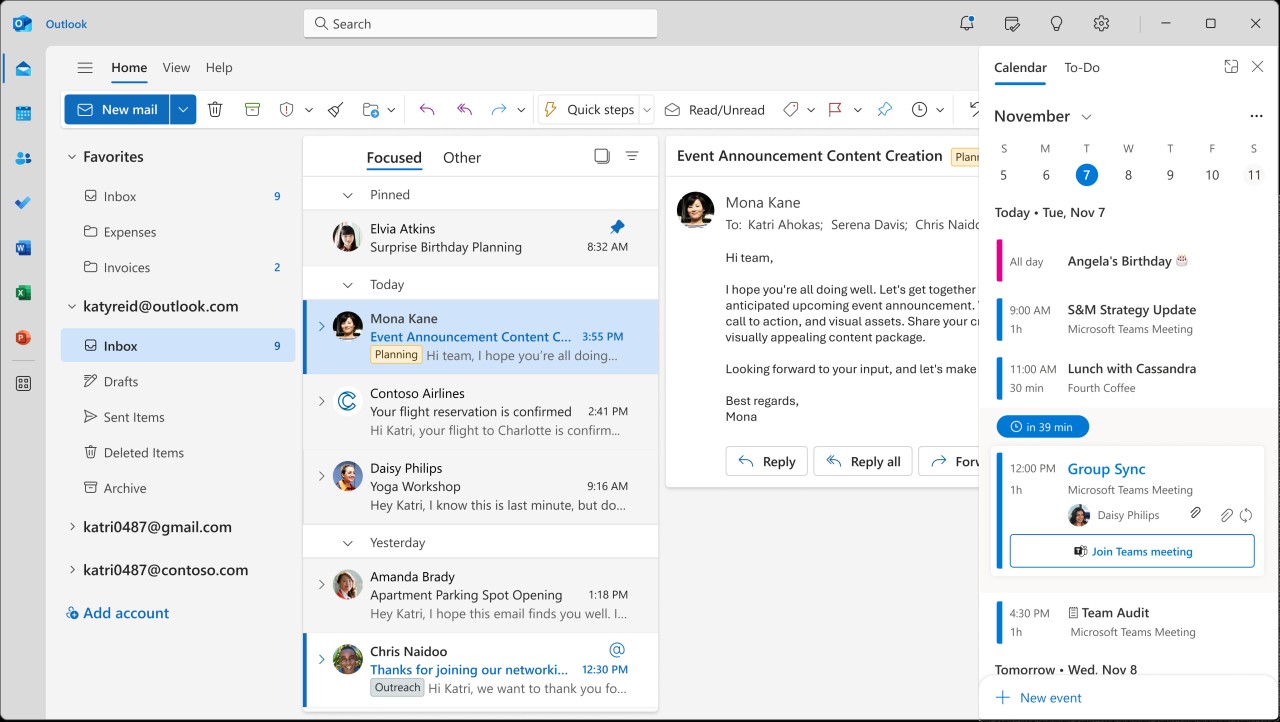
A calendar is also available in Outlook, which shows any upcoming event, meeting, and reminder. It only takes a tap or click to switch between mail and calendar. Planning an event, responding to invitations, adding files, or sharing the availability of a particular event is effortless, and this makes it easy to book an appointment and coordinate deadlines.
Outlook supports Office additions, Word, Excel, PowerPoint, and OneDrive, making it possible to add attachments directly to cloud storage. The app allows establishing a video call via Teams or Zoom, therefore keeping messaging and meetings connected. Mobile users can use voice, word, or finger typing to search their emails as well as have suggested replies offer them fast responses. Email conversations in Outlook groups are easier to follow since they are arranged into long threads. The inboxes are clean with smart filters, swipe actions, and rules.
Another important feature is security. Outlook has spam filters, phishing filters, and sign-in protection. This stability is necessary in the case of office employees who work with sensitive data. The organization, inbox intelligence, calendar management, and integration of Microsoft Office are the primary elements of the experience with Outlook.
Is Outlook Free to Use?
In the case of Windows, there is a free version of Outlook, which can be used. Free users can work with email, calendars, and attachments freely, but with advertisements and storage quotas. A Microsoft 365 subscription eliminates advertisements, expands storage, and opens up more features. The basic email service is free on mobile and web, and it allows one to add external accounts without any additional charges.
Which Platforms Support Outlook?
Outlook works on desktop, web, and mobile. Windows On Windows, it substitutes the older Mail and Calendar apps. It is compatible with the free or the Microsoft 365 services. There is also a specific build of Outlook available to the users of macOS. Outlook can be used on Android and iOS phones, and it replicates the desktop experience, including folders, calendar items, contacts, and files that can be cross-platform.
The web version is compatible with any major browser, and therefore, it can be convenient for users that alternate devices. Some use outlook.com directly, and those who use the desktop application combine various email accounts. Cross-platform syncing implies that when a message is read on one device, it can be remembered across the board. Events in the calendar, address books, and attachments remain related. Exchange servers are used in many offices, yet personal accounts are not technically configured so that an individual user can utilize them. In daily usage, Outlook goes with the user wherever he or she logs in, be it on a desk at home, a phone on the road, or a browser at work.
What Are the Best Alternatives to Outlook?
The most popular email service in the world is Gmail. It operates primarily on the browser and has Android and iOS applications. Gmail uses labels to group messages instead of folders, which is more adaptable to some users. Search is also quick, and Google combines it with Drive, Docs, Sheets, and Meet. The collaboration in real-time on documents is also powerful. Gmail has a good spam filter, but the level of customization is lower than the advanced rules of Outlook. Gmail is more appropriate for individuals who remain online and do not require sophisticated offline control. Users inclined to the ecosystem of Google tend to use Gmail. Many users download Gmail first purely for its convenience and familiar interface.
ProtonMail lays emphasis on encryption and privacy. The fact that it is end-to-end encrypted implies that the provider is unable to read messages. This is what makes ProtonMail very different compared to Outlook, which is productivity- and integration-oriented. There are free accounts, but with less storage, except for upgrades. ProtonMail is suitable for privacy-conscious users, journalists, researchers, and those not wanting to use the giant cloud services. Encryption can, however, restrict compatibility with external services or high-level filtering. Outlook can prove more convenient to use in the daily working flow, and ProtonMail can be more effective to use in case of sensitive communication. Some privacy-focused users download ProtonMail specifically to keep conversations protected.
Thunderbird is a Mozilla desktop client that is open-source. Thunderbird is highly flexible as opposed to Gmail or Outlook Web and is locally run. It is compatible with several accounts, POP/IMAP, extensions, themes, and local storage. Thunderbird is adored by users due to its ability to be used offline, control privacy, and the availability of a non-corporate tool. It lacks an inbuilt calendar unless an add-on is installed. Thunderbird does not have built-in Office connections, and thus, productivity is subject to the use of plug-ins or third-party applications. It fits those who desire a custom setup and open-source liberty instead of a managed ecosystem. People who like customization often download Thunderbird to build an inbox experience the way they want.