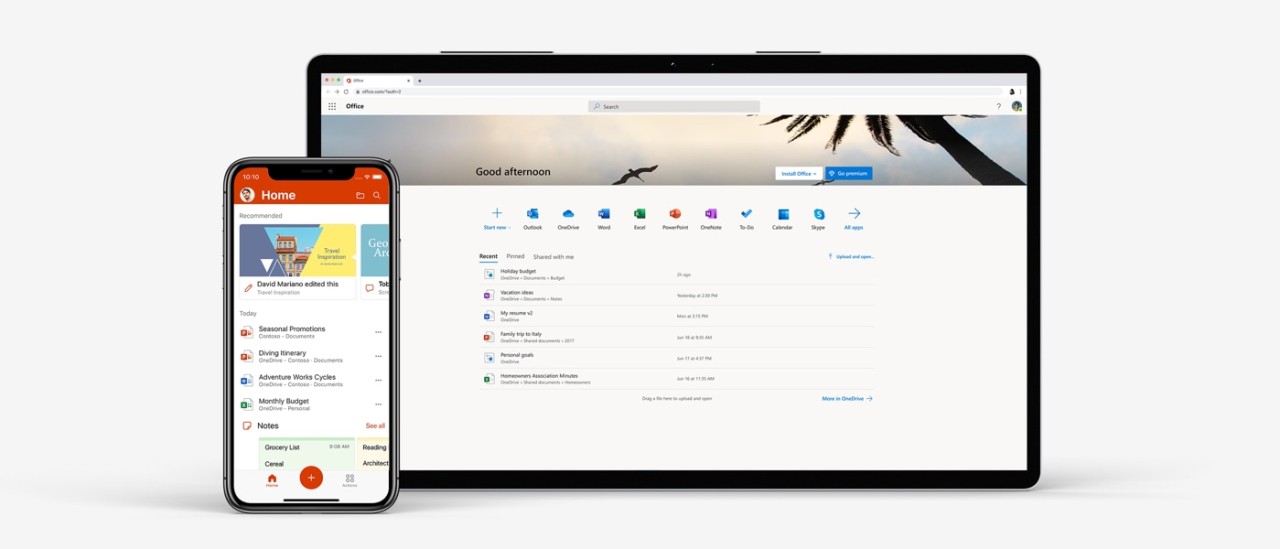
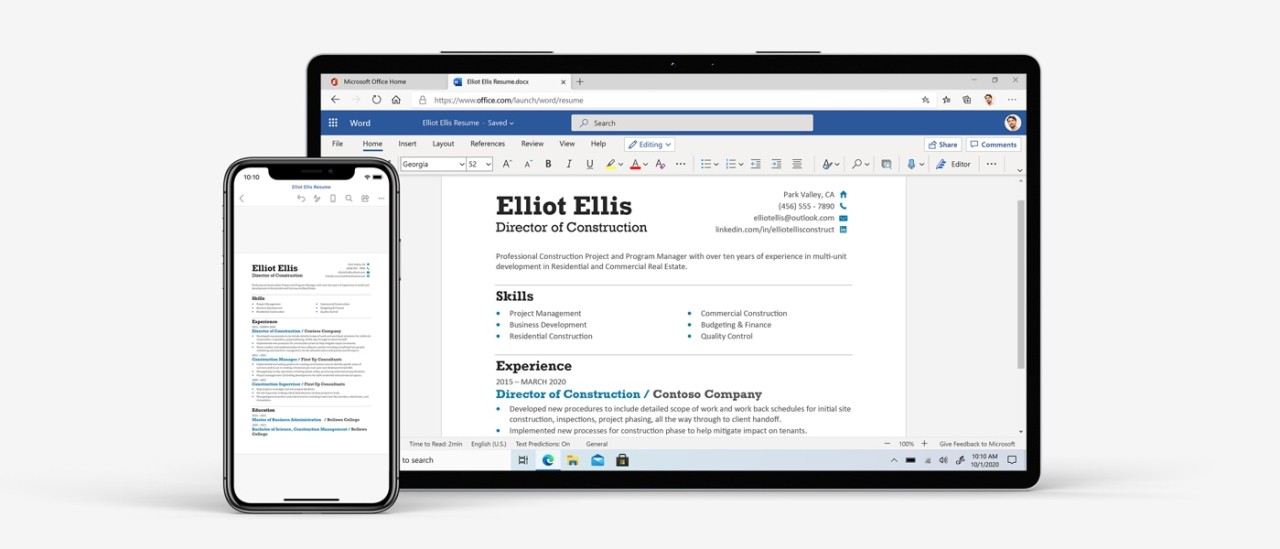
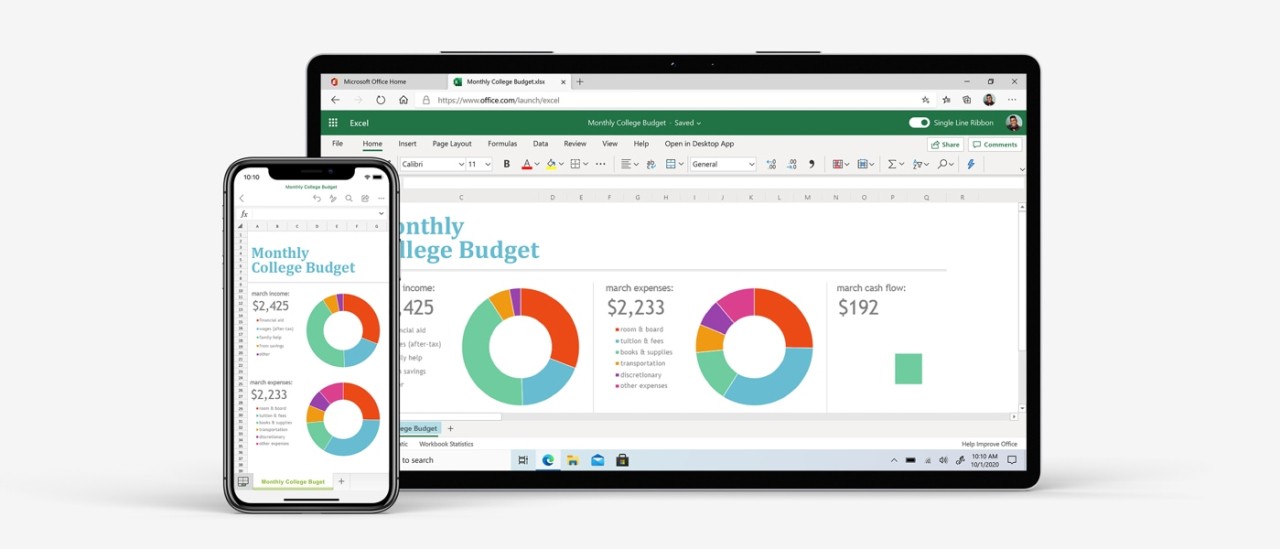
Microsoft 365 Online is the online productivity suite provided by Microsoft. Word, Excel, PowerPoint, Outlook, OneDrive, and others are not downloaded as full desktop apps but can be accessed in a browser. It is useful when you would like to use familiar office products without having to install bulky programs, or when you change gadgets throughout the day. Cloud access stores the documents with the user rather than in a single computer. This is the primary attraction of offices, schools, and the relaxed use of the home.
Work occurs live, and thus two or ten individuals could be typing on the same document without any need to exchange files back and forth. In addition, Microsoft 365 Online also integrates with OneDrive, Teams, SharePoint, and AI-assisted Copilot based on the level of plan. You can write documents directly in your browser and proceed with them at a later date on another machine or even resume a project that someone else left off.
It is a trimmer version of the desktop suite, which relies on the internet, but not a full-fledged one: it has enough features to do everyday writing, spreadsheets, and presentations, but not all. Certain sophisticated formatting capabilities are not found in any mobile versions; with less demanding and more regular work, it can be a simple, uniform environment that can work anywhere.
What Are the Key Features of Microsoft 365 Online?
The best quality is the access without installation and from any system. You open a free Microsoft account and access your files in a browser, and work as in the desktop version.
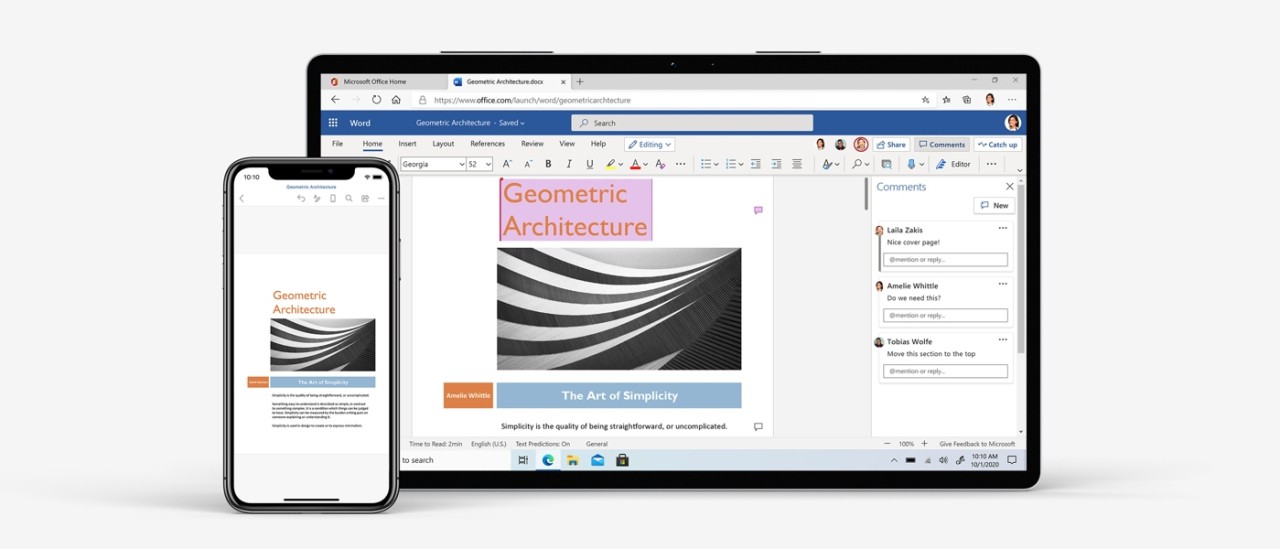
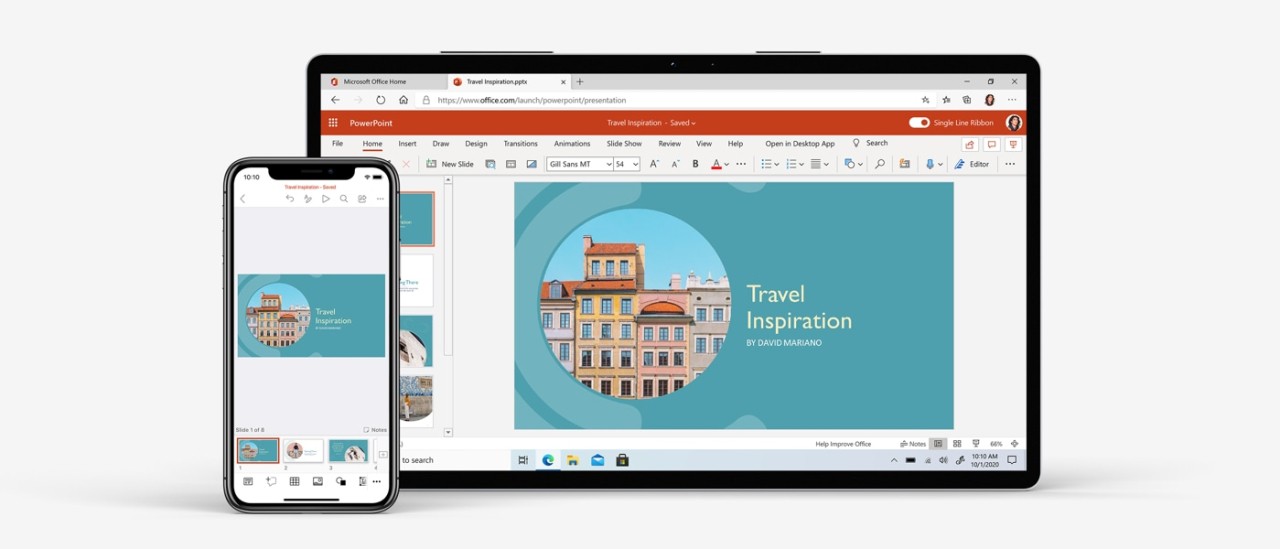
Word Online helps with writing, formatting, comments, tracked changes, and cloud autosave. Excel Online supports sheets, formulas, conditional formatting, charts, and pivot tables to some extent, sufficient for most tasks despite being deprived of macros by the power users. PowerPoint Online allows you to create slides, add images, animate elements, or use real-time collaboration. OneDrive connects it all, saves files on the internet, and synchronizes the changes automatically.
Collaboration is central. The cursor movements of many users can be observed in real time. Mentions, comments, and file sharing can be easily done without attachments. Online Office, with the help of Teams integration, can facilitate meetings, shared documents, chats, and task follow-ups, all through the browser. Outlook Online stores email, calendar, and contacts; therefore, communication and editing of documents remain united.
Through Microsoft Copilot, AI support is seen according to the level of subscription. It could condense reports, create drafts, tone adjust, or extract information into tables. Searchability in files of a cloud workplace implies that documents can seldom be lost in folders. All that is connected to your Microsoft account rather than the hard drive.
Is Microsoft 365 Online Free to Use?
Microsoft 365 Online has a free version for any user with a Microsoft account. It has Word, Excel, PowerPoint, Outlook, and more, with essential features in their browser-based version and free storage on OneDrive (of limited capacity).
Premium plans will access better storage, desktop application downloads, Copilot, expanded Excel functionalities, and increased Teams and business capacity. The suite is therefore free to use generally; however, larger organizations and power users usually need to subscribe to use the full version.
Which Platforms Support Microsoft 365 Online?
Being a browser-based platform, Microsoft 365 online is compatible with virtually any internet-enabled device. Edge, Chrome, Safari, or Firefox are used in Windows PCs, macOS, Linux, and Chromebooks. Tablets such as iPads and Android tablets can use the same cloud workspace; however, touch interaction may not be as familiar as working on a keyboard. It can be used on phones, but with its small screen, editing is only useful in making quick updates.
No installation is needed, merely a sign-in. Files will be synchronized by OneDrive; therefore, a change of machine will not get in the way of work. A document that was initiated on a school computer can be completed on a personal computer at home. There is limited offline functionality; to be fully offline, one would require desktop applications.
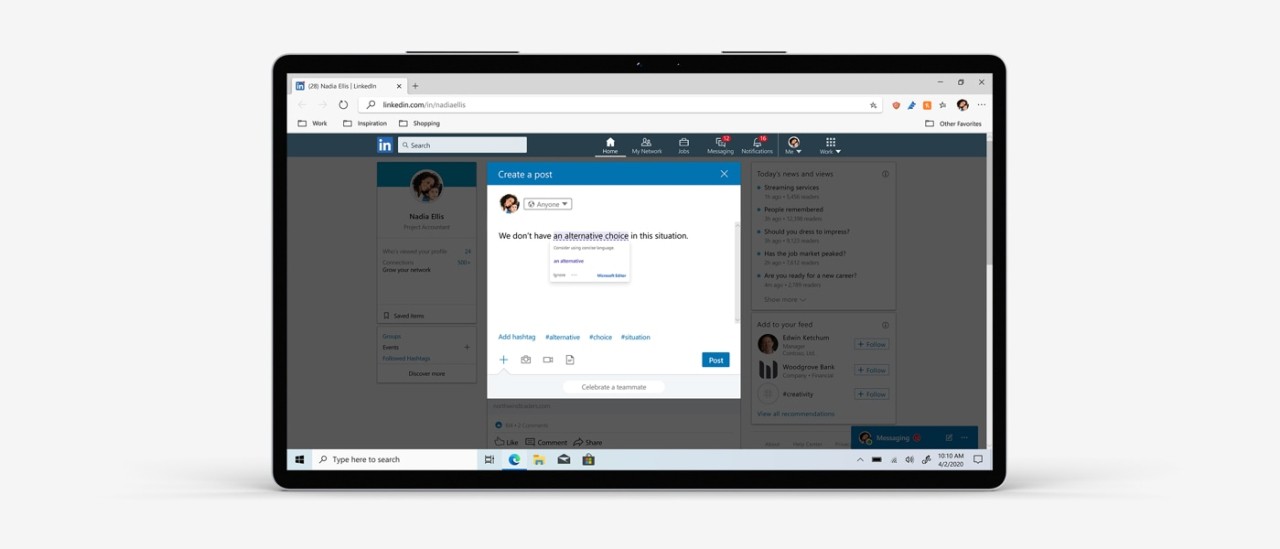
Microsoft 365 online is closely connected to Microsoft Teams. The files exchanged during meetings or chats open in the online editor. Cross-device continuity makes sure that any comment or edit and tracked change is visible at the next place where the document is opened. Regardless of how distant or the location of the team, all participants view the most recent version without exporting or reattaching files. The platform encourages installations and emphasizes cloud continuity.
What Are the Best Alternatives to Microsoft 365 Online?
The nearest direct competitor is Google Workspace. It substitutes Word, Excel, and PowerPoint with Docs, Sheets, and Slides. It all works in the browser, and it features powerful real-time collaboration, autosave, and comment processes. Google Workspace is structured in a way that is very closely connected with Gmail and Drive rather than Outlook and OneDrive. It is easier to work with online-native teams, but they can be considered less adaptable to word-intensive formatting, publishing layout options, and advanced Excel formulas. Google-centered organizations can be drawn to Workspace since it is more familiar with remote teams, with priorities in shared editing over traditional formatting. Many users download Workspace alternatives just to compare workflow differences before deciding what to keep using.
WPS Office is a combination of desktop and cloud capabilities. Its interface is similar to Microsoft Office, which simplifies it for its users. WPS supports documents, spreadsheets, presentations, PDF files, simple cloud sync, and mobile interfaces. It has a free plan that is quite generous and provides paid upgrades, rather than placing the basic functionality behind a paywall. There is some degree of collaboration, but it is not as extensive and liquid as the Microsoft or Google systems. WPS is appropriate when editing, lightweightness, and ease of use with fewer cost constraints are required. It is a compromise, a middle-way product, an Office-like product that is not fully based on the cloud. People often download WPS to test its interface before shifting from traditional Office workflows.
OnlyOffice Docspace is aimed at cooperation with a powerful document-sharing model. It has native support for DOCX, XLSX, and PPTX; hence, Microsoft files are easily transferred. In contrast to mainstream suites, DocSpace is centered on shared rooms, where users edit files together, control access permissions, and arrange client or internal workspaces. It does not act as a personal editor but as a managed collaboration centre. Enhanced characteristics such as private workspaces, file permissions, and self-hosting integration appeal to the organizations that need greater control over data location. Although it is not on a par with Microsoft in terms of scale and email integration, it provides the structural clarity of collaborative document hosting. Some teams download OnlyOffice DocSpace when they need document control and a self-hosted structure rather than general office editing.