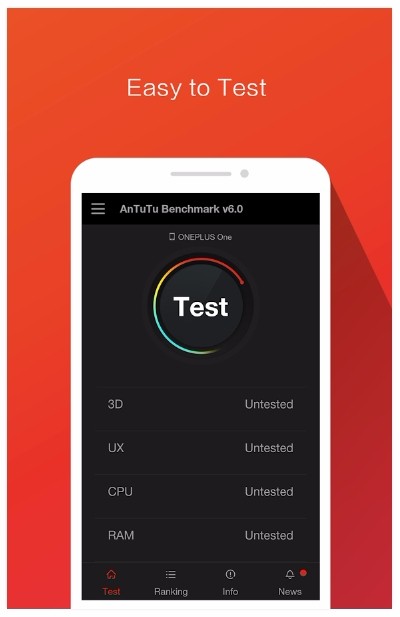
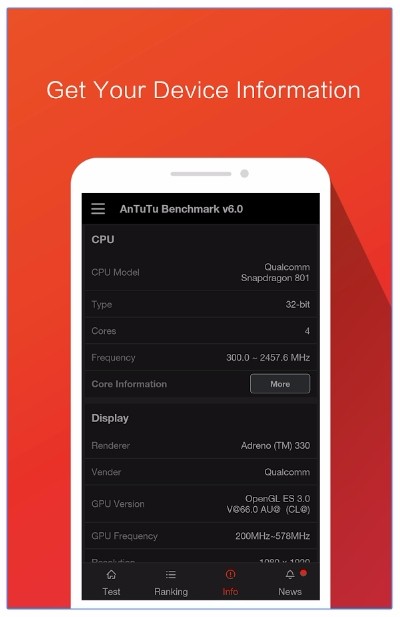
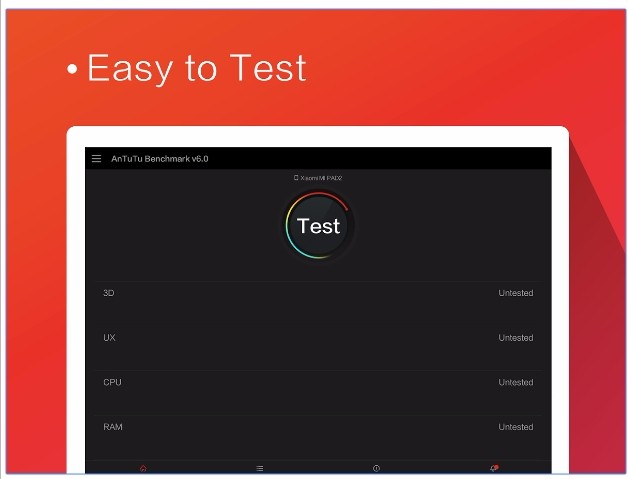
AnTuTu Benchmark is an application that allows end users to check the performance of the device by executing a set of performance tests. It is used mostly on smartphones, though it operates on tablets and personal computers as well. Once the tests are executed, the software will give one score, which will be an overall performance of the device. The score is highly applied in the comparison of devices.
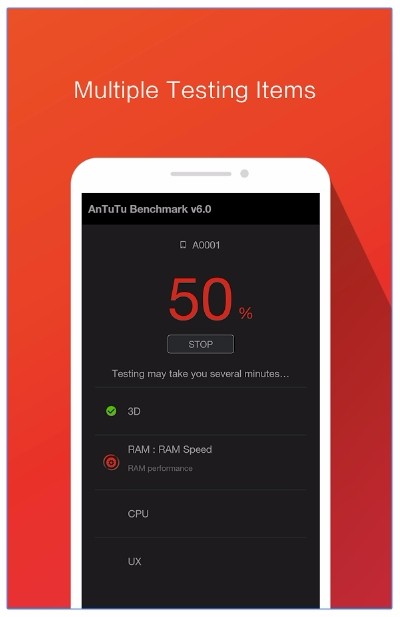
AnTuTu will test multiple parts of a device rather than testing only a single component. It tests processing rate, graphics processing, performance of the memory, and the smoothness of ordinary operations. It is aimed to provide users with the true image of how a device will behave in the real world, not only of technical values.
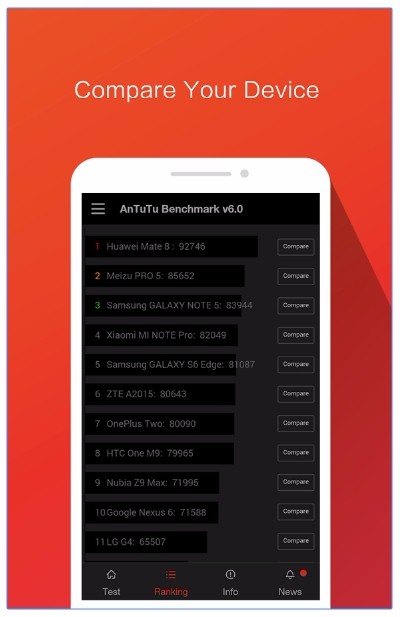
AnTuTu Benchmark is directly connected with performance ranking. Its website shares Android and iOS rankings across the world according to benchmarking scores. Such rankings indicate how these devices would be good during a given period. Most people use AnTuTu just to know the position of their device in comparison with other devices, and it is not to reconfigure or adjust the hardware.
The application is user-friendly. The test can be initiated with very little configuration and hence is usable even by individuals without technical expertise.
What Are the Key Features of AnTuTu Benchmark?
Among the most evident ones is its single combined score system. Once several tests have been completed, the program determines a single final score, which is a figure that illustrates the general performance of the device. That is why it is easy to compare devices without the analysis of separate metrics.
The benchmark consists of tests of CPU performance, GPU performance, memory speed, and tasks of daily user experience. These tests tend to be based on the everyday use scenarios and not the maximum or synthetic loads. Due to that, AnTuTu is perceived to be a general performance measure but not a specific testing instrument.
The presence of variations is also another distinguishing characteristic. AnTuTu provides choices for more recent and older Android devices, lightweight versions for older hardware, and iOS and PC platforms. This enables the software to be run on a large selection of devices with different system requirements.
Rankings and comparison data are also prioritized by AnTuTu. The findings are incorporated with monthly and regional performance charts on its webpage. Those charts allow the user to monitor the trends in performance and compare the generations of hardware with each other. Regular updates will make sure that the new processors and devices will be subjected to testing.
Is AnTuTu Benchmark Free to Use?
The AnTuTu Benchmark is open source. The software may be installed free of charge and used by the user to run benchmark tests and performance scores. Its popularity is owed to this free accessibility, which is enjoyed by ordinary users who desire quick performance analysis.
The data that is offered does not show any necessary payment in case of standard benchmarking. Although there might be other tools or ways of doing business, there exist basic performance tests at no cost to the general users.
Which Platforms Support AnTuTu Benchmark?
AnTuTu Benchmark is a flexible testing tool that supports multiple platforms. On Android, it is quite common and gives varying variants based on the Android version and hardware capability. Some are developed to work with newer devices that have more memory, and others can run older versions of Android.
The software can also run on iOS, where it conducts the same testing on iPhones and iPads. AnTuTu performance rankings include results on iOS tests and thus can be compared in the context of the Apple ecosystem.
Besides the mobile platforms, AnTuTu offers PC benchmark versions. They are Windows builds of x86-64 and ARM64 and a Linux branch of Ubuntu. There are also the PC varieties that are identified as beta, meaning that they could still be in development and may not be as stable as the mobile versions.
This platform's extensiveness enables AnTuTu to be utilized on phones, tablets, and computers; however, the level and presence of tests can differ with the system.
What Are the Best Alternatives to AnTuTu Benchmark?
CrystalDiskMark is purely based on the performance of the storage. It is used to evaluate the speed at which storage devices are capable of reading and writing information, and is also used when testing SSDs and hard drives. It does not do graphic, CPU, and system-wide performance tests the way AnTuTu does. CrystalDiskMark is a good tool to use when the user intends to test the speed of a storage device and not the overall performance of the device. It is typically applicable on the desktop and not on testing mobile devices. Many users download CrystalDiskMark when they want a quick and focused check of storage speed on a desktop system.
PCMark works differently, imitating real-world usage situations. Instead of generating one gaming-style score, PCMark generates tasks including web browsing experience, office applications, media management, and overall performance. This can be used to explain the way a system works when undertaking its daily operations. PCMark is primarily applicable to PCs and laptops and is more efficient when it comes to testing productivity, rather than comparing mobile hardware. People often download PCMark to understand how well a PC handles everyday work rather than gaming tasks.
Geekbench is a cross-platform benchmarking utility that focuses on CPU and graphics card performance. It gives individual marks on the single-core and multi-core processing, which assists a user in comparing processors more accurately. Geekbench also handles both mobile and desktop systems, and hence it can be used to compare performance across platforms. Nevertheless, it does not, in addition to AnTuTu, underline the device ranks or the total experience rating, and is more concerned with the raw processing power than with the balance of the system as a whole. Users usually download Geekbench when they want clear CPU and GPU performance numbers across different devices.