IP Scanner is a network scanner that displays the devices that are in your local network, typically via Wi-Fi or Ethernet. Rather than digging into router settings or the command line, it provides a clear visual display of a list containing IP addresses, hostnames, MAC addresses, and, in some cases, the vendor information. Users start it when they need to know who is connected to their Wi-Fi, investigate their sluggish network, locate lost printers, or just because they are curious about the gadgets connected to their home or small office.
The tool is highly user-friendly. You begin a scan, wait some couple of seconds, and the devices found on it are displayed on the screen. You may not be an expert in networking, but you can name a phone, laptop, TV, or desktop. To make it easier to understand, many people rename devices, e.g., transforming unknown xx-ab-49-cd into “living room TV” or “Dad's iPhone.” This is aimed at maintaining transparency in the network, such that the people know what is attached to the network at any given moment.
What Are the Key Features of IP Scanner?
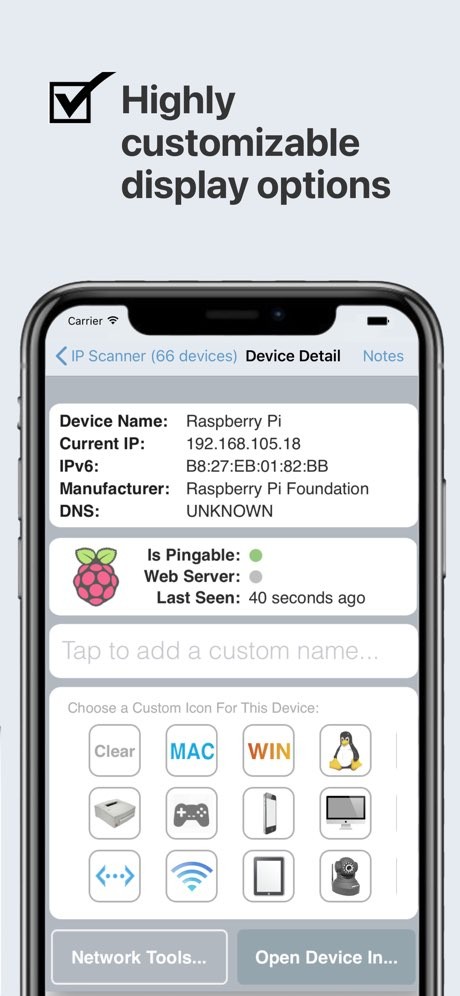
Simple detection is its primary role. The IP Scanner scans the network range and provides a list of active devices with the IP, MAC, hostname, and vendor name, where possible. Items may be renamed, categorized, or labeled to be referred to later. Since the default names of smart-home devices are usually confusing, manual labeling will create clarity over time.
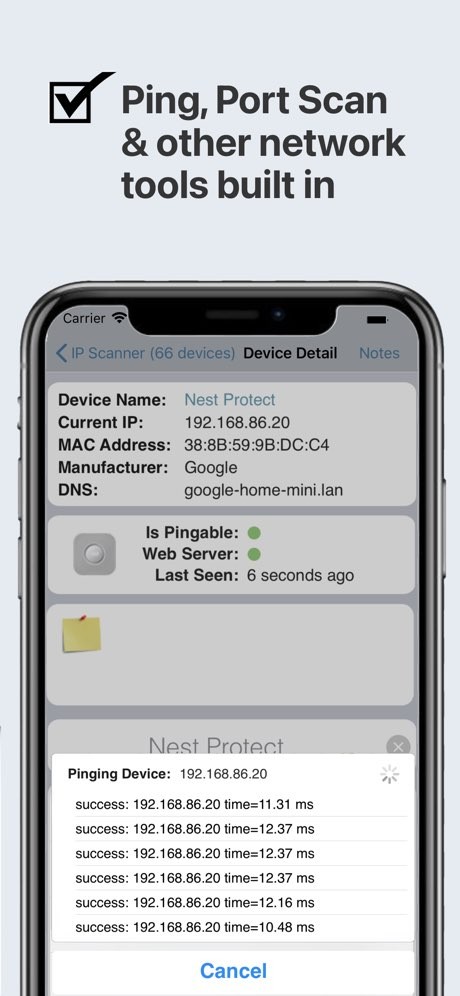
Port scanning is also provided in IP Scanner, whereby you can view the services made available by a device. It is more technical and is applied by the people who are interested in more in-depth insight. Built-in ping tests allow connecting stability or device availability. The Wake-on-LAN feature allows you to boot remote computers that are compatible without having to press the actual power buttons.
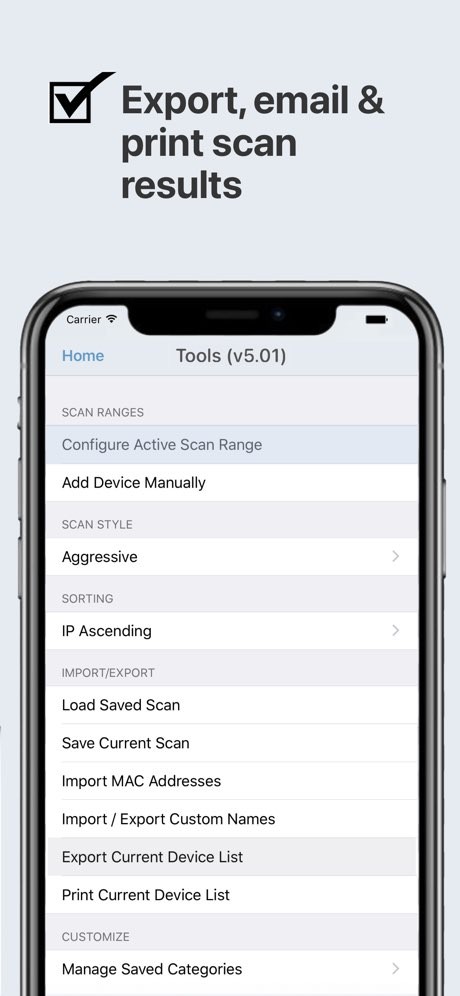
Scan results may be saved, exported, or imported in the future. This is convenient to those people who carry out frequent checkups or compare snapshots across time. The interface remains graphic, light, and serene. It does not attempt to become a complete network security suite; it just provides the answer to the question, What is on my network right now? without a bewildered configuration.
Is IP Scanner Free to Use?
Yes. The free version restricts the scans to an approximation of 15 devices, which is decent in most households. The paid upgrade also eliminates these restrictions to allow the full feature set in case you must scan bigger networks or use it regularly. Single-officer or multi-device household offices might require the paid version so that they can view it all without any limitations.
Which Platforms Support IP Scanner?
IP Scanner is developed to be compatible with Apple ecosystems, thus supports both Apple macOS and iPadOS. Users of MacBook or iPhone can scan the network, export, and reuse logs without changing the devices. It is compatible with Apple families who have access to such devices as MacBooks, iMacs, iPhones, and iPads that share the same Wi-Fi mesh. (Apple TV and Apple Watch support is only offered through the Ultra upgrade edition.)
To the typical users of Apple, IP Scanner is compatible and does not need any additional installation to make it visible. It is not to supersede enterprise monitoring; it remains in the discovery and visibility league.
What Are the Best Alternatives to IP Scanner?
LanScan is a good scanner software for macOS that identifies the IP addresses, MAC IDs, and the names of the vendors and presents them in a proper list. Those users who remain in the Apple environment do so by using LanScan due to its light weight and lack of technical implementation. It is missing some extras of IP Scanner, such as Wake-on-LAN or deeper inspection, but in the case of what is currently online, it is good. It offers free scanning, though unlocking more advanced or entire vendor resolution requires a fee. It is simple, straightforward, and dependable regarding simple checks of the LAN. Many users simply download it to get quick visibility over their active network devices without complexity.
Another widely used cross-platform option, which is compatible with Windows, macOS, and Linux, is Angry IP Scanner. It scans at a high speed, shows the device information, and has open port discovery. Exporting to text or CSV is also easy; hence, it is appropriate for documentation. Angry IP Scanner is more technical and utilitarian; hence, it is preferable to power users. Because it is not specific to a single OS, it can be applied to many types of machines. Its scriptability and open-source model are also popular with people. People download Angry IP Scanner mostly for flexibility and cross-platform use without being tied to one system.
SoftPerfect Network Scanner also extends the discovery further, covering the network resources, shares, open services, and SNMP responses, among others. It supports both macOS and Windows and is more detailed than a device count tool. It may be cumbersome to home users, but it can be used to monitor shared drives, workstations, or file servers. It records, exports, and reports effectively, which makes it appropriate for continuous auditing. This is the tool that is between user-friendly scanners and enterprise software—full of functionality, detailed, and understandable without being self-complicated. Advanced users often download SoftPerfect Network Scanner when they want something deeper than basic device discovery.