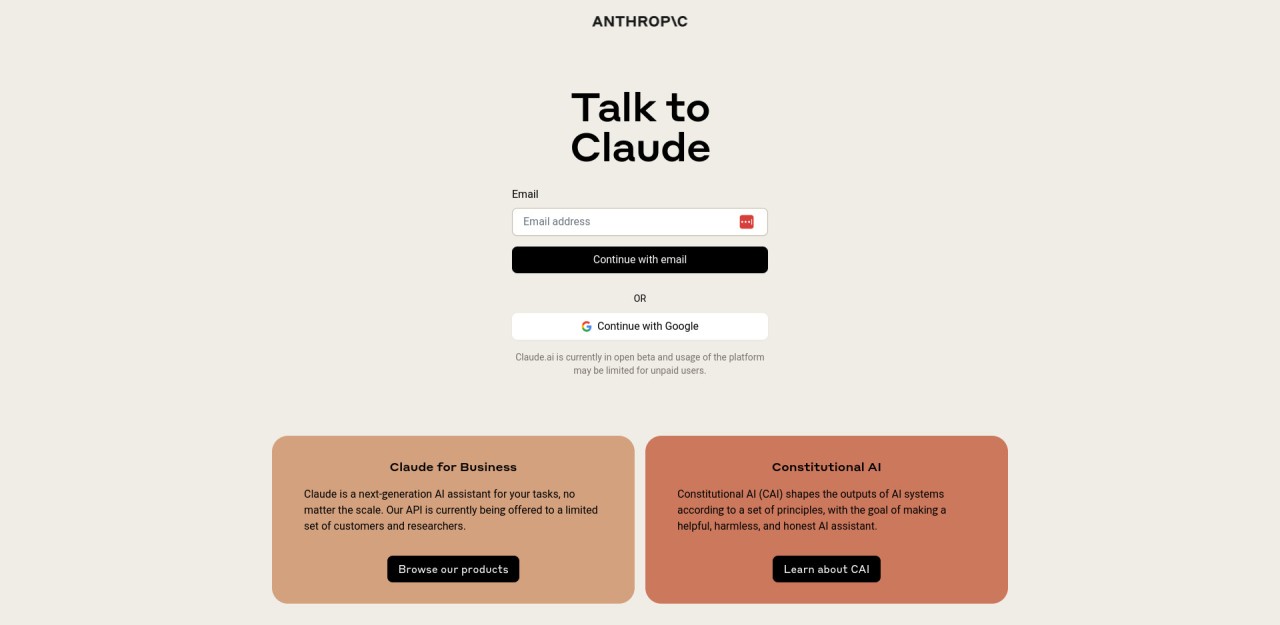
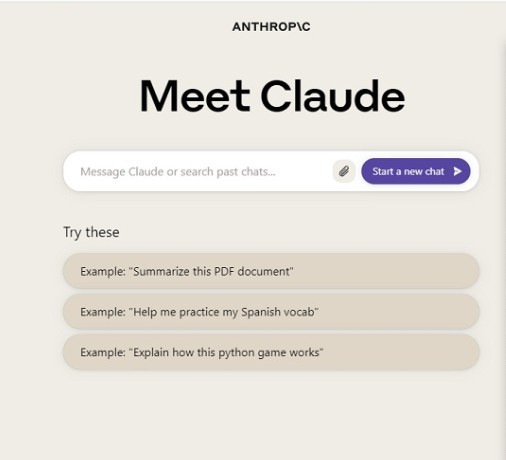
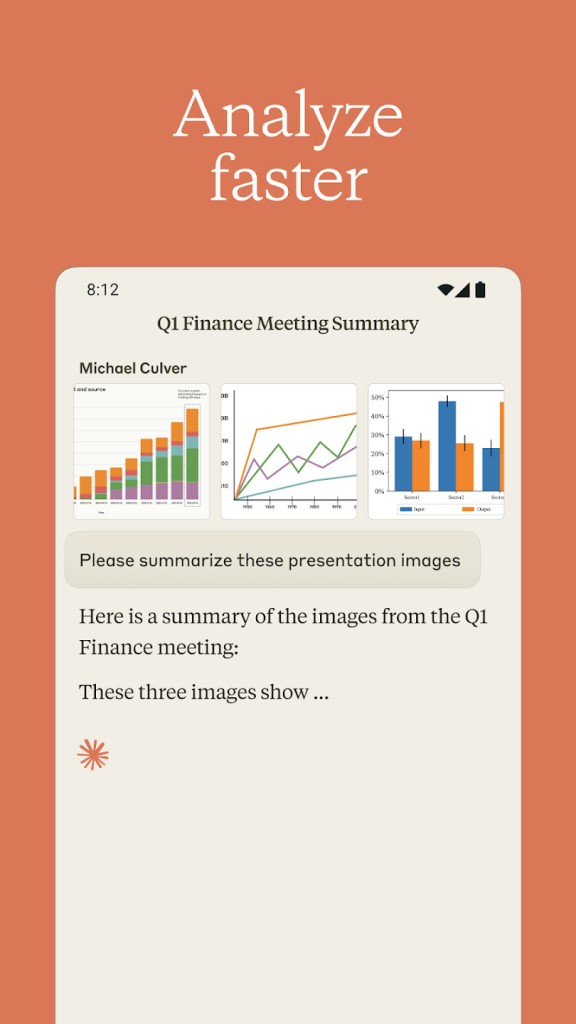
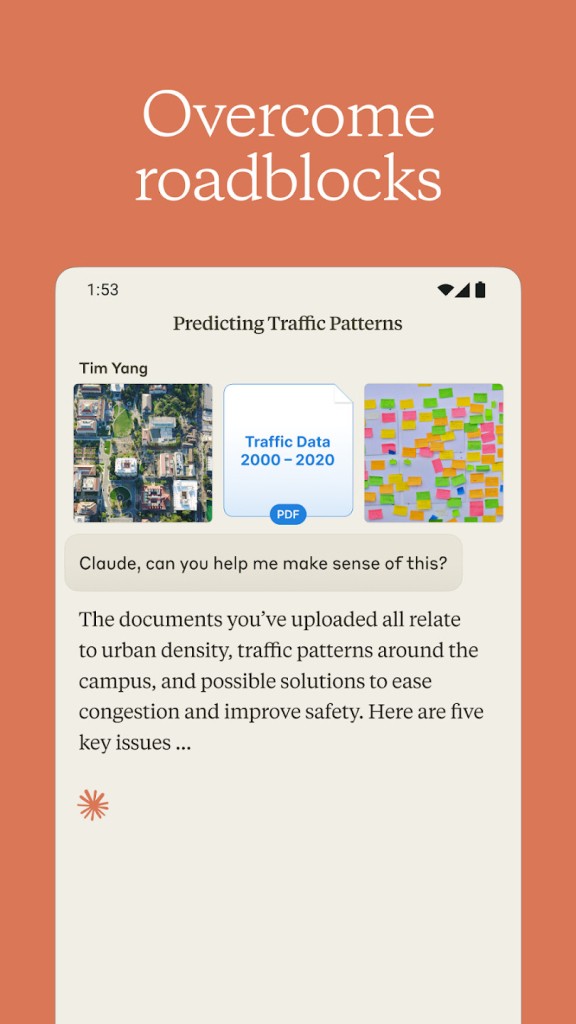
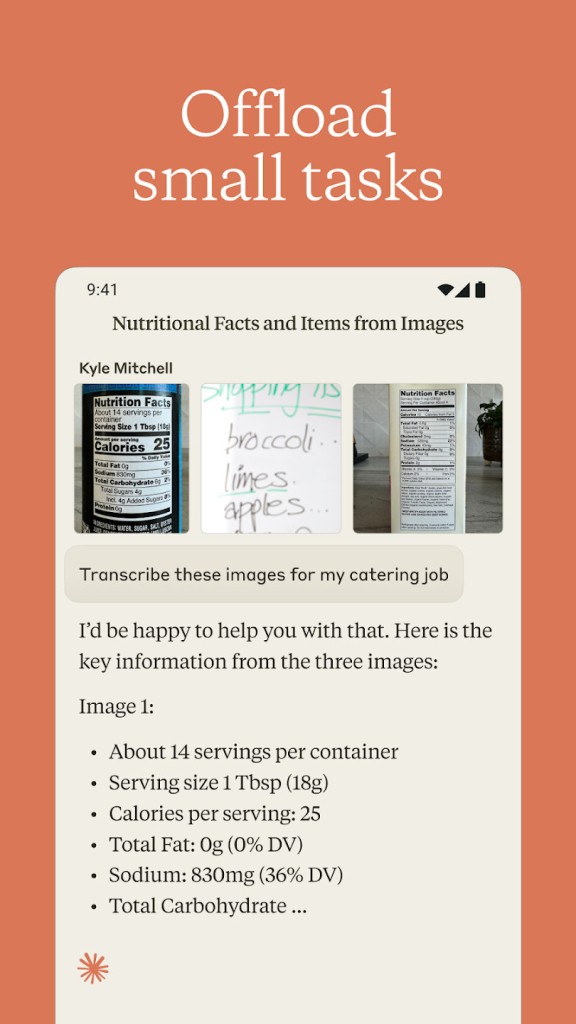
Claude AI is the conversational AI developed by Anthropic and one of ChatGPT’s main competitors. Since its earliest versions, the service has evolved significantly and is based on a family of state-of-the-art models. These models are designed to address both everyday needs and complex tasks requiring reasoning, programming, document analysis, and the creation of sophisticated content.
Claude can be used in many different contexts. In particular, it can analyze and summarize documents, answer questions, assist with writing and translation, rephrase or correct texts, and help users with their programming projects. The most recent versions also perform particularly well on tasks requiring multiple steps of reasoning, the use of tools, and the execution of complex, long-term projects.
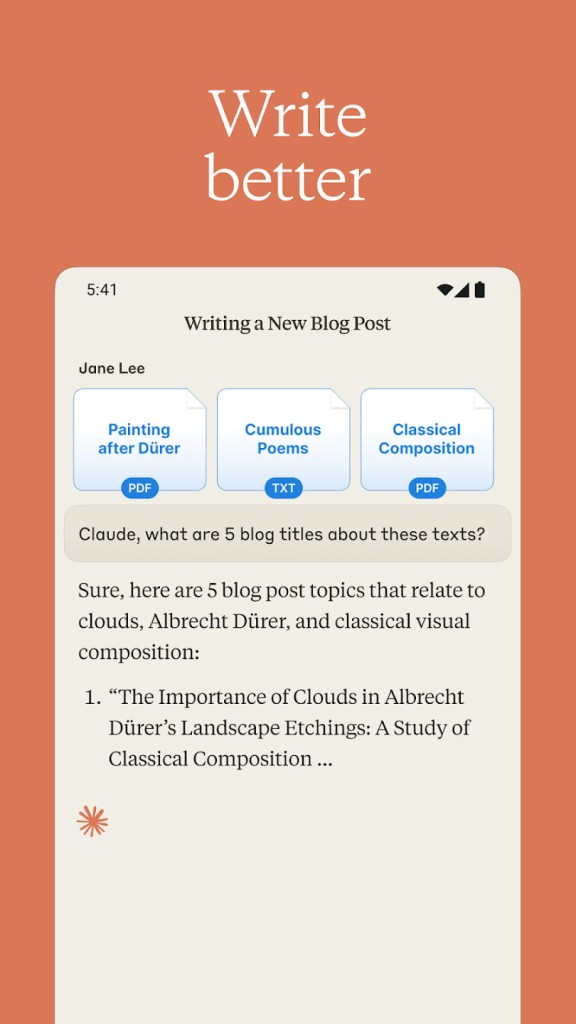
Anthropic’s AI also supports images and documents, allowing users to provide it with various types of content for analysis. For example, Claude can extract information from a document, compare multiple sources, structure data, or generate content based on the provided elements. Its features also allow users to create documents, presentations, and spreadsheets, particularly through the “Skills” system, which enables Claude to be adapted to specific types of tasks and workflows.
Anthropic also places a high priority on the security and reliability of its models. Claude is developed using the “Constitutional AI” approach, which aims to integrate principles and behavioral rules into the model training and evaluation process. The goal is, in particular, to make the assistant more useful, more reliable, and more compliant with certain security constraints.
What Are the Key Features of Claude AI?
Claude AI offers a wide range of features that go well beyond basic conversational interactions. From writing and analyzing content to coding, processing documents, and handling complex multi-step tasks, Claude is designed to assist users with both everyday requests and more advanced projects.
To interact with Claude, simply submit a natural-language request through its conversational interface. Users can ask it to explain a concept, write or edit a text, analyze a document, solve a problem, generate code, or work on a multi-step project. The quality of the result depends largely on the instructions provided in the prompt and the context made available to the assistant.
Claude is also accessible to developers through Anthropic’s API. This API allows Claude models to be integrated into third-party applications and services. The available capabilities can include document and image processing, reasoning, the use of tools, and web search. Recent models support particularly long contexts, which is one of the main strengths of the Claude family.
Another major advancement in Claude is its ability to work with tools and perform more complex tasks autonomously. Current models are designed for programming, agent-based workflows, and professional work, with enhanced capabilities in reasoning, planning, and tool usage. Claude can thus go beyond simple question-and-answer interactions to assist the user in completing an entire project.
Claude is therefore now much more than just an alternative to ChatGPT. Anthropic’s assistant has evolved into a comprehensive platform designed for conversation and writing, as well as document analysis, programming, content creation, and the automation of complex tasks.
Is Claude AI Free to Use?
Yes, Claude can be used for free. The free plan allows you to explore the AI assistant and its main features, but it is subject to usage limits. For users who need more capacity, Anthropic offers several paid plans, including Pro and Max, while the Team and Enterprise plans are designed for businesses and organizations.
The various subscription plans provide access to higher usage limits and, depending on the plan, additional models and features. The most advanced models, including Claude Opus 5.5, are reserved for certain subscription tiers on Claude. Developers can also access Anthropic’s models via the API and integrate them into their own applications.
Which Platforms Support Claude AI?
Claude AI is available across a range of platforms, making it accessible for both casual users and professionals. The service can be accessed directly through a web browser via Claude’s online interface, while dedicated applications are also available for Android, iOS, Windows, and macOS. This allows users to continue their conversations and projects across different devices.
For developers and businesses, Claude is also available through Anthropic’s API, which makes it possible to integrate Claude models into applications, websites, and other software. Claude can additionally be accessed through a growing number of third-party platforms and development environments, giving users different ways to incorporate its AI capabilities into their existing workflows.
What Are the Best Alternatives to Claude AI?
Several AI assistants can serve as alternatives to Claude AI, each offering a different set of features and strengths.
ChatGPT, developed by OpenAI, is one of the most widely used AI assistants and provides a broad range of capabilities. It can help with writing, coding, research, data analysis, image generation, and everyday questions. Its wide selection of features and integrations makes it a versatile alternative to Claude for both general and professional use.
Perplexity AI takes a more research-oriented approach to generative AI. It combines conversational answers with web search, allowing it to provide up-to-date information and cite the sources used to generate its responses. This makes Perplexity particularly useful for researching topics, checking recent developments, and exploring information from across the web.
Mistral Vibe, developed by French AI company Mistral AI, is primarily aimed at developers. It provides an agentic coding environment that can understand a software project, modify files, run commands, and assist with development tasks directly from the command line. It is therefore a particularly relevant alternative to Claude for users looking for an AI assistant focused on programming and software development.