DevCheck Device & System Info is a smartphone Android application that aids the user in knowing what is in their phone or tablet. The app is not restricted to guessing the labels on the manufacturers, but instead, it reads the system data and presents it in an easily readable format. Its primary aim is to demonstrate the process of building the device and its performance in daily life.
The application includes hard and soft information. The processor, graphics card, memory, battery, drive, sensors, cameras, networking, and system-on-a-chip are visible. A lot of this data refreshes in real time, enabling you to observe what the device does as applications are used, powered, and as it connects to networks.
DevCheck does not set out to improve performance or to change the behavior of a system. It is simply a report of the information given by Android. Some systems are restricted to accessibility, and the app clearly states such restrictions. Root or Shizuku access can be enabled on supported devices to get access to more data; for basic usage, it is not required.
The design is straightforward, which makes it easy to follow, even by non-technical users. Meanwhile, the richness of data renders it applicable to high-level users who require precise system knowledge. In general, Devcheck is an information program to learn how to work with a device, but not a tuning program or optimization program.
What Are the Key Features of DevCheck Device & System Info?
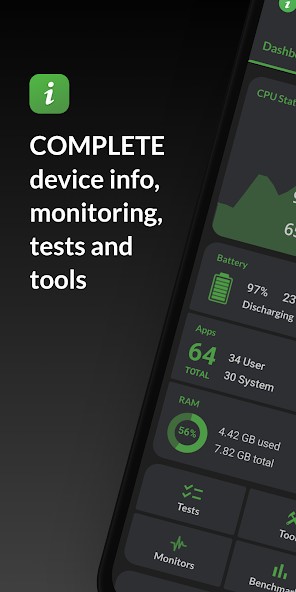
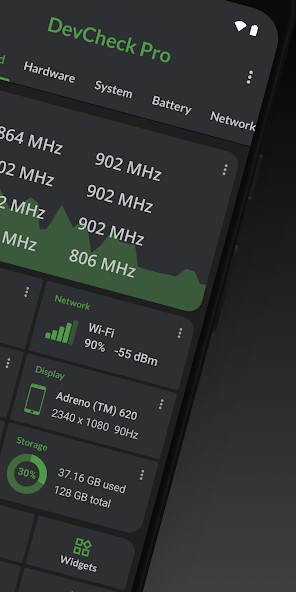
DevCheck is divided into a few sections that are dedicated to a particular component of the device. The dashboard provides a summary of important values in a system. It shows real-time CPU frequencies, memory consumption, battery percentage, uptime, and detailed sleep information. This will easily show you whether your computer device is running, idle, or loading.
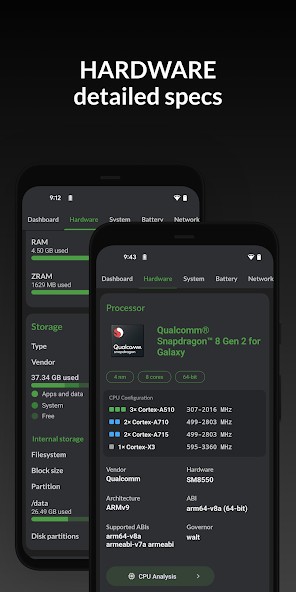
The system-on-chip and processor are discussed in the hardware section. There are core count, architecture, clock speeds, manufacturing process, and configuration. GPU information involves the actually supported graphics features, rendering capabilities, and model. Memory and storage reveal capacity, usage, and type, and this enables users to know the device limits.
The software and firmware are dealt with through the system section. It includes the name of the codename used, the manufacturer of the device, Android version, level of security patches, version of the kernel, and also the bootloader version. It may also show root status, BusyBox presence, and other states in the system, depending on compatibility.
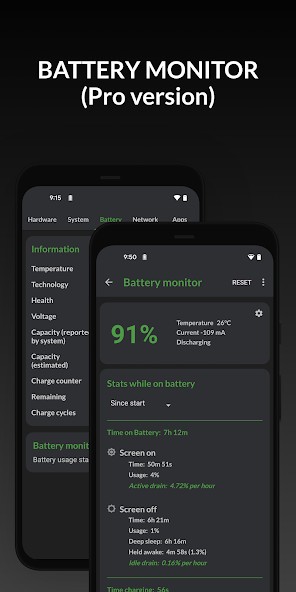
DevCheck displays temperature, voltage, current, power consumption, health, and loading pattern. In the Pro version, it measures battery consumption over time, including screen-on and screen-off information, to assist you in visualizing battery consumption.
There are network specifications for Wi-Fi and mobile connections. You are able to see the IP addresses, type of connection, operator details, signal information, and the support of dual-SIM, where appropriate. The camera side provides such specifications as the level of resolution, the lens, the supported formats, and the functionality of the camera capture.
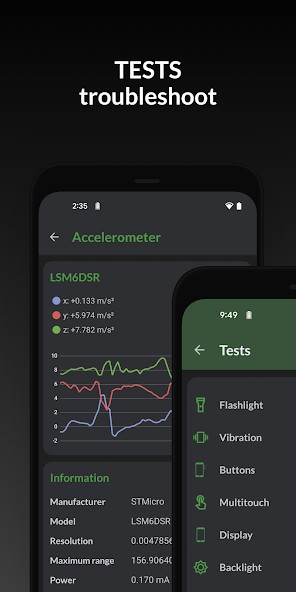
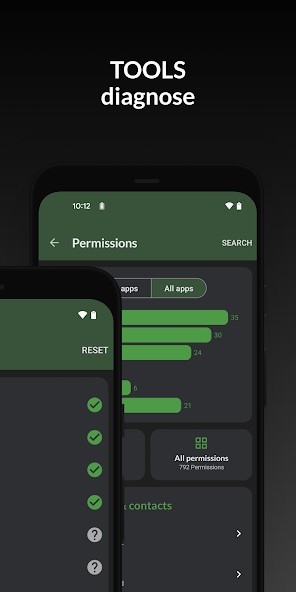
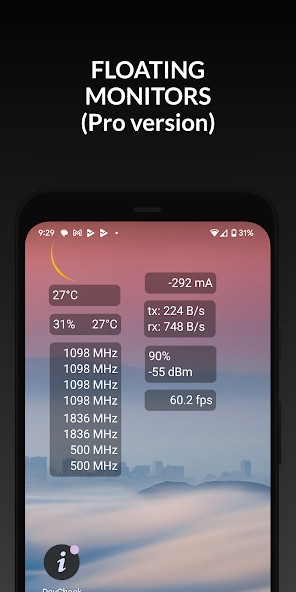
The Pro version is also characterized by sensor lists that have real-time graphs, device testing, system tools, tablets, and floating monitors. These are the tools that allow you to view system behavior as you use other applications.
Is DevCheck Device & System Info Free to Use?
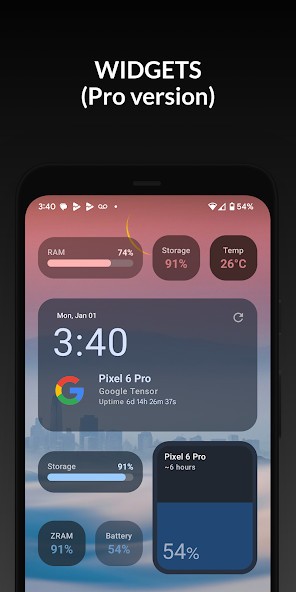
DevCheck Device & System Info is free to use and download. The free edition provides the majority of core hardware and system details, including real-time monitoring and specifications. A Pro version will also unlock advanced battery usage tracking, floating overlays, widgets, benchmarking tools, and additional system utilities, available via in-app purchase. The app is ad-free.
Which Platforms Support DevCheck Device & System Info?
DevCheck Device and system info is created based on Android devices. It is compatible with a wide range of phones and tablets, and it is compatible with newer and older Android versions. The compatibility is in the manufacturer, chipset, and system limitations. Newer devices can have less hardware data due to privacy and security regulations.
The application displays the available data and respects these boundaries. Root or Shizuku access allows a bit more information about compatible devices to be read, but this is optional and may not be required to use in practice. Windows, macOS, Linux, and iOS versions are not official. The application can be downloaded from Google Play and is Android-specific only.
What Are the Best Alternatives to DevCheck Device & System Info?
Device Info: System & CPU Info is a more basic option for a user who only requires the bare minimum in terms of system details. It is concentrated on the processor usage, memory-related data, battery data, and the general device information. The interface is basic and simple to use. It does not attempt complicated hardware detection or system inspection, and this is how it can suit ordinary users. It is not as detailed as DevCheck, but it can be used to quickly check it. Users often choose to download this app when they only need quick system checks without extra details.
Pony Tools' Device Info offers a simple overview of the device specifications, sensors, and version. It is simple-minded and does not have advanced tools or real-time graphs. There is limited hardware detection, although the app is effective when it is needed to have a basic overview of the phone. It is not complex in terms of technicality. This is a common download choice for users who want a lightweight and easy way to view basic phone details.
Device Info HW offers a more technical approach. It classifies physical elements, like chips, sensors, but also drivers. Advanced users, technicians, and developers who require low-level hardware data are popular with the app. Nonetheless, it has a less graphic interface and a more technical one. It is more complicated to use than DevCheck but it provides more in-depth hardware inspection. Many advanced users download this app specifically for deeper hardware inspection and analysis.