Anaconda is a distribution of Python that contains many scientific and data tools as a single package. It is effortless to install, and it does not create problems with the version. It can be encountered by new users when attempting to use NumPy, SciPy, Pandas, or TensorFlow. Putting these packages together by hand may turn into a mess. Anaconda is like a safe box, which isolates your projects, which are not the Python system.
It leaves everything stable; hence, introductions of new libraries hardly ever break existing work. Anaconda has, over time, evolved to be a useful installer for a larger ecosystem. Now you have environment management, a managed repository, a graphical launcher, and even corporate security tools. The same principle has been kept: give users hours of trouble-free computing by offering a predictable and stable environment to conduct their scientific computations. It can be huge, though novices will keep to it because it eliminates numerous frustrations.
What Are the Key Features of Anaconda?
The environmental system is the primary characteristic that people depend on. Rather than a single Python installation that includes all the packages, Anaconda provides isolated environments. Every project receives its version of Python and its own packages. The failure of one environment results in the safety of the others. This is the reason it is a favorite among researchers and students, particularly when handling various projects that require various versions of the library. Another significant component is the package manager, Conda.
A high number of scientific packages rely on compiled components. Pip has these problems, but Conda loads ready-made binaries. That saves users a lot of build time and unintelligent errors. Anaconda Navigator also includes a graphical interface that allows you to start Spyder, Jupyter Notebook, or create or manage environments without using commands. Some have never used the command line since most tasks are carried out with Navigator.
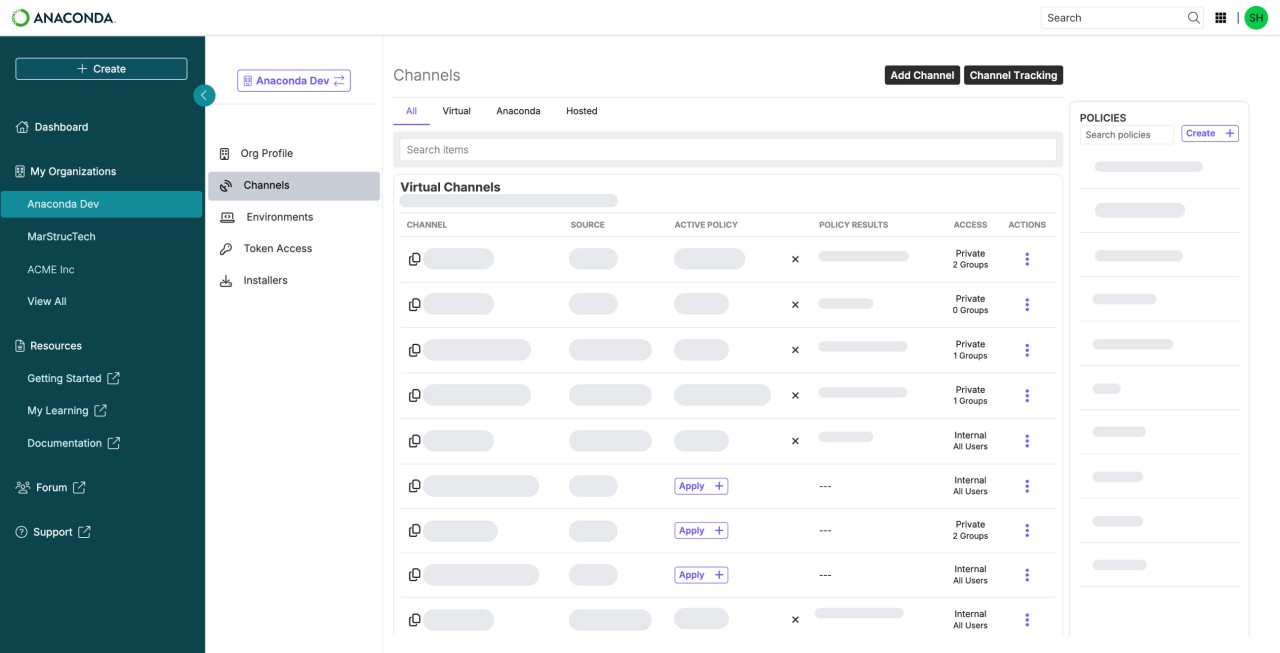
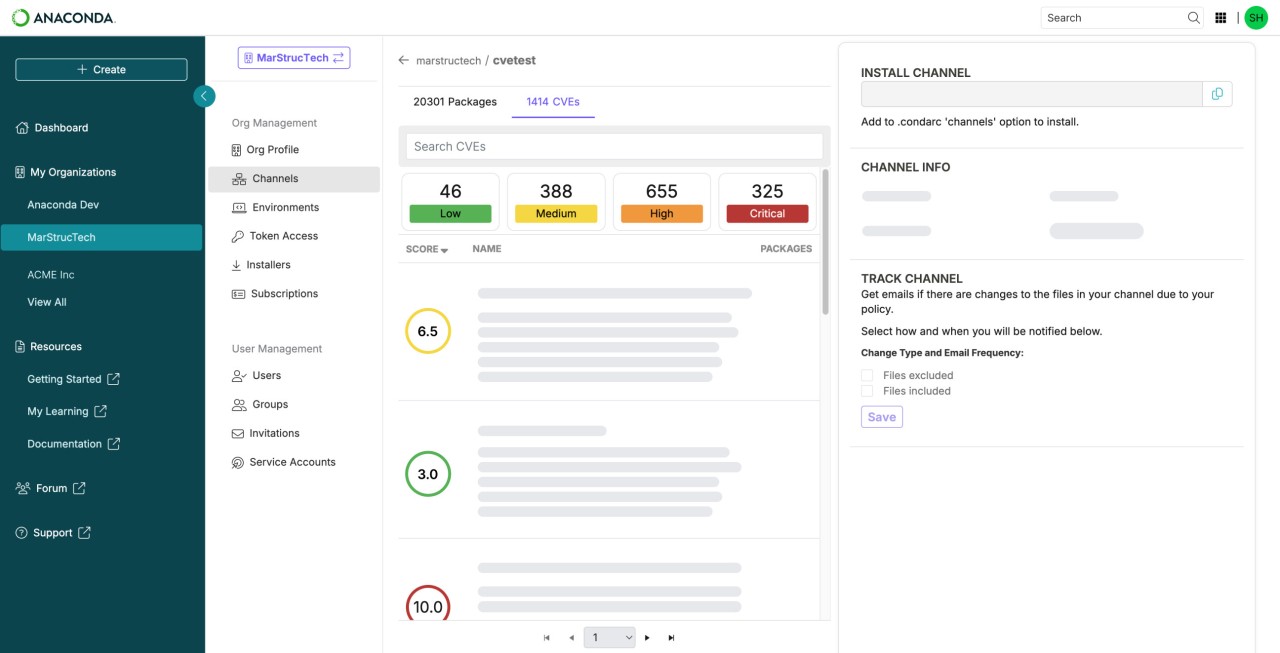
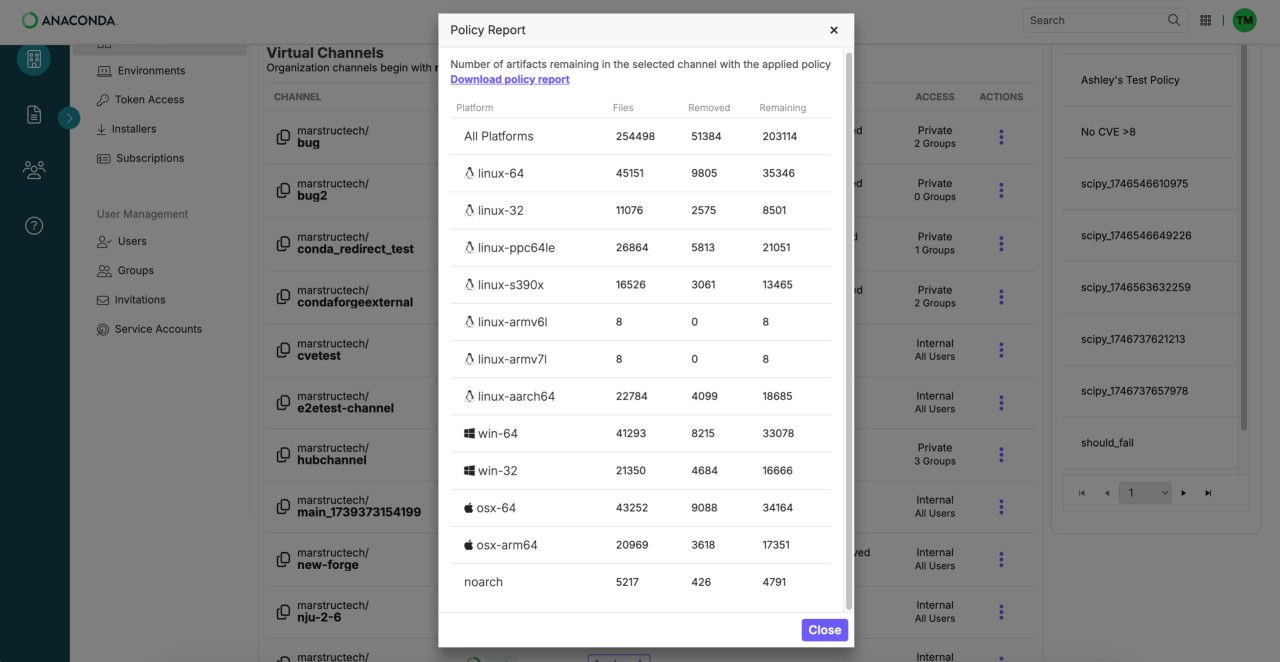
Anaconda provides dependency policies, curated repositories, and security scanning on the enterprise side. These are characteristics that support teams that require stringent software control. They are never used by the majority of individual users, but are available to those organizations that need to control installations. In total, Anaconda makes scientific or analytical workflows based on stable environments less constrained.
Is Anaconda Free to Use?
Anaconda can be downloaded and used freely by individual users, that is, students, hobbyists, freelancers, and Python learners. The paid plans are aimed at companies operating Anaconda on a commercial basis or at an enterprise scale. These strategies principally address managed repositories or formal support of governance. The free edition retains all the major features: environment and package management. The license modifies the experience of big organizations, but not of the everyday coders.
Which Platforms Support Anaconda?
Anaconda is compatible with Windows, macOS, and Linux. Its conduct is congruent in all three. It is the most used by Windows users, as the manual configuration of scientific Python can be tedious, particularly when compilers or other non-Python dependencies are involved. This naming reflects Apple’s current operating system terminology, but the support itself remains unchanged. Anaconda is also compatible with macOS, because it does not experience a problem with the system Python and package-building errors that may become evident with machine-learning tools. Many advanced users on Linux like Miniconda, which is a smaller tool allowing the addition of only the needed packages.
The entire Anaconda distribution is also functional on Linux. No support is provided to such mobile platforms as Android or iOS. Nonetheless, cloud notebooks or remote Linux servers can be used to operate Anaconda-like environments. Environment files written on one operating system typically port to the other operating system with slight modifications. This can be useful when exchanging work among machines or working as a team. In general, the cross-platform design of Anaconda will be attractive to those who would like to have the same predictable behavior regardless of the type of computer.
What Are the Best Alternatives to Anaconda?
PyCharm is not an installer or distribution, but is commonly compared to Anaconda since it operates environments within the editor. PyCharm emphasizes a structured code workspace rather than bundling scientific libraries. It provides project management, debugging, inspections, and refactoring tools. You can build virtual environments, select Python versions, and install packages without having to leave the IDE. It does not address the problem of heavy scientific dependency in as much of a way that Anaconda does, but it plans development well. PyCharm is commonly considered the preferred choice of users who like having everything under a single IDE and have Python applications as their primary work unit, rather than a data analysis toolkit. It is workflow instead of package stability, yet it may be used as an alternative to the latter based on the needs of a user. Many users simply download it because the guided interface feels easier to manage when setting up their workflow.
Wing Python IDE is different. It is based on debugging, fast iteration, and a clean interface rather than dependency management. It is compatible with any Python environment that already has pip, venv, Conda, or system Python. Individual users who have adopted Wing like its robust debugging environments, breakpoints, inspections, and how the tool assists in identifying the problem in lengthy or complex scripts. Wing does not include the bundling of scientific libraries or the creation of isolated environments; hence, it does not substitute the role of Anaconda in those situations. When an individual has the knowledge of how to handle their own environments and mainly requires a powerful editor to write and debug the code, then Wing is a viable alternative. It does not interfere with the workflow, and developers can customize their workflow instead of delivering a pre-assembled ecosystem.
Some people download Wing mainly for its debugging strengths rather than for any environment features.
Spyder is technically a part of Anaconda, though it can be used as a standalone IDE as well, and there are some users who use it as an alternative to Anaconda when they are not interested in the whole ecosystem. Spyder was developed with a MATLAB-like feel: variable explorers, plots, object inspectors, and layouts that assist with analytical or research-oriented work. It does not maintain packages or environments itself; instead, it relies on whatever Python installation you bind to it. Spyder is bright when you need to play with data, get a visual view of results, and examine the variables one after another. It is not as feature-rich as PyCharm or as debugging-oriented as Wing, but it can be integrated into workflows constructed around exploration and science. Spyder is often used as an alternative to users who are interested in something more lightweight and oriented towards analysis instead of the structure of the project. Researchers often download Spyder when they want a simple scientific workspace without the weight of a full ecosystem.