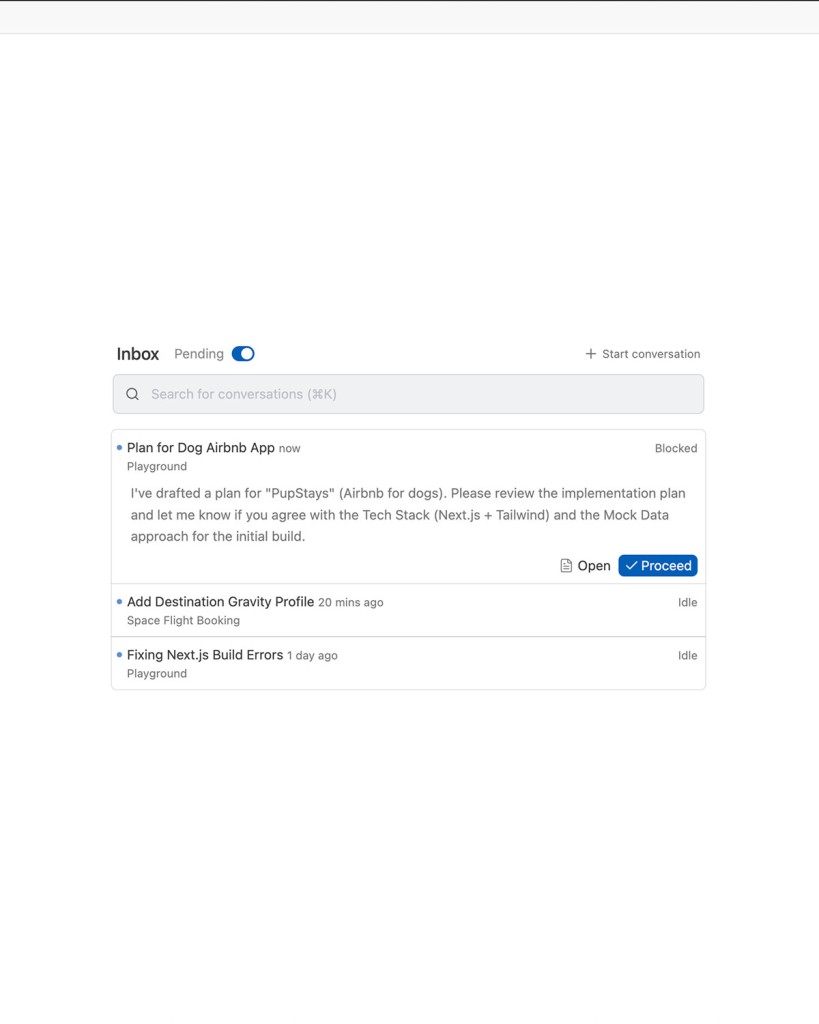
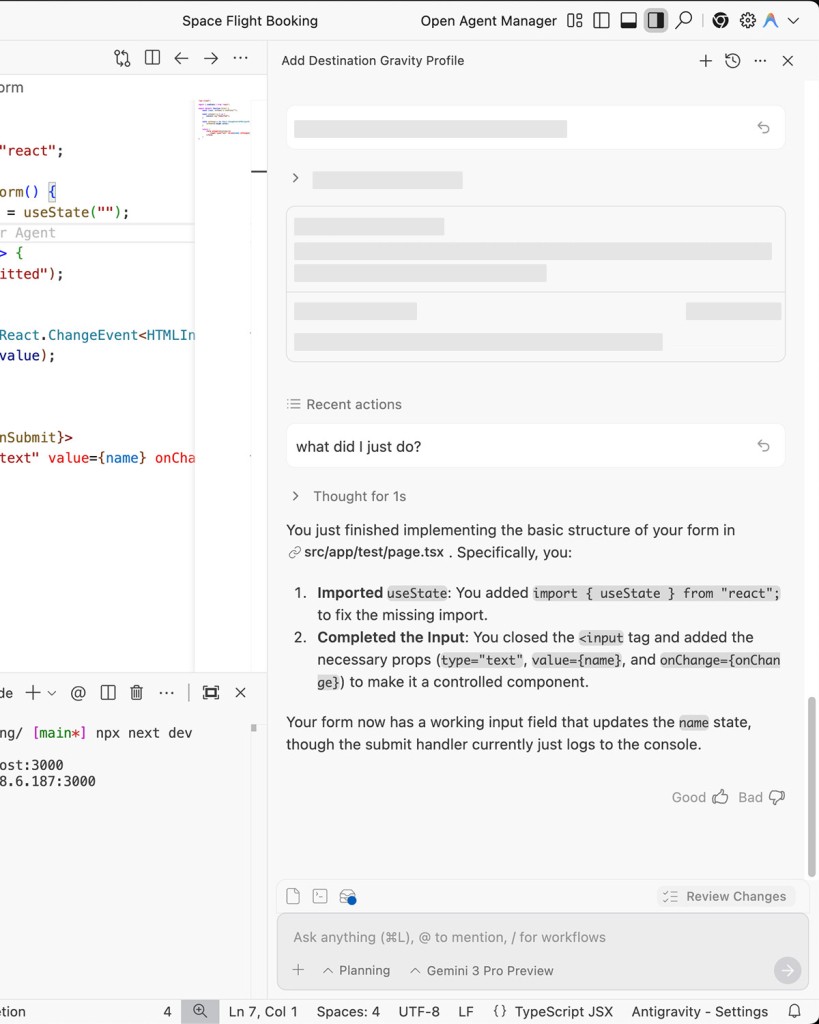
Google Antigravity is an artificial intelligence-based development tool that assists developers in writing, administering, and managing code using intelligent agents. It is similar to VS Code, except that it operates as a modern code editor with the notion that AI may have a major role in the development cycle, rather than merely suggesting.
The members of Antigravity do not bypass the lines of code, but instead can plan activities, write files, test applications, and even use the Internet when necessary. The tool will help lower the number of manual processes, as the AI can take up repetitive or more complex procedures with the developer remaining in command. This methodology can be said to be agent-first, which implies that the AI is considered an actor in the development of software.
Antigravity has an editor, a terminal, and a browser view that interact. This enables the AI to code and, again, instantly test it in the real world. It also logs activities by having a view of its managers to enable users to monitor what the AI is doing.
The software is already being promoted as a next-generation IDE, and its primary target demographic includes the developers who prefer using AI-assisted code-writing processes over the more traditional code-only editors.
What Are the Key Features of Google Antigravity?
Google Antigravity is that which integrates tools of coding with autonomous AI behavior. The built-in AI agent to decode natural-language instructions and convert them into development steps is one of its main characteristics. The AI can plan before it creates the code, such that the user understands what is going to happen.
The editor assists in unlocking usual code, like file development, editing, and business. It is also connected to a terminal and a browser so that the AI can execute commands, access web pages, and even test applications. The AI can even communicate with web pages as a real user, and other times it can document the testing steps and recall them at a later stage.
Antigravity features a task or agent manager in which users can keep track of the work in progress. There can be several agents who are employed simultaneously and working on various sections of a project. With feedback tools, users can give directions or correct the AI when necessary.
The interface is close to those developed in popular code editors. Importation of settings and preferences may be done with other tools, thus reducing the setup time. In general, significant features are based on automation, planning, testing, and the minimization of the manual development effort.
Is Google Antigravity Free to Use?
Google Antigravity does not charge single developers. It is presented in the form of a preview and needs a Google account. This preview phase provides users with a quota of free access to higher AI models. A long-term pricing or organizational plan has not been publicly announced yet. Another alternative for the organization is also stated, but about the future, it is not indicated. The terms of availability and usage could be modified as the product evolves.
Which Platforms Support Google Antigravity?
Google Antigravity is available on several platforms, including desktop. It is compatible with Windows, macOS, and Linux. On Windows, it has 64-bit support with x64 and ARM64 support, and requires Windows 10 or later. Antigravity supports macOS versions that continue to receive Apple security updates, with a minimum requirement of macOS 12 (Monterey). Older x86 systems are not supported, and the Apple Silicon devices are. Certain distributions that satisfy the necessary system libraries can be supported with Linux.
The application is not web-only, but has to be installed on a local machine. This requires a Chrome web browser and a personal Google account to use to the full extent. Platform support can be broadened or varied later on when the product is no longer in preview status.
What Are the Best Alternatives to Google Antigravity?
ChatGPT Codex is one of the alternatives. Codex assists programmers in composing and comprehending code with the help of AI-inspired proposals and descriptions. It traditionally gets involved in the creation of code snippets, refactoring, and solving programming problems. It is not a complete IDE, as is the case with Antigravity, built-in testing, and task execution, but it is a good tool to quickly code a bit or to learn. Many developers download or access Codex-style tools when they want quick help understanding code without setting up a full development environment.
CodeConductor is another possibility. CodeConductor is an AI-based tool that assists teams in performing and automating development processes. It emphasizes coordination and processes instead of profound editor-level integration. Certain users might want to use it in a team-based situation where orchestration is more important than direct code support. Some teams choose to download CodeConductor tools to support structured workflows and shared development tasks.
One of the other alternatives is Cursor. Cursor is an AI-enhanced code editor based on developed tools. It provides AI-assisted code completion, suggestions with explanations, and editing right within the editor. As much as it enhances individual-agent code speed, it does not pay as much attention to autonomous agents that plan and test projects as a whole. Developers often download Cursor to get AI assistance directly inside a familiar editor layout.