KiCad is an open-source electronic design package. It mostly assists you in designing schematics and printed circuit boards. Inasmuch as it is professional grade, it can be used by beginners with patience. Instead of being a single program, KiCad has a design pipeline: write the schematic, check it, lay out the board, and preview the appearance in 3-D before it is fabricated. It is used when users desire to have full layout control, not using drag-and-drop builders.
The software is capable of working with small boards and also large multi-sheet designs as needed by the project. It endorses the hierarchy, numerous layers, design regulations, and library of symbols. This is applicable in hobby projects, teaching, and the engineering of products. One of the benefits is that the layout, schematic editing, and visual checking are all in a single program.
KiCad does not focus on automation but manual control. The connections, trace widths, spacing, and symbols are set as desired by the users. KiCad can provide a complete toolkit to anyone who wants to design a hard piece of hardware or create a PCB, whether for simple or complex boards.
What Are the Key Features of KiCad?
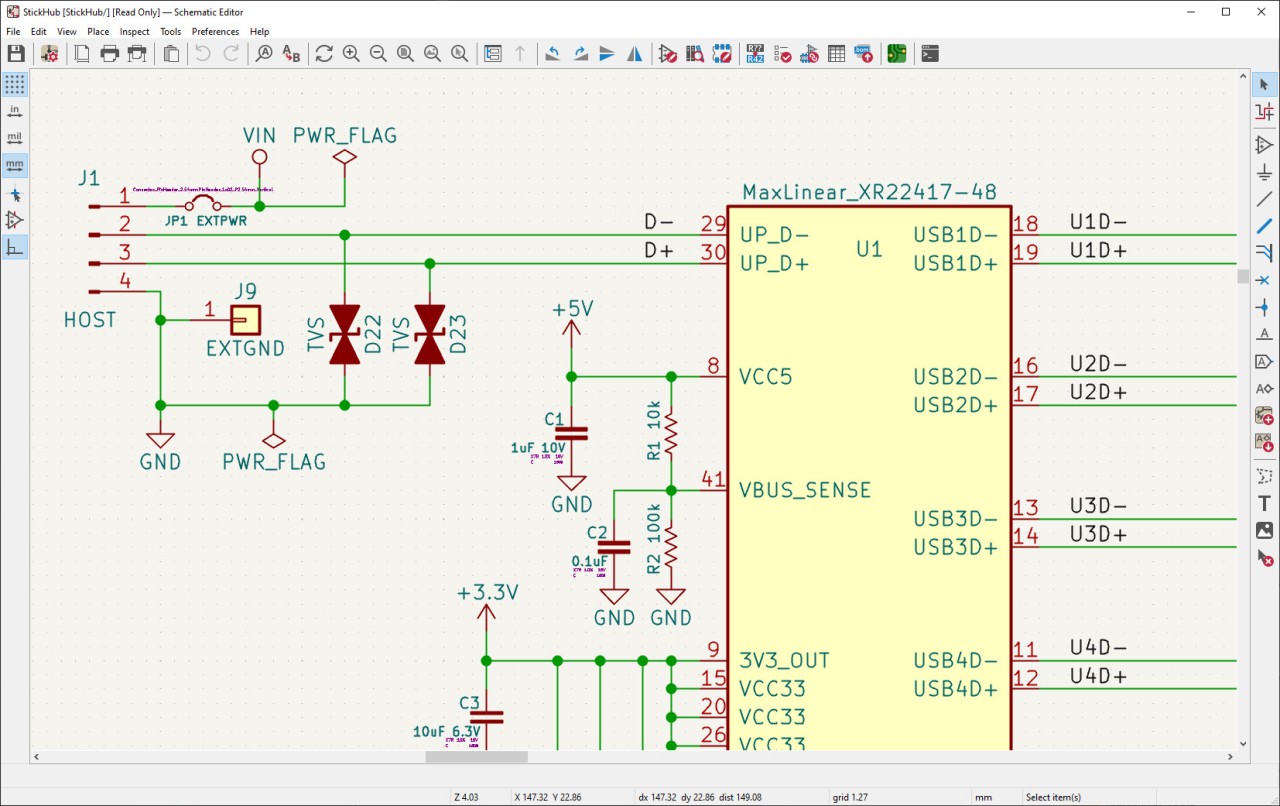
KiCad contains numerous tools, though the three most significant are Schematic Capture, PCB Layout, and the 3-D Viewer. In the schematic editor, design begins. It allows you to create circuits using simple parts or create your own symbols as necessary. There are thousands of parts in the official symbol library, and as such, the most popular components are already available. Hierarchical schematics enable you to distribute the large designs into distinct blocks rather than congest a single sheet.
The SPICE simulator is built in, allowing you to test circuit behavior before completing the layout. It is particularly applicable in measuring current flow, component response, or voltage under different load conditions. Connection errors are identified at an early stage by electrical rule checking.
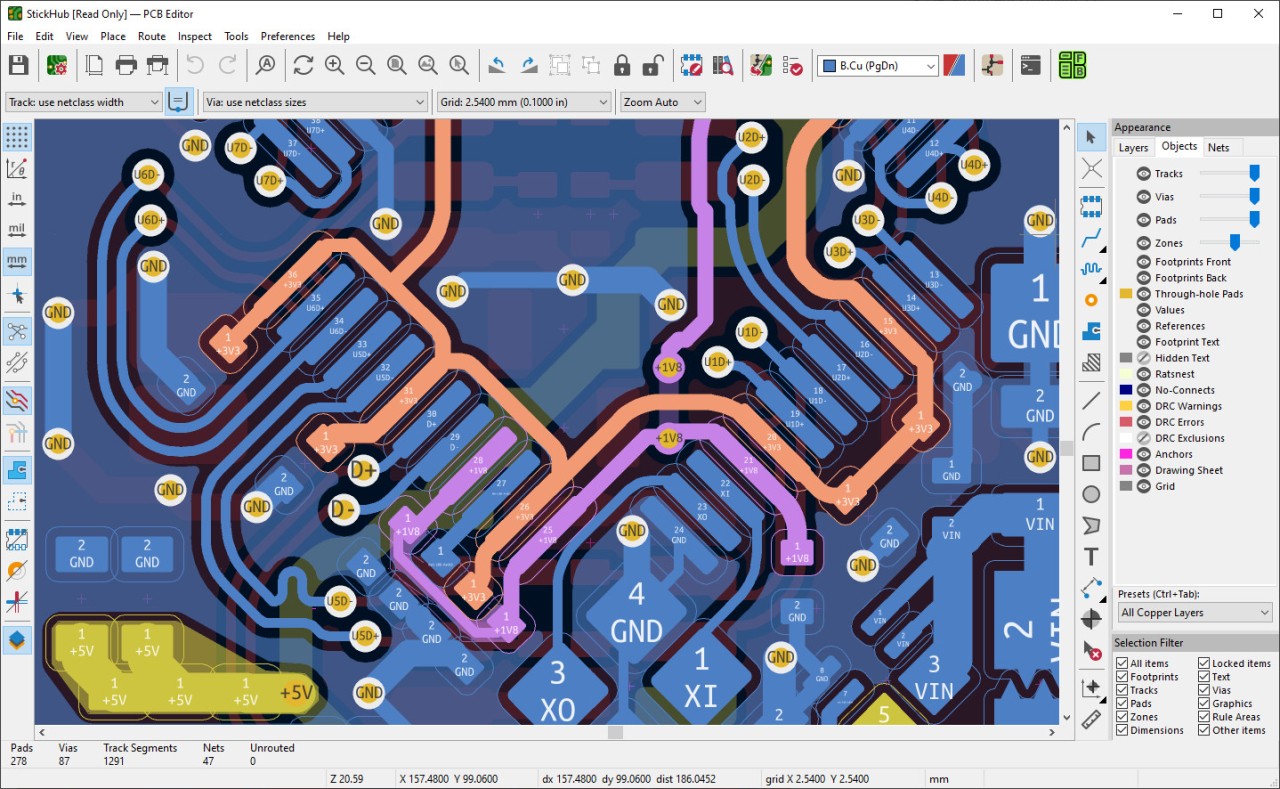
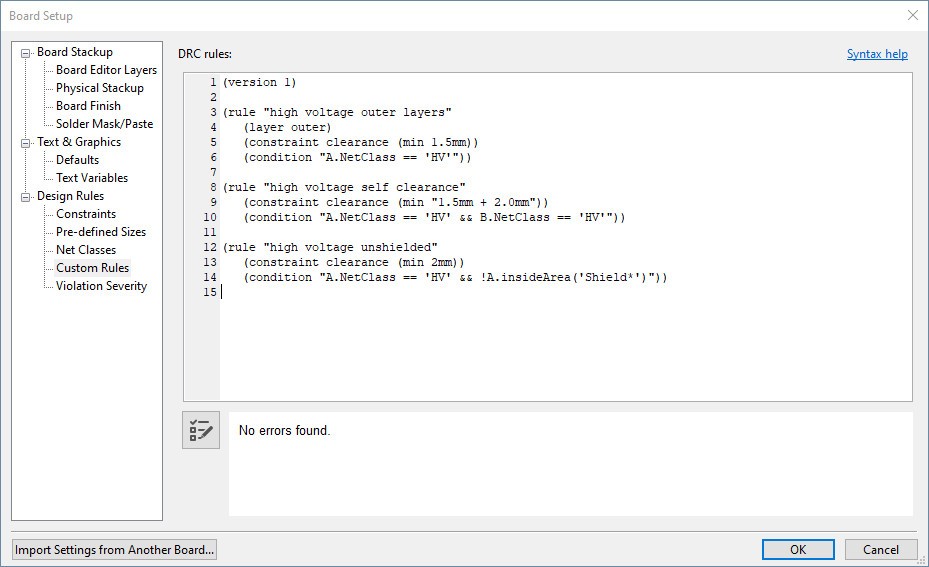
The interactive router is an important tool in PCB layout. It allows you to draw traces manually rather than putting each segment in one by one, which saves time. Design rules are highlighted, nets are inspected, and copper fills are manipulated using visual tools. KiCad supports both layer stacking and via configuration, whether using small or advanced boards.
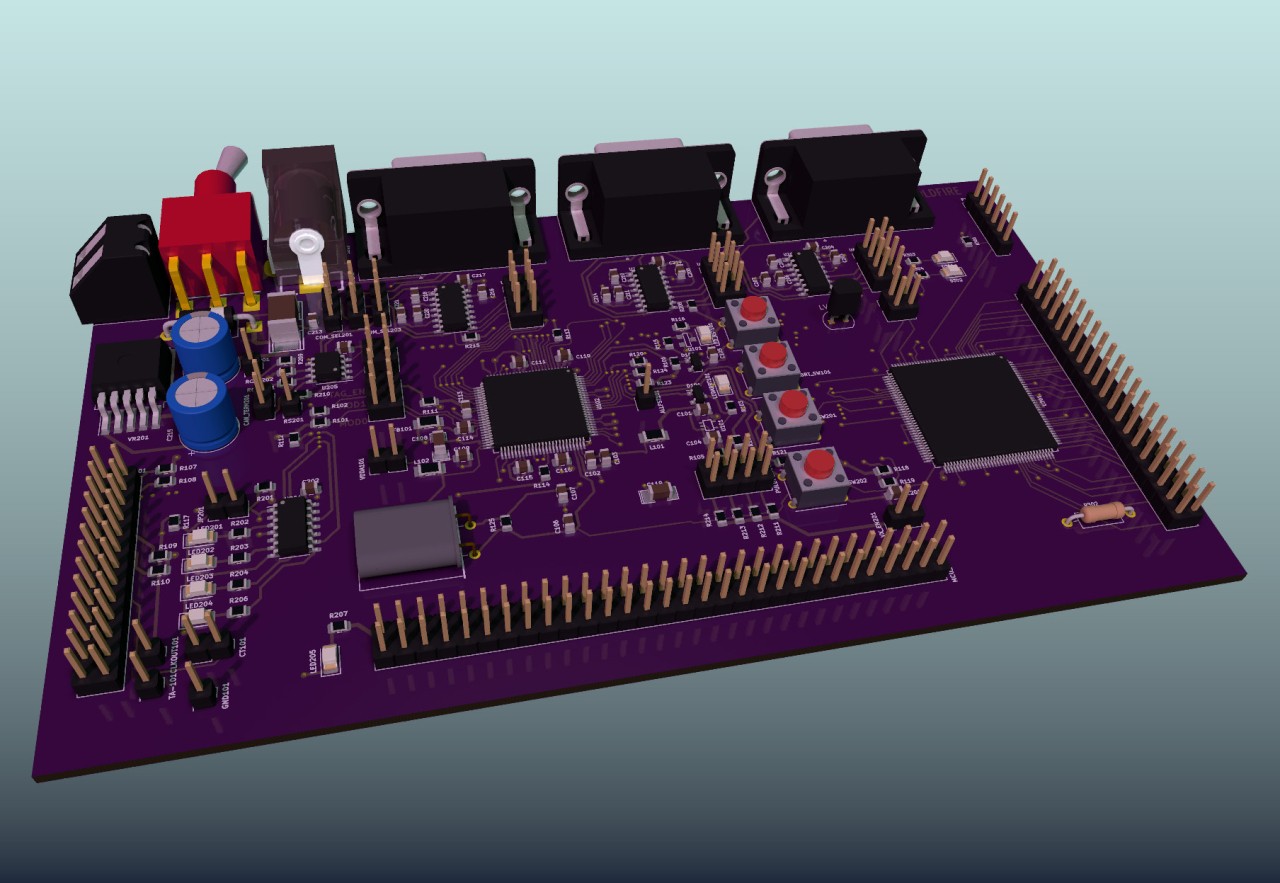
The 3‑D viewer is the final step. It displays the PCB, parts, and copper traces of a physical model. You can check the mechanical fit of enclosures and connector alignment. Lighting Ray-tracing gives visual previews that are realistic.
Is KiCad Free to Use?
KiCad is free and entirely open. It is free of subscription and paid license. It can be installed without feature limitations and used commercially, academically, or personally to design PCBs. There are no secret premium features. You can also include external libraries or models. Community development continues to add features, and KiCad is an accessible tool to any electronics designer.
Which Platforms Support KiCad?
KiCad is compatible with various operating systems, such as Windows, Linux, and macOS. This versatility assists programmers who alternate between Linux workstations and Mac laptops or users who desire their workflow to be similar across hardware.
Its cross-platform usage offers a similar interface and functionality across all OSs, making it possible to learn the program in one location and use it in all places. KiCad packages are offered on the official KiCad site. Linux users have an option to install through their package manager or repositories, as well as the standard installers in macOS and Windows.
KiCad lacks a complete mobile-based version, and it is not designed to be used on touch-only devices such as tablets; it is desktop-oriented. Designing PCBs requires precision in cursor control, keyboard shortcuts, and a big screen. Project files made on one operating system can be opened on the other as long as the project files are present. Cross-platform portability assists engineers in working together in cases where their teams work across different systems.
What Are the Best Alternatives to KiCad?
FreeCAD is a generic 3D CAD package, which does not confine itself to PCBs. It is commonly employed in enclosure design, mechanical components, and the modeling of electronic housings. FreeCAD is used with KiCad by PCB designers. FreeCAD focuses on parametric modeling, providing careful control of measurements and geometry. Users who want to work with PCB only, but not in detailed object modeling, are best suited to it. Although it does not have an embedded schematic editor, it is not a one-tool workflow, yet it is good at mechanistic side work, casing prototypes, bespoke fittings, and environment testing. Many users simply download it for mechanical modeling when PCB design is only a small part of their workflow.
In comparison with KiCad, ProfiCAD is less complex and heavier. It is primarily applied in electrical schematics rather than PCB manufacturing. ProfiCAD does not generate copper routing or copper layers, but rather profiCAD is concerned with proper symbol placement and electrical documentation. It fits wiring diagrams, domestic layouts, automation systems, and industrial control layouts. ProfiCAD can be more direct to users who do not require PCB manufacturing, just electrical drawings. It has a lighter interface and is therefore easier to learn, but there are no more complicated PCB features like a 3-D view or routing. People who want quick electrical diagrams often prefer to download ProfiCAD for fast drafting without PCB routing.
AutoCAD is more extensive than electronics. It is among the most popular drafting tools. It is used to create mechanical drawings, architectural plans, electrical layouts, and complicated CAD models. It can be designed in PCB, but not a specialized design; it is usually combined with AutoCAD and either CAM or EDA utilities to complete the routing. The software is not free but is more suitable for industrial CAD users or those who require cross-disciplinary drawings. AutoCAD is more versatile and is applicable in mechanical and civil, among others, unlike KiCad, which has a more flattened curve. AutoCAD can be used in PCB design. Many industries download AutoCAD because it covers electrical, architectural, mechanical, and PCB needs in one ecosystem.