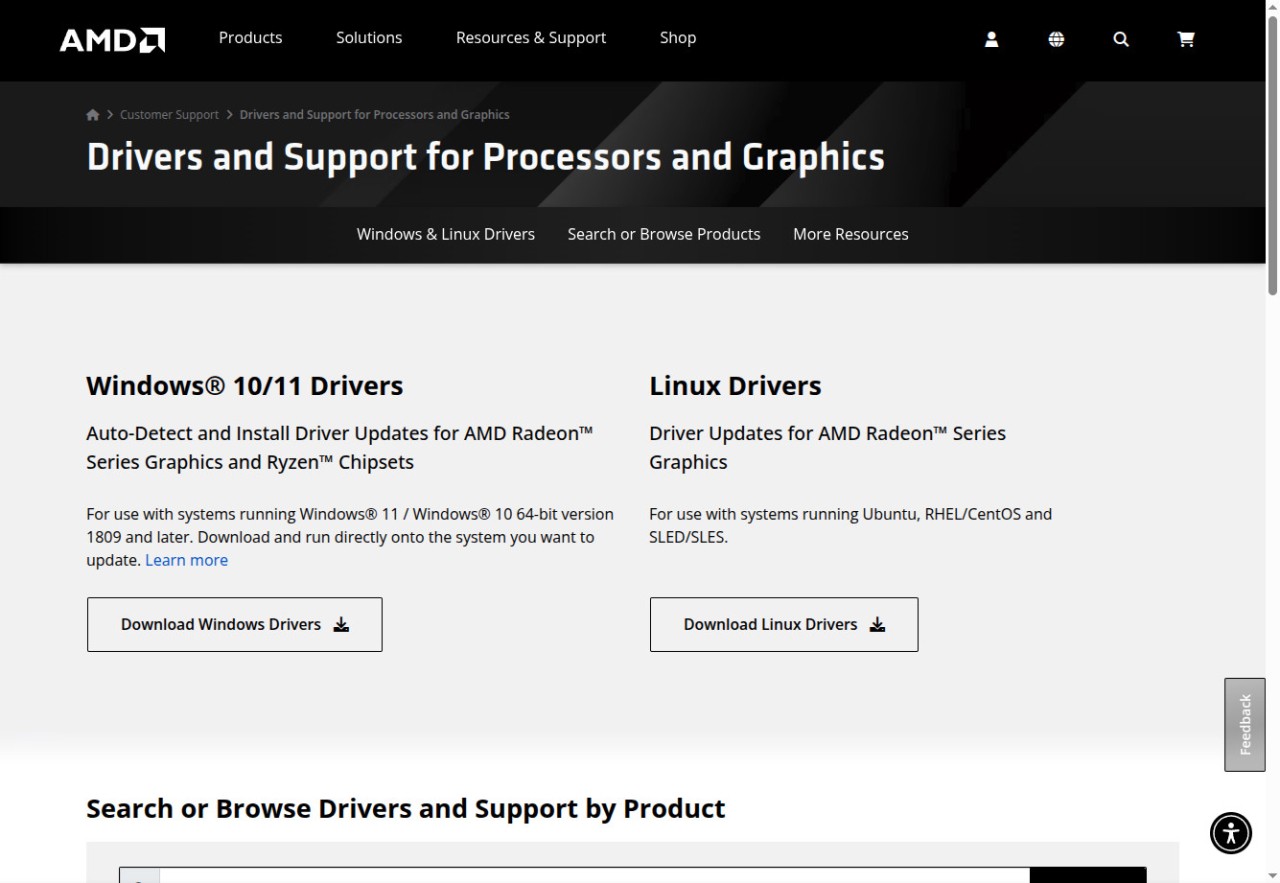
AMD drivers are the official graphics card and processor chipset drivers provided by AMD to its graphics cards and processors. They allow the operating system to interact with the hardware of AMD properly, making their use reliable and smooth. Without the right drivers, they are not going to use the graphics card or processor as well, and some features will not work.
AMD drivers maintain systems mainly in terms of being compatible, stable, and up-to-date. Gamers rely on them to receive the best game support and performance additions. Normal users require them to avoid display glitches, crashes, or other missing features. Professionals make use of the drivers to keep creative and technical apps free of errors.
Tools identify and install the appropriate drivers automatically with AMD. They are convenient to the user who does not know which graphics card or chipset he/she has. Drivers do not tend to tune or overclock hardware; they only make sure that the hardware and software work together effectively and meet their expected performance.
What Are the Key Features of AMD Drivers?
AMD components are widely supported. Downloading the drivers allows support for AMD Radeon graphics cards and Ryzen chipsets in various system configurations. This is to ensure compatibility of older and newer AMD hardware with the new operating systems and the new applications.
Another important feature is regular updates. AMD provides driver releases, which rectify errors, increase performance, and support newly released software and games. Some updates enhance the performance of a given task, whereas some enhance compatibility and trustworthiness. The users are allowed to update manually or utilize the auto-detect tools provided by AMD to simplify the process.
AMD drivers are provided with supporting computers depending on the hardware. To illustrate, most Radeon graphics drivers have control software that lets the display options and graphics behavior be attuned. Linux users have access to drivers developed by AMD that are compatible with the used distributions, and they can also use distribution-supplied driver packages.
All in all, most AMD drivers are concerned about the precision and support rather than other features. Their main concern is to make sure that the hardware of AMD can be used effectively in daily life.
Are AMD Drivers Free to Use?
Yes, you can download and install any AMD driver from the AMD website without any expense other than the components you already bought. Users do not have to pay to install or update drivers of AMD graphics cards or chipsets. Any driver updates are free of charge.
Which Platforms Support AMD Drivers?
Both Windows and Linux feature AMD drivers. On Windows, you can find drivers for 64-bit hardware on Windows 10 and Windows 11. AMD also provides an auto-detect tool to automatically find compatible hardware and install the required drivers.
AMD provides drivers to several popular Linux-based distributions, including Ubuntu, RHEL/CentOS, and SLED/SLES. Depending on their setup, users may install official AMD drivers or get them through their distribution package manager.
AMD drivers are designed to serve desktop and workstation systems in which there is an AMD graphics card or processor. Support and behavior depend on the specific AMD hardware model and the supported Windows or Linux version in use.
What Are the Best Alternatives to AMD Drivers?
Not everyone has AMD components in their computer. So here are some other solutions.
For NVIDIA graphics cards and components, you can download NVIDIA drivers. They simply fulfill the same basic task to allow the operating system to communicate with the GPU. The NVIDIA drivers are regularly updated and made compatible with new games, emerging creative programs, and also with operating system releases. Gamers and professionals with NVIDIA hardware are the users of this kind of popularity. Many users download NVIDIA drivers directly when their system relies fully on NVIDIA graphics hardware.
DriverPack Solution is a third-party utility that can install and automatically update a wide variety of hardware drivers all at once. It is usually invoked when new drivers are missing following a fresh installation of the operating system. Graphics cards, network adapters, sound devices, etc., are all supported, which makes it easy for people without a technical background. When hardware drivers are not available, it can install generic drivers instead of the latest official drivers (which can also restrict performance). Some users prefer to download DriverPack Solution when they want a quick way to restore missing drivers after a system reinstall.
Snappy Driver Installer is preferred by technicians and advanced users. It offers an offline version and has a huge driver base. It is suitable in an environment where there is low internet connectivity. Users have the manual option of installing the drivers they want, and not those they do not want. Although it is flexible, it relies on external sources of drivers and does not necessarily provide either the most recent or the most efficient drivers. Technicians often download Snappy Driver Installer to manage drivers on multiple systems without constant internet access.