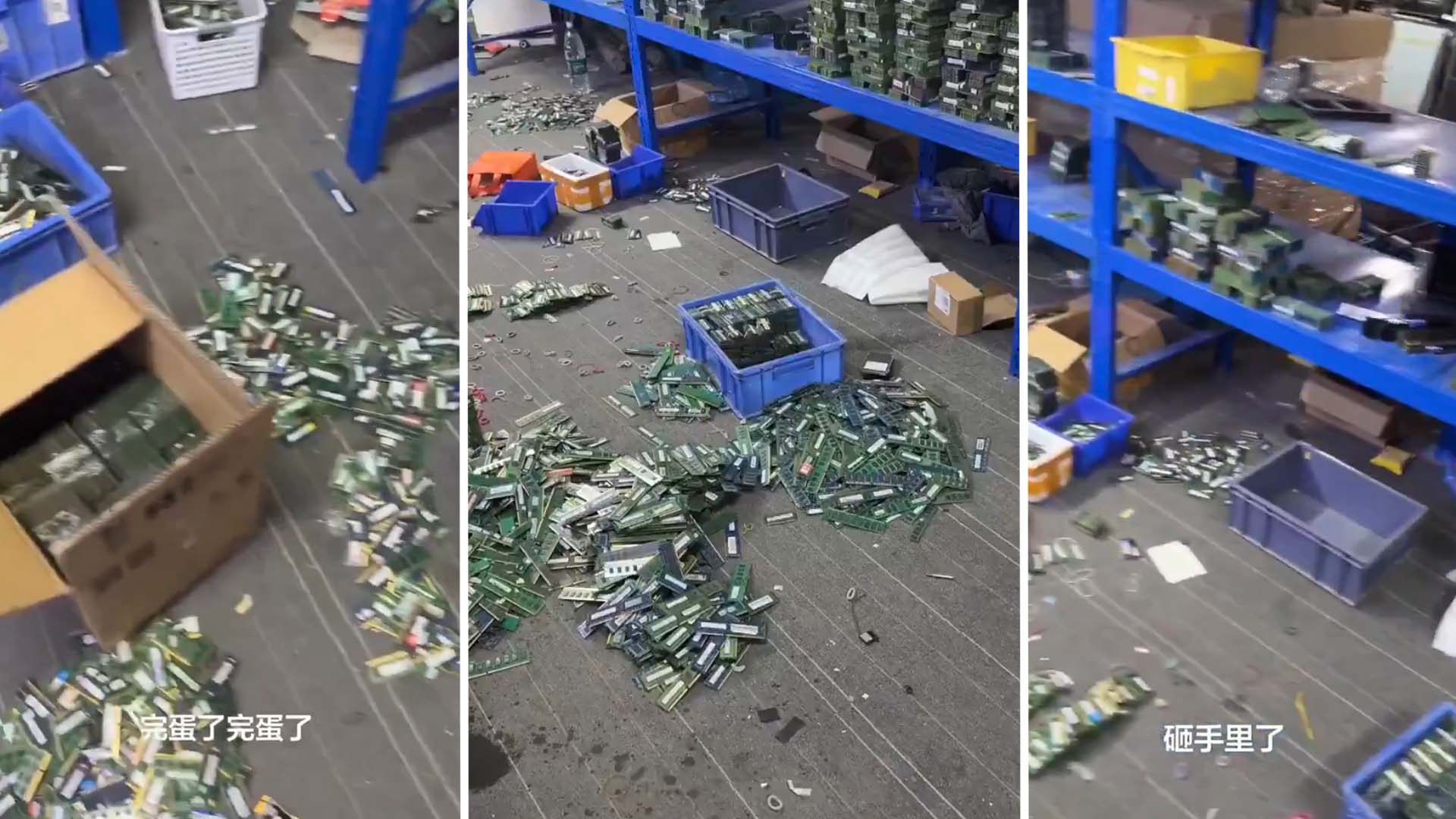
At least one PC parts vendor that had stockpiled a load of DRAM components as prices skyrocketed is now apparently worried they and others who bought up as much of the stuff as possible are “doomed” and hope memory costs increase again soon.
As spotted by Wccftech, a memory vendor in China allegedly posted a video showing a warehouse filled with DRAM chips and memory parts while complaining about recent news that some RAM prices have started to drop for consumers in some areas of the world. In a video shared by China Pulse on Twitter, a vendor showing off their massive hoard of stockpiled memory can be heard saying (via Google Translate/Wccftech):
“Brothers, memory [prices] have taken a massive dive. We’re stuck with it, stuck with it. We’re doomed, we’re screwed. Is there still any chance for the price to go back up?”
Memory prices have plummeted, and speculators in China are already crying out in despair. pic.twitter.com/JwiEHRUXM4
— China pulse 🇨🇳 (@Eng_china5) April 1, 2026
To be clear, the price drops that likely led to this reaction haven’t been massive and don’t signal that the ongoing RAM-aggedon caused by AI hyperscalers buying up DRAM and other PC parts for datacenters is ending anytime soon. But yes, there have been some price drops.
As pointed out by the outlet, some Corsair memory modules on Amazon have dropped from around $490 to $380. Other RAM sticks have dropped less dramatically. So it’s clear that RAM prices are sliding a bit, even if it might not be widespread or permanent. For hoarders looking to sell memory at a high price, even a small slide backwards on price could cause big problems, as some of these sellers might start dropping prices to burn off excess stock while they can, which could lead to even more price drops as supply increases.
Many believe the recent memory price dips can be connected to the reveal of Google’s TurboQuant compression algorithm, which can purportedly drastically reduce the amount of memory required for certain AI workflows. Some tech and AI experts have pushed back on Google’s assertion, but it seems clear that companies are paying attention, and if memory becomes less useful, a lot of people and corporations are going to want to run or risk being the one left holding the bag.