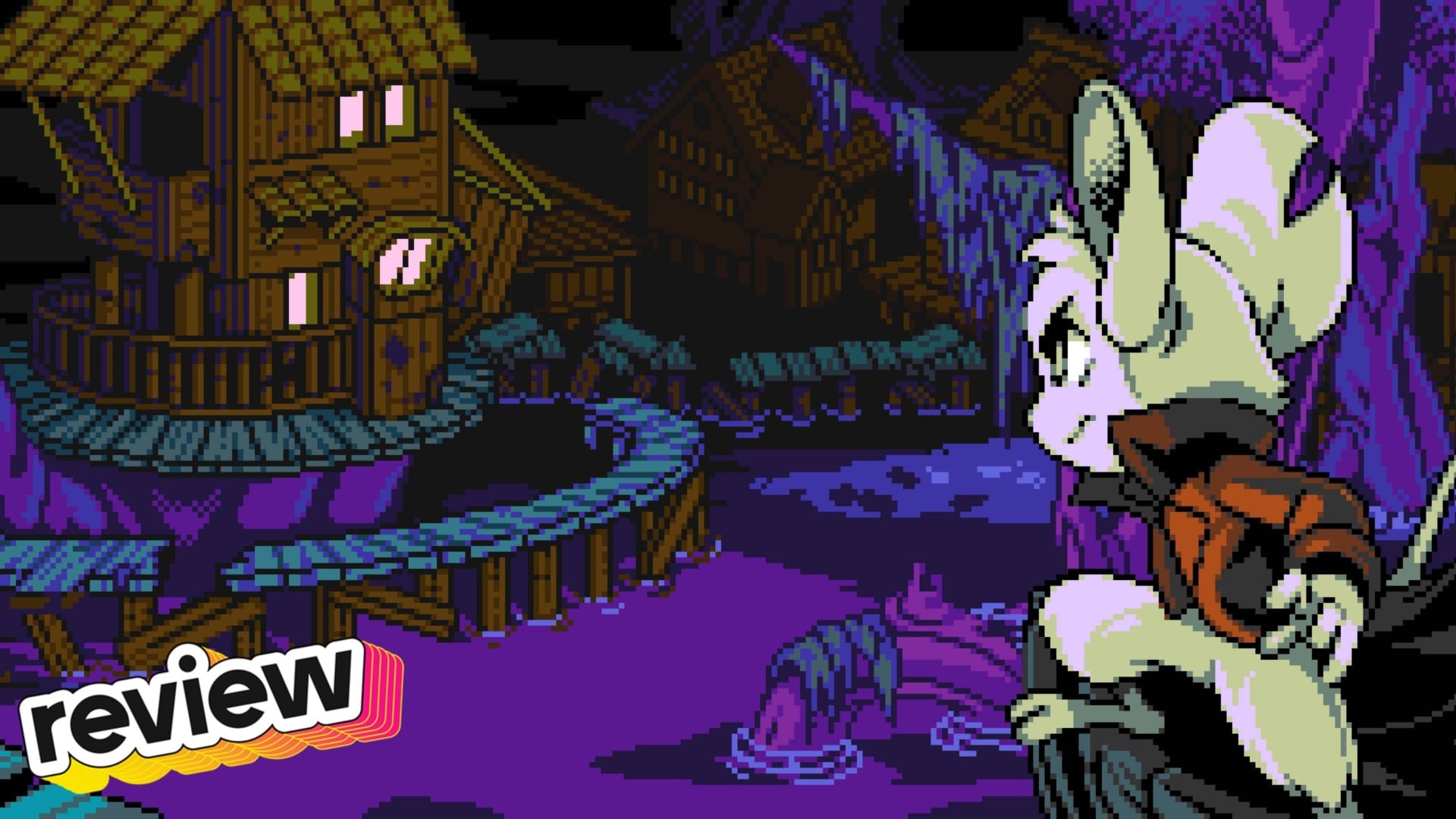
A whole discourse on nostalgia just flooded my social media feeds, and I tend to hang out more in the camp of disliking games that just wave stuff I loved as a kid in my face to try and elicit an emotional reaction. But Mina the Hollower, Yacht Club’s second attempt at a retro-invoking hit, isn’t that. I don’t feel like Mina is gracelessly milking retro nostalgia for a time gone by so much as it’s tapping into my existing love, born in my childhood and grown to adulthood with me, for games in which everything is wonderfully mysterious. I want discovery; I want surprise; and I want it not just at the start of a game, but in the middle and end and all points in between. In this spirit and so many others, Mina carries banners of love for Zelda and Dark Souls and sundry. But when Mina looks in the mirror, what’s reflected back at her is her own, lovable self.
Mina is, yes, a Hollower, which from what I’ve been able to gather means she’s a member of some guild that’s good at fighting and also capable of burrowing underground for short spells, letting them move fast and get under and into stuff. She is also a genius inventor, a woman with a history. Everyone in town knows her, and most love her. She conceived of and (with the funding of the rich and powerful Baron Lionel) built giant machines called Spark Generators that light up and power the entirety of Tenebrous Isle, sending it into a technological Renaissance and dramatically improving life for (just about) everyone. Mina’s been off on adventures elsewhere, but returns to Tenebrous Isle at the start of the game because her generators have broken down, monsters are flooding the island, a member of her Hollower order has gone rogue, and obviously she’s the only one who can solve the people’s plight. It makes for a very convenient and easy-to-understand opening set-up: there are six generators spread across six major areas—light ‘em up, save the world. It’s a top-down Zelda-like, with action and puzzles. Like in Link’s Awakening, you can jump, and unlike in Link’s Awakening, you can dig through the ground. Simple.
So of course, immediately, I got lost! Blissfully, deliciously lost.
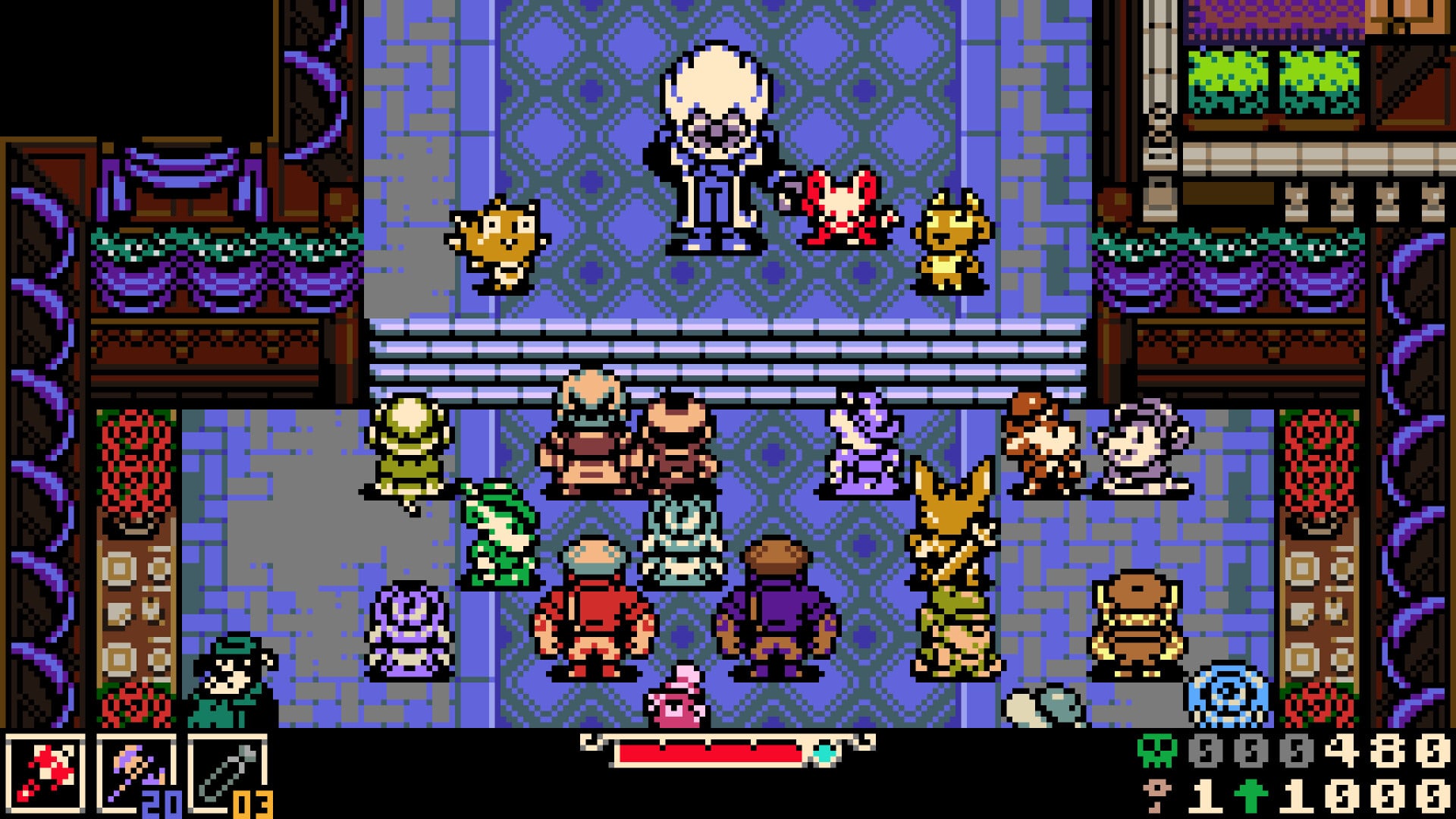
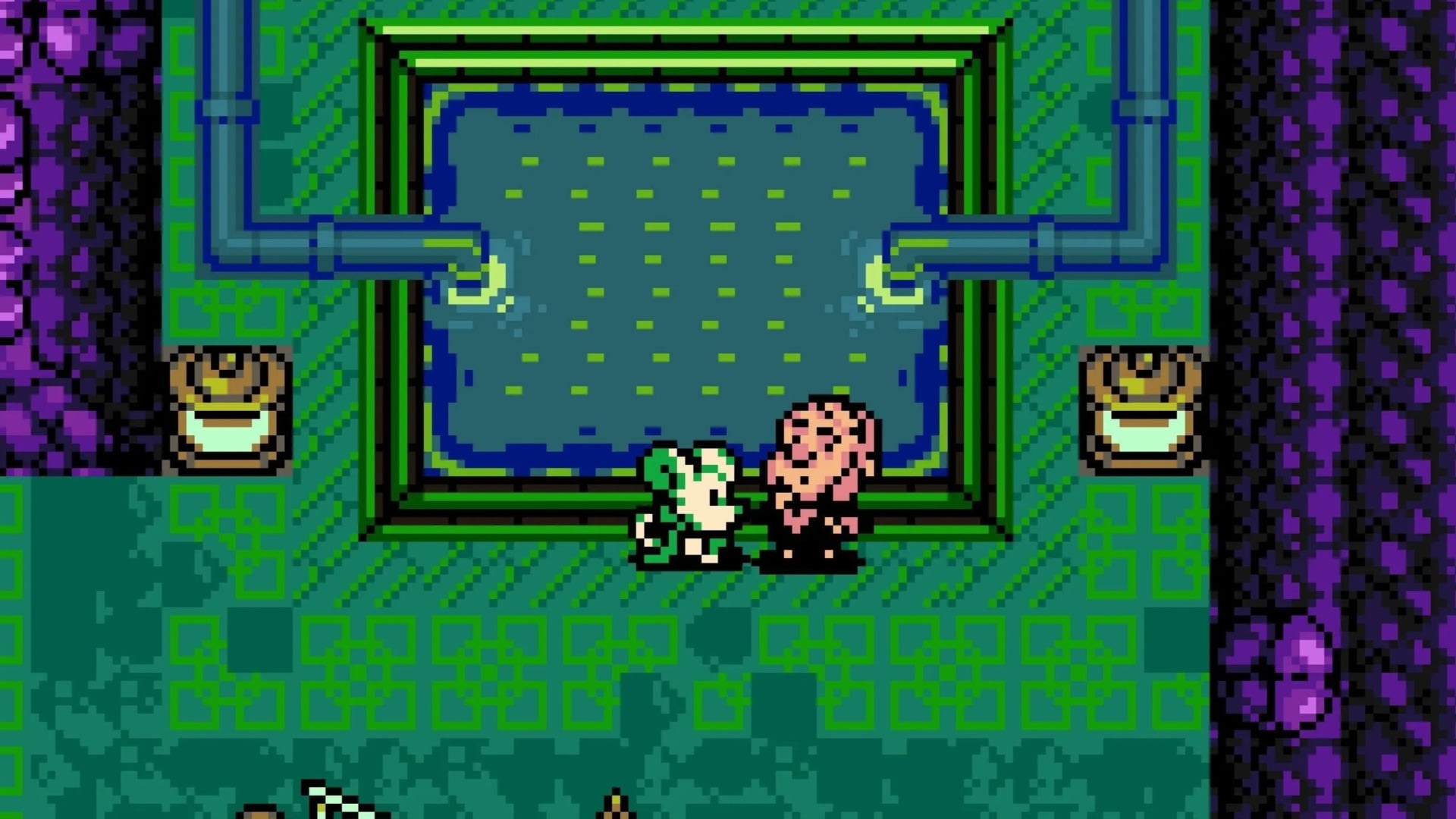
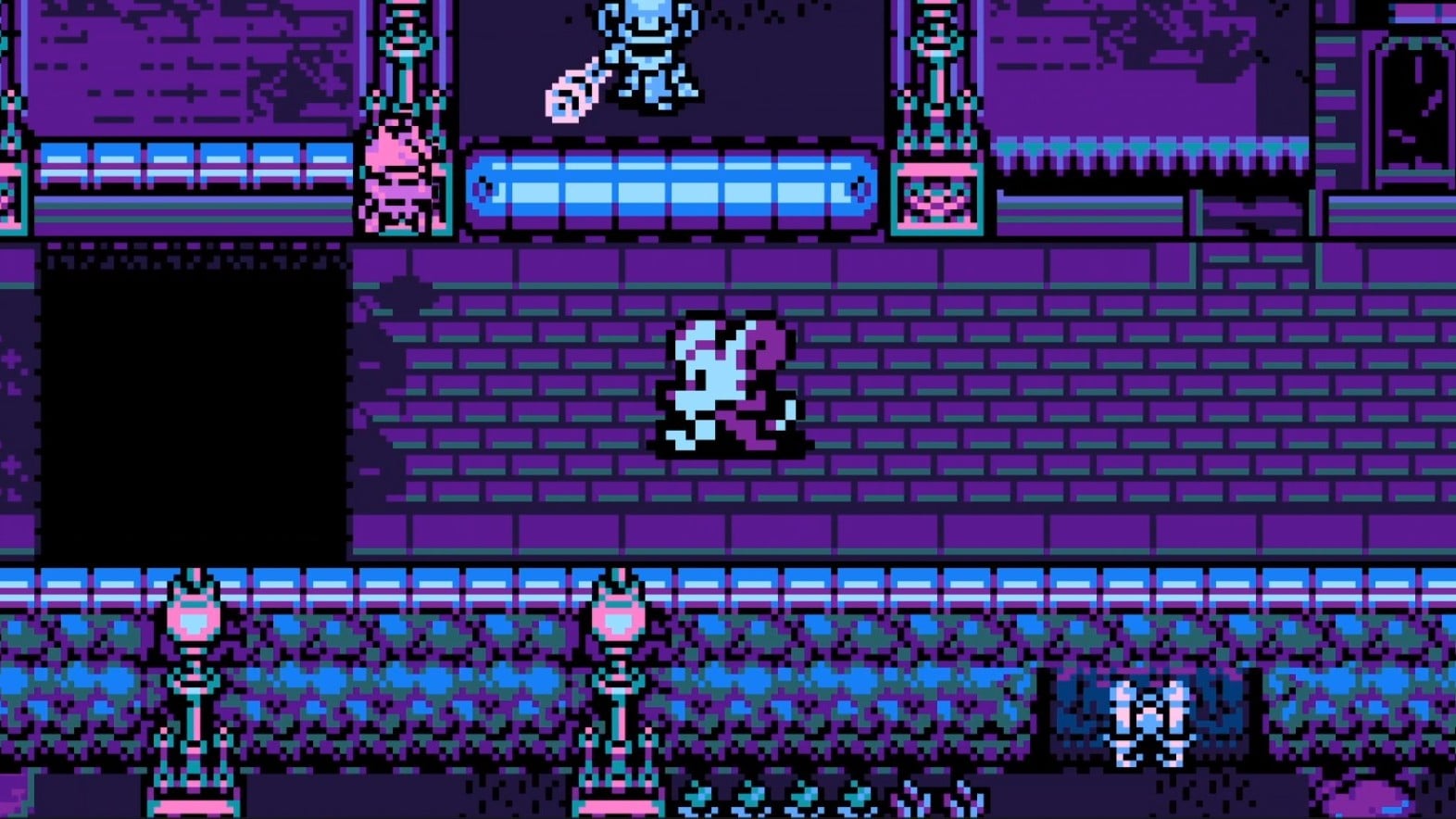
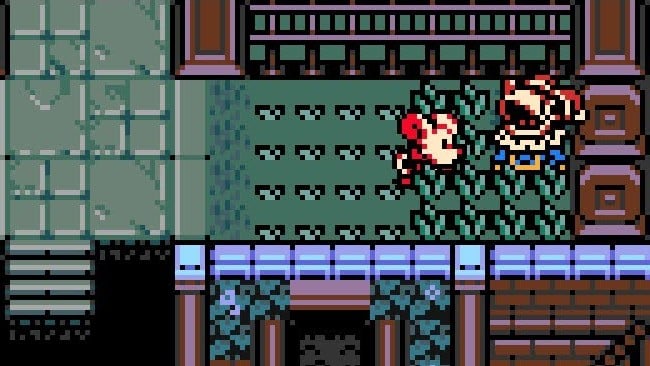
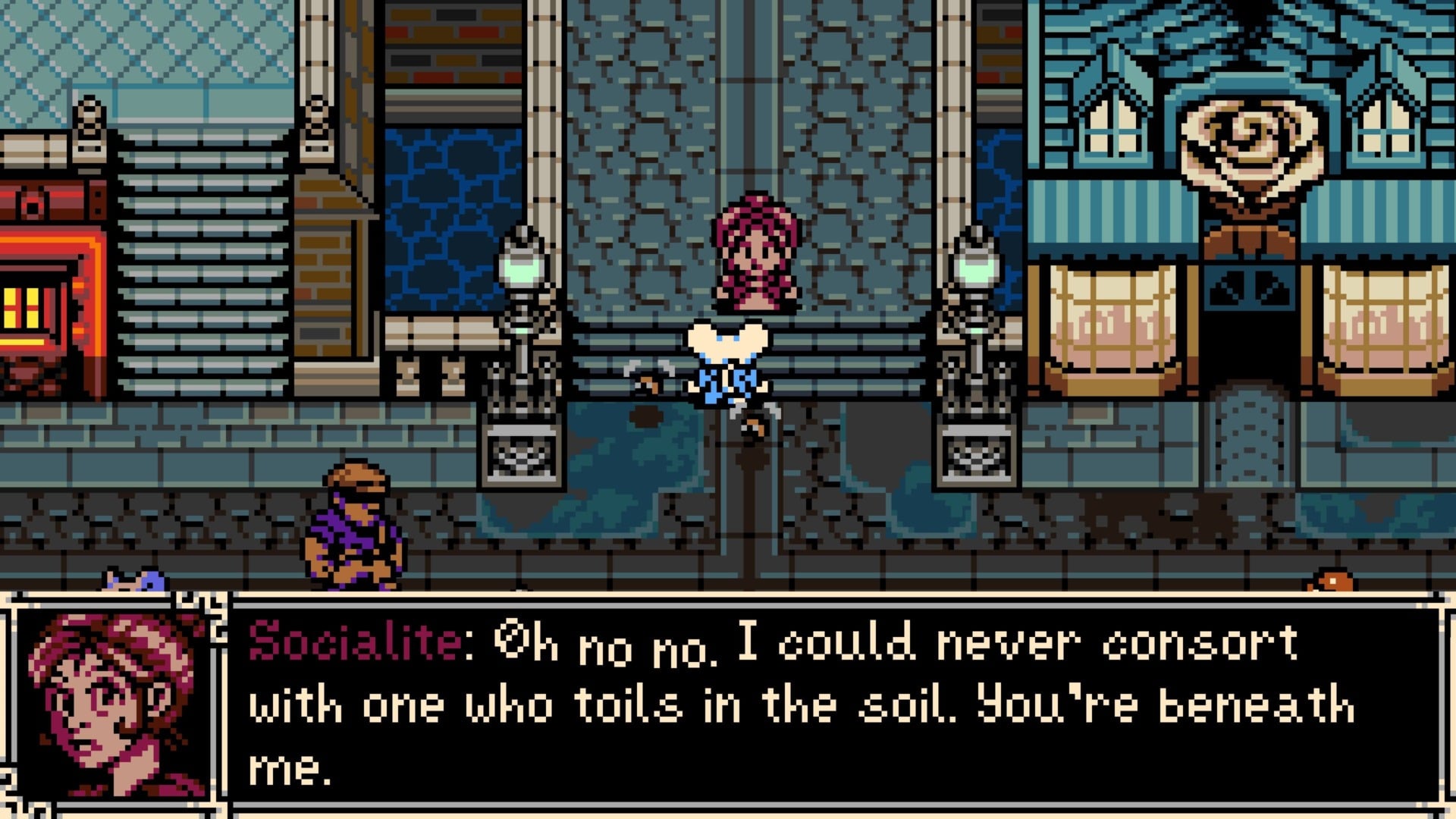
That, I think, more than anything is what I want out of a game like Mina, which comes from a studio known for invoking retro aesthetics and feel in a modern way. Mina the Hollower succeeds at the most important thing a “retro”-style game can succeed at for me: it gives me that soaring sensation, seeded in my childhood, of being on a real adventure in a world where everything feels brand new. Some of that’s aesthetic, I guess. Mina the Hollower takes me back to what I fuzzily, dreamily think playing a non-specific Game Boy Color game surely must have looked like at the time even if it did not: the detailed pixel art, the dense environments, the adorable enemies and animations, that very specific Game Boy-sounding chiptunes of the soundtrack.
But it’s more than that, right? Mina captures that thrill of getting lost, happily lost, and as you wander, discovering something you’ve never seen before behind a bush or a wall or a hidden trap door. The mysteries of Tenebrous Isle will, I know, be broken open somewhat by the influx of game guides sure to flood the internet on launch day. There’s nothing to be done about that. But unless you’re following a walkthrough to the letter, you’ll likely still get at least a little taste of that wonder. For one, you can visit the six areas in any order, and I really do mean just about any order (there’s only one minor exception I’ve found). Each zone has its own unique environmental hazards and enemies, and you’ll be gently nudged toward the easier ones first by a clever series of newspapers in the main town that give you optional hints on what to do next. I’d argue that it’s more fun to do the easier ones first also, as the “intended” order of the areas builds up to a truly impressive and climactic finale, and I don’t think doing Queensbury Crypt last would hit quite the same. But it truly does not matter. The newspaper will yell at you to go to the bog until you go there, but there are no consequences for doing it last. Some of the areas have shortcuts into other ones. Skip around, abandon stuff that’s too hard, come back later, whatever. Just about everything in the Tenebrous Isle is open for you to explore always.
And I cannot emphasize enough how true that is in every respect. Upgrades to your weapons, armor, health, tools, and so forth are all sitting wherever it is they are at all times, just waiting for you to pick them up. If you have the bones (currency) and know where to go, you can gas the hell out of your starting weapon right away, get multiple armor upgrades, or get really silly with trinkets and tools. You can absolutely grind until overpowered by beating up guys, amassing bones until you “Bone Up!” and spending them, Zelda 2-style, to increase your attack, tool strength, or defense higher and higher. See a treasure chest in a hard-to-reach place? I guarantee you that you can probably reach it right now, you just don’t know how yet. You probably just need to equip the right tool or trinket, or possess the right knowledge of how to use your environment.
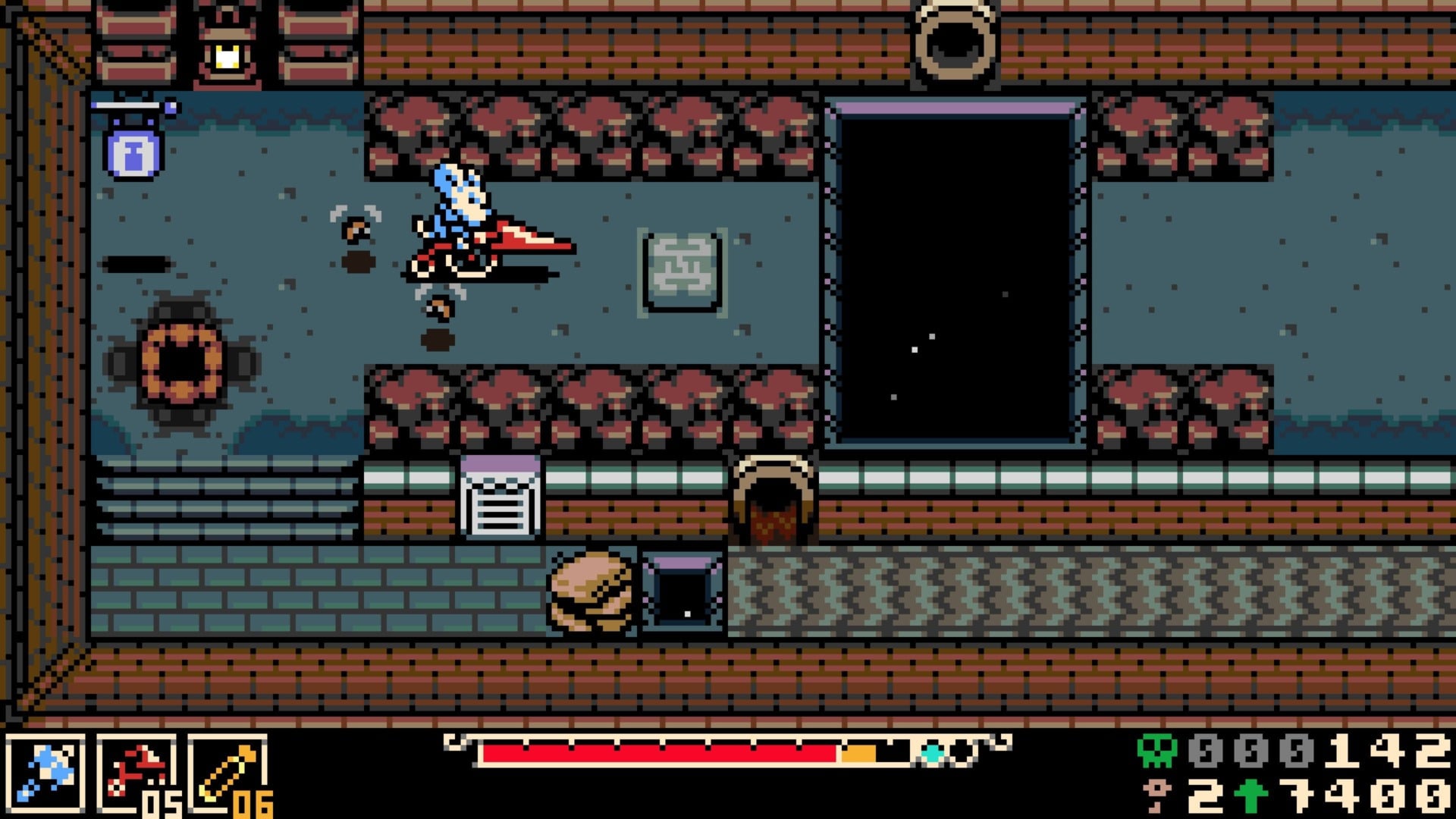
There are all sorts of stupid fun tricks you can learn to perform by experimenting, like Mary Poppinsing your way across huge gaps with an umbrella or doing sick tricks on a fragile penny-farthing. Mina the Hollower rewards players liberally for constant experimentation: crashing into walls, digging in odd-looking spots, picking stuff up and throwing it, everything. It was actually difficult for me to finish this game by embargo time because I just kept getting distracted trying to do stuff often for no real reason other than wanting to try it. I think I spent at least an hour bopping around on purple bouncy flowers in one specific cave, just puzzling out how exactly they worked and what all I could do with them.
Experimenting is fun not just because it so often results in in-game rewards of one sort or another, but because it’s fun in and of itself. It feels good to hit little bad guys with weapons: it makes a nice sound, and moves just right. It’s even more fun to burrow under them as they lunge at you, pop up behind them, and throttle ‘em while they frantically swivel around trying to figure out where you went. I spent a lot of time with Mina’s main morning star weapon whacking things at a distance, but a sleeper favorite was a big shield that (God help me) comes with a parry option as well as a guard and a thrust attack. She can equip one at a time (at first) of an arsenal of tools that you find, Castlevania-style, scattered in candelabras and bushes all over the world, and these are fun too. One’s basically an attack dog you drag around on a leash with you. One’s a portable portal that you can drop, and then warp to at will with a big explosion. There’s a dash item, a big throwing axe, a thing that makes toxic clouds, and one that’s literally just chucking rocks. All fun, all satisfying to use.
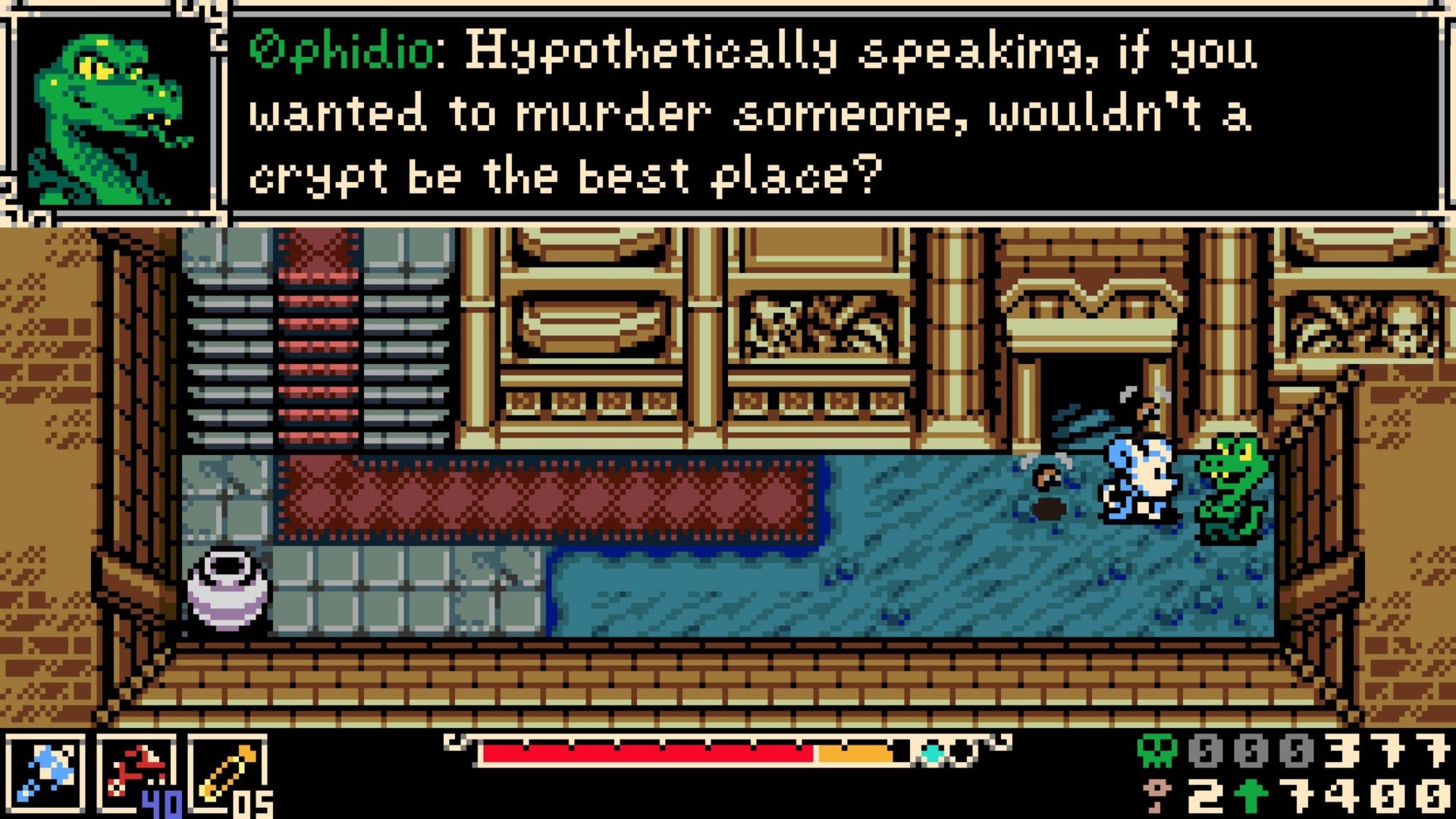
Mina the Hollower’s cast is similarly full of delightful surprises. Yacht Club Games is expert at designing a varied roster of detailed and coherent Weird Little Guys, both hostile and friendly. Despite so much of Mina the Hollower being a solitary adventure, some of its best moments revolve around other characters. Some of those moments are silly, such as those involving a wonderful, horrible clown scaring the pants off me, or the time I stole a ladder from a testy gorilla shopkeep or raced a ghost with a deep hatred of stairs. Some are genuinely nerve-wracking—the boss for one zone in particular is utterly horrifying, and the build-up to his fight was so effective that by the time I got to his arena I was so wound up and ready to kick his ass I demolished him in a single go, fueled by pure fury. I will remember that asshole and what he did to me forever.
There are more emotional moments, too, including a few driven by some light choice-making that caught me off-guard given the genre and tone otherwise. Nothing collectible in Mina the Hollower is missable, so there are no real gameplay consequences for choosing one way or another, but the outlook of the story is another matter. For instance, there’s an action you can take at the end of Queensbury Crypt that I didn’t realize was as grim as it was until it was too late to take back, and I’m not sure if another option would have made things a bit more optimistic. Even more dramatic is a major choice at the end of Mina the Hollower that contextualizes the fate of…well, just about everything. The way it played out was genuinely unexpected yet appropriate, and it justified what I had thought up to that point was a ham-handed way to signal the true antagonist.
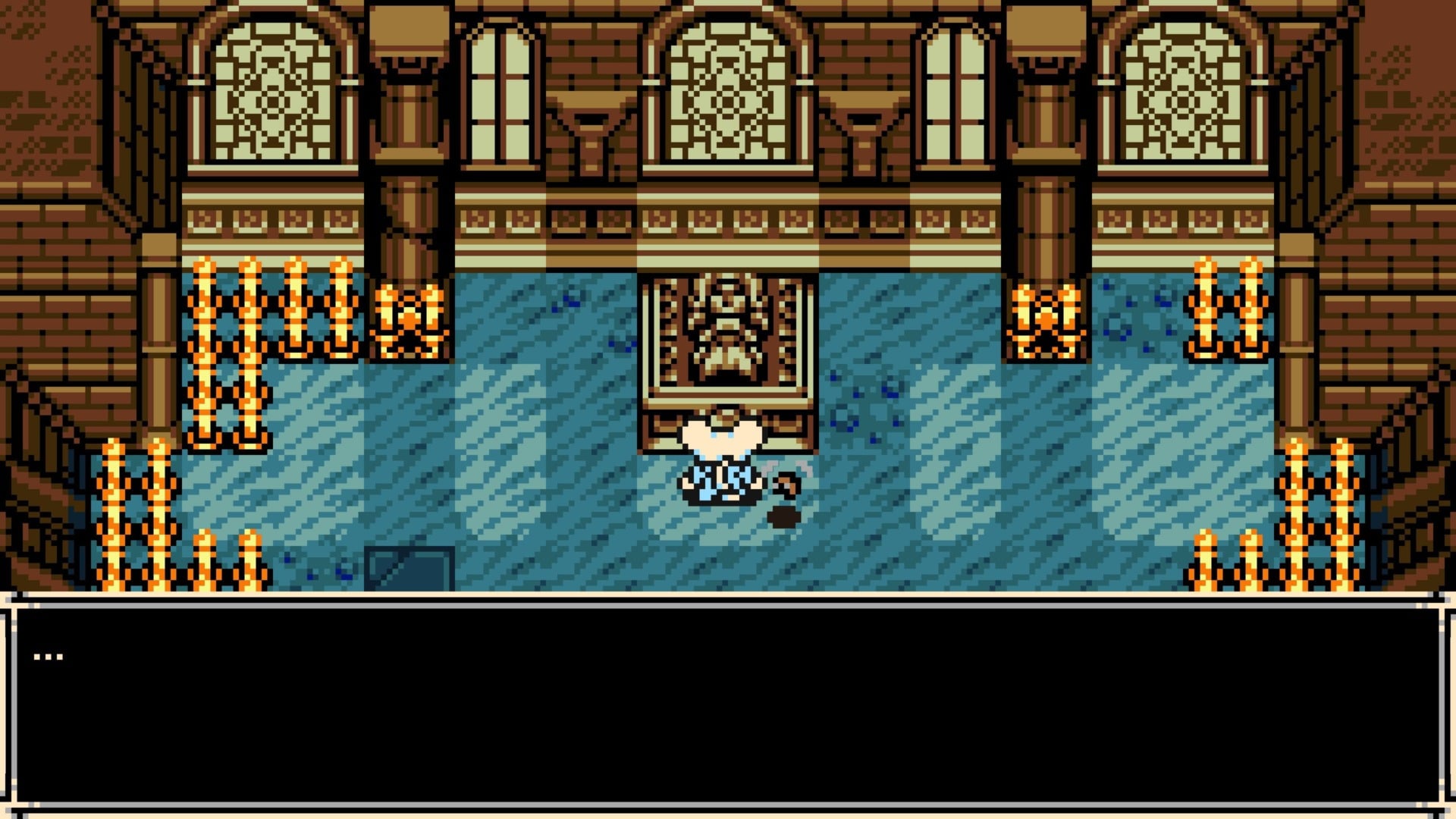
I don’t really have any asterisks to put on my love for Mina the Hollower: it’s fun, it’s full, it’s mysterious, nice to look at, and very nice to listen to, thanks to another bangin’ chiptune soundtrack by composer Jake Kaufman. I do, however, insist on slapping a big signpost on this game purely for informational purposes: Mina the Hollower is a soulslike. It’s a very friendly soulslike: you always get at least one chance to recover yourself before you lose all your currency on death, and there is a fantastic suite of game adjustment options to make it easier, harder, or even (hell yes) sillier that you can turn on and off at literally any time you want, even mid-fight. But it is a soulslike.

Mina the Hollower
-
Back-of-the-box quote:
"The bones are their money."
-
Developer
Yacht Club Games
-
Type of game:
Top-down action-adventure with some Soulslike thrown in.
-
Liked:
Gorgeous pixel art, soundtrack is a bop, open-ended structure, tons of secrets, weird little guys many of whom are fun to smack around.
-
Disliked:
Falling into pits, which I did often, and that one guy who won't let me into the music hall
-
Platforms:
PC (Played on Steam hooked up to TV in Big Picture mode, as well as Steam Deck), Xbox Series X/S, PS5, Nintendo Switch, Nintendo Switch 2
-
Release date:
May 28, 2026
-
Played:
30 hours and counting. Main story complete, SO much left to do!
The odds are high that most players will be dying frequently without some easier options turned on. I like challenge, so I didn’t touch the toggles until near the end of the review period when I was testing everything out, and the result was that I lost all my bones on several occasions. That’s Souls, bay-bee. If you, like me, love that, great! But if you don’t, also great? Yacht Club’s attitude toward this, as with everything else in Mina, is to experiment. For this reason, I want to see what folks who are interested in the idea of Souls games but who balk at the difficulty make of Mina the Hollower. I, on the other hand, am interested in bopping around the world secret-hunting with options like a 1.5x size increase on Mina and a super high jump turned on. Why not?
Because I will be continuing to play Mina the Hollower. There’s so much I haven’t seen. I’m missing a whole weapon. I still owe that asshole racing ghost a third rematch. I have a leaf funeral to attend. I never figured out what the deal was with the kid and the kite, or how to feed that one guy who wanted to eat acid for some reason. The world is full of mysteries to solve! I was once an eager child who loved to feel like I was going on a real adventure when I started up a new game. And I’ve grown up into an eager adult, perhaps a bit more picky about the adventures I select, but just as happy to be surprised by everything. I never want to grow out of that, and I don’t imagine I will as long as games like Mina the Hollower reflect that love right back at me.