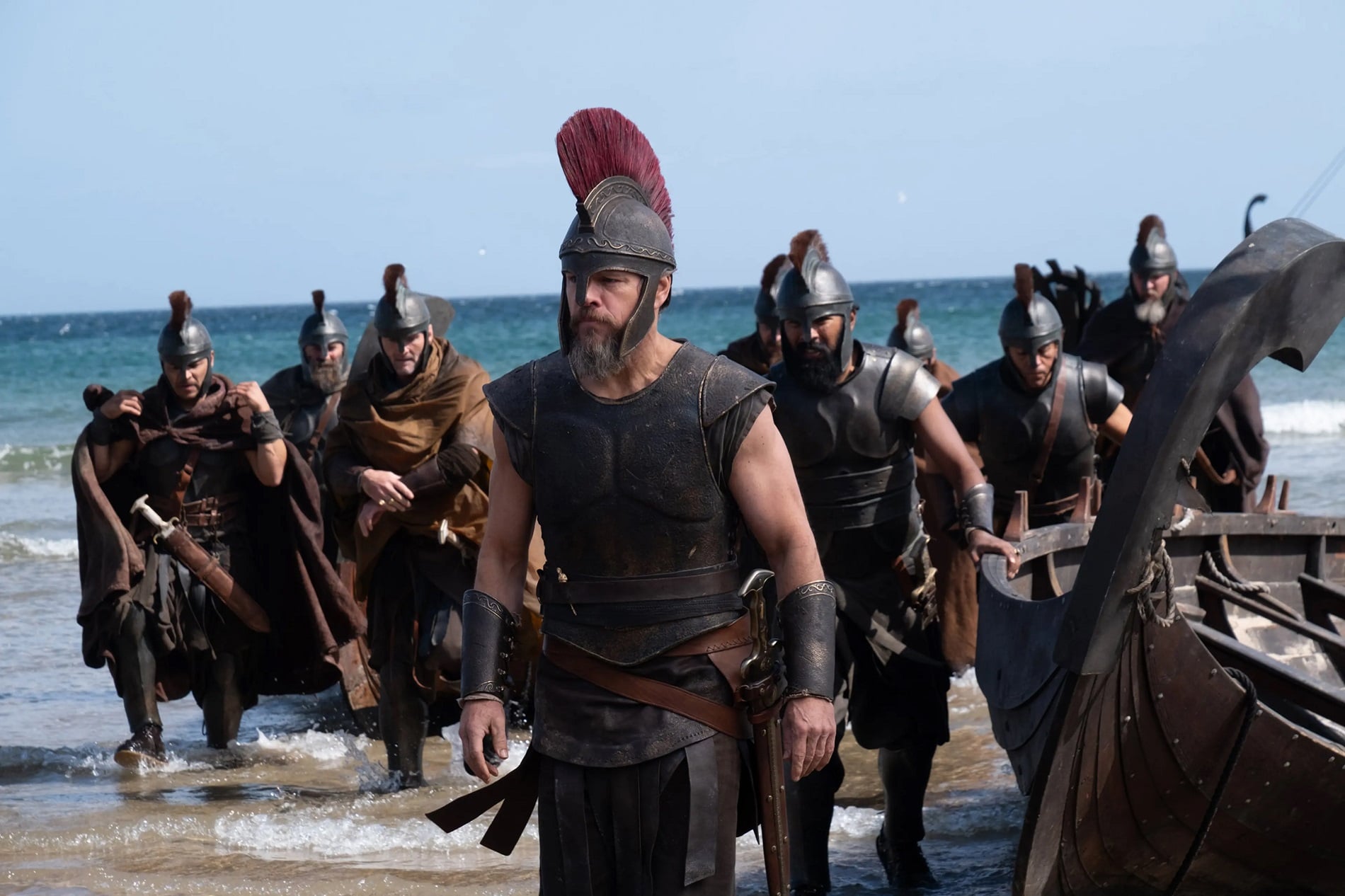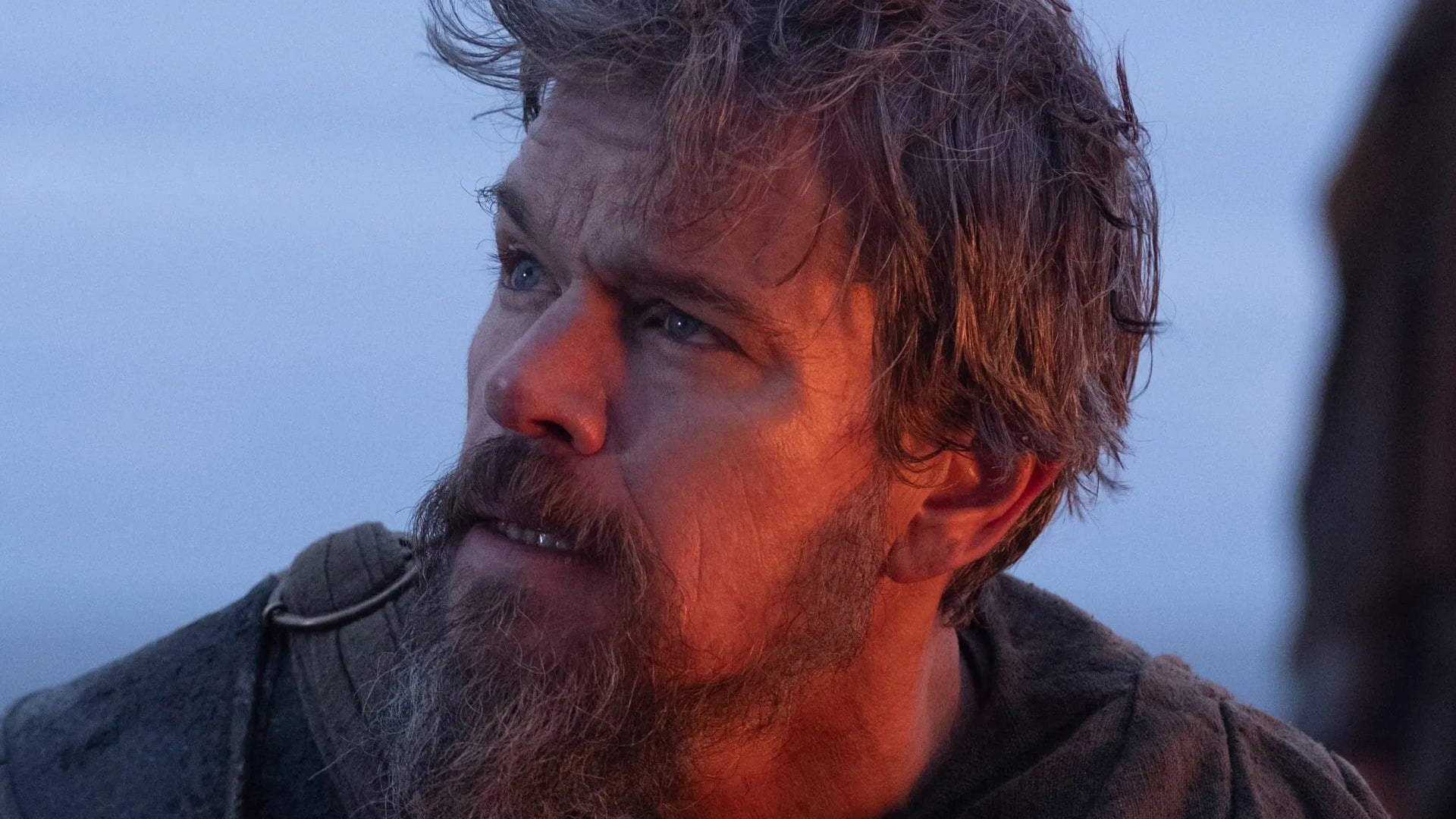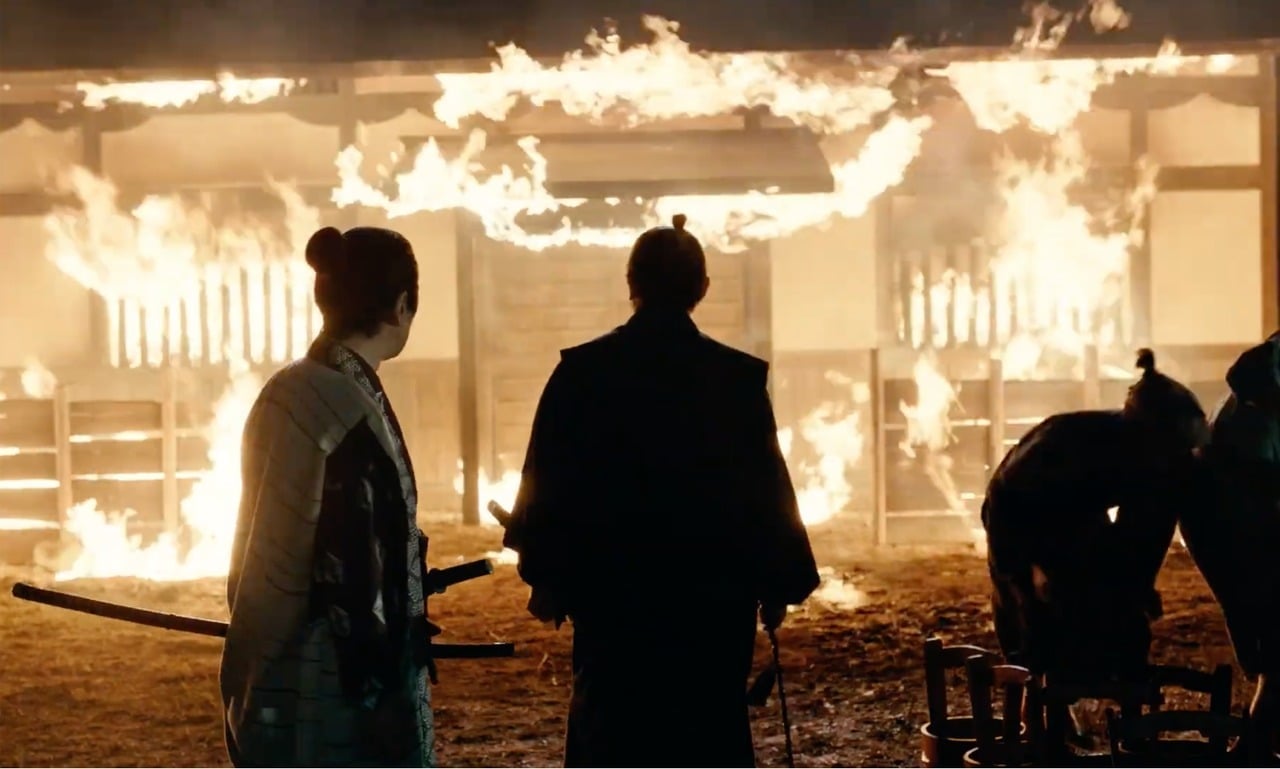
It wasn’t my intention to see Nolan’s blockbuster Odyssey side by side with an advance screening of Kiyoshi Kurosawa’s The Samurai and the Prisoner. Still, they complimented. Two historical epics that convey the fear and awe that comes from watching your era come to a violent end, and how it weighs on the crowns of those who lord over it. For Odysseus, it weighs heavy, to see tradition and honor crumble to pebbles on the ground. For Lord Murashige, who rallies his clans against Oda Nobunaga, tempting the wrath of the gods might be worth the consequence.
In The Samurai and the Prisoner, Araki Murashige (played by pop star turned actor Masahiro Motoki) is a well-respected lord due to his ability to keep Nobunaga’s armies at bay and his well-meaning philosophies. While his court has their misgivings, Murashige regularly defies the samurai way, refusing to torture or execute prisoners of war. His personal code is tested when the son of a traitor, refused an honorable end, turns up dead anyway, killed by a seemingly impossible arrow. It’s then that Murashige turns to an unlikely ally, one of Nobunaga’s advisors chained up in the basement, to solve the increasingly bizarre string of mysteries occurring in his house.
Kiyoshi Kurosawa is best known for supernatural thrillers like Cure, Pulse and Sweet Home. Often they rope-a-dope the audience into a false sense of security, achieved through sterile, even homely environments. By the time the true shape of the threat becomes clear, it’s too late for his characters, or the feelings of the viewer, to escape. I especially adore his remake of Séance on a Wet Afternoon, which begins as a near comedy before submerging to the brow in dread. Everyone trapped together in a painted corner.
Despite sharing a name with Japan’s most celebrated director, this is Kurosawa’s first samurai epic. The fact that it kicks off into a murder mystery so quickly should alert his fans that this probably isn’t going to revolve around solving zany crimes. While there’s no cannibalism to speak of, the tension between Murashige and the eloquent Kuroda has an air of Clarice and Hannibal, tete-e-tetes between two men trying to unravel the other. Sure enough, the true mystery isn’t magical arrows or reanimated body parts, but Murashige’s deal. Is he truly sparing lives out of principals, politics, guilt, scheming, or something between those routes.
Like Odysseus before him, Murashige is witness to the end of a powerful empire, finding himself a nexus of history. How it passes through him makes an incredibly rich and fascinating portrait. How high Motoki’s shoulders are to guard himself communicates more than any smoking gun.
How Nolan chose to communicate guilt was overly coy, mistaking a twist for nuance, as provocative as the flashes of bombastic imagery can be. Evoking modern war campaigns and even the hooliganism of January 6, Nolan exercises Homeric principles to speak of our own unraveling empire, how it delivers indignity and suffering. Humanity, somehow, has survived its ending eras in spite of it all. New things grow in the rubble. Maybe lost on those in the Bronze Age, but weighing on Murashige as he considers what kind of man he’ll be, beyond lord or leader, when new leaves begin to bloom.