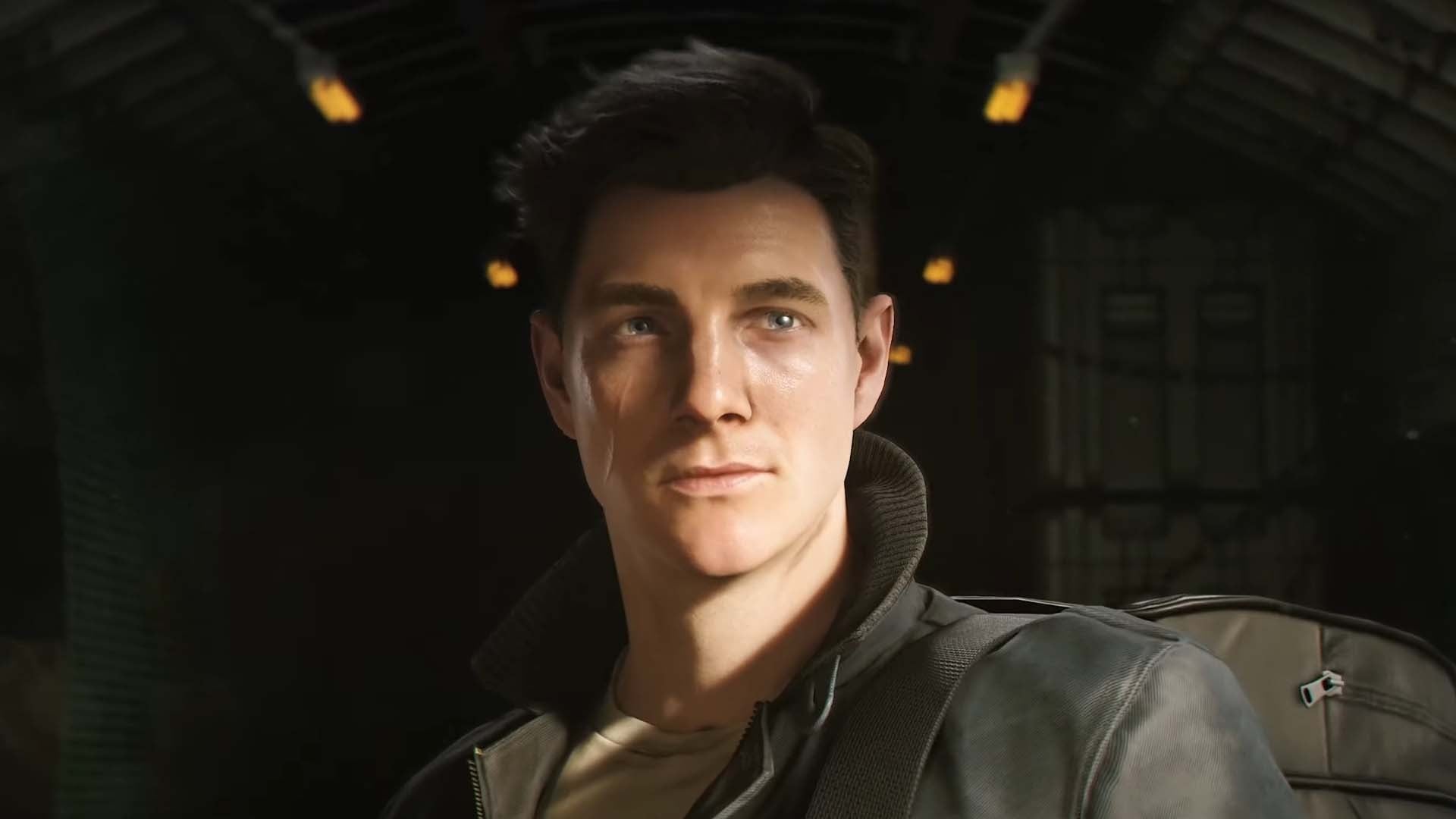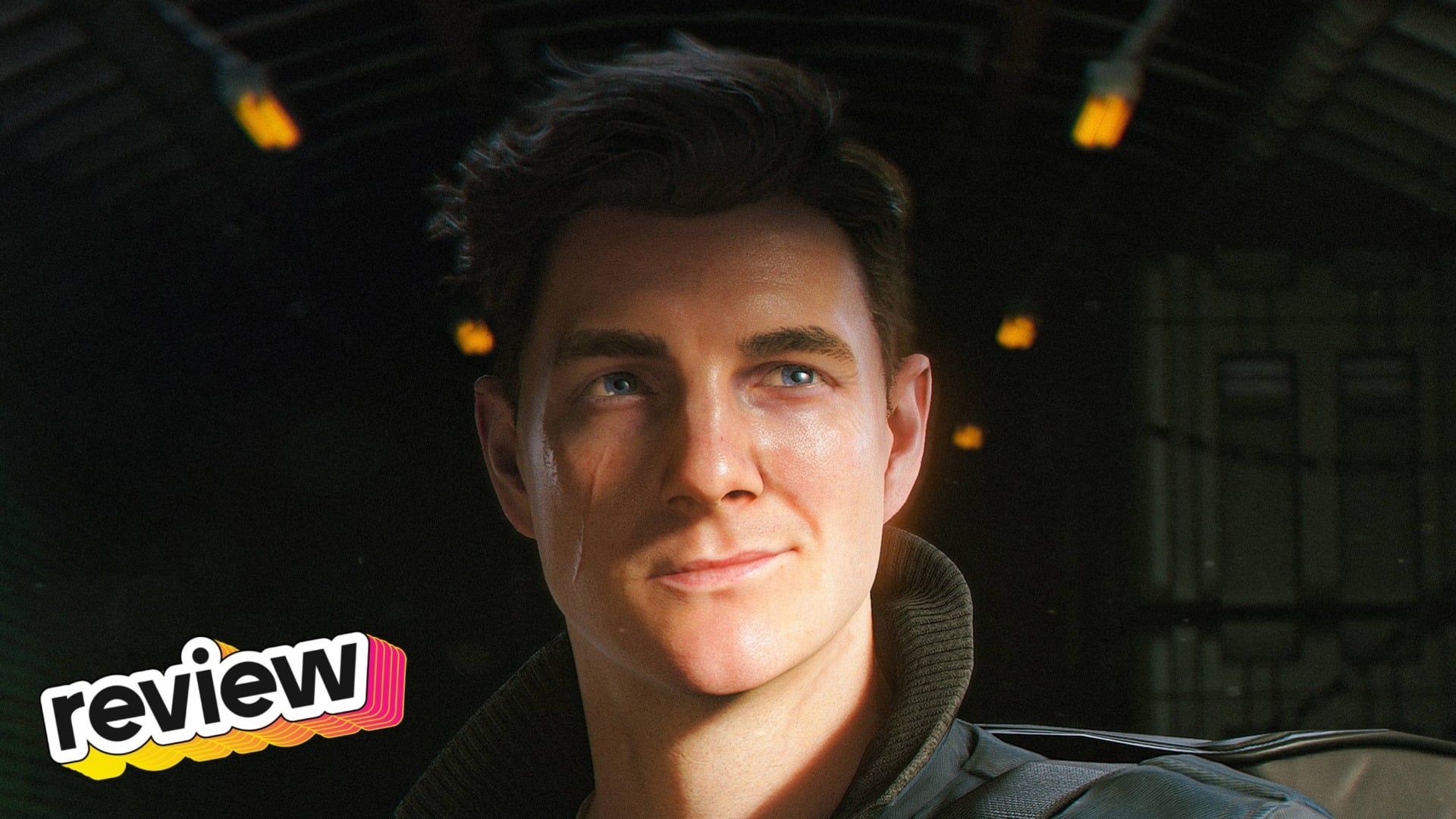
Midway through 007 First Light’s best level, young agent James Bond has to tie his very first bow tie. After killing, so far, approximately seven thousand men with headshots, and fresh off seducing the hottest, richest women in the world with autopilot charm, this is the moment in which the game slows down to make Bond feel briefly, genuinely human. Q, who here is a Distinguished Gentlemen Dandy in First Light‘s inspired take on the character, must calmly talk Bond, and the player, through a 20+ step bow tie QTE that never seems to end.
It’s an incredible bit that conjures up a vision of Bond-as-game that lies somewhere between Shenmue and Heavy Rain, translating moments of cinema directly into play through precisely orchestrated abstractions; a Bond who doesn’t just shoot under your control but sips his martini and flicks his lighter. Such a game shines through in a few individual flourishes, but First Light is not that game.
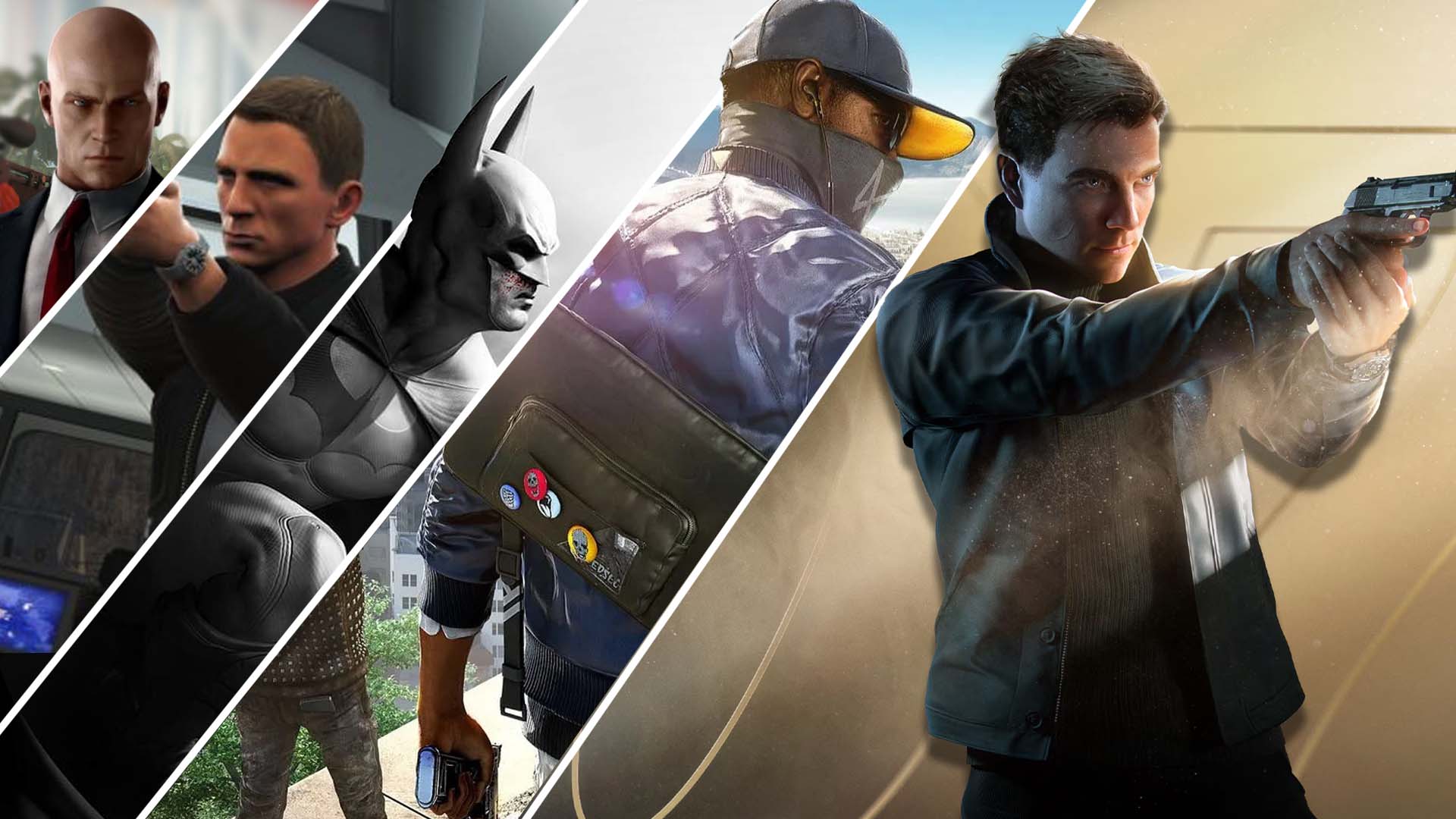
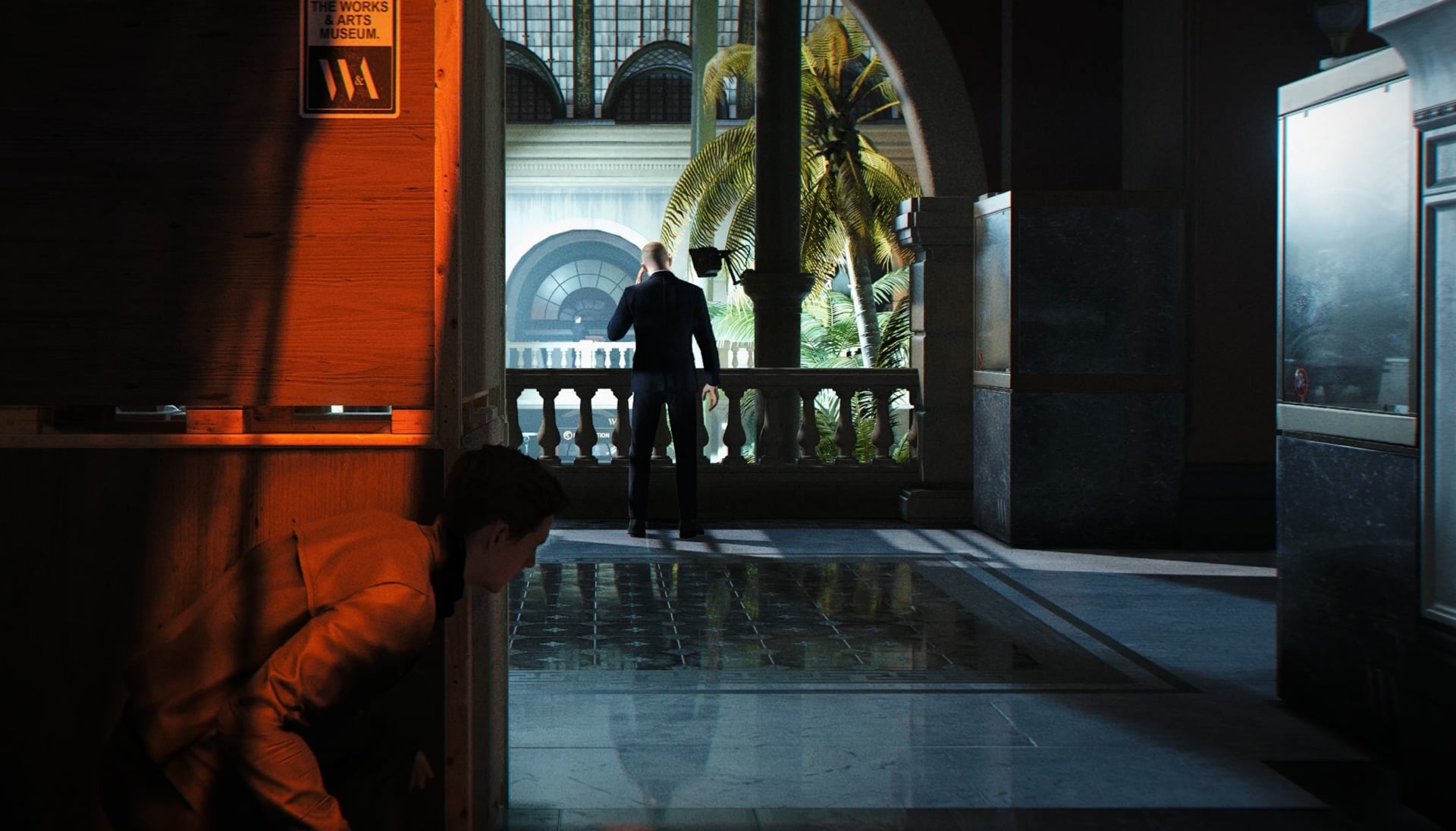
First Light is not shy about its inspirations. The opening level lifts heavily from Metal Gear Solid V: Ground Zeroes, complete with a helicopter explosion and sneaking through a muddy base with lens flares clashing into raindrops as you attempt to rescue hostages. Bond’s first real mission, which takes place in a high-class European hotel, is an even more direct parallel to the iconic opening Paris level from IO’s recent Hitman trilogy. This stage might briefly make you think that First Light is going to seamlessly combine the sightlines, gadgets, and dynamic detection systems of Metal Gear with the multi-layer social puzzle boxes of Hitman, but although it contains seeds of this idea, First Light is not that game either.
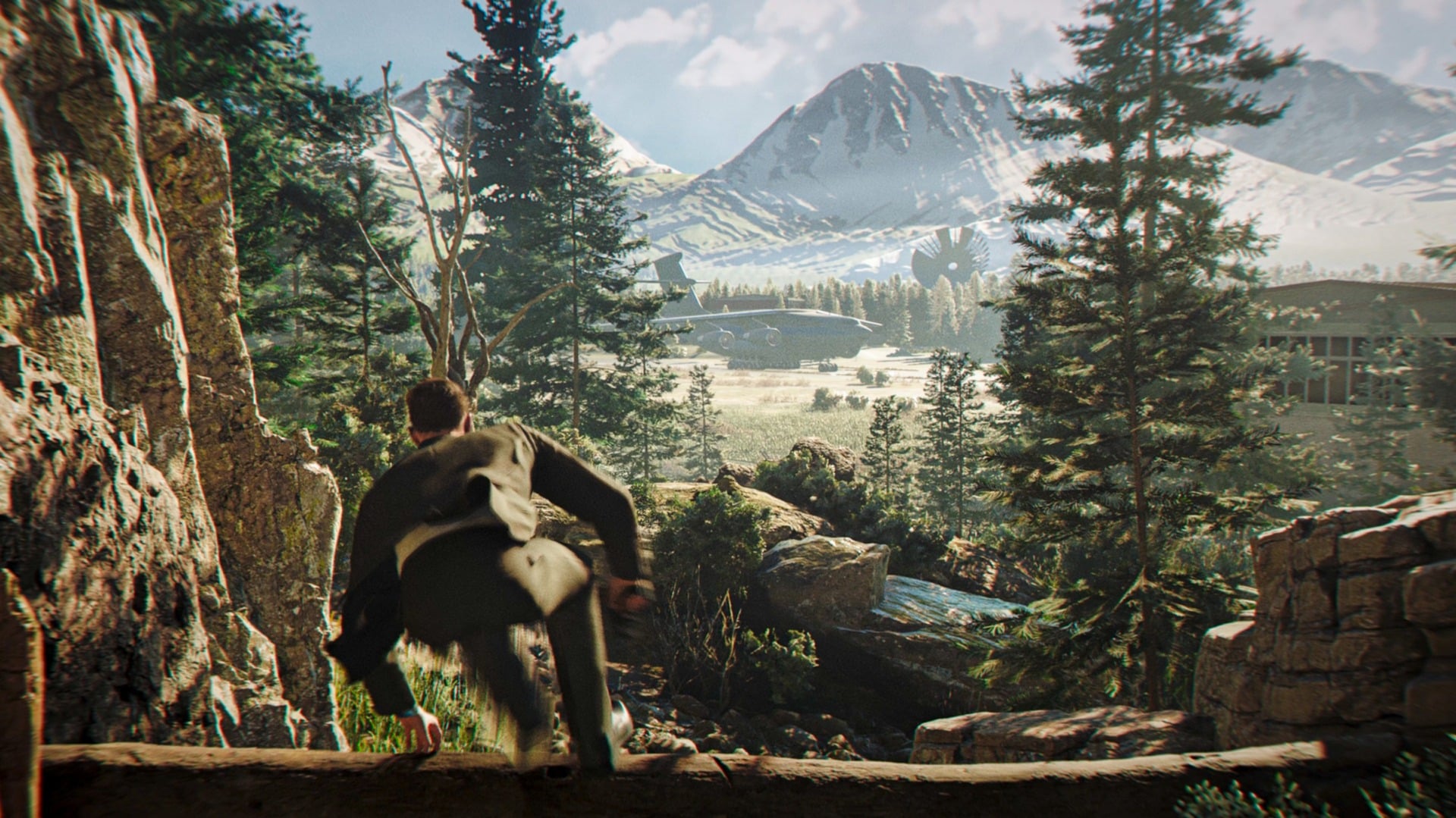
So what kind of game is First Light, then? Its primary model is the modern Prestige Cinematic Game that is PlayStation’s bread and butter. Its premise is simple: a young James Bond is recruited by MI6 into a rebooted 00 program thrust into crisis by the re-emergence of the former 009, a mole and traitor whose nefarious past ended the program a decade before. The story of Bond’s training, his first MI6 mission, and the battle over the 00s’ existence is told through long cutscenes interspersed with simplistic yet varied modes of play to serve as texture between elaborate setpieces with bespoke mechanical identities. For about 45 exhilarating seconds, you engage in a gunfight inside a plane you can dynamically bank in real time, sending enemies and storage crates careening everywhere. Because this is James Bond, this never once happens again, and there’s always a brand new action scene waiting around the corner.
Yet while games like Uncharted are certainly the template, First Light is in many ways more of a flat reflection of that series rather than a one-to-one copy. Uncharted is seamless and fluid where First Light has distinct modes, the gears audibly creaking as the game shifts from Adventure Game Mode to Beat ‘Em Up Mode to Third-Person Shooter Mode. Uncharted is mechanically straightforward to a fault. First Light refuses to give up the dream and still tries to cram a mostly robust stealth-combat sandbox into this more disposable narrative framework.
To put it another way: Uncharted is more than the sum of its parts while First Light is less than the sum of its parts, but those individual parts are almost all much more interesting and alive than those usually found in the genre First Light desperately wants to imitate.
Unfortunately, the central pillar that binds these creative moments of game design together, the main story, is not very good. If First Light has a central flaw, it is trying to be all things to all people and spreading itself far too thin. Narratively, this manifests as a deeply inconsistent tone. Its dialogue and drama situates itself squarely in the post-Daniel Craig era of the franchise, with bitter spies working for two-faced politicians while facing down the eternal pointlessness of their patriotic sacrifice.
This kind of tone was already strained in the Craig films, which could often make you feel as if you’d ordered John Le Carré from Burger King, but it’s pushed beyond the breaking point when every action scene can’t help but escalate and plot points seamlessly migrate to the Roger Moore dimension where everything’s made up and the details don’t really matter. James Bond has the biggest public gunfight in the history of London, three missions in a row, all over the course of a single night. Characters escape a skyscraper in an explosive helicopter chase and immediately proceed to have a somber conversation about the emptiness of spycraft in a Central London park, next to their casually landed helicopter.
-
Back-of-the-box quote:
“Good work, Bond. Now, head for an exit.”
-
Type Of Game:
Narrative adventure with systemic stealth elements.
-
Developer:
IO Interactive
-
Release Date:
May 27, 2026
-
Liked:
Deeply satisfying segments of suave espionage adventure gaming with open-ended objectives in rich and beautiful environments.
-
Disliked:
Unsatisfying main plot, Bond’s toolkit is rolled out far too slowly, the pace of a Bond Film drags over a 15-hour runtime.
-
Platforms:
PS5 (played), Xbox Series X/S, PC
-
Played:
20 Hours. Fully completed main story on intended difficulty. Spent a couple extra hours with the postgame Tacsim missions, but there’s still much more there to dive into.
These tonal issues can be, and occasionally are, forgiven when the character writing is strong, but unfortunately this only happens about half of the time. There are some genuinely excellent moments, almost all having to do with First Light’s standout narrative dynamic: the buddy cop duo of a cocky young Bond and his surly instructor who hates him, John Greenway. Based on that description alone, you can probably guess every single story beat that will occur between them throughout the game, and I’m happy to say First Light follows through on these genre expectations without a hint of embarrassment or subversion. These are the hits, and First Light is happy to play them. This is James Bond, after all.
The pitfalls of the rest of the main story are disappointing, but also so predictable for Ian Fleming’s multi-generational icon, that it almost makes it hard to hold them against First Light specifically. The villains are underwritten, perfunctory and utterly boring. Like in a lot of James Bond films. The main Bond Girl is barely a character, serving as equal parts a mystery for Bond to solve and a victim of his irresistible charm. Dialogue is often inauthentic and forced, as M turns directly to the camera and says, “Bond, here is your mission and also here is your simplistic character arc this time.” (It’s that he keeps disobeying orders, by the way. Like in a lot of James Bond films.)
First Light‘s success in adapting the Bond Film, warts andvall, to the Modern Cinematic Game form, is undeniable. Yet that success also reveals flaws that are even more fundamental to the entire undertaking. Firstly, Bond films are not usually fifteen hours long. The form is stretched beyond its breaking point (I won’t spoil exactly how many times the villains have Bond in captivity with no way of escaping and no reason not to kill him, but I will say it is more than five) as mysteries that would barely pass muster for twenty minutes of screen time are stretched out to ten hours of gameplay. Second, the closer that AAA games get to replicating the fidelity of live-action cinema, the more starkly the differences stand out between what you can get away with in a game and what’s necessary in a movie.
For example: after the title sequence, Bond enters the lobby of the MI6 building and there isn’t a single establishing shot of London. We don’t see Bond in a cab, or on the bus, and we don’t see Vauxhall Cross. First Light rightly saves its environment budget for the places Bond actually visits and interacts with, and it would be a waste to build helicopter shots of London in an engine built for walking through human-sized spaces. And yet there is an intangible quality to the sense of place such a sequence would have provided. Its absence gestures toward the types of things First Light simply isn’t built to replicate; the closer it gets, the more obvious the differences in the mediums become.
Ultimately, First Light expends a lot of effort to chase a goal that seems impossibly out of reach and perhaps even undesirable in the first place. To successfully adapt the films this closely, so many of IO’s greatest strengths as a maker of infinitely replayable, systemic sandboxes have been downplayed. Yet these strengths still bubble to the surface within its individual gameplay modes. Paradoxically, this propensity both hold First Light back from going down as easy as Naughty Dog’s popcorn-friendly gameplay, but also gives it far more to offer than any of its cinematic game competitors.
It is hard to define the exact boundaries of First Light’s gameplay modes, as one-off setpieces are constantly being introduced and discarded, but broadly they are as follows: First, an adventure game in which Bond is free to explore an open environment, find clues, and solve social puzzles to progress. Second, a stealth-based exploration game in which Bond must avoid detection from guards to make it through an environment. Third, a beat ‘em up in which Bond brawls hand-to-hand with his foes. And fourth, a third-person shooter in which Bond uses whatever guns he can find to fight back against open enemy assaults.
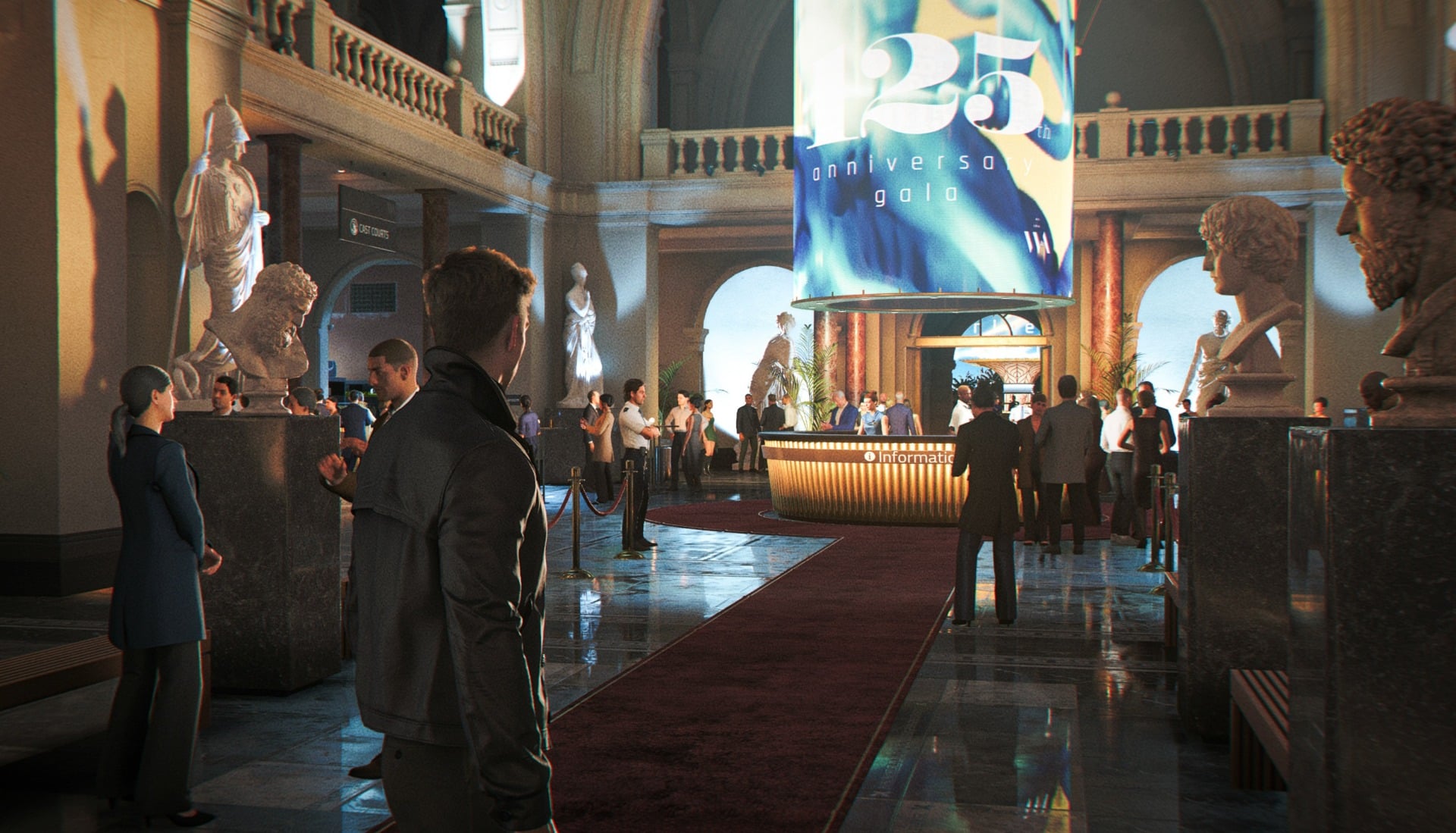
The first of these is by far the best, and, unsurprisingly, the one most easily described as Hitman-Lite. Whereas the writing in the main story is often generic and obvious, much in the style of the films, the levels are full of IO’s trademark vibrant cast of NPCs, all with their own perspectives and concerns, tiny subplots and moments of comedy as you overhear them and maybe steal their keycards. You can pretend to be a yoga instructor to get inside a crime lord’s private villa. It’s beautiful. Tragically, First Light seems terrified that this self-directed element of the game might simply be too much for some people to handle, and is as such constantly putting objective markers on screen to steer you along (annoyingly, they have to be manually turned off each time), even though nothing here is close to the open-ended dynamic of your average Hitman mission story.

The other three modes blend into each other much more, combining for the closest thing First Light has to “core gameplay,” and forming the spine of the TacSim VR Missions that provide postgame longevity after the credits have rolled. Bond’s combat encounters in this game are extremely improvisational. Guns never have more than two clips of ammo. Gadgets never get more than two or three uses before running out of resources. First Light is at its best when Bond is constantly on the move and using whatever he has at his disposal in that five seconds of gameplay to propel him to the next five seconds. When everything clicks together it is incredibly satisfying. However, everything does not always click together. Bond’s abilities are rolled out agonizingly slowly across the main story, making much of it almost feel in some ways like a tutorial for the post-game TacSim missions where this form of gameplay really shines.
The worst of the game’s building blocks is hand-to-hand combat. For most of my playthrough I was confused how something with such boring Simon Says–style inputs could have been such a core feature of a game from such an obviously talented team. By the end of the game, and with the full suite of abilities at my disposal, the melee fighting felt more natural, slotting seamlessly into the rest of Bond’s toolkit. At this point the simplicity becomes a virtue, letting me improvise an attack against a specific weak enemy in order to steal his gun and get back in the fight against enemies shooting from afar. The hand-to-hand combat works nicely in this context, but it requires suffering through hours of terrible sub-Batman: Arkham-style combat sequences to get there.
First Light’s biggest problem is its own scale and form. It’s a game from an incredible team playing against type, leaning into a format which has a tendency to obscure the team’s strengths and overplay its weaknesses. Sometimes it wants to sand down its rough edges and be everything to everyone, but all of its best moments are where it stalwartly refuses to do so where other studios would fold. It’s too expensive for its own good, it’s smarter than it has any right to be and so much dumber than you wish it actually was. It’s not going to change your life, but it’s still a fun time at the movies, or rather, in front of your PS5 for a weekend or two. It is, for good and for bad, a James Bond film that you can play. Mission accomplished.