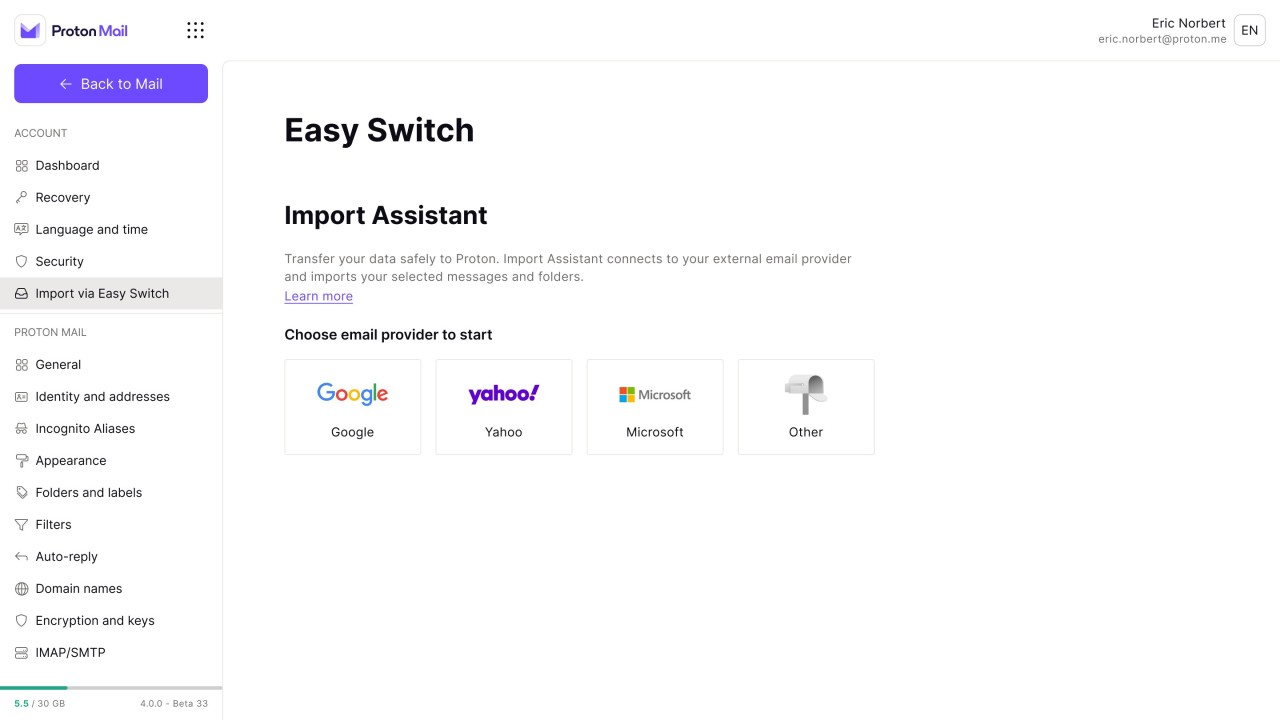
ProtonMail (sometimes written as Proton Mail) is an email solution that features privacy as its main focus instead of advertising and tracking. The concept of it is not complicated: the email is a means of communication, not profiling the user and reading their inbox to sell targeted advertisements.
It was created in Switzerland, where privacy laws are very strict, to help the platform achieve its objectives, and it employs end-to-end encryption such that the message is only visible to the sender and the receiver. Even ProtonMail cannot read what is in an inbox due to zero-access encryption. Messages are encrypted in the user's device.
Background scanning, behavior tracking, and commercial profiling are all operated by the majority of regular email providers. ProtonMail completely gets out of the system. People register an address upon signing up with a name of either proton.me or protonmail.com and proceed to use the service like any other mailbox, with the added advantage of encrypted mail security.
It is used by common people, journalists, researchers, and privacy-conscious professionals in different parts of the world. The interface operates in a contemporary and structured manner, but is familiar to an extent that switching to a mainstream email service does not present a heavy burden.
What Are the Key Features of ProtonMail?
ProtonMail is notable for its encryption. The encryption of messages is not only done over the wire but also on the client side, and therefore, there is no time when messages are left unprotected on server logs. Attachments are also afforded the same protection. This service also allows sharing password-protected emails with people beyond ProtonMail, and hence, the privacy is not limited to the case of internal communication. Multiple accounts can be managed by a user, and they can switch without signing out.
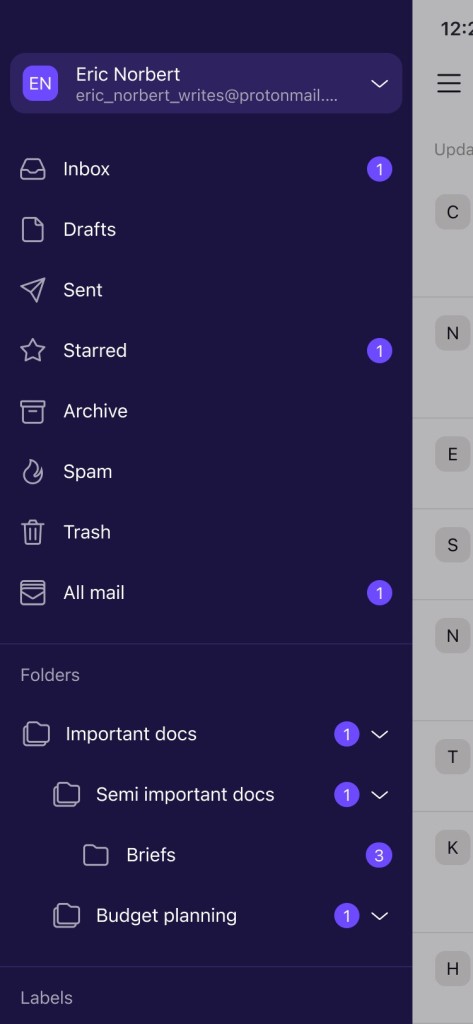
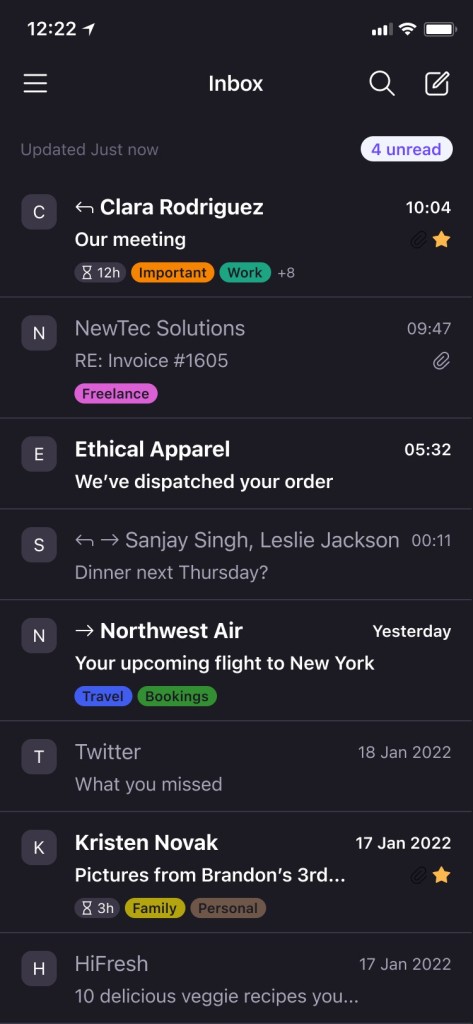
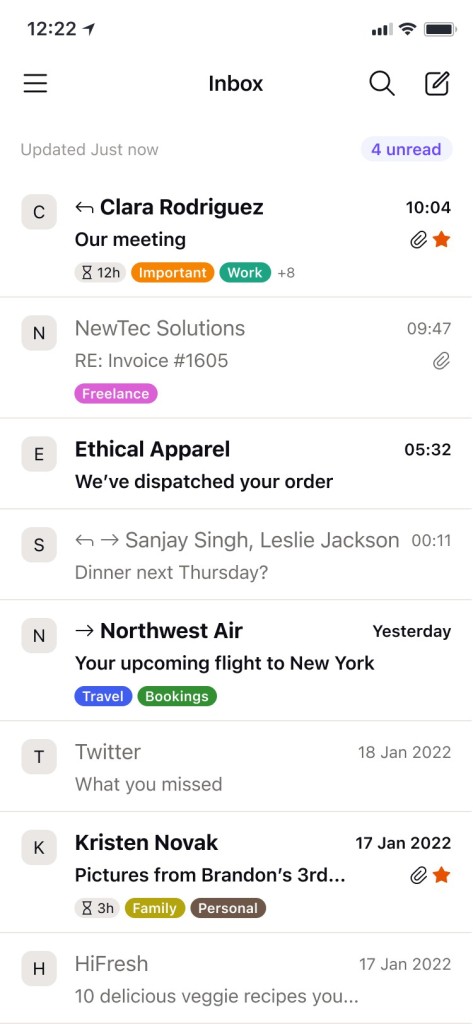
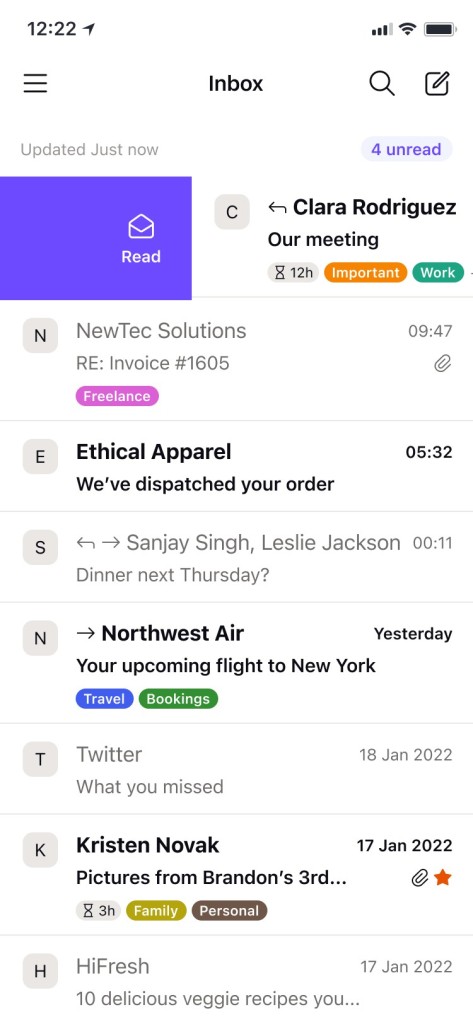
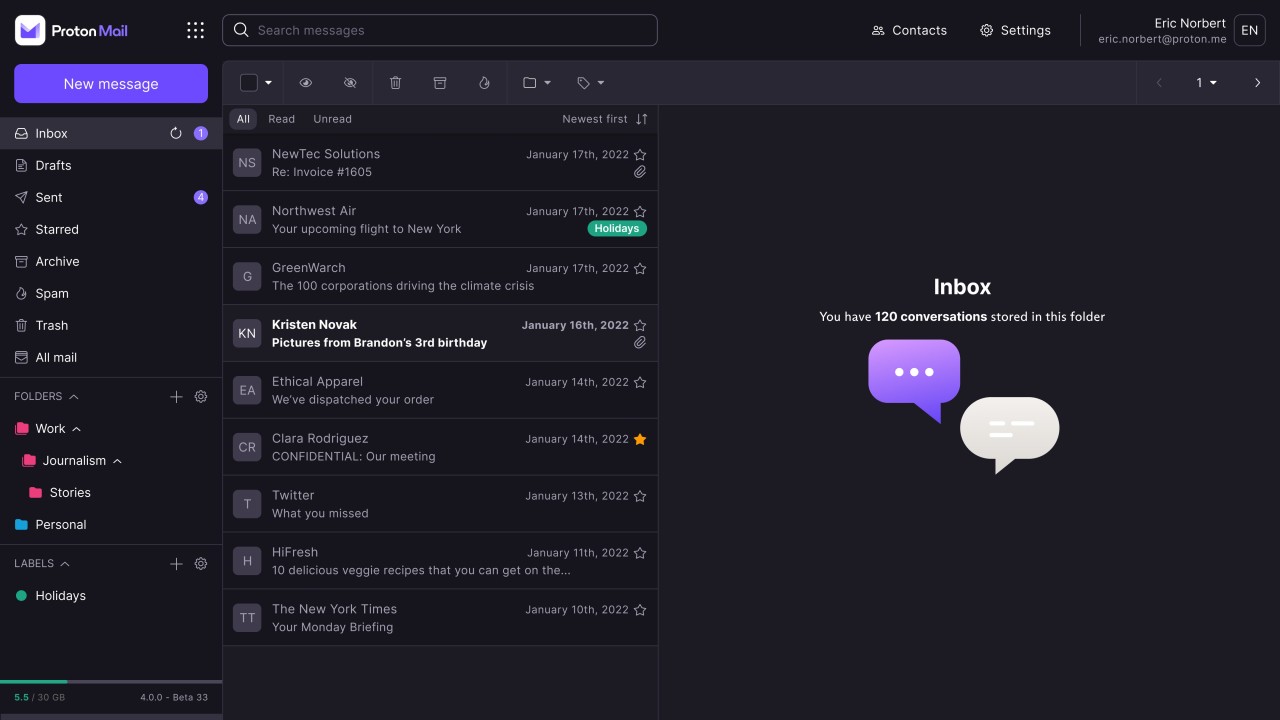
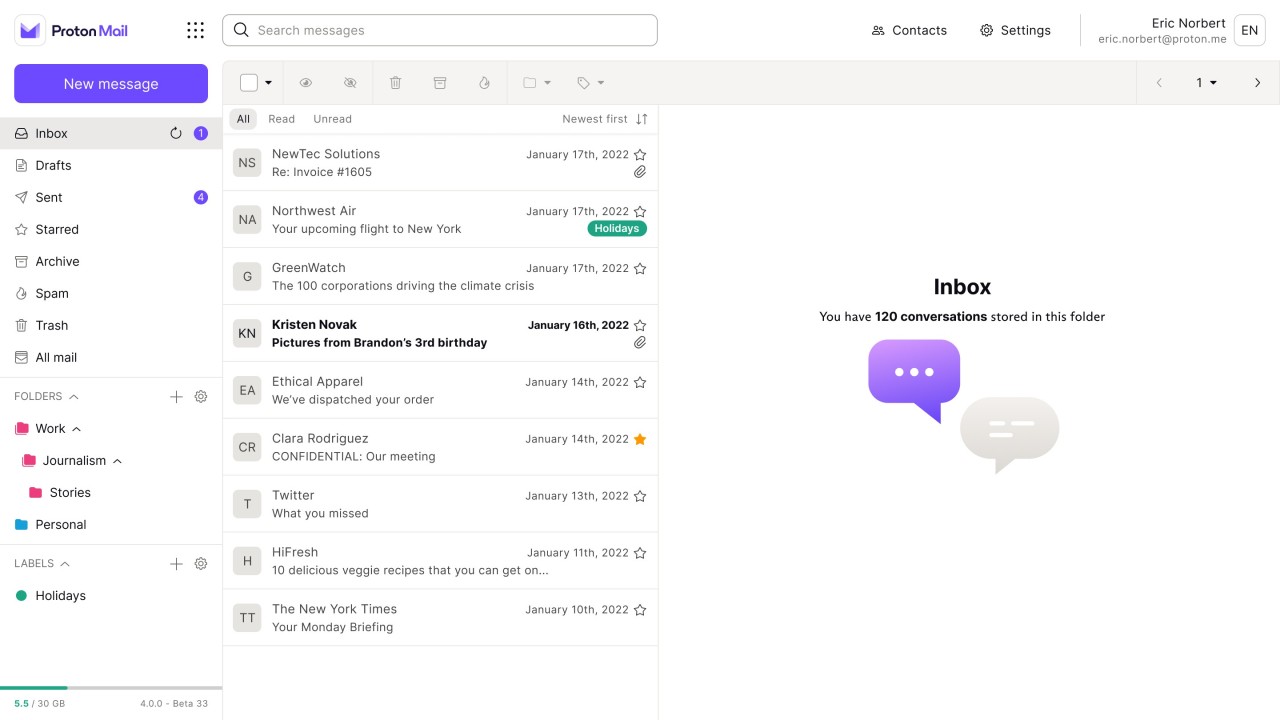
In practice, ProtonMail appears as any email client: it has folders, labels, and swipe gestures that facilitate arranging messages more quickly. The interface is well-organized, and there are dark modes and notifications informing about new mail. It prevents spam, phishing, and tracking pixels that most mainstream providers do not specifically block. The cryptographic stack is open-source, publicly reviewed, and built on standards like AES, RSA, and OpenPGP, with no closed blind spots.
The experience is not as commercial but more controlled. The service provides privacy defaults instead of intelligent ad filtering. No behavioral prediction, no in-box advertisements, and nothing is scraped for commercial purposes. It can be used in personal and professional life as it offers such features as collaborative forwarding, a simple interface, and the possibility to read or send encrypted mail using a mobile device. It is not created in such a way that it is flashy; it is created to ensure the security of communication with minimum friction.
Is ProtonMail Free to Use?
Proton Mail has a free version, which includes basic emailing and storage with the inclusion of encryption. The free service is adequate for daily communication. Paid plans will open up more space, more addresses, and longer productivity features. The free account is frequently sufficient to test the service and to know how it works. The free version is not a trial version, and users can upgrade to heavier storage or business-level features.
Which Platforms Support ProtonMail?
ProtonMail offers a browser-based app on its web portal as well as specific mobile applications. It can be accessed using shared or temporary devices, and any person with an internet connection can log in without the need to install software. The Android and iOS versions of the mobile application have been supported with encrypted messages, push alerts, folder management, and message writing. Users who are not continuously connected online can make drafts and manage messages saved, and synchronize when they are connected.
ProtonMail also has specific desktop software, such as Outlook or Apple Mail, for Windows, Linux, and macOS. The layout remains the same: a navigation column, message list, and reading pane. It is largely web-first integration, which maintains uniformity across hardware. Users who want to use mobile only can install the app with the help of either Google Play or the App Store and toggle between accounts with a single touch.
The fact that ProtonMail encrypts data at the device level means that data is kept safe across platforms. Individuals can switch from a phone to a laptop to a tablet without compromising privacy levels. Web-based access would become manageable in the case of a person who travels frequently or works remotely without a workstation. All the activities take place within the browser window; there is no need to download unless using the mobile version.
What Are the Best Alternatives to ProtonMail?
Gmail happens to be one of the most popular email systems in the world. Privacy is not associated with it because it is more convenient and integrated. Gmail is integrated with Google services, including Drive, Calendar, Meet, and Docs, which is handy for users who use cloud collaboration. Its drawback lies in its business model: scanning the emails and profiling the behaviors are included in the personalization of the ads by the system. Gmail is not designed to be as anonymous and encrypted as ProtonMail is, but it is robust when it comes to productivity of workflow and accessibility. Gmail is a good mainstream substitute for those who value automation, search power, and productivity over their privacy. Many new users download Gmail mainly because it connects smoothly with every Google service they already use.
Spark Mail designs email productively. It organizes messages smartly, permits snoozing, scheduling, delegation, and inbox organization by team. Unlike ProtonMail, Spark is not about encryption; the company aims at reducing clutter and making life easier to manage the mail. It helps in supporting smart inbox, multiple accounts, and device sync to users who deal with high volumes of correspondence every day. Spark is suited to individuals who prefer an automated and instructed email experience. Its capabilities minimize the feeling of inbox anxiety, but do not safeguard against surveillance. It is an excellent alternative across situations when the workflow is of greater importance than privacy. People often download Spark Mail for the convenience of automation tools that simplify daily inbox routines.
Thunderbird is an email client based on open source instead of a cloud mailbox. Users carry with them their server or service login. It is compatible with IMAP, POP, add-ons, a customizable themes, and encryption using built-in and expandable tools. Thunderbird is attractive to those who prefer the freedom of choice over the fixed design. Configuration is possible and provides security and privacy, but could only be done by users. This makes Thunderbird more technical compared to ProtonMail, but also more flexible. Your workflow (filters, extensions, encryption keys, etc.) is created by you and can be expanded. It is another philosophy: personalizable instead of pre-guarded. Many choose to download Thunderbird when they want control, plugins, and custom security without relying on proprietary platforms.