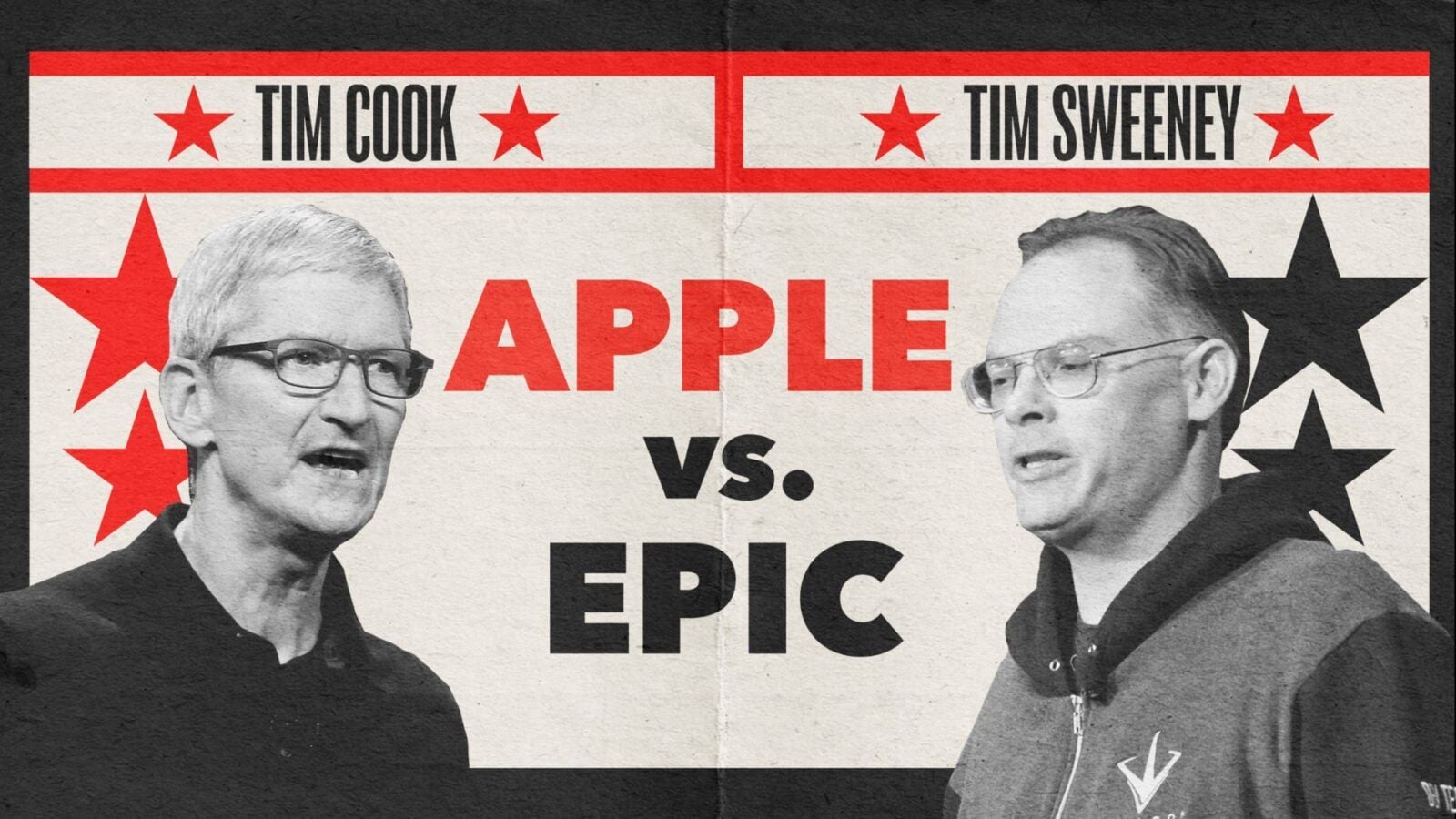
It seems the U.S. Supreme Court does have a limit after all. It might be happy to kowtow to Trump’s mercurial whims over women’s bodily rights and tearing up the Voting Rights Act in aid of racism, but when it comes to not being able to buy Fortnite V-Bucks on an iPhone, those nine bastions of the law took a brave stand. Reuters reports that the Supreme Court has refused Apple’s appeal over a 9th U.S. Circuit Court of Appeals ruling that the company was in contempt over a previous District Court judgment (bear with me) that it had to more easily allow third-party stores to be easily accessible via iOS products.
It’s very obviously the correct decision, and it’s farcical that this case was even allowed to reach the Supreme Court given that it has nothing at all to do with constitutional matters. Apple very clearly lost the part of Epic’s 2021 legal battle with the company that had to do with Epic’s desire to be able to avoid iOS store prices and 30-percent fees (while winning in many other aspects), and then this was underlined by the 9th Circuit decision that by not fully adhering to that ruling, Apple was in contempt. Apple’s hope was that by getting it in front of the woefully corrupt Supreme Court it would be able to add yet another lengthy delay before returning to the District Court to face its comeuppance.
Last July’s finding by California’s District Court was unequivocal in its furious response to Apple’s failure to adhere to the court’s previous 2023 rulings over allowing third-party stores to sell in-game items on iOS devices, calling Apple’s actions “insubordination” and “a gross miscalculation.” Judge Yvonne Gonzales Rogers added, “Apple willfully chose not to comply with this Court’s Injunction. It did so with the express intent to create new anticompetitive barriers which would, by design and in effect, maintain a valued revenue stream; a revenue stream previously found to be anticompetitive.” What Apple did instead was bring in a new 27-percent charge to evade the 30-percent charge, but make it near-impossible to use. The same filing stated that Apple’s VP of finance, Alex Roman, “outright lied under oath.” Crikey. It was demanded that Apple immediately start allowing third-party purchases. Guess what…
Not very appealing
Apple responded with yet another appeal, which the 9th Circuit responded to with similar disdain, observing that “Apple claimed to comply with the injunction, but it instead prohibited App Store developers from using buttons, links, and other calls to action without paying a prohibitive commission to Apple, and it restricted the design of the developers’ link to make it difficult for customers to use them.” That higher court concurred that Apple was in contempt, saying, “Apple’s civic contempt was shown by clear and convincing evidence.” And that’s when Apple ran to the biggest boys of all, the Supreme Court.
But the Supreme Court is having none of it. After Apple and Epic made their applications to the court, Justice Kagan denied the appeal, and with no higher court to go to, that means it’ll return to the Northern California District Court, and after Apple’s failed attempts to get a new judge, most likely the wrathful ire of Judge Yvonne Gonzales Rogers once more. That should be fun at least.
The eventual result of this should be that it will soon be possible for games publishers to reroute potential customers to their own stores to buy in-game items and currencies without having to hand over almost a third of every payment to Apple. In theory, this should allow customers to be charged less for in-game content, given the game publisher will be receiving a far greater proportion of the payment, but yeah, I won’t hold my breath.
Epic boss Tim Sweeney is pleased, as you might expect, posting to X to call the Supreme Court decision “great news,” and saying, “Now we head back to the District Court to determine what Apple can charge for only the necessary costs of implementing external purchase links.”
Great news – the Supreme Court denied Apple's delay tactics. Now we head back to the District Court to determine what Apple can charge for only the necessary costs of implementing external purchase links. https://t.co/VbSc52NpA2
— Epic Games Newsroom (@EpicNewsroom) May 6, 2026