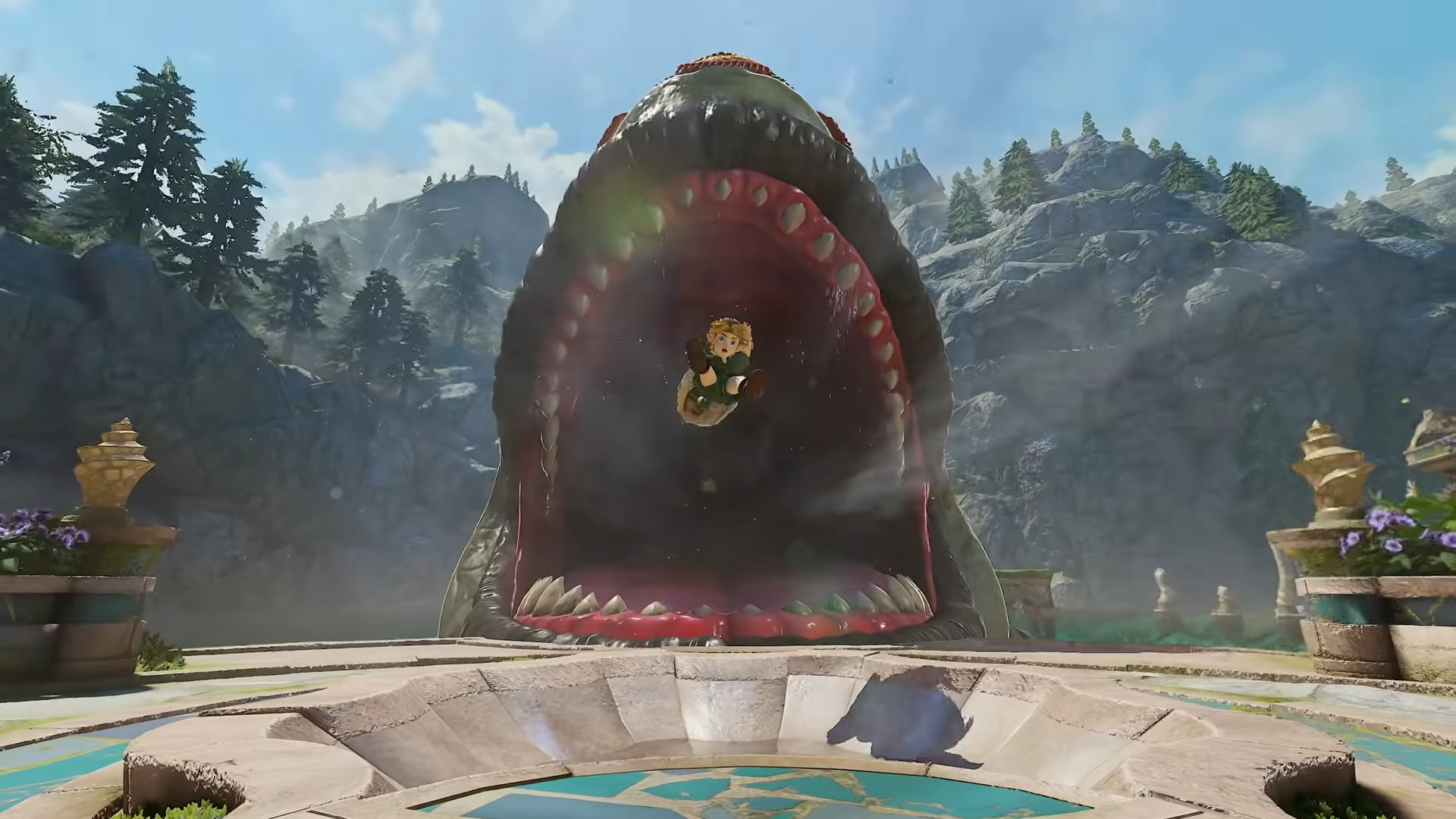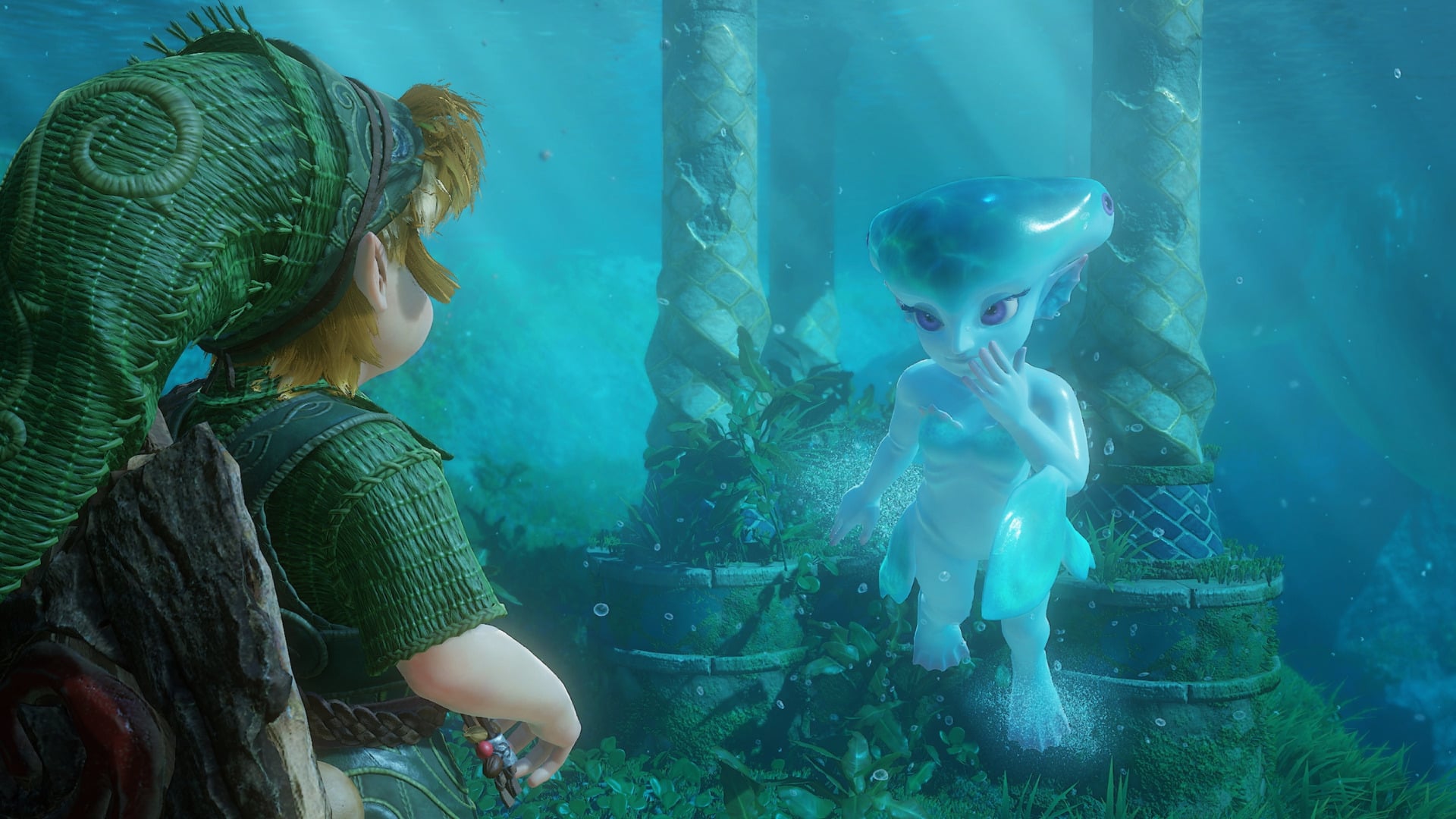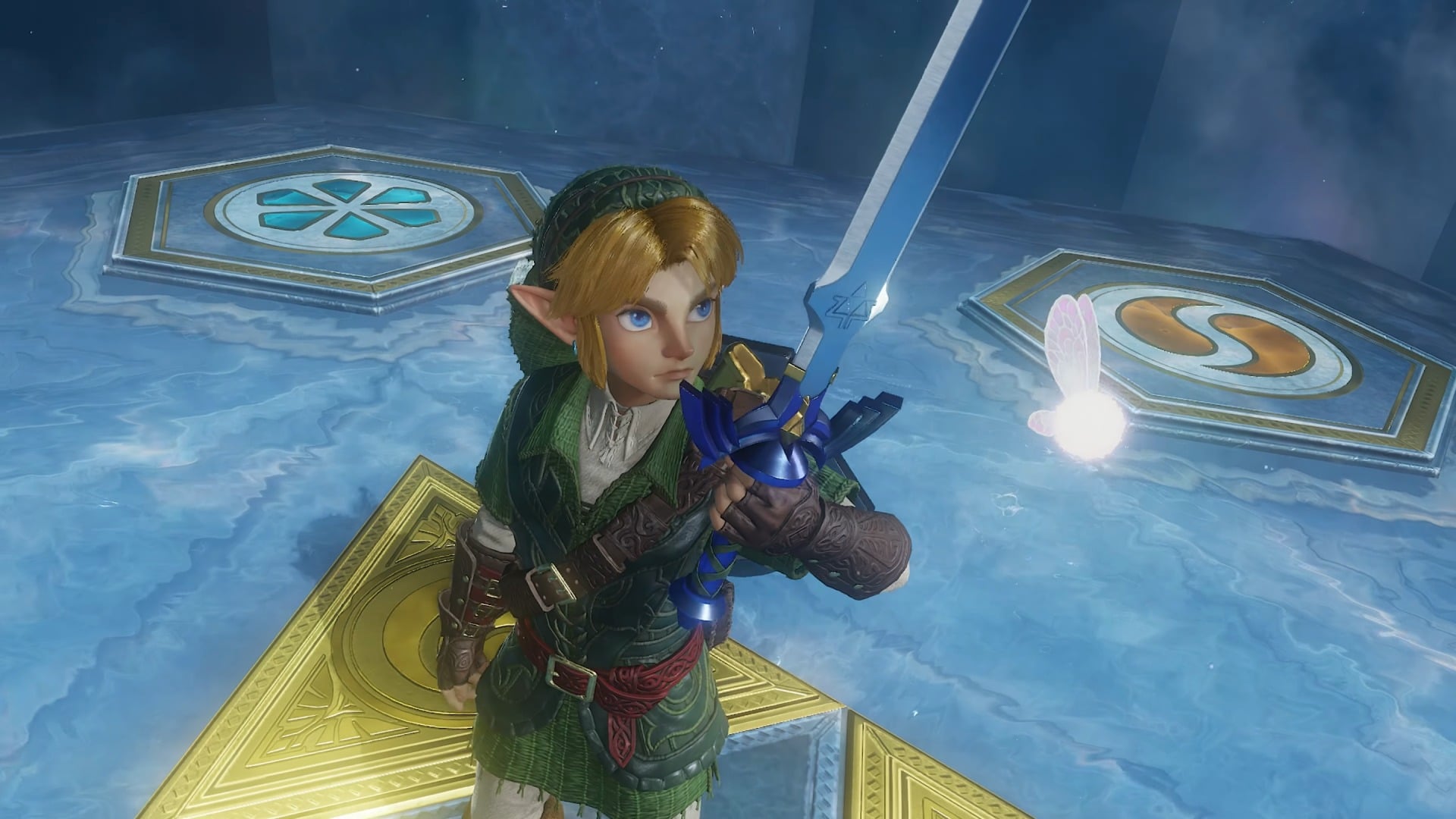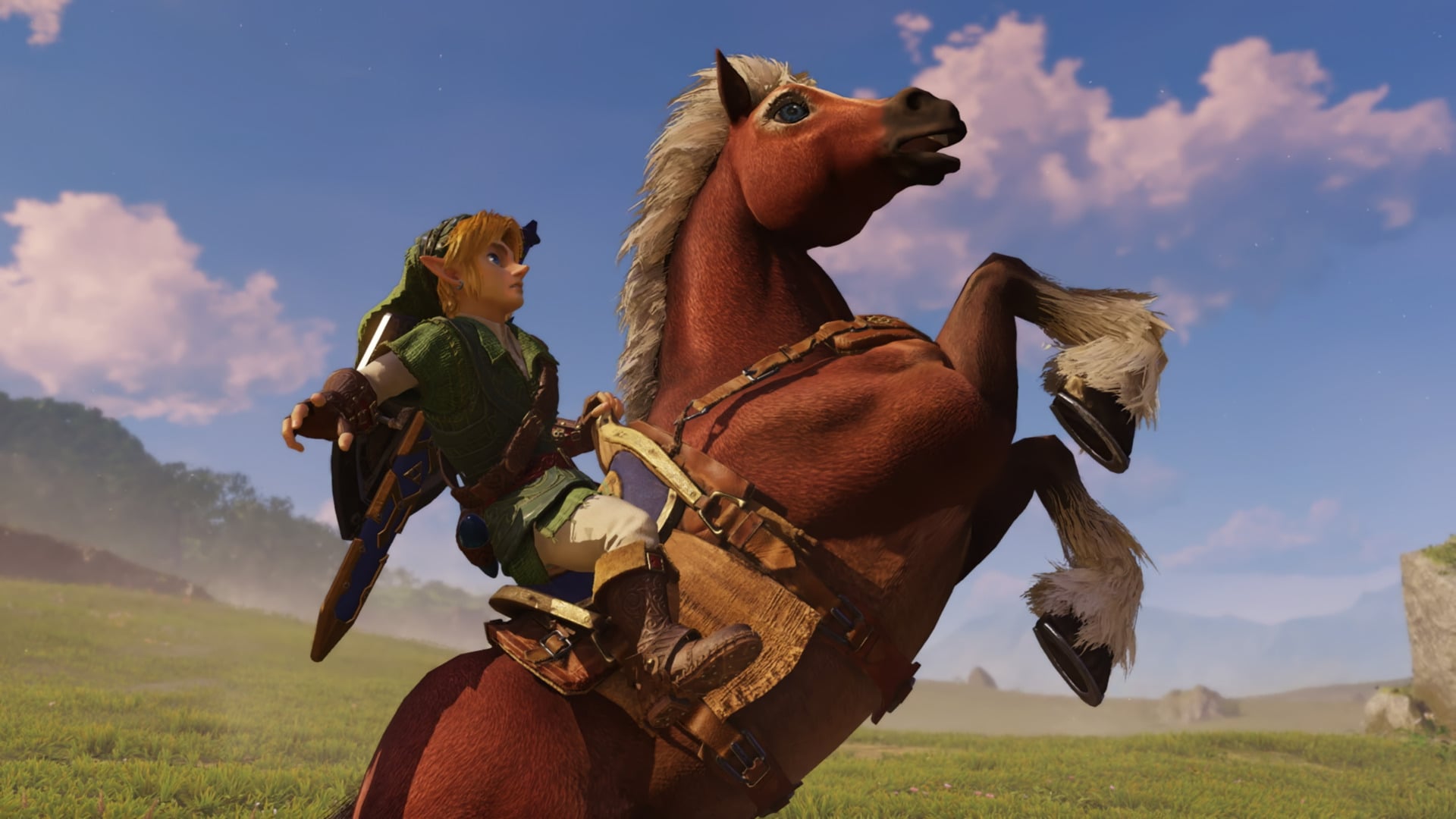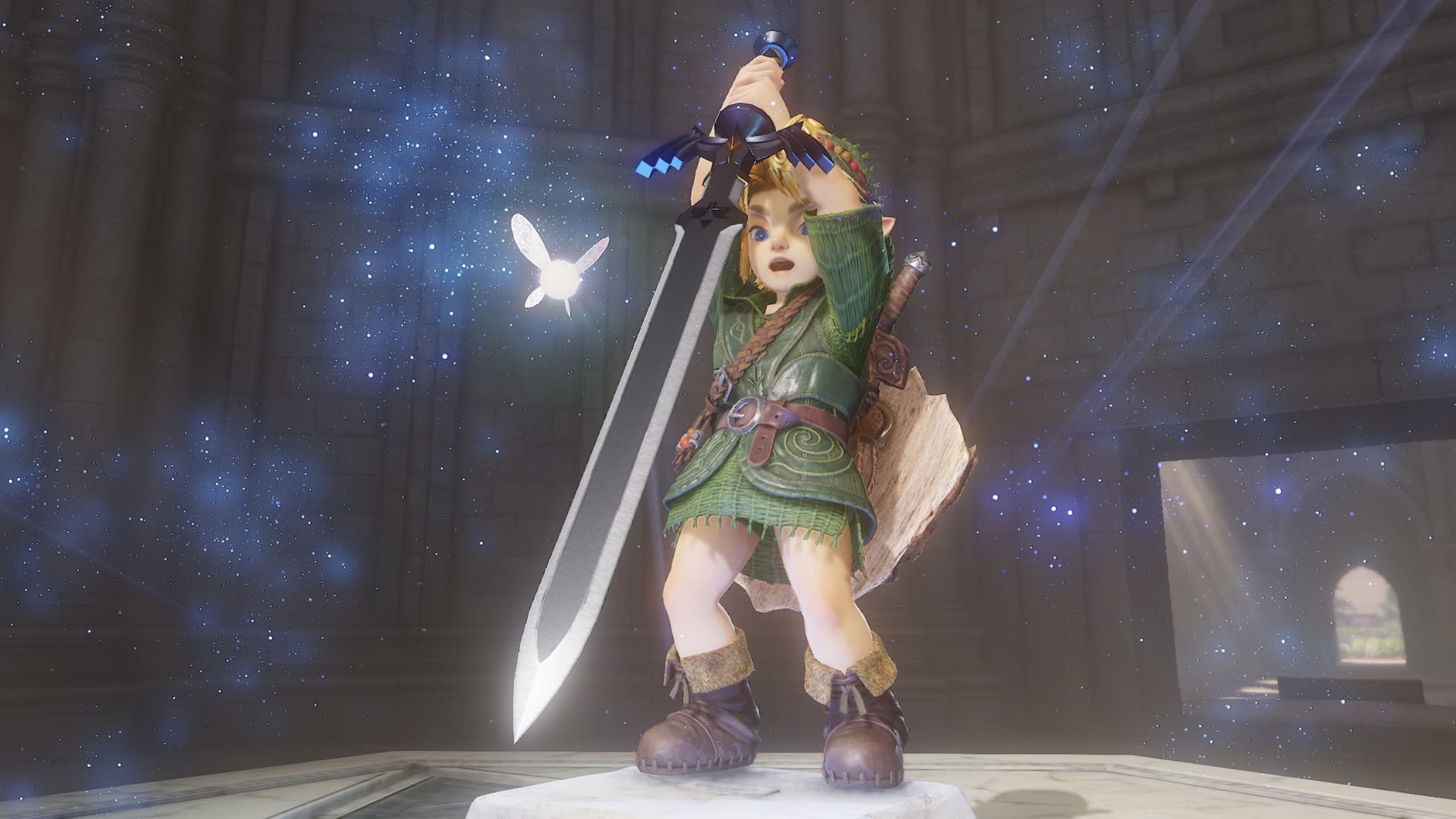
When the Legend of Zelda: Ocarina of Time remake was first revealed, one of the most common gut reactions I saw across the internet was in response to the game’s overall visual style. And everyone seemed to focus on one thing in particular: Link’s clothes.
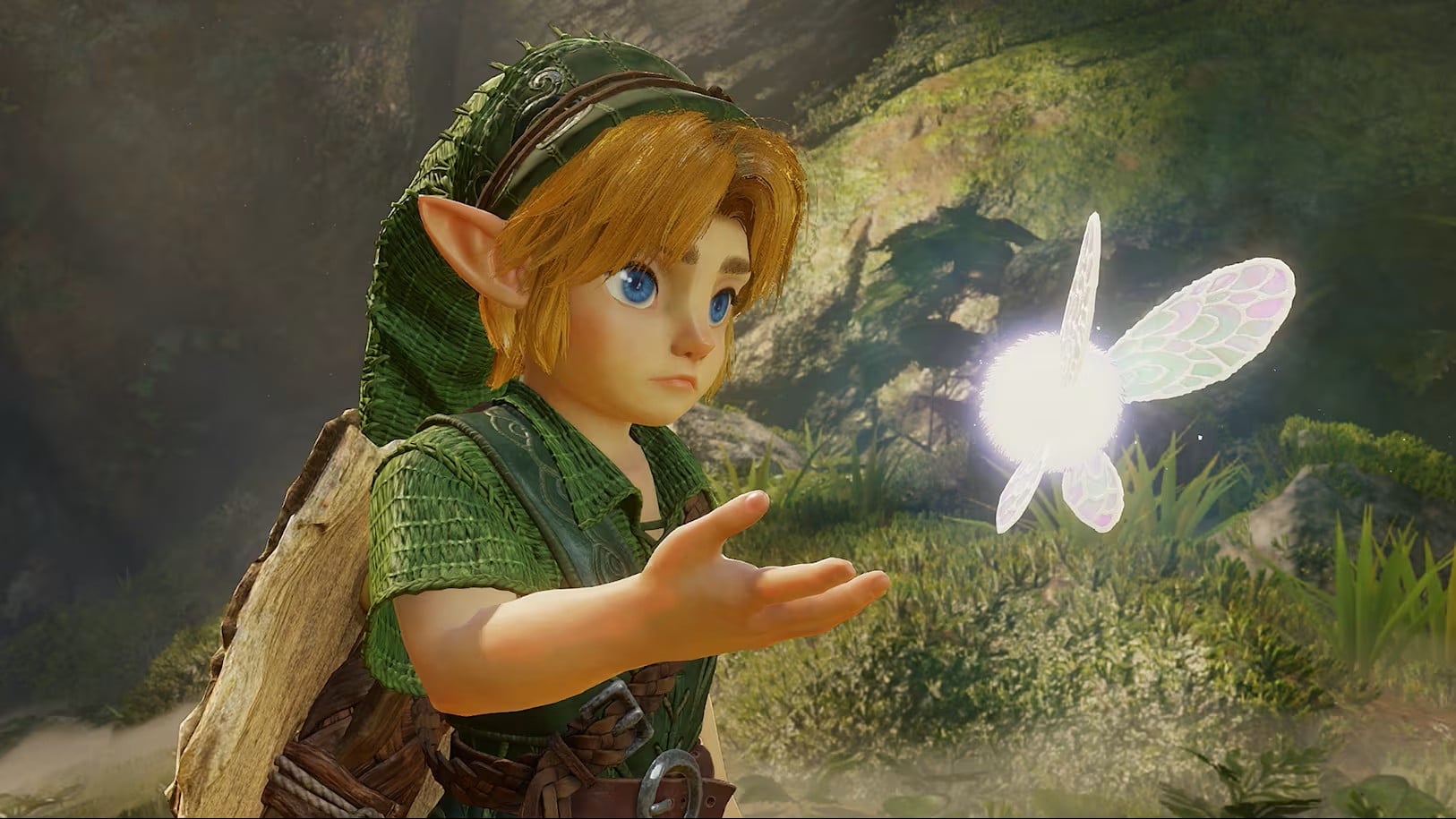
Basically, Link’s clothes feature a ridiculous amount of detail. They appear to be hand-woven out of some sort of fiber, and you can see every stitch. There’s a fringe around the bottom, and larger stitches where the sleeves attach and where his hat comes together. Over his tunic, he’s wearing some sort of leather armor with swirling leaf designs. Adult Link’s boots have similar etchings. It all looks…not hyperrealistic or anything, but it certainly has an over-the-top amount of intricacy that the Nintendo 64 Link never could have dreamed of.
There was debate, though, as to whether this was good or not. Some people compared it to the look of Unreal Engine fan games, which have been oft-mocked for missing the simplistic charm of typical Nintendo games. A lot of people felt that Link stood out from his surroundings, especially when he stood next to other NPCs with less detail, such as some folks in Castle Town. But others really liked the tunic and its details, and noted how well it spoke to Link’s origins as a child of the forest.
Well according to the game’s developers, that history is exactly what they were tapping into with the tunic’s intricate look. In an Ask the Developer interview today, art director Aya Shida and producer Hidemaro Fujibayashi explained how the tunic (and the rest of the art style) came to be. Shida begins by saying the team didn’t take changing the designs lightly, and began by making sketches of the characters to place side-by-side with the old designs, as well as a 3D model of the Great Deku Tree. “We wanted characters like these to blend naturally into a world like this.”
The sketches made by the team don’t look more realistic than the old designs. But the original designs did have significant limits placed upon them by the Nintendo 64’s technology, as Fujibayashi explains:
Back when games were being developed for Nintendo 64, there were limits to what could be expressed in-game. With those limitations in mind, the developers chose to exaggerate the characters’ movements and defining features so that their distinctive qualities would come through. But if we recreated all of that precisely with today’s technology, it might look a little creepy. (Laughs) I imagine it was quite a challenge to strike the right balance while still preserving each character’s individuality.
Fujibayashi ends by noting that in the new game, there was a lot of attention given to clothing textures now that those limitations have been removed. As an example, Shida offers Young Link’s outfit.
If the fabric looked too neat, as though it had been machine-woven, it wouldn’t look like something the children living in the forest had made themselves. It just wouldn’t feel believable.
So we started by asking what kind of fabric those children might actually weave and wear. We looked at materials in museums and even experimented with making our own fabric from thread to get a better sense of what it should be like. For this game, the hardware allowed us to depict that level of detail, but that also meant we needed to do our research until we had a clear idea of what we wanted to create. As a design team, we often talked about imagining the story behind every object in the game as we created it.
So essentially, while Link’s smooth tunic was fine for the Nintendo 64’s capabilities, on the souped-up Switch 2, a smooth tunic might have looked ridiculous on him and the other Kokiri given what we know about their lore. So instead, the team did a bunch of (frankly very cool) research to work out what sort of clothing would make sense for him and his brethren, clothing which would naturally be quite different from what everyone outside the forest was wearing.
The rest of the interview is pretty cool and worth reading, though if you’re just looking for highlights, you can read real quick about Eiji Aonuma adding, and then removing, more fast travel points to the game. A second part to the interview will be out tomorrow, and the remake of Ocarina of Time is out later this week, on November 5.