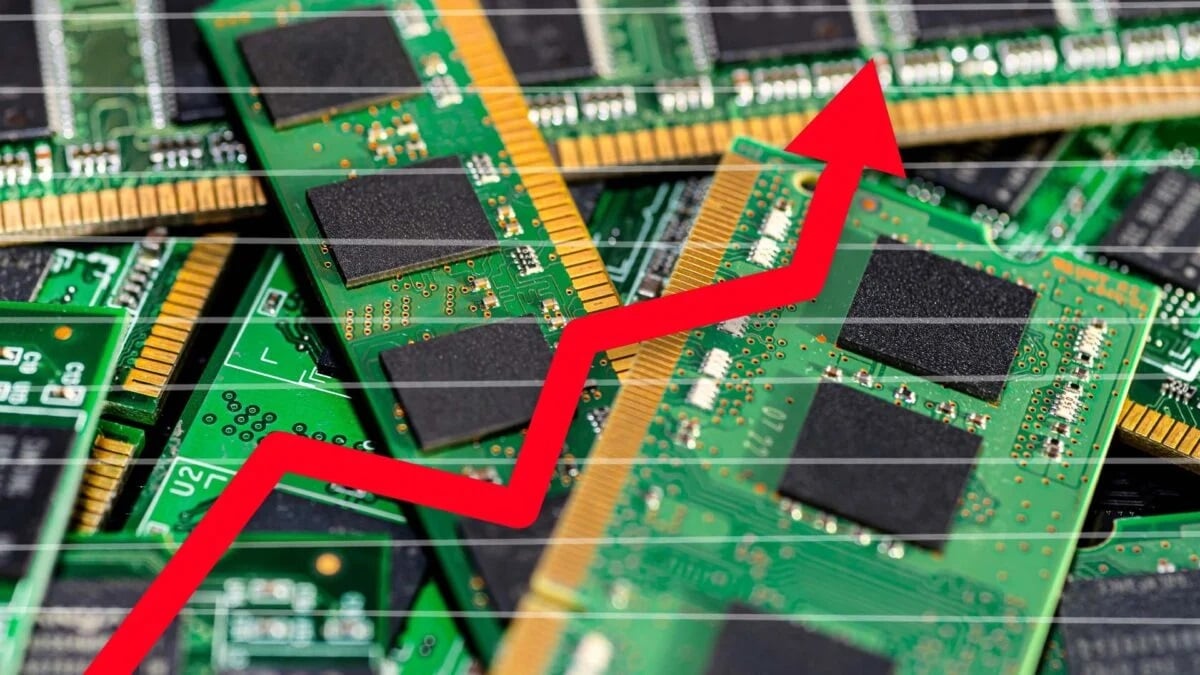
Skyrocketing RAM prices are terrible for people who want to buy new electronics or upgrade their existing ones, but great for companies like Micron who have seen their planned inventory of memory and storage sell out before it’s even manufactured. The company keeps reporting record profits and doesn’t see things changing until 2029 at the earliest.
“As we noted, in calendar 2027 as well as 2028, we see demand exceeding supply,” Micron CEO Sanjay Mehrotra told investors this week. “In fact, we see greater tightness in the industry in 2027 and in 2028 versus 2026. Overall, supply-demand environment is only getting tighter.”
The company reported a revenue for last quarter of $54.2 billion, up 379 percent year-over-year. Net income for the quarter jumped to $38.4 billion. Not surprisingly, Micron’s stock price has catapulted up 500 percent from a year ago. Money doesn’t grow on trees, but thanks to the AI craze, Micron’s production facilities have basically become indistinguishable from massive money-printing operations.
Mehrotra said the company is trying to ramp up production, but the complexities and requirements surrounding the manufacturing process for RAM make it slow going. “We see continuing tight supply conditions because, first of all, clean rooms take a long while to build,” he said. “Even after they are built, even after first wafer output, production ramps up only gradually in the clean rooms. That’s just the nature of what it takes to bring up production.”
As a result, prices will continue to spike even further in the years ahead. “As you know, for 2026, our prices for HBM [high bandwidth memory] were negotiated with our customers last year,” the CEO told investors. “We mentioned that now, for 2027, a large part of the volume is already sold out for 2027 for HBM, and the prices are much higher than 2026 prices.”
Micron already announced it was abandoning the consumer market for RAM last December. As other companies follow suit, servicing enterprise clients instead of regular people, prices for the remaining off-the-shelf stock only get worse. The result is memory prices that have reportedly jumped as much as 500 percent in just 12 months.