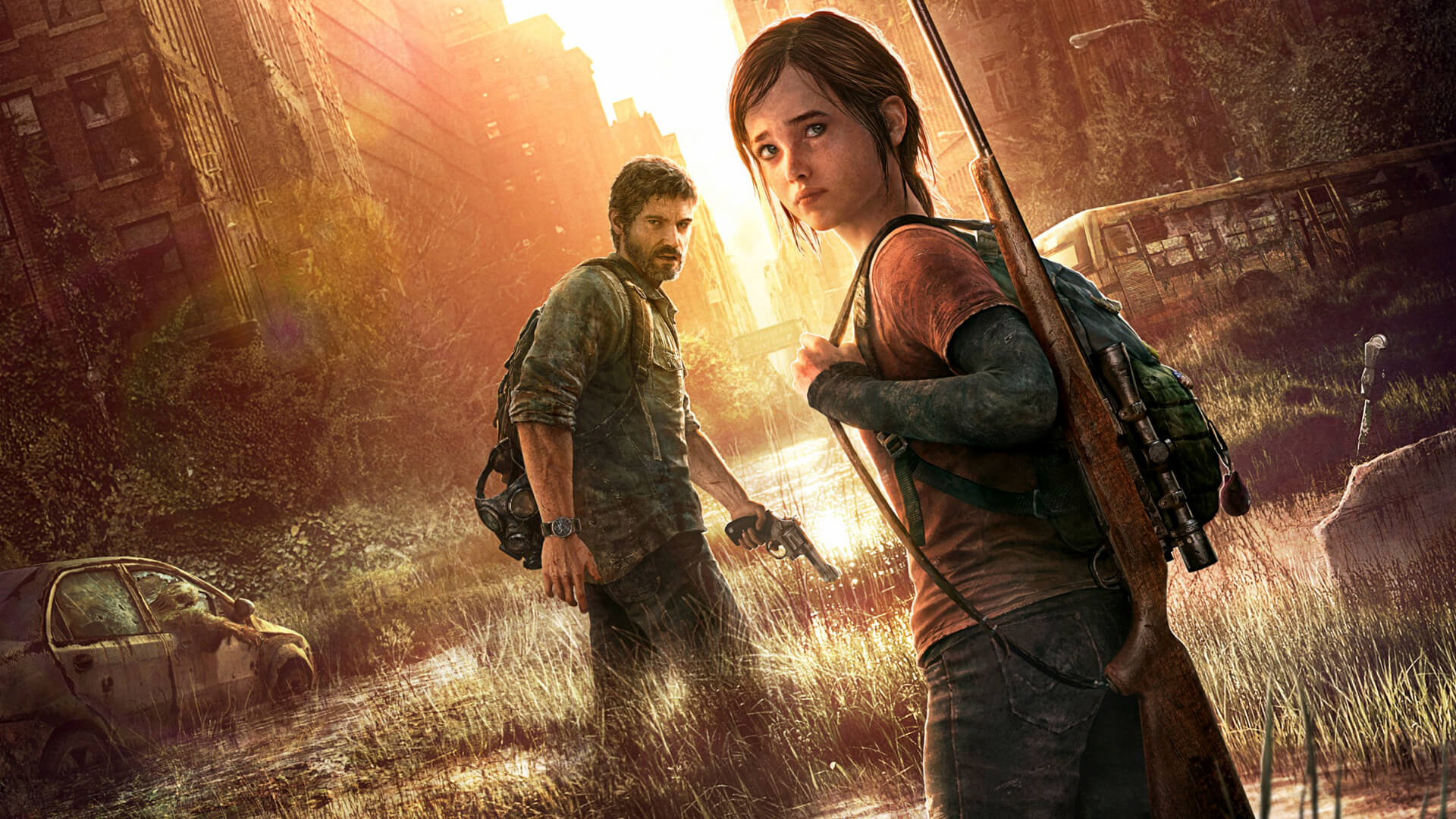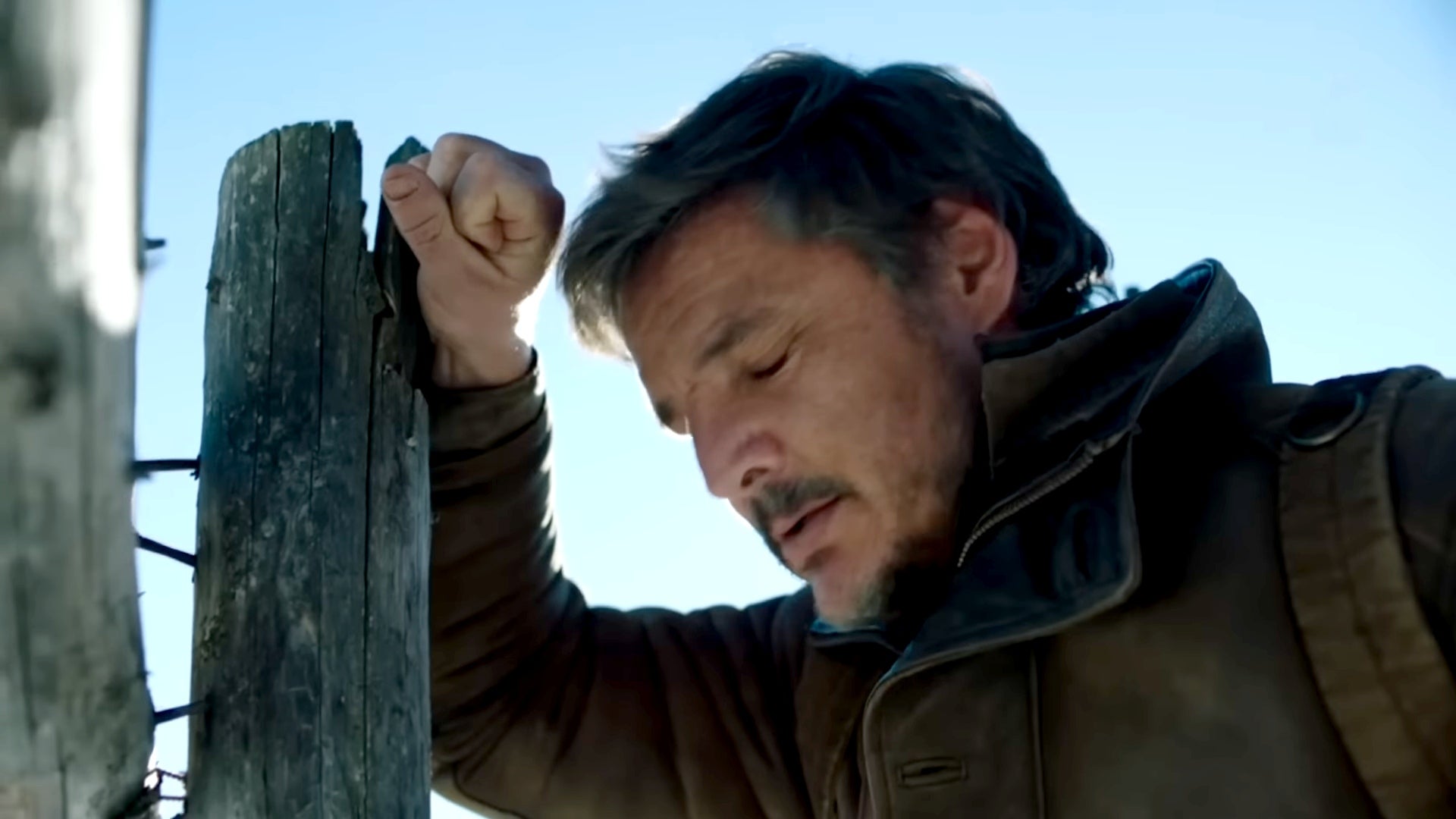
With just one episode to go, we’re nearing the end of Joel and Ellie’s long journey together. This week’s entry, “When We Are in Need,” corresponds with the game’s winter section, though the HBO adaptation isn’t using the same seasonal structure of the game, and here in TV land, it’s been winter for a while.
When I first played The Last of Us ten years ago, in some ways the winter chapter felt to me like overkill, the game leaning hard into desperation and depravity just to be as gritty and bleak as it could, in order to help sell itself as a “mature,” serious game. “Enough, I get it. Humanity is awful and given half a chance, we’ll all do grotesque, morally reprehensible things.” Replaying the game now alongside the show, the purpose of the chapter within the narrative is clearer to me. Of course it’s common for stories to put characters at their most hopeless and desperate points right before the resolution, but the way The Last of Us does it, separating the characters while both are in dire straits, drives home the importance of their bond to each other. It also, importantly, illustrates that while Joel may have started out as Ellie’s protector on this journey, he now needs her at least as much as she needs him. Let’s take a closer look at this week’s episode, and its similarities to the same stretch of the game.
Ellie meets David in the show vs. the game
This chapter has its own villain in the form of David, a preacher and a predator whose flock reside in the resort town of Silver Lake and are suffering through a particularly harsh winter. In terms of dialogue, it’s one of the show’s more faithful episodes. In fact, it’s almost as if writer Craig Mazin’s screenplay for the episode just took this section of the game, cut out most of the combat sequences, and from there, sought to embellish the dialogue and build on what the game reveals to us about David and his congregation. It continues to be interesting to me how, in the game, combat is perhaps prioritized as the most important element, while in adapting the game to a series, it becomes the least important.
The winter chapter immediately distinguishes itself from the rest of the game by having you play as Ellie for the first time. (Today, playing through the story in order, you’d play the Left Behind DLC before this, but when the game came out in 2013, this was a surprising shift in perspective.) Desperate for food, Ellie hunts a deer she spots in the woods with her bow and arrows. Nicked and bleeding from multiple arrows, the deer runs, ultimately collapsing, but when Ellie finds it, two others, David and James, have seen it too. Just as in the game, David (voiced here by Nolan North, who plays Nathan Drake in Naughty Dog’s Uncharted games) makes a deal with Ellie: penicillin for some of the deer meat.
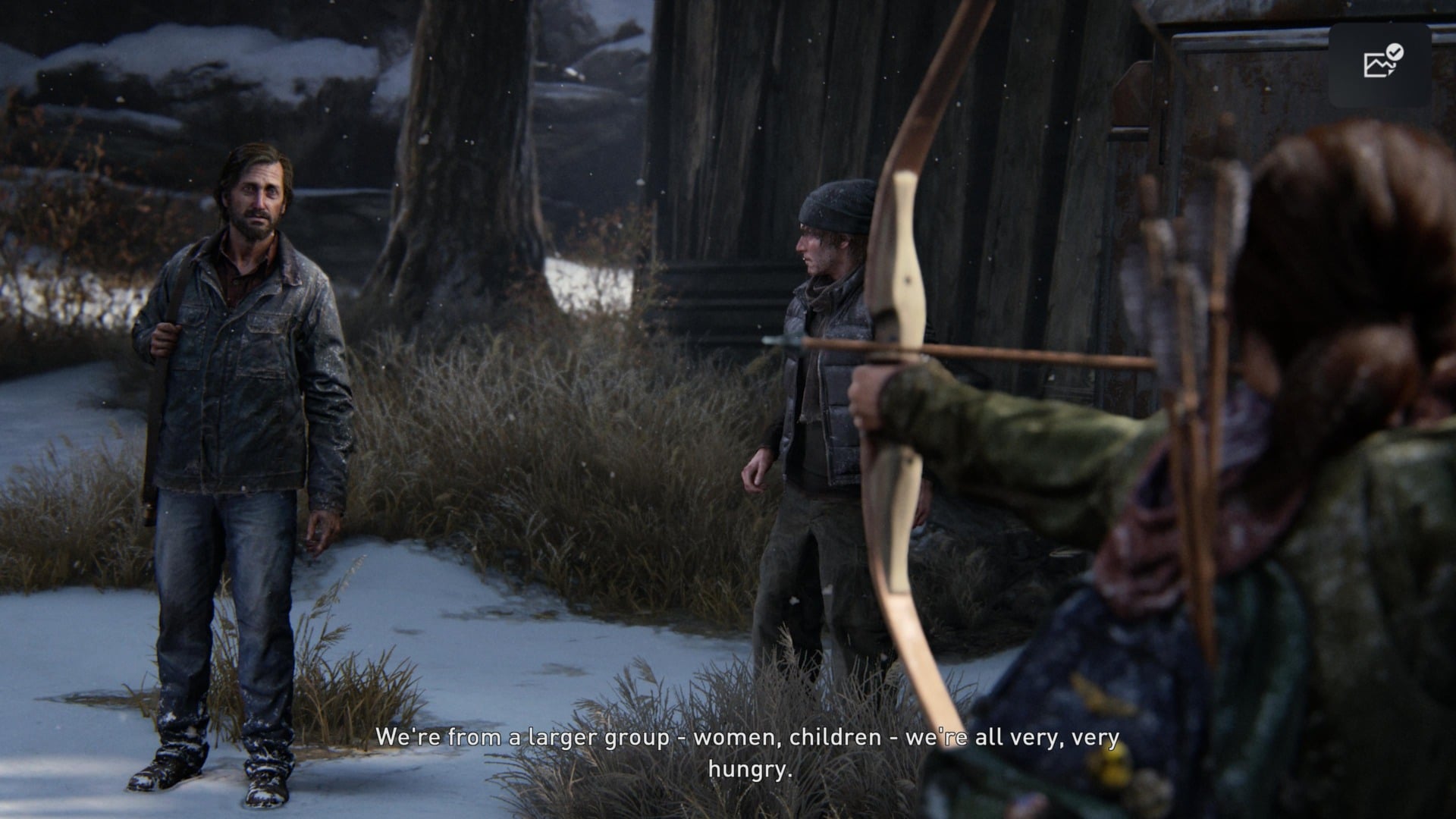
What’s unique to the game is that while waiting for James to return with the medicine, you have a multi-stage combat encounter fighting alongside David, involving a few standoffs against multiple waves of infected and a climactic battle with a bloater. Through it all, you might think that David is actually a new friend. He seems genuinely concerned for your welfare, and fighting alongside someone can be an experience that develops trust. Naughty Dog knows how to use combat as a tool for relationship-building, and here, they build up your trust in David a bit just to pull out the rug from under you and remind you that, in this world, the trust between Joel and Ellie is a rare and precious thing.
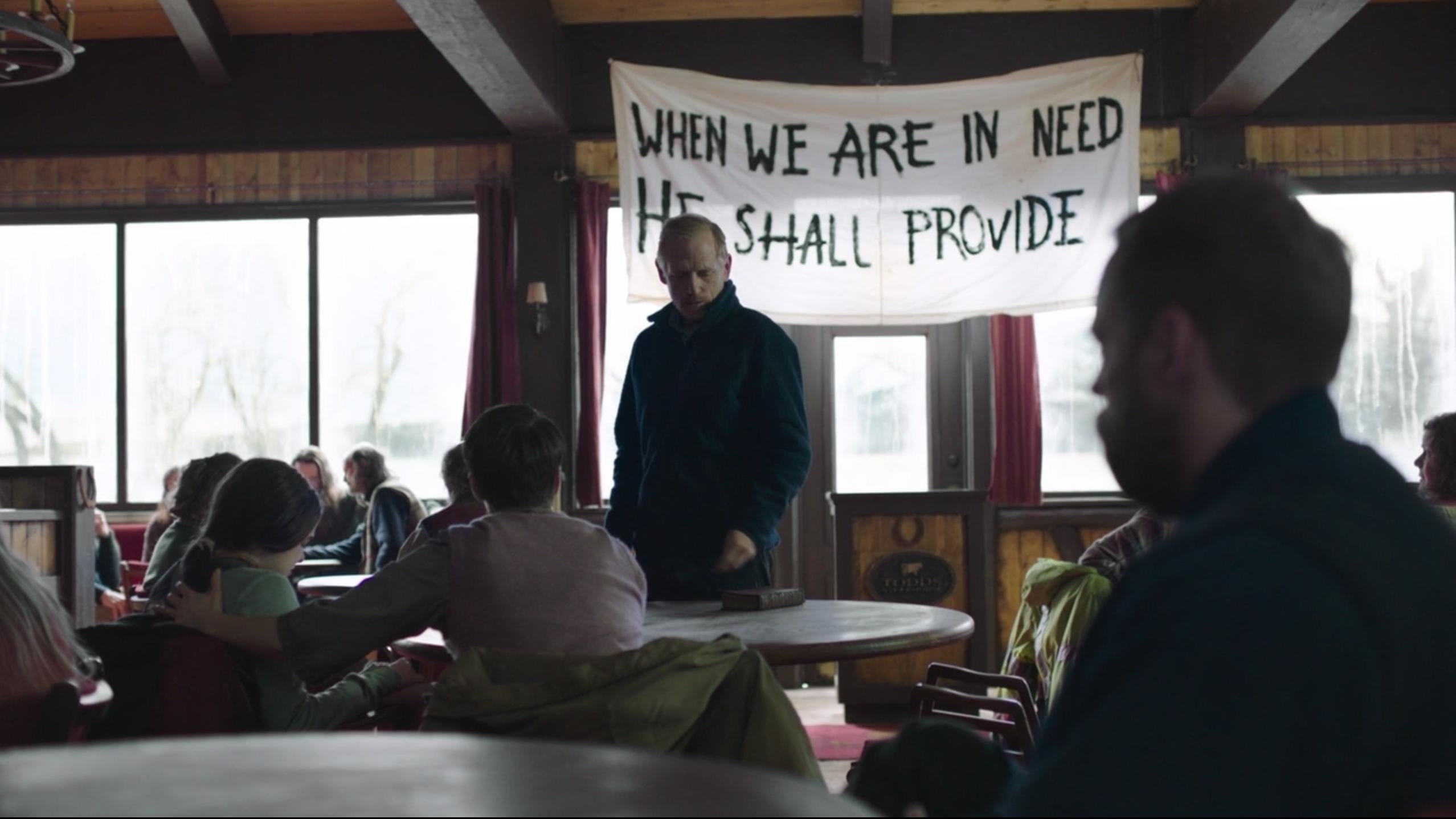
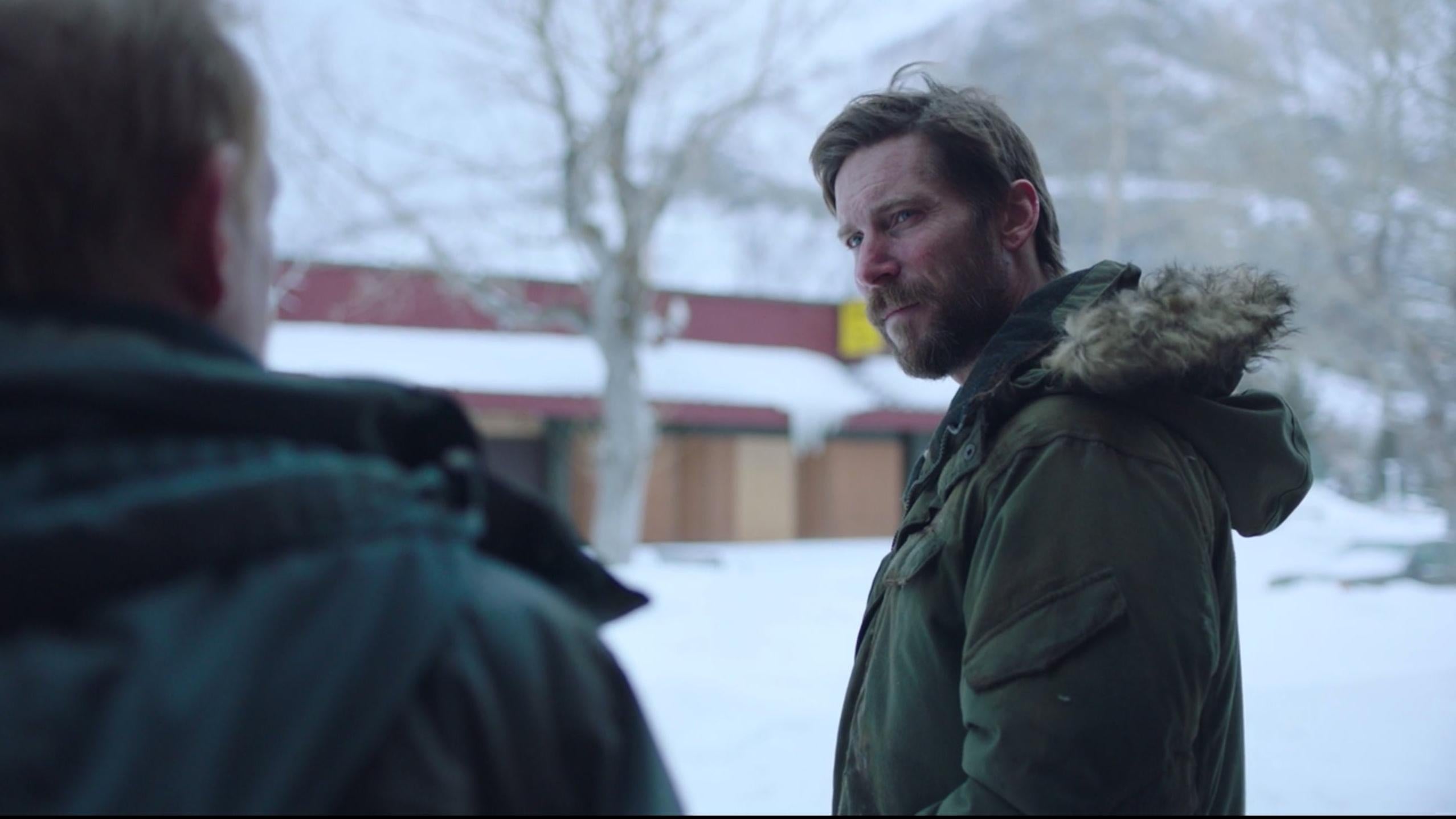
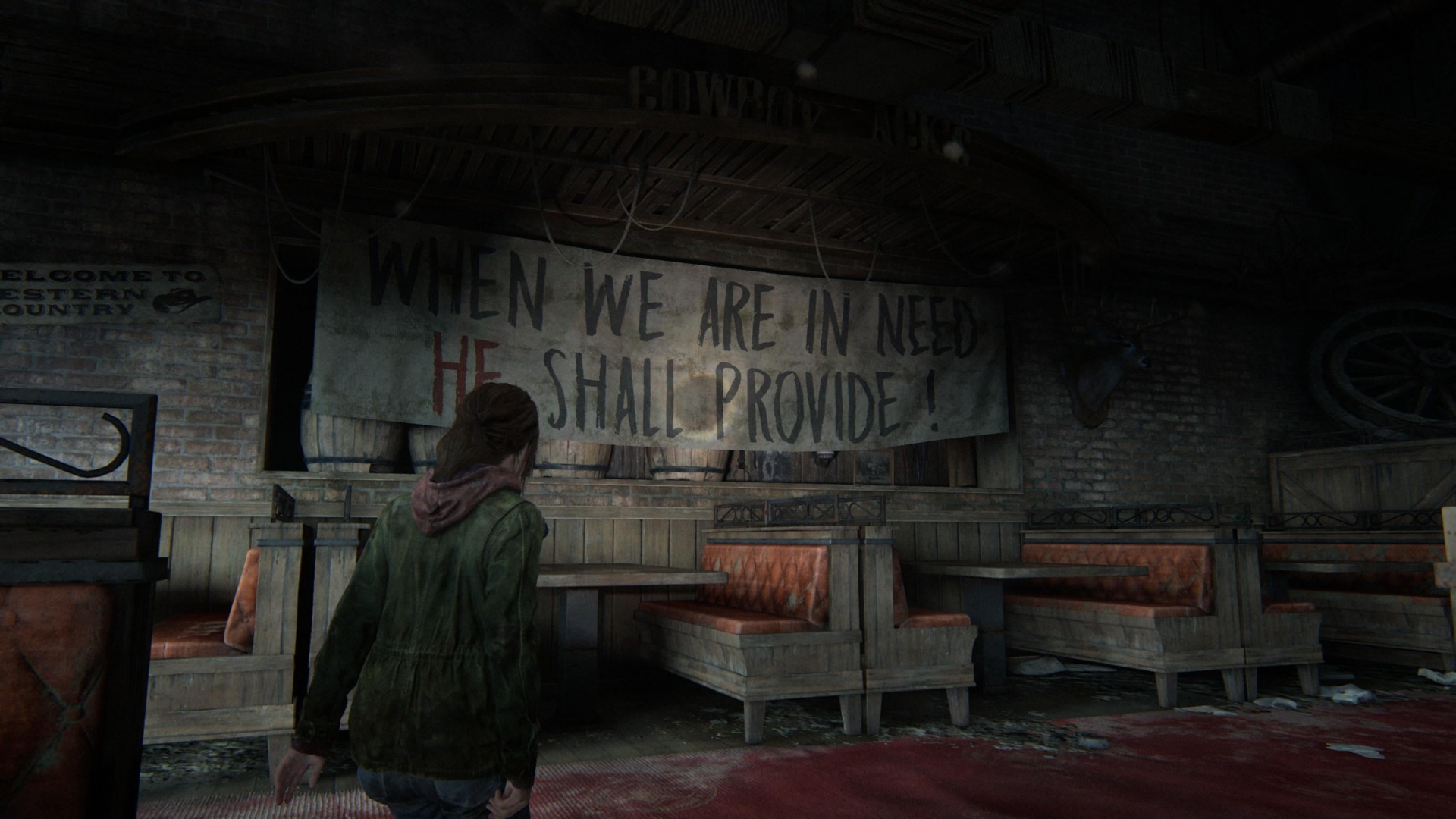
In the show, by the time Ellie first encounters David (played here by actor Scott Shepherd), we already have our reasons to be suspicious of him. The episode begins with him reading scripture to his flock, in the old steakhouse he’s converted into a church and town hall of sorts, a place where the abundant food of the pre-cordyceps past is sharply contrasted with the desperate circumstances of the present. (It’s an important location in the game as well, one you come to later, and the sign reading WHEN WE ARE IN NEED HE SHALL PROVIDE is a detail straight from the game.) The faces of the congregation’s members are lean and hardened, telling us much at a glance about what a difficult winter they’re having. A grieving daughter asks when her father can be buried and David says that it’s too cold to do so now, they’ll have to wait until spring. And outside after the service, David chides James (played by Troy Baker, the voice of Joel in the games) for his “doubt,” giving off the sense of a man who very much wants to maintain control.
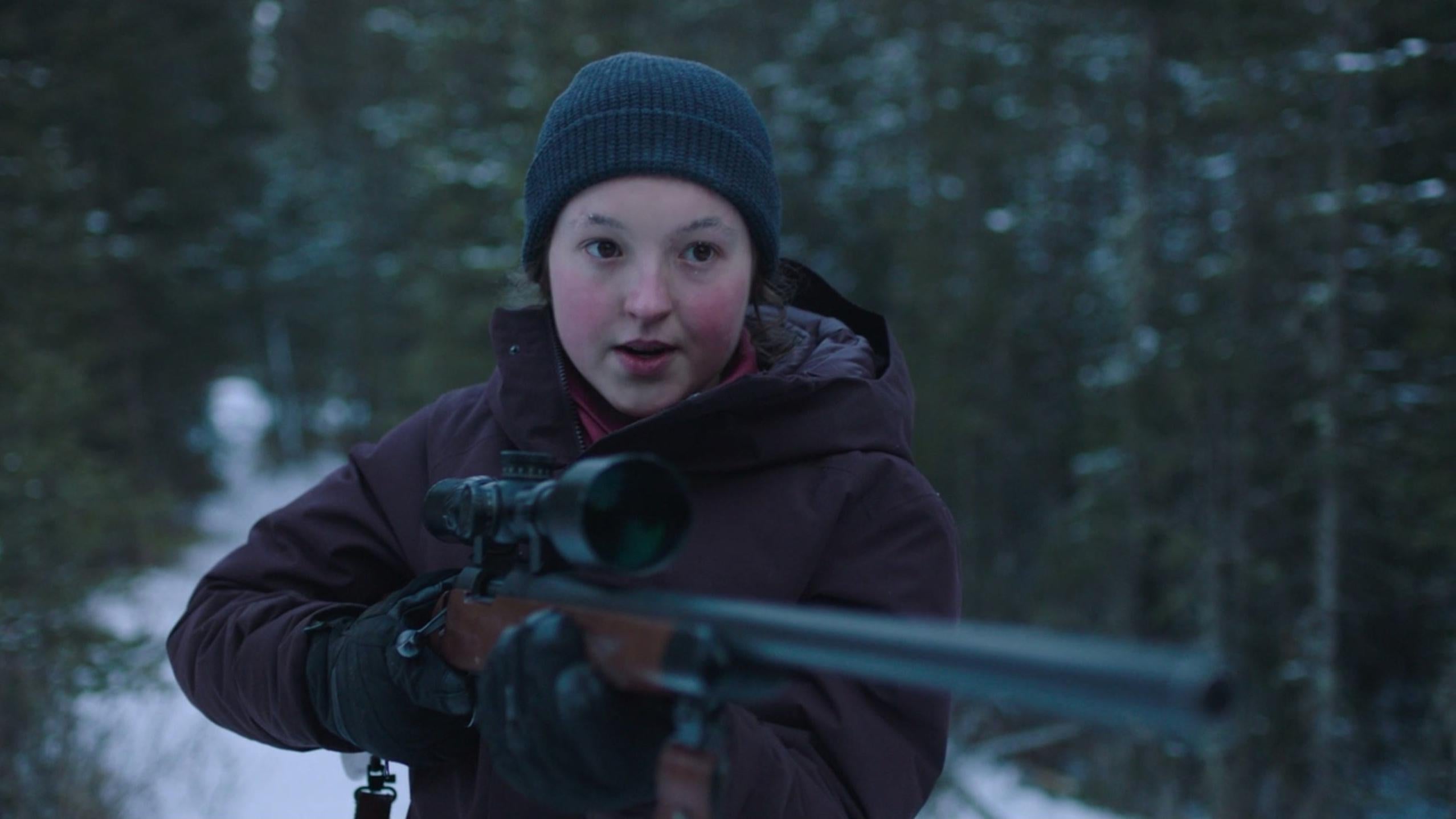
Notably, in the show, Ellie hunts the deer not with a bow and arrows but with the sniper rifle, recalling in our memories the moment toward the end of episode six when Joel tried to teach her how to use it. When she takes a moment to focus with the deer in her sights, we can sense her recalling Joel’s words and trying to draw on what he taught her.
Both the game and the show have Ellie talking tough when she sees David and James near the deer she killed, with her calling James “buddy boy” and saying that if David tries anything, she’ll “put one right between your eyes.” The show, however, foregrounds David’s role as a preacher in their first conversation far more than the game does. In fact, perhaps the only real hint David gives off in the game that he has certain rigid moral standards might come when, after Ellie swears, he absurdly says, in the midst of a life-and-death battle against waves of infected, that she should watch her language. We definitely pick up on the fact that he’s a preacher eventually, but there’s no real character development done around it.
In the show, however, Ellie asks if David’s “hunger club” is some sort of cult, and he turns on the folksy charm, saying “Well, you sorta kinda got me there,” but saying that what he preaches is “pretty standard Bible stuff.” When Ellie wonders how he can still “believe that stuff” after everything that’s happened, he tells her it was actually after the world ended that he started to believe. “Everything happens for a reason,” he says in both the show and the game, and it’s here that whatever sense of trust you might have felt for David while fighting alongside him likely evaporates. His seeming friendliness reveals itself to be a guise for something more threatening, and he tells her that a “crazy man” killed someone in their flock recently at the university. A crazy man who just happens to be traveling with a “little girl.”
Ellie now understands that David is a threat if she didn’t before, but David lets her ride off with the medicine, telling her that there’s room for her in his group, that he can protect her. It’s almost as if he has some gross designs of his own for her.
Dinnertime at the steakhouse
One of the luxuries of HBO’s adaptation has always been that it can leave the perspective of Joel and Ellie behind entirely when it wants to, and here, we get more development of David’s congregation. In the kitchen, members of the flock lament their dwindling food supplies, and when a man brings in some fresh meat, one of them asks, “What is it?” “Venison,” he replies hesitantly, in a way that may have you asking, “Is it though?” Nonetheless, they put it into the evening’s soup.
David and James haul the deer Ellie killed into the restaurant, but the room still seems quiet. Sensing what the tension is about, David tells them that yes, it’s true, “we found the girl who was with the man who took Alec from us.” Come morning, he says, they’ll track her trail, and “bring that man to justice.” The grieving girl from the opening scene raises her voice, saying they should kill both of them. David walks over and, in a moment that shows us just what kind of congregation leader he is, backhands her across the face. Things get worse still a moment later when he tells her that although she may think she doesn’t have a father anymore, “the truth is, Hannah, you always have a father. And you will show him respect when he’s speaking.” Kenneth is not wrong when he says the show makes David even more disturbing than he already was.
The scene ends with shots of these hungry people eating their dinners, the thought lingering in our minds that it may be Alec they’re eating.
Hungry…for vengeance!
The next morning, David’s men do indeed come a-huntin’. In both the show and the game, Ellie does the only thing she can think to do: try leading the men away from Joel, who she’s injected with penicillin but who is still hovering on the edge of consciousness. In the show, she presses a knife into his hands and tells him to kill anyone who comes into the house, though he doesn’t even look like he has the strength to sit up.
The show gives us another brief exchange between David and James, as David insists that Ellie be brought in alive. James says he doesn’t mean to question David’s “sense of mercy” but the girl would just be another mouth to feed, and that yes, she may die if left alone out here, but perhaps that’s God’s will. David simply gives him a withering look, but it’s abundantly clear that David’s interest in keeping Ellie alive has nothing to do with mercy.
Ellie rides through the neighborhood on her horse—the neighborhood which, in the game, has a small army of David’s men on the streets—and eventually, her horse is shot out from under her. In the show, it’s James who does this, and David has to stop him and some other men from killing Ellie. Carrying her off himself and ordering a few men to haul the horse carcass, he tells the remainder of his men to go door to door hunting Joel. “You’re so hungry for vengeance? Deliver it.”
In the game, however, another extended combat sequence begins, as Ellie must sneak by or kill a number of David’s men. What we get here that we don’t get so much in the show is a lot of deep dissatisfaction among the flock with David’s leadership, with many men expressing doubt in David and suggesting that soon, his role as leader be put to a vote. Despite your best efforts, though, David does eventually capture and subdue Ellie, while his own delusions of grandeur about his own benevolence continue to manifest. “I’m keeping you alive here,” he says, as he jokes the consciousness out of her.
Ellie left Joel behind
In both the show and the game, Joel finally comes back to life, as if awakened by the cosmos just in Ellie’s hour of need. The Police have a song about that called “Synchronicity I,” but I digress. In the show, some poor bearded sap enters the house where Joel is stashed in the basement. Ellie was smart and hid the door to the basement behind an old piece of furniture, but the poor bastard rolls well on his perception check and notices something’s up. It would have been better for him if he hadn’t.
As he comes down the stairs, spotting the bloody mattress Ellie’s had Joel on for days, we know Joel has finally regained awareness, and is hiding down there somewhere. Yes, it turns out Joel has regained the strength not only to move, but to stab and choke the life out of a man. That’s the Joel we know and love!
Meanwhile, Ellie wakes up in a cage—in the game, to the sight of a man butchering a human body right in front of her, though in the show, it’s just David sitting there, waiting for her to wake up. In the show, which continues working to make David more overtly disturbing than he is in the game, he tells her that she’s in a cage because “you’re a dangerous person, you’ve certainly proven that,” and there’s an unmistakable hint of amusement and even admiration to his comment.
Joel’s back in action
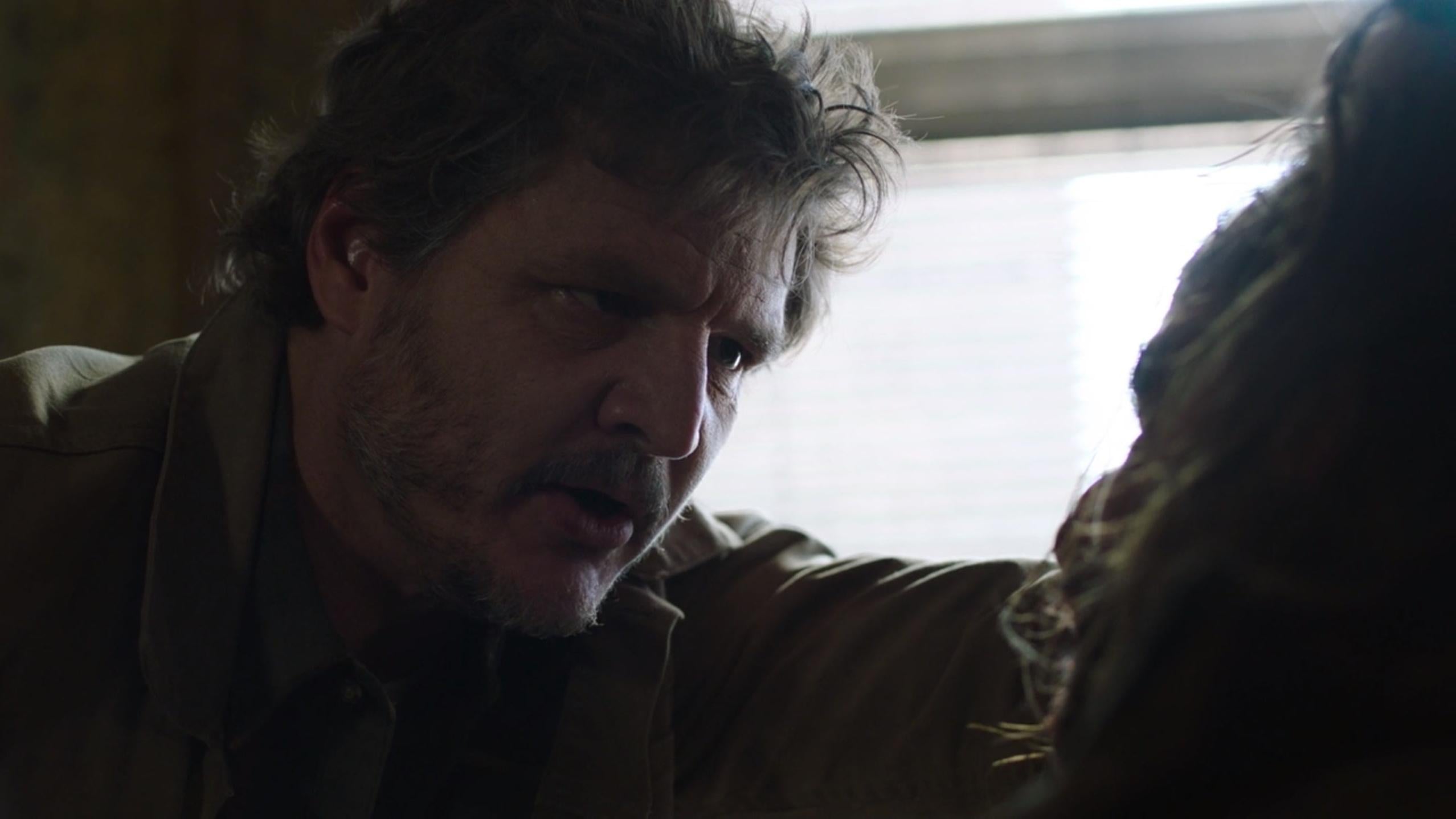
Joel, desperate to find Ellie, tortures two of David’s men to get her whereabouts. It’s a startling juxtaposition with an exchange between Ellie and David in the game. When Ellie calls David an animal, he protests that she and Joel have killed a great many people too. “They didn’t give us a choice, it’s a video game,” she says. (Well, okay, she doesn’t say that second part.) “And you think we have a choice, is that it?” David says. “You kill to survive. So do we. We have to take care of our own, by any means necessary.”
I don’t really subscribe to that logic, but his words do on some level indict Joel, I think. Some may feel that Joel and David are points of contrast, one’s violence rooted in hate and delusion, the other’s in love and necessity. I certainly don’t think Joel and David are the same, but I also don’t think there’s anything innocent or acceptable about what Joel does here. And I’m fine with that. I want characters in my media who sometimes do awful things. What’s always troubled me about the reaction to Joel, though, is just how many people who played the game seem to think that everything he does is totally justified, while recognizing that the actions of others in the world aren’t. It’s as if we don’t want to closely interrogate the actions of the person we play as, the one we most closely identify with.
This may be a conversation for next week’s finale, but it seems clear to me that the game, and the show, at least want us to think about the lengths Joel goes to here, lengths that include brutally murdering one man after he tells Joel what he wanted to know, and then killing the other, too. When the second man declares that he won’t tell Joel anything, both the game and the show give us the chilling and memorable line in which Joel, referring to the man he just killed, says “That’s okay, I believe him.”
Cordyceps showed David the light
The show expands significantly on David’s conversation with Ellie, and makes it much more unsettling. He speaks to her—a 14-year-old girl—as if he sees her as some kind of equal, a kindred spirit, because they both have “a violent heart.” He fought to restrain his violent heart for a long time, he says, before he was shown the light, not by God, but by cordyceps. “What does cordyceps do? Is it evil? No. It’s fruitful. It multiplies. It feeds and protects its children. And it secures its future with violence, if it must. It loves.” I appreciate the expansion of David’s ideas here, because I think the notion that love and violence can overlap is at the core of The Last of Us, and while David is clearly deranged, the debate over whether Joel’s violence is a manifestation of love rages on.
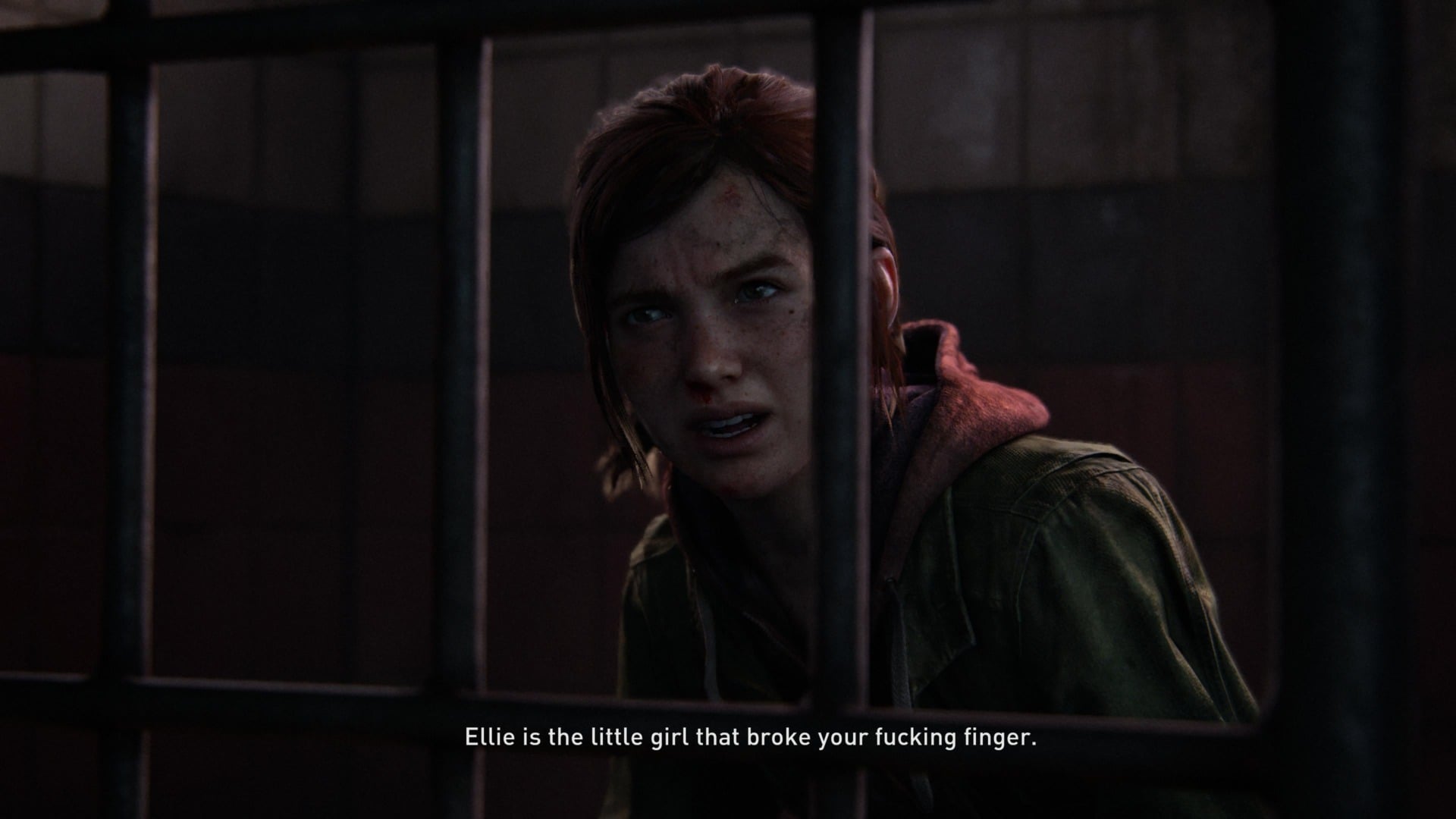
David, plainly a man who is used to having people respond to his charisma, makes the mistake of thinking that Ellie might be seduced by him as well, when, in both the game and the show, he puts his hand on the bars of the cage and makes it clearer still that his ideas about her are, to put it mildly, inappropriate. It’s a deeply sad moment to me, the realization that even in this world where society as we know it has collapsed, Ellie, like most women in our world at one time or another, in one way or another, still has to deal with the threat and the supreme bullshit of predatory men. Both versions punish David for his arrogance and delusion, as Ellie, briefly playing along, takes his hand and then snaps something in it before finally telling David her name. Tell the others, she says, that “Ellie is the little girl that broke your fucking finger!”
Here the game begins to employ the effective device of having us switch back and forth between Joel and Ellie at intervals, as Joel heads into town to find her, killing plenty of David’s men along the way while a blizzard gathers strength, raising the sense of drama and letting you pick off your prey in the low visibility. Yes, of course he’s doing it for her sake, to protect her, to help her, but by now, it also feels very much like he’s doing it because he doesn’t know what he would do without her. Of course historically, games once relied too often on putting underdeveloped women in peril and just focusing on the men who had to rescue them, but The Last of Us earns this setup by humanizing them both, by developing their connection, and by presenting their relationship as one of mutual care and benefit. By now, Ellie has taken care of Joel and saved his life about as much as he’s done for her.
The show also now switches back to Joel’s perspective, showing him heading into town and finding Ellie’s stuff, not to mention human bodies strung up on meathooks. Better hurry, Joel.
The trick up Ellie’s sleeve
In both versions, David (with James’ help, in the show) hauls Ellie out of the cage to cut her up into “little pieces,” since she didn’t take him up on his excellent offer. Just as they’re about to start cleaving, however, she announces that she’s infected, prompting David to roll up her sleeve and reveal the wound on her arm. David says it can’t be real, James says it looks pretty fucking real to him, and that’s the last thing he’ll ever say, as Ellie takes advantage of their moment of hesitation to sink a meat cleaver into James’ neck and dash out of the room.

Here, the game becomes a kind of boss fight, as Ellie must sneak around the restaurant and stealthily attack David while a fire begins to spread. In the show, his ego more evidently implodes as the restaurant, his church, burns down around him. It’s a breakdown on multiple levels, with this deluded, awful, terrifying man shouting “You don’t know how good I am!” In both cases, it’s up to Ellie to protect herself, to defeat this supremely shitty, predatory man, whose intentions to inflict sexual violence on Ellie, implied but still clear in the game, are made much more explicit in the show. And in both cases, it’s immensely cathartic and satisfying to see her finally kill him, and not just kill him but stab him again and again until she herself is a blood-spattered survivor, a horror movie final girl. But part of what gives the final girl trope its awful potency is that the kinds of sexualized violence these women so often fight against can’t be killed by killing just one bad man. It’s a threat we all face, all the time. Ellie survives, of course, but the stare she gives in the wake of it, the way she reacts at first when Joel approaches her, suggests that she’s forever changed by the experience. Ellie is all of us.
It’s okay, baby girl
Joel shows up just after her fight is won, and as subtle a detail as it is, the fact that in the show, just like in the game, he calls her “baby girl” in the wake of the horror she’s just endured is tender and very meaningful. It tells us that there’s no longer any pretense of division or obligation between them, of Joel doing this just as a job, of her just being cargo.
By putting both characters in such desperate circumstances, and then having them finally come back together in the end, this episode and this stretch of the game are the cementing of the connection between Joel and Ellie that the story needs before it heads into its final chapter. That’s next week, when we’ll finally settle the discourse about whether or not Joel’s actions are justified once and for all. See you then.