I’ve been seeing some chatter online about a specific scene in The Legend of Zelda: Ocarina of Time that’s extremely beloved by longtime fans. It’s easy to miss: if you visit the Hyrule Castle Town back alleys after Zelda and Impa flee from Ganondorf, but before the time skip, you can find a soldier on the ground slumped against the wall. In the original, if you speak to him, he asks if you’re the “boy from the forest” and, in a pained stutter, tells you that Ganondorf has betrayed the king and that Zelda has escaped, but that she wanted to give something to you before she left.
His final words direct you to the Temple of Time, the text speed slowing as he finishes his line, before he shudders and fully collapses. Trying to speak to him further prompts Navi to say, “He’s not moving anymore….”, and that’s it. The soldier’s dead.
This moment has been cited by many as a prime example (among very many!) of the “darkness” of the original Ocarina of Time. It’s an otherwise noble and normal NPC dying a painful death in a back alley due to the cruelty of the villain, in front of the child protagonist who, up to this point, has only seriously fought soulless monsters. He’s not yet had to face down death in this particularly tragic way.
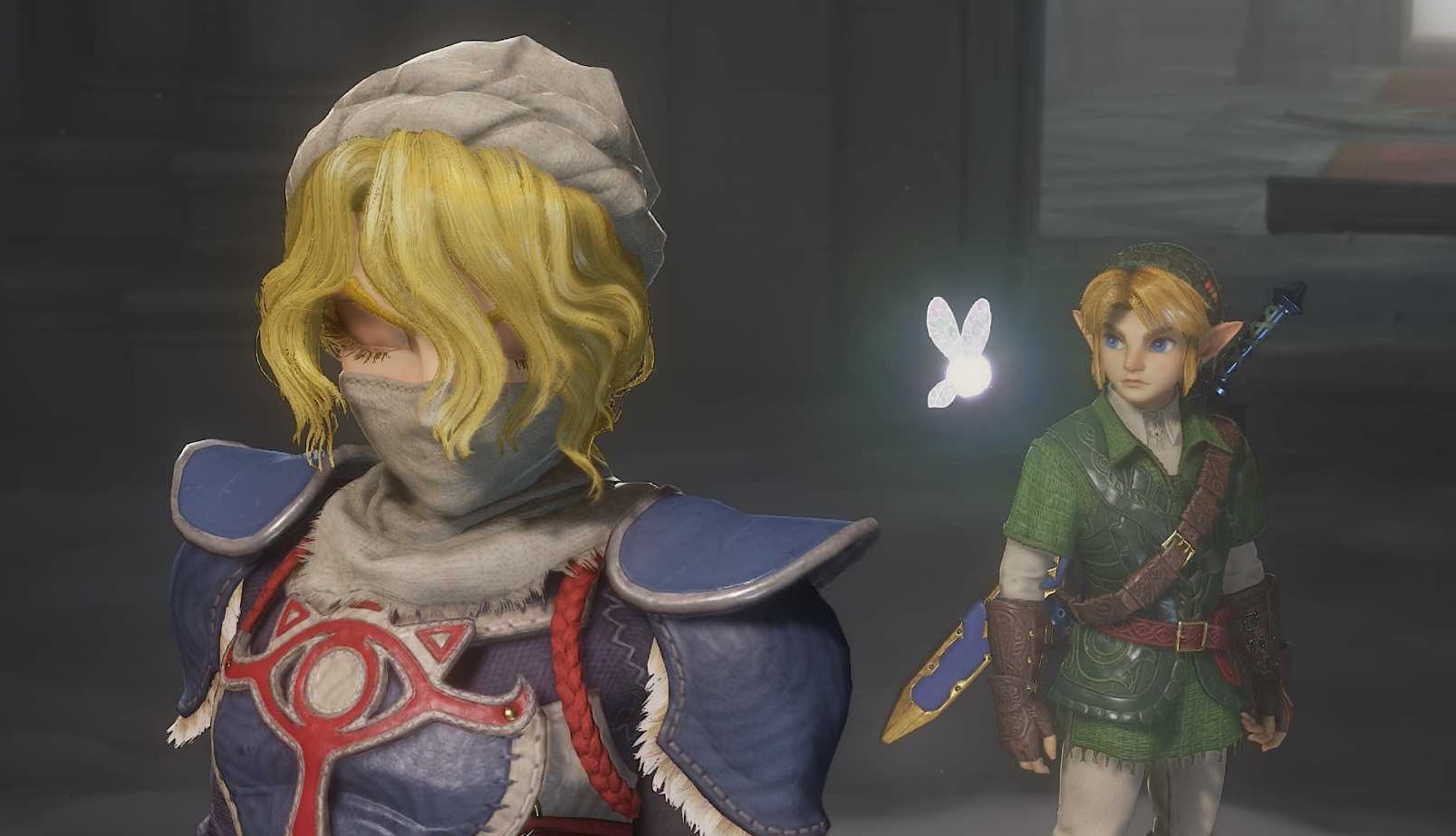
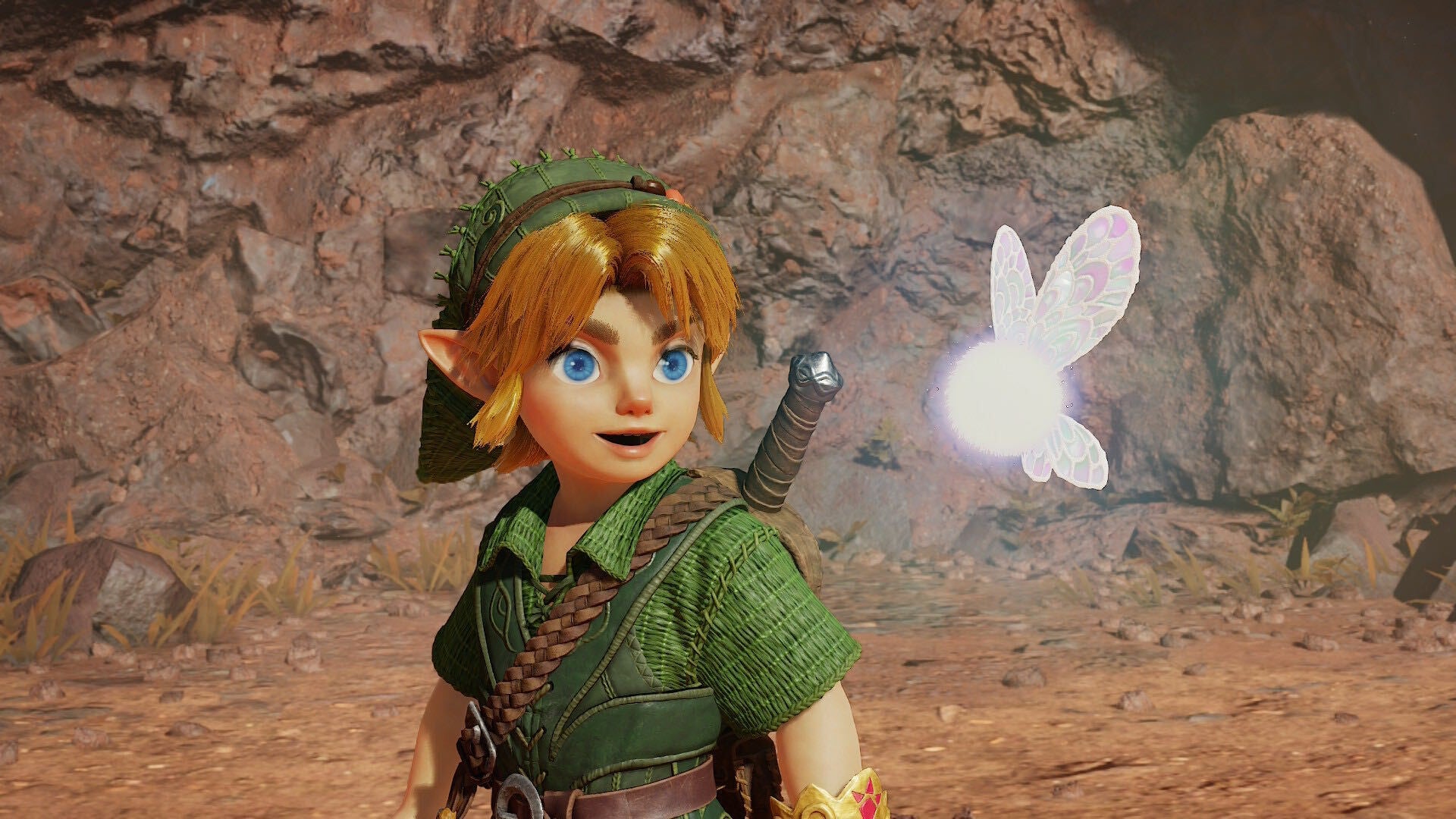
In the remake, however, the soldier doesn’t die. He stays alive, and you can talk to him as many times as you like to have him direct you to the Temple of Time. I believe this is just one of a cavalcade of examples of Nintendo being terrified that the player is going to get lost in the remake somehow and not know where to go. What if you forget you’re supposed to go to the Temple? He’s there to remind you, again and again, seemingly merely exhausted instead of in agony.
People are bringing this up as evidence that the remake has somehow blunted the “darkness” of the original Ocarina of Time. Defanged it a bit, suggesting a more modern fear from Nintendo of exposing children to grim themes. I saw people say Nintendo “censored” itself here, or that this may have been related to “ratings.” Setting aside questions over whether or not some vague content meter of “darkness” or “maturity” is the measure of anything really, I want to push back on the idea that this moment in Castle Town has been stripped of its power: the soldier lives, yes. But for me, the remake transforms visiting Castle Town between Zelda’s departure and Link’s first experience of time travel in a way that makes it one of the most haunting and sad moments in the entire game…especially if you know what’s coming.
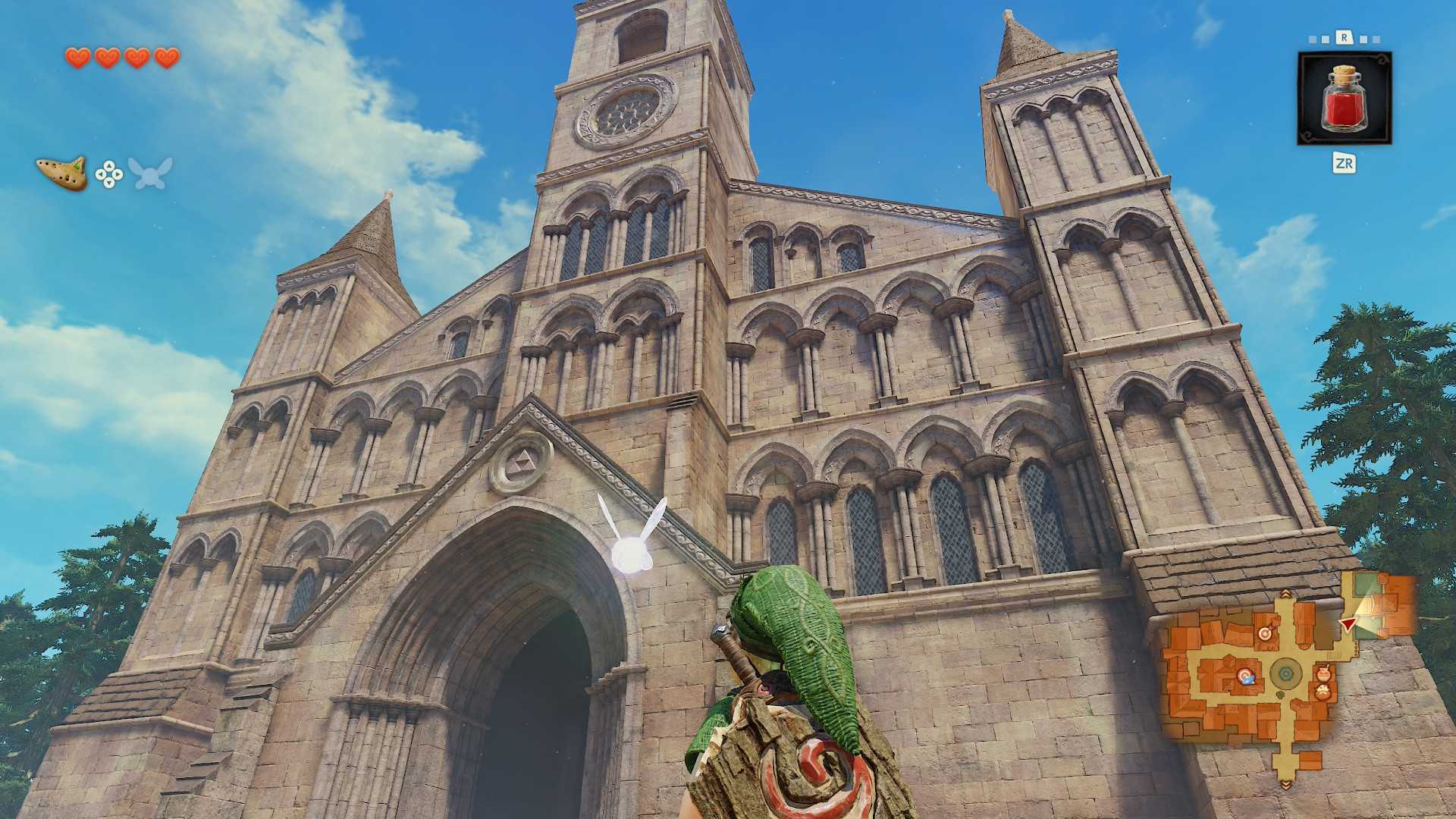
When you emerge in Castle Town as Adult Link in either game, it’s in ruins. Dark clouds hover over the square, and Hyrule Castle looms ominously, now the seat of Ganondorf’s power. The once-bustling square is now home to multiple horrifying Redead enemies, heavily implying that some the townsfolk may have been transformed into these health-sucking zombies. You can find most of the major NPCs from Castle Town now living in Kakariko Village, but not all of them make it there. The implication is that Ganondorf essentially enacted a massacre on the town before installing himself as king, and only a handful of refugees escaped to tell the tale.
The original Ocarina of Time had some conversationalists in Castle Town right before the timeskip, but many of the NPCs had only a little or even no dialogue, and just served as background to suggest a bustling town square. A few of those characters express some anxiety about the guy on the horse who just galloped through, if you talk to them in the brief window between Zelda’s escape and Link’s transformation. It’s the only time you can hear this special dialogue, but most of it is pretty humdrum—just folks remarking on the horses that galloped through.
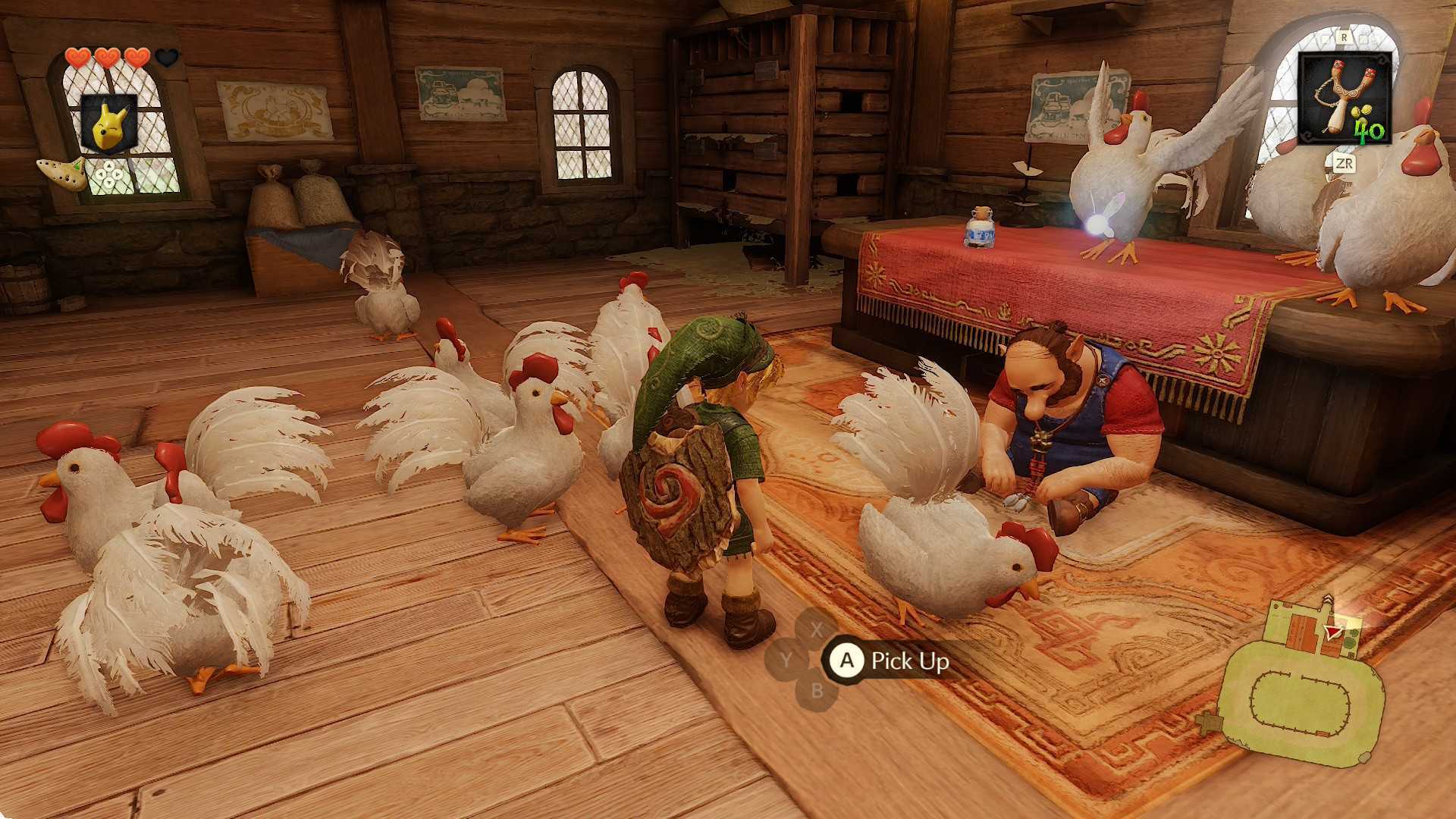
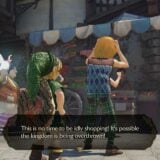
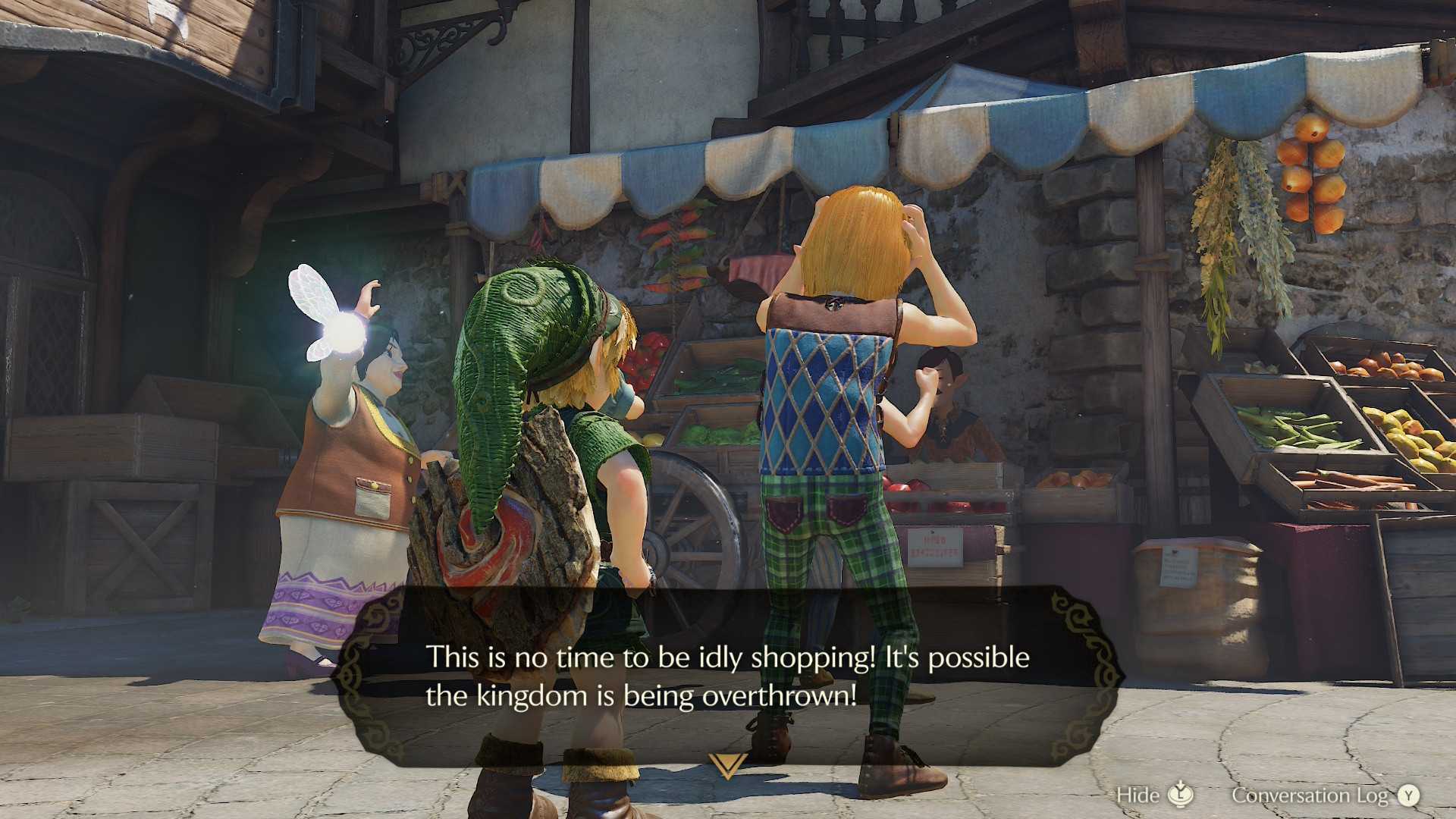
The remake’s Castle Town is populated with essentially all of the same NPCs that existed in the original, but with one key difference: just about all of them will speak to you, and most will do so at length, talking about whatever it is that’s on their mind. In that same short window of town panic right after Zelda has fled, almost everyone’s dialogue changes to remark on what just happened…but with a far deeper awareness of what’s coming than was expressed in the original game. A little girl talks about being told to stay away from the “old man chasing people.” The owner of the dog Richard spends all day and night frantically searching for him. Another wealthy woman demands answers from the guards. Some people, happy that fewer people are outside, go on a shopping spree, while one guy ponders stocking up on supplies in case of disaster. Honey and Darling continue to dance blissfully, deliberately ignoring the sound of horses.
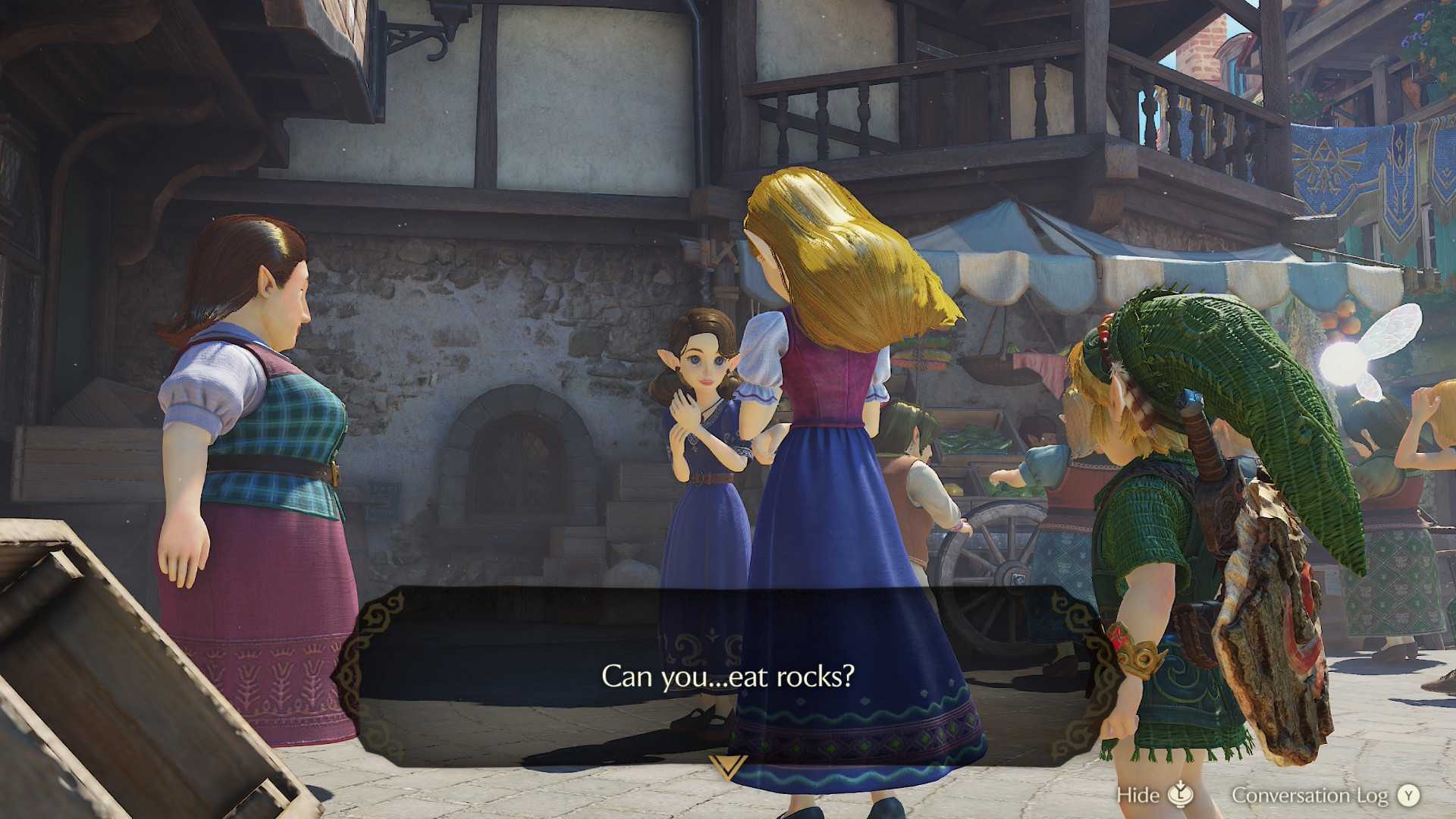
Multiple NPCs discuss leaving town, aware that an occupation of some sort is imminent. One woman in particular suggests she might move to Goron City, but gives up the idea when she remembers she can’t eat rocks, while another puts her foot down: “Cowards—all of you! I’m not leaving this town no matter what! I love this place.” When asked what she’ll do if the town is overrun by monsters, she stammers that she’ll “figure it out.” Maybe she’ll make friends with the monsters.
Is it weird to say I had to set the controller down for a moment after hearing all this? This whole scene was…a lot. So much more so than it was in the original. I am all-too-aware of many places in real life where people, for years and years, live extremely normal, cheerful lives. Then, something happens. Something off-putting, scary, ominous. Some folks insist everything will be fine. Others panic. Still others double down. And then, the worst thing imaginable, or even something unimaginable. People are made into victims or refugees by some force they had no power or time to stop. Harmony in one moment, horror in the next, and in between the two this tiny, surreal space of half-awareness of what might come, and disbelief that it ever could.
It’s easy to abstract the horror of all this in a video game when it’s zombies and cartoon villains. The soldier dying in the alley was sad and, sure, “dark,” but apart from a curiosity it never did much for me. Now, though, we have this haunting interlude between childhood and adulthood where these characters, briefly, exist in terrified uncertainty. These few minutes of wandering town and speaking with everyone hit me unexpectedly hard in a game that’s otherwise, relative to many other things I’ve played, pretty tame and even childish.
I think the small touch of adding all this dialogue to these NPCs in Castle Town in this moment, a moment most people will totally skip over, was a powerful and good artistic choice made by this new, younger development team. I don’t know about “dark,” I guess, or whether the remake is more so than the original. This scene has convinced me that such designations matter less than they ever did.