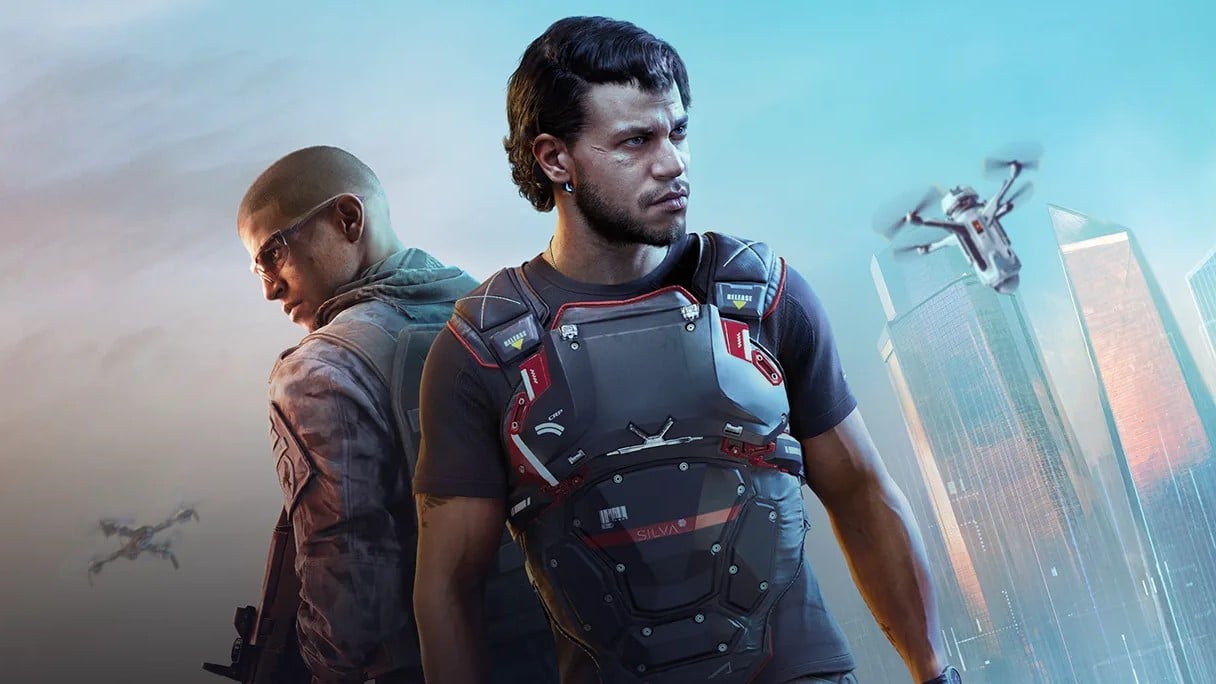
Chris Wilson has worked as an animator in the video game industry for over 20 years, and there’s a good chance he’s helped make something you’ve played. GSC’s S.T.A.L.K.E.R.: Shadow of Chernobyl, Rocksteady Studios’ Batman: Arkham Knight, IO Interactive’s Hitman: Absolution—the list goes on. Then there’s Build a Rocket Boy’s MindsEye, one of the worst-rated games and most lampooned launches in recent history. “Sometimes traumatic experiences can bring people closer, right?” he told Kotaku. “But people…they’re embarrassed about it. People don’t want to talk about it. They don’t want to say that they were part of the project or worked there.”
The studio’s faced two separate rounds of redundancies, accusations stemming from an alleged leaked internal meeting that the “enhanced cybersecurity software” Teramind was installed on employees’ workstations without their knowledge, and, most recently, a collective grievance led by the Independent Workers’ Union of Great Britain (IWGB) and signed by 40 Build a Rocket Boy workers, detailing alleged “unlawful blacklisting” and claims that the studio was “recording individuals in their homes and without their consent.”
The majority of the current and former Build a Rocket Boy staff involved in the legal proceedings have so far chosen to stay anonymous, but Wilson, who worked at Build a Rocket Boy from November 2020 to April 2026 as MindsEye’s lead cinematic animator, has opted to comment publicly. Kotaku sat down with Wilson for a four-hour-long interview last week to discuss his time at the studio and the fallout over the last year. Almost six years have passed since Wilson first joined the studio, so why come forward now? What was the straw that broke the camel’s back?
“Basically, the Teramind monitoring and the blatant lack of respect for the staff, where they were not being honest about the reasons for the monitoring, why they started it, when they started it—that was like finding that nail in the coffin for me,” said Wilson.
Teramind is, according to its website, an “employee monitoring software” tool that allows for keystroke logging, email monitoring, file tracking, social media monitoring, remote desktop control, and visual and audio recording—including direct access to a device’s built-in microphone.
Build a Rocket Boy was founded by Leslie Benzies, former president of Rockstar North, where he enjoyed nothing but success working on the Grand Theft Auto series. His reputation took a hit, however, from MindsEye’s buggy, poorly received launch, and the summer of layoffs that followed. He then took a temporary leave of absence after his name appeared in some of the Epstein files released by the Trump administration (he denied any association with Epstein or any wrongdoing).
While Benzies is now back in the office, ongoing drama around Build a Rocket Boy was recently stoked by co-CEO Mark Gerhard’s decision to threaten YouTuber Cyber Boi with “escalated legal action”, via a “formal cease and desist” posted in the MindsEye Discord server, for publishing a YouTube video discussing Benzies’ presence in the Epstein files, and by recent accusations from Gerhard that people inside and outside the studio were working to sabotage it, an assertion which Gerhard states is currently being investigated by law enforcement.
As Gerhard has served as the studio’s mouthpiece following Benzies’ sabbatical from Build a Rocket Boy, the extent of the two co-CEOs’ collaboration has been unclear. During Benzies’ leave, Gerhard announced that MindsEye would be receiving an update on April 28, which would feature a new mission titled “Blacklisted.” According to Gerhard, the mission would be used to “share some of the evidence of the sabotage with the community”—sabotage he believes was committed by Cyber Boi and Ritual Network.
Blacklisted had started life as something else entirely: a crossover mission featuring Agent 47, the protagonist of the Hitman franchise, the flagship property of MindsEye’s original publisher, IO Interactive. However, on January 30, Insider Gaming published a report detailing the cancellation of MindsEye’s crossover mission with IO Interactive’s Hitman franchise. According to Wilson, Build a Rocket Boy repurposed the content in the Hitman mission for use in the Blacklisted update, which went live on April 28: “So originally that was part of the IO Interactive Partnership, which was originally the Hitman mission. Then obviously, with the disintegration of the partnership with IO, things started to move more towards Blacklisted[…] Originally, it was just Hitman arriving in Red Rock, and then we replaced the Hitman character with the current character for Blacklisted. So there was no mention of any of the sabotage or anything like that.”
According to Wilson, the proof of sabotage by Cyber Boi was shared with Build a Rocket Boy staff during a surprise meeting in early 2026, during which Benzies read “hate mail from his personal email” for ten minutes. Benzies attributed these comments to the YouTuber, and the slur-filled emails apparently proudly admitted to “sabotaging” the company. “Now, these emails read like League of Legends chats,” said Wilson. “In no way did it seem like a sophisticated multi-million dollar plan to try and take down Build a Rocket Boy.”
Unsurprisingly, the meeting and the lacklustre evidence of sabotage provided didn’t go down well with Build a Rocket Boy employees, as it followed Gerhard’s announcement in February that a number of staffers were being made redundant. According to Wilson, employees had little sympathy for Benzies as he rattled off the hate mail he’d purportedly received. “Everyone was just sort of beyond caring, like, ‘Oh, poor babies.’ Meanwhile, the staff are like, ‘I might lose my house, because you’re making me redundant.’”
Wilson explained that Gerhard’s LinkedIn announcement was actually how staffers first learned about the latest round of layoffs: “There was never an internal company meeting regarding those redundancies. I know a number of people that found out about the redundancies through either the LinkedIn posts put up by Mark Gerhard, or through family who saw the post and then were calling their family members going, like, you know, ‘Sorry to hear this.’ People were a bit dumbfounded.”
Wilson also stated that he believes the redundancies in February may have been influenced by an internal poll distributed to Build a Rocket Boy’s staff. As he explained, several developers at the studio were apprehensive and “quite vocal” about MindsEye’s Blacklisted update, with many not wanting to work on it due to Gerhard’s alleged comments that Build A Rocket Boy would “own this narrative” and “use” the names of Cyber Boi and Ritual Network in the mission: “And so as a result of that, the company decided to put out a poll asking like, ‘Should we remove it? Should we include it?’ Now, anyone I spoke to agreed that we should not [include it]. Then there was a follow-up poll, and it’s my belief that they didn’t get the results they were hoping for—that it would be unanimous, that everyone would agree to put it in [the game…] I do feel personally that they could have possibly used those results to influence [decisions about who got let go]…[The surveys] were not anonymous.”
While the last year of Build a Rocket Boy-related antics paints a picture of a studio in rapid decline, I was curious if the company’s earlier years, when Benzies was fully in control, were comparably mismanaged. Wilson told me that while the pre-Gerhard years still felt somewhat unorganised, the vibes under Leslie Benzies were noticeably more positive. During the early years, Benzies even “put on a barbecue” for staff at his private residence in Los Angeles. “I got to know him there. Seemed like a good guy,” said Wilson. “And in getting to know him through that, it made me want to be, like, ‘Okay, yeah, I can understand this guy’s vision, and I will do what it takes to the best of my ability to make it happen.’”
However, following this period of positivity, the inevitable occurred: crunch. Crunch has, thankfully, become a dirty word in the video game industry over the past decade, though it’s hardly been stamped out. Due to his time at Rockstar Games, Leslie Benzies has an infamous association with crunch culture, as public scrutiny regarding the practice began to take root during his work on Red Dead Redemption in 2010 and Grand Theft Auto V in 2013.
Luckily for Benzies, he managed to dodge the full brunt of Rockstar Games’ crunch-related criticism in the late 2010s, as he went on sabbatical leave in September 2014. Following this sabbatical, it was revealed in January 2016 that he had fully parted ways with Rockstar North. Rockstar Games would later be condemned for its crunch culture practices during the development of Red Dead Redemption 2 in 2018.
History has a funny way of repeating itself, though. In October 2025, over 90 Build a Rocket Boy staff signed an open letter criticizing the studio for its forced crunch during the development of MindsEye. “Even before the disastrous launch of MindsEye, staff had suffered months of crunch, resulting in some horrific mental and even physical illnesses, beyond the typical widespread burnout,” stated Build a Rocket Boy’s former lead games analyst Ben Newborn.
Wilson echoed Newborn’s sentiment when the topic of crunch came up during our interview: “It was hard for a lot of people. It did go on for a considerable amount of time[…] Some teams were on crunch for quite some time. In cinematics, we were probably in crunch from June until a good few months later…no overtime pay or anything like that.”
“Eight hours was the minimum requirement, but people were doing way more for sure,” Wilson continued. “I was doing way over an additional eight hours a week…there were people who were certainly not appreciative of having to work those extra hours, but a lot of people just had to bite the bullet. I think Cinematics were crunching for somewhere between six to nine months. Some people racked up a lot of extra hours, and that’s outside of the general day-to-day stuff. People were already doing extra hours, and then they introduced the crunch as well.”
Yeah, Mindseye definitely needed a delay… pic.twitter.com/mhBNkvMN2f
— NikTek (@NikTek) June 10, 2025
And yet, worst of all, Wilson feels like his time working on MindsEye may hurt his chances of working in the industry again. “It’s driven some people mad to be associated with this, you know? And, I hear stories of people going for interviews, and while they’re in the interview, the interviewer is like, ‘Oh, you’re at Build a Rocket Boy? I’m so sorry.’”
Likewise, Gerhard’s Cyber Boi outburst on Discord back in January, during which he accused the content creator and his unnamed associates of “criminal espionage, sabotage, and interference,” particularly annoyed Wilson. He accused the CEO of being a magnet for bringing negative energy to the team and the game, despite allegedly having little real involvement. “He’s had no input into the game that people have spent eight, nine years working on,” Wilson said. “If I was Leslie, I would be like, ‘Dude, shut your fucking mouth.’ Anyone else would have been fired out of a cannon into the sun, but then it just kept going.”
Additionally, upper management at the studio stated to staff in January that they’d “only been testing [Teramind] for the last couple of weeks,” but Wilson says he has reason to believe that employees had been monitored with the software beginning months earlier. Wilson said he’d “heard through the grapevine” that a “very key member of staff” at Build a Rocket Boy was privately contacted by Benzies for assistance, so the co-CEO could determine if Teramind had been installed on his own work devices. “This was probably around December. They were working from home. This is where the risk and the rumor of having your personal home environment recorded started. I’d heard that Leslie had reached out to this person privately, asking them how to test to see if Leslie had the monitoring software installed. So even he was not aware of it going on at the time.”
Kotaku reached out to Build a Rocket Boy for comment, detailing all of the claims made by Wilson, and received the following response in an email from Mark Gerhard:
Build A Rocket Boy has always conducted its operations lawfully and appropriately. The security systems and measures we have in place are implemented lawfully, proportionately, and in full accordance with established internal policies. These protocols are designed to protect our team, proprietary technology, creative work, our studio, and the wider gaming community we serve.
MindsEye is a game that commands attention. It compels players to pause mid-scroll, do a proper double-take, and immediately start wondering when they get to play it. The title has generated substantial anticipation and interest for all the right reasons, even if some of that attention has arrived with rather questionable intentions.
As a studio dedicated to creating exceptional interactive experiences, we remain focused on delivering high-quality games for our community. We do not engage in public commentary concerning former employees or unauthorised disclosures of confidential information. After all, we prefer crafting memorable experiences inside the game rather than providing cheap entertainment for the backstage-drama crowd.
Four hours after the statement was sent, Kotaku received a second email, simply attributed to “Build A Rocket Boy communications,” asking us to “please discard the earlier statement” and use an alternative one instead:
Build A Rocket Boy has acted at all times completely lawfully and appropriately, and we reject any effort to suggest misconduct where none exists. We are so proud of our talented and deeply creative team, whose work is the reason MindsEye exists and continues to evolve.
We are not going to turn disputed internal matters or selective fragments of workplace discussion into public entertainment. MindsEye is a game that commands attention: bold, cinematic, ambitious, and built to get people talking. When creative work breaks through, it attracts players, critics, theories, debate, and, best of all, the kind of mega fans who remind us why we built the thing in the first place. But attention also brings noise, and noise should not be confused with fact. Not every storyline is accurate, complete, or fair.
Our focus remains exactly where it belongs: on our players, our team, and the continued work of building unforgettable experiences. Any genuine issues will be addressed through the proper channels, not tried through headlines, anonymous claims, or social media theatre.
The difference between the two emails is clear: Gerhard’s statement focuses on the drama surrounding MindsEye, but the more formal, second email focuses on the “talented and deeply creative team” behind the game. It’s an appropriately chaotic form of response, however, given Wilson’s confusion regarding who is currently leading Build a Rocket Boy.
“To be honest, I don’t know who is leading,” Wilson told me. “I mean, Leslie’s back. Leslie’s in the office. In my last days, he approached me. He said he wanted to have a chat. Obviously, since the articles have gone out in the last couple of days, that did not happen…”
So, why did Lezlie Benzies, who produced the likes of Grand Theft Auto V, Red Dead Redemption, and Max Payne 3 during his time at Rockstar Games, decide to go into business with Gerhard in the first place? “I’ve been thinking about it for the last couple of years since [Gerhard has] been involved, and I cannot figure it out,” said Wilson. “It seems predatory. Leslie… it’s almost like he’s lost his confidence and his pride at some point.”
Wilson claimed the company’s org chart has also been redrawn to sideline Benzies. “Just after it was announced that Leslie was going on his extended holiday, the entire chart moved from Leslie to Mark,” he said. “So Leslie’s still there, but he has no one below him. Essentially, it seems like it’s just a takeover.”
As the interview came to a close, Wilson took the opportunity to speak on behalf of the developers who have spent the better part of a decade pouring their life’s work into MindsEye: “Despite the highs and lows of the development cycle of MindsEye, the development staff did all that they could and tried their hardest to make it something very, very special. We would in no way try to sabotage or bring down the company. That would go against our better interests. We are developers. Making games is our livelihoods, our careers. All we want to do is to make the best, most entertaining product for not only ourselves, our friends, and our family, but for anyone else that’s willing to pick up the product and give it a try.”