I have been waiting for Dragon Age: The Veilguard for 10 years. The last game developer BioWare put out was 2019’s Anthem, an ill-fated loot shooter that chased live-service trends and felt like a misuse of the team’s talents. In the years since, there have been reports and admissions from the studio that the fourth entry in the studio’s fantasy RPG franchise had undergone multiple revamps, including pivoting away from a live-service, multiplayer-driven game in 2021. At a glance, The Veilguard, with its emphasis on narrative and on the multiple well-developed, three-dimensional companions you can befriend or romance, seems like a strategic shift back to core principles for a studio that has been fumbling to find its voice again.
Order Dragon Age: The Veilguard: Amazon | Best Buy | GameStop
The Veilguard is a single-player, story-driven RPG with a focus on its companions so precise that BioWare renamed the game to represent its team of mages, warriors, and rogues, rather than the elven god Solas they hope to stop from ending the world. (The game’s original title, Dreadwolf, was a reference to him, the game’s antagonist.) All of these elements are the makings of a BioWare game that will draw in fans of the studio known for its character writing, relationships, and worldbuilding. But despite their presence, The Veilguard has already been divisive, as its hard pivot into the action RPG genre feels decidedly at odds with Dragon Age’s CRPG roots. Which begs the question: After 10 years, has BioWare learned the right lessons, not just from its own struggles over the last tumultuous decade, but from the successes that made Dragon Age and the studio beloved in the first place? After playing seven hours of The Veilguard, I’m feeling more confident than ever that it has.
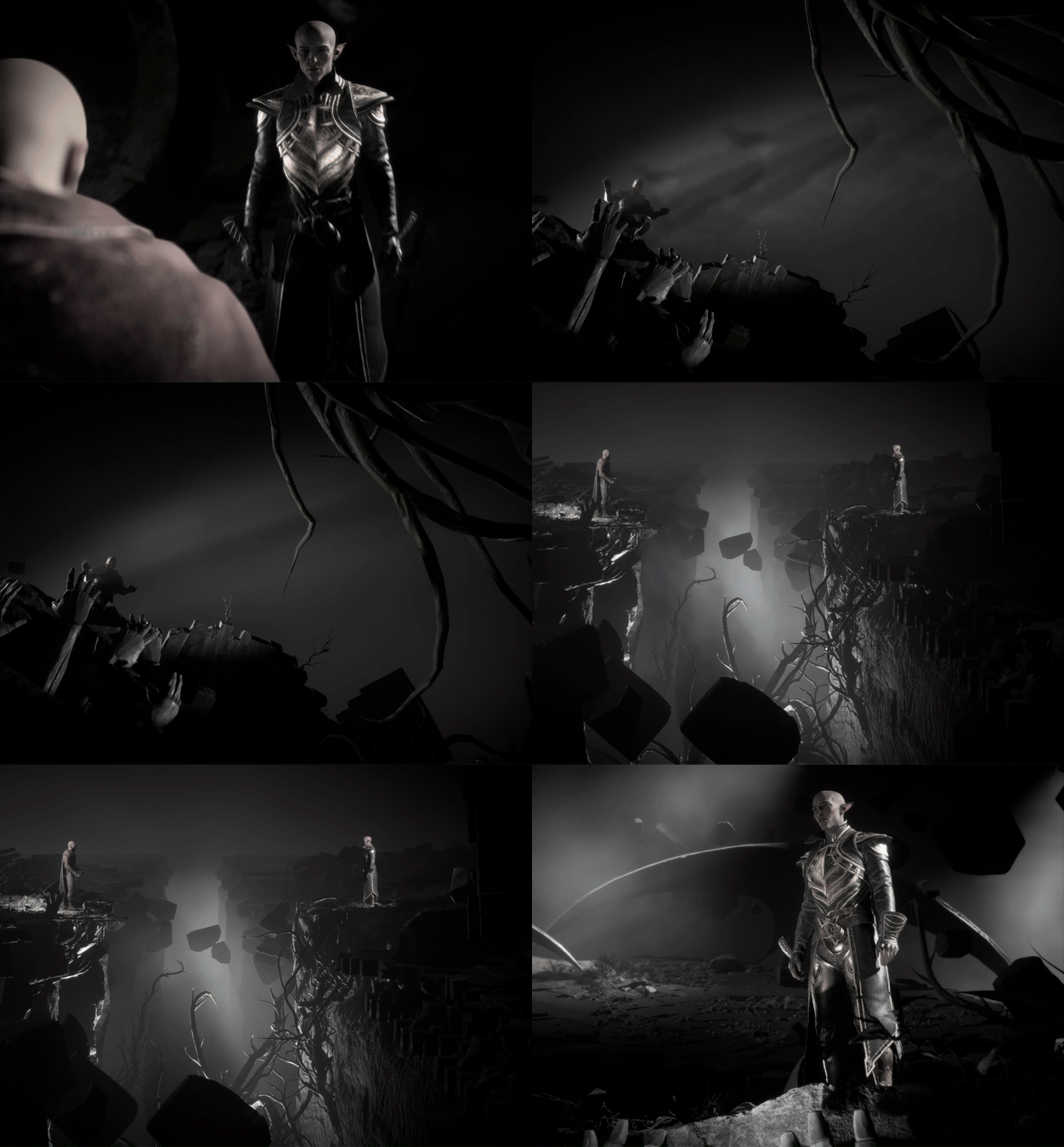
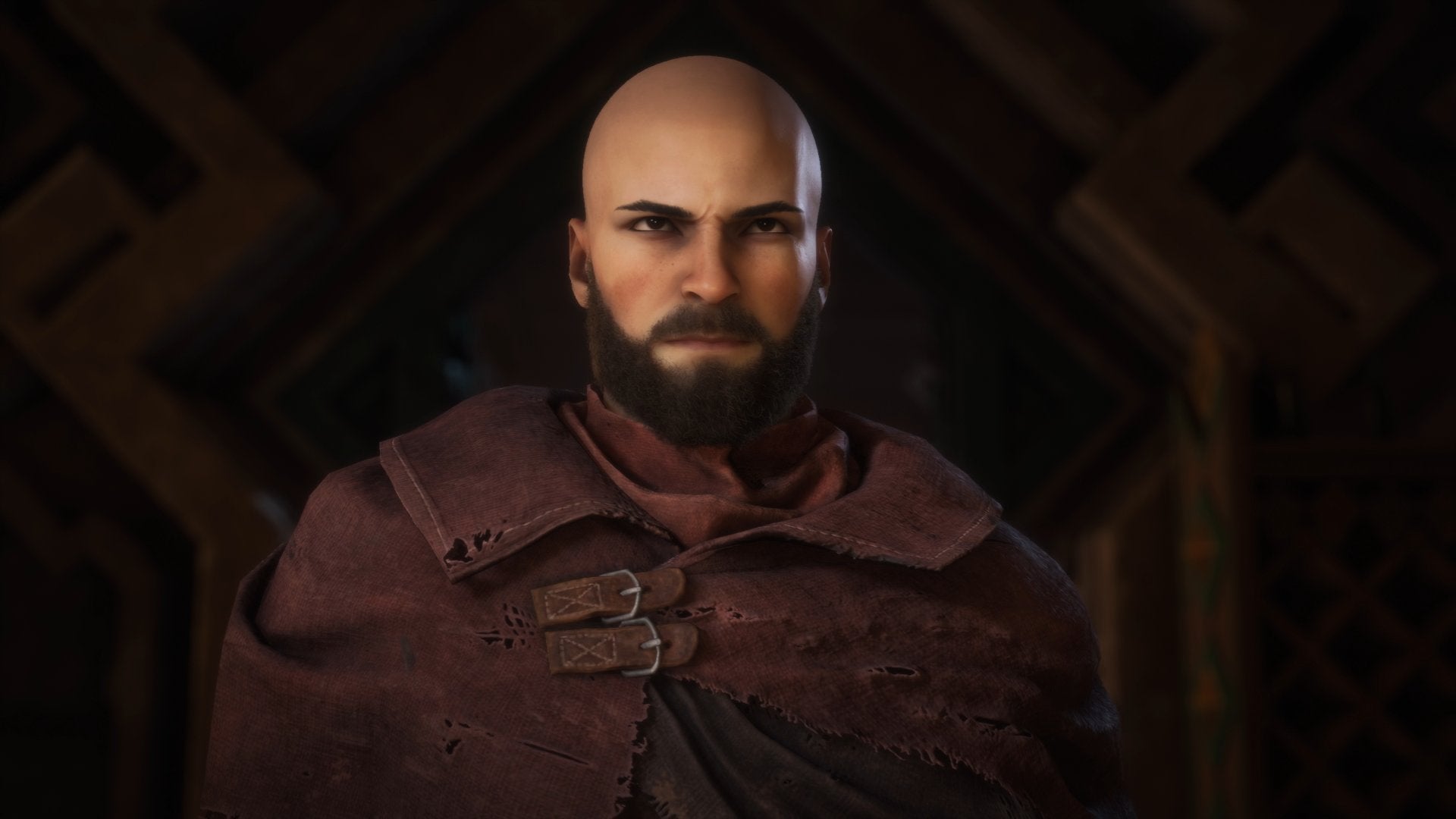
As a long-time fan of the series, what struck me most about The Veilguard was how, despite its fast-paced action combat bearing little or no resemblance to the battles from previous games, much of the connective tissue between this story and past worldbuilding feels intact. The game stars Rook, a new hero of your own creation, working with beloved characters Varric Tethras and Scout Harding to take down Solas, the elven mage from Dragon Age: Inquisition who, it’s revealed in a post-credits scene, is actually an elven god called the Dread Wolf. The Veilguard has its own twists and turns that make even that synopsis merely the tip of the iceberg, but as a starting point, it’s comforting to know we’re heading into the conflict fans have been waiting for.
But it’s not just the main plot that draws heavily from previous threads. Much of the game takes place in Minrathous, the magical capital city of the Tevinter Imperium where magic reigns over the common man. We’ve heard conflicting accounts about the city, from characters like Inquisition’s mage pariah Dorian Pavus and Dragon Age II’s elven slave Fenris. Now, we’re finally going to what feels like BioWare’s magical take on an oppressive cyberpunk city, where we’ll get to form our own impressions of it and—in classic BioWare fashion—make a difference. I’ve been a mage in all three previous games. I loved a Tevinter slave in DA2 and a man who hoped to change the country in Inquisition. In playing the early hours as my radical mage Rook, it felt like all of my time in the Dragon Age universe had been leading to this moment.
The Veilguard feels like the Dragon Age I’ve been waiting for
After waiting 10 years and hearing reports of drastic shifts in the project, I was naturally concerned about whether we’d get a satisfactory continuation of Solas’ story. According to creative director John Epler, abandoning that plot thread was never in the cards, even as the game that would become The Veilguard went through its multiple iterations.
“At every iteration of this game, it was gonna be the hunt for Solas,” Epler told Kotaku. “We ended Trespasser with a dagger in the map on Tevinter. Those were kind of the core of [the story]. We knew we wanted to go to Northern Thedas and part of that was just we wanted to try something new, go somewhere new. And I mean, for me, Tevinter has always been this place we’ve said so much about, but we’ve never been able to show it before. So it was always like we need to go there. That makes the most sense. And then for Solas, obviously, at the end of Inquisition, he revealed himself as the Dread Wolf. At the end of Trespasser, we revealed his plan. Those two have always been a part of this game no matter what, it was always going to be about Solas to some degree and it was always going to be at least partially in Tevinter.”
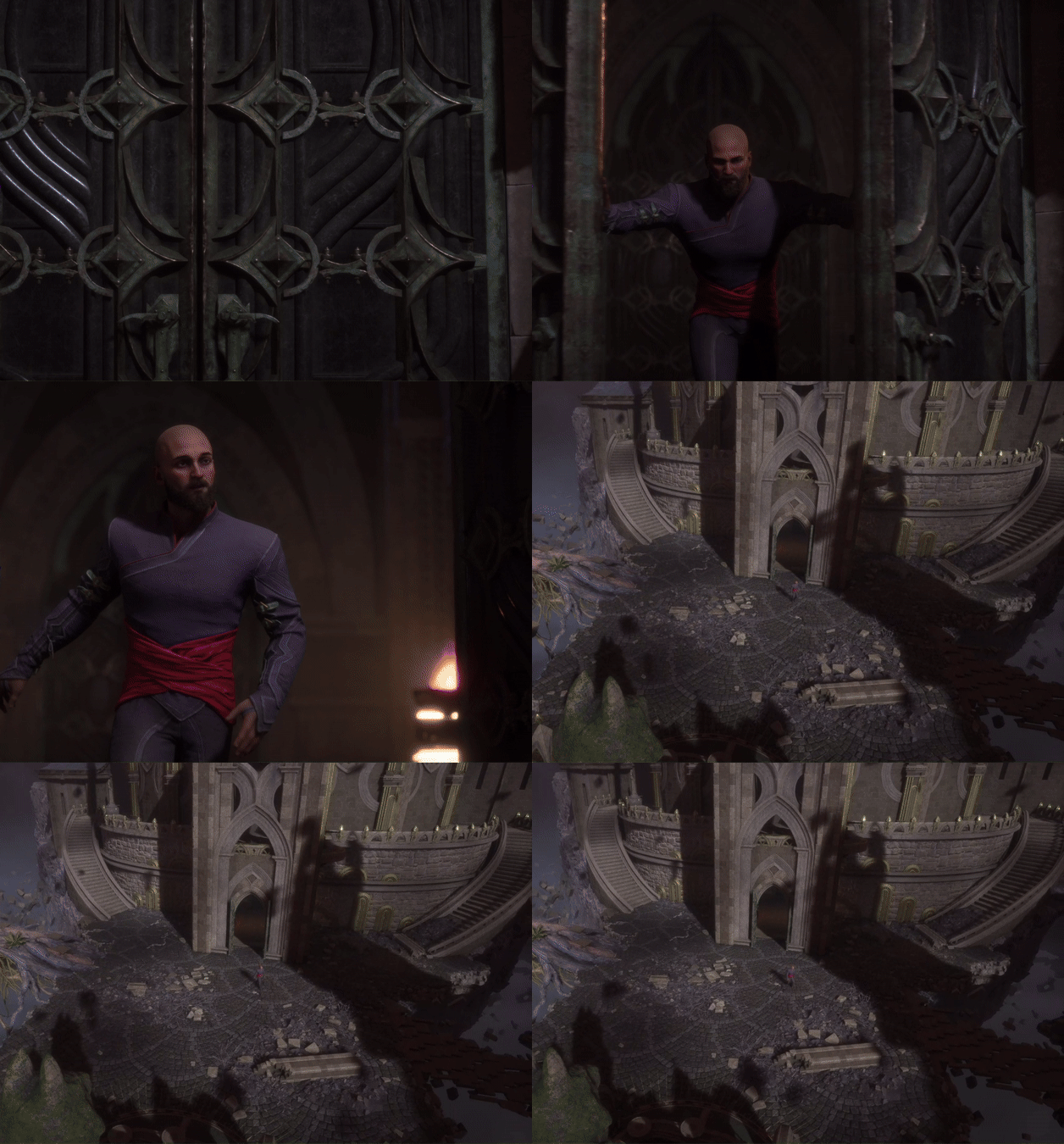
While Tevinter and the city of Minrathous have been central to everything we’ve seen of The Veilguard so far, the game broadly takes place in northern Thedas, using the series’ portal-like Eluvian network to let players bounce around other distinct locations like the countries of Antiva and Rivain, which have also been spoken about in previous games but never fully explored. However, one of the ways BioWare seems to have been more measured and played to its own skill set is that The Veilguard doesn’t echo Inquisition’s open-zone structure. Nor is it quite Dragon Age II, which all took place in one concentrated area. Instead, what I played felt more structured like a Mass Effect game, utilizing bespoke missions and environments that tell contained stories that flow back into the main one.
One of the best examples was the recruitment mission for Lucanis Dellamorte, the Antivan assassin found in an underwater prison. Not part of one of the cities I’d already seen, it was a sequestered area that didn’t feel like it was caving under the scale of an open-world structure. The Veilguard has smaller environments that are densely packed with things to care about, rather than a lot of empty space for you to ride through on horseback while trying to get to the shit that matters. It feels like BioWare is working with a reasonable scale to cater to its strengths. After wasting hours of my life moving through Inquisition’s Hinterlands forests or Mass Effect: Andromeda’s harsh Elaaden deserts, I can’t begin to describe how refreshing it was to just get to the heart of what I came here for with ease.
The action-based combat, meanwhile, feels more comparable to that of Mass Effect than Dragon Age, for better or worse. You have two companions rather than the previous three, and unlike in previous games, you can’t swap control to them to change up how you play. This is certainly a change that’s hard to swallow for long-time fans, and when I heard this news, I was concerned about what we’d gain in this trade-off. But as it turns out, I never encountered an enemy or situation that merited switching off my Rook to play as Harding, the ice mage Neve, or any of the other companions I fought alongside in my seven hours of play.
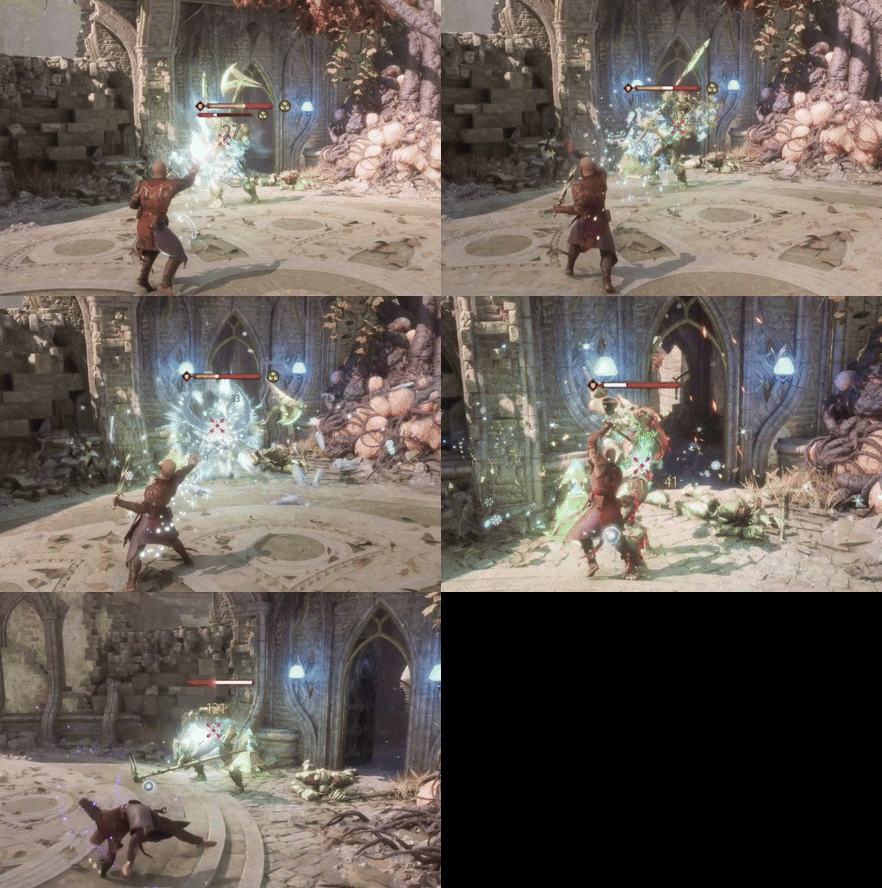
In a vacuum, The Veilguard feels like an exceptionally solid action RPG, but it’s not designed to feel evocative of previous Dragon Age games, and I know that will rub some the wrong way. However, I don’t feel like I’ve lost anything in not being able to swap to companions, because the game seems thoughtfully designed so that you’ll never need to. Here, your teammates act more or less as cooldown machines, dropping in their own abilities at your command and helping you execute combos. They’re here to support you, rather than offering skill sets you’ll want or need to deploy yourself. There’s an enjoyable synergy to the teamwork that comes from moments like using my Ultimate ability to gather enemies together in a black hole while ordering Neve to freeze all of them in place with an ice spell. It doesn’t feel quite like Dragon Age as we know it, but it still feels really good to set up combos alongside your team. But The Veilguard also probably makes me feel the most independent I’ve ever felt in fights in Dragon Age, and that’s coming from a career mage player.
Every class in The Veilguard feels more versatile than it has in the past, in keeping with the baseline action combat BioWare has designed. Whether you’re a warrior, mage, or rogue, you get two weapon sets that you can switch between on the fly. Warriors can use a standard “sword and board” build or change to a two-handed axe. Rogues can go back and forth between dual daggers or a bow. Mages, however, sported the most interesting kit I saw during the preview. My Rook started with a staff that felt like The Veilguard’s version of the previous games’ long-range mage builds. But I was also able to swap to a dagger-and-orb build that let me fight at mid-range with a magical sphere I was able to throw back and forth to keep enemies at a comfortable distance. Then, if they got too close, I still had my dagger in hand.
Those parallels and the inherent versatility of each class have naturally made some of the more methodical teamplay of previous games slip through the cracks, but BioWare says the rest of the RPG elements are meant to make it more than a hack-and-slash game for those that want to create builds.
“We’ve always had different combat styles for each Dragon Age game, but the two focuses have always been moment-to-moment gameplay needs to feel fluid and there needs to be that strategic layer,” Epler said. “And I think once you start getting especially into the skill trees, once you start getting into companion abilities, there is still a lot of that strategy in this game. And especially as you get to harder difficulties. You either need to be very, very good at the moment-to-moment gameplay or you need to dive deep into the strategic layer to succeed.”
While Mass Effect is an easy in-house comparison to make, Epler told me that games like Final Fantasy VII Remake were a big influence on The Veilguard’s world construction, and the S.T.A.L.K.E.R. games were a surprising inspiration for environments like Arlathan Forest as “this weird magical Chernobyl where things have gone wrong.” Of course, BioWare has also been looking at its own history, but the specific game that Epler cited the most from the studio’s own past is a surprisingly divisive one.
2011’s Dragon Age II is one of the most divisive games BioWare’s put out. The sequel was notorious for its crunched development, and it shows in its smaller scale and reuse of environmental assets. It has some pretty interesting ideas, though, too; ideas that I can’t help think about as I play The Veilguard. It was more action-oriented, more self-contained, taking place as it did in one city, and it’s the most companion-driven story in the franchise. The Veilguard is unapologetically an action-RPG, stripping away the open-zone structure of Inquisition, and it’s brought back the divisive “free-for-all” romance mechanics of DA2. It even falls back into Dragon Age II’s dialogue system, in which you choose from three distinct “personalities” of nice, sarcastic, and aggressive, complete with the same icons on its dialogue wheel. Given all of this, I can’t help but feel like The Veilguard is a spiritual successor to one of the more controversial games in BioWare’s portfolio. Epler says that each of the past Dragon Age games served as an influence, but DA2 and its party dynamic have been one of the biggest inspirations as the team decided what lessons to take from the sequel’s reception over the years.
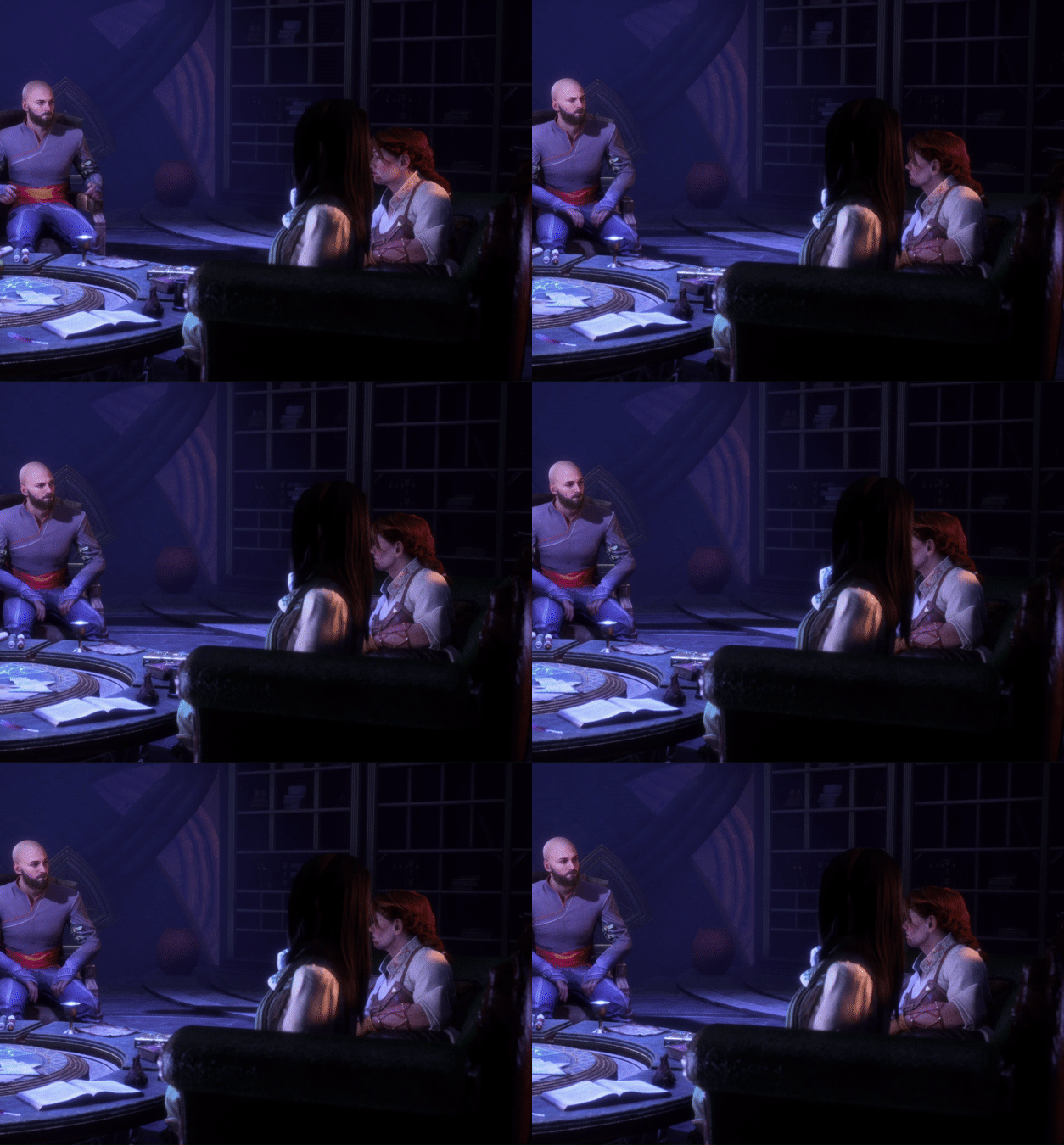
“I think, for me, it’s a lot of the foundations of [Dragon Age II that influenced the team],” Epler said. “A lot of the ideas behind the characters, especially around the way that the companions were handled and how they felt over the course of the game [as you] built this group that [we looked back on]. There were more interactions between companions than there were in pretty much every other Dragon Age game. DAI had the Wicked Grace game, DAO had back-and-forth between characters at camp, but DA2 is the one that really focused on, ‘These are people with their own lives.’”
For the folks at BioWare, there still seems to be a lot of love for Dragon Age II despite its troubled development and mixed reception. Asked if there was anxiety or concern about drawing on such a divisive game, Epler says that looking back on it for The Veilguard is just about making a judgment call on what was worthwhile to revisit and what shortcomings may have just been a result of the development parameters the team was given.
“I don’t know if there’s so much anxiety, it’s just something where you want to make sure you’re drawing the right lessons and not drawing the wrong lessons from it. It was at the end of the day, it was a game made in a very short period of time. A lot of that was, I wouldn’t say failures of execution, it was executed as best as it could be, but it could never be necessarily executed better than that.”
Back to basics
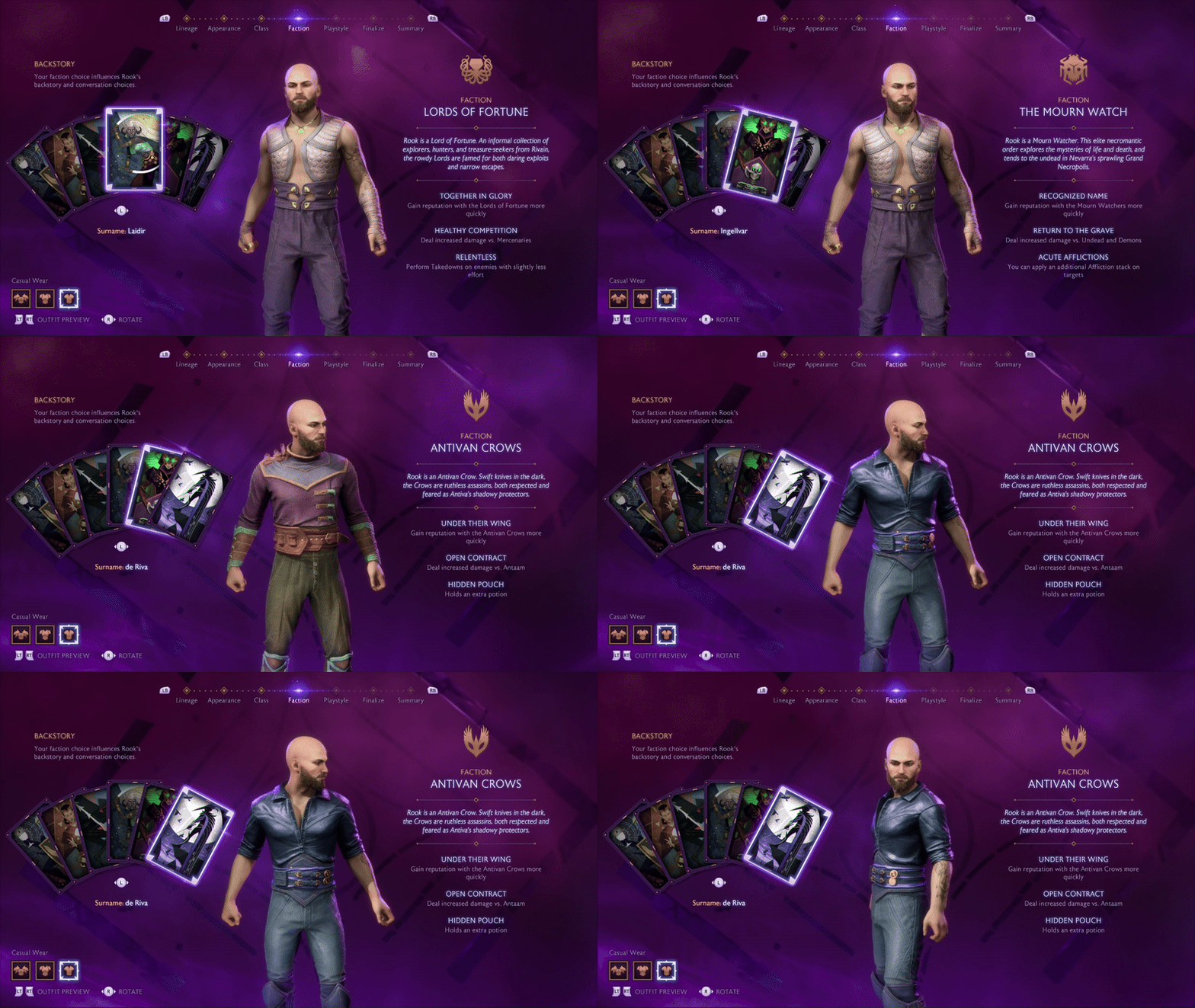
Game director Corinne Busche said during a developer Q&A after our demo that Dragon Age’s constant reinvention of itself has been the “greatest challenge” and the “most interesting opportunity” for her, and said picking and choosing what to bring with them from previous games was a key question throughout The Veilguard’s development. Whether it’s small things like Rook’s six possible backgrounds feeling like an homage to the original Dragon Age: Origins or larger-scale design philosophies like the fast-paced combat of Dragon Age II clearly influencing that of The Veilguard
“I think I could speak for the entirety of the team that our hope is that this all comes together to respect where we’ve been, but also advance the franchise into this next adventure into Thedas,” Busche said.

From what I played, I believe that it will. I don’t think I would have believed that if The Veilguard had been a live-service multiplayer game. I have spent the past 10 years feeling cynical about Dragon Age, as I long feared it wouldn’t be able to deliver the conclusion I was looking for, and with each passing year my cynicism only grew. 2017’s Mass Effect: Andromeda brought me back home to my favorite world in video games, but was chasing open-world and live-service trends in the margins of what, with proper scaling, could have been a better game. Anthem confirmed my fears that a studio which had created worlds I’d spent thousands of hours in and thousands of hours thinking about had been devoured by the hunt for the next big live-service phenomenon. Now, The Veilguard feels both like a calculated return to familiar territory and a bold declaration of what the studio should have been making these past 10 years.
It’s a shame it took all this strife to get here, but playing those seven hours made me more confident than I’ve felt in years that this team has its head on straight again. Dragon Age: The Veilguard might not be the game some fans want, but it feels like the game BioWare needs.
Order Dragon Age: The Veilguard: Amazon | Best Buy | GameStop
.