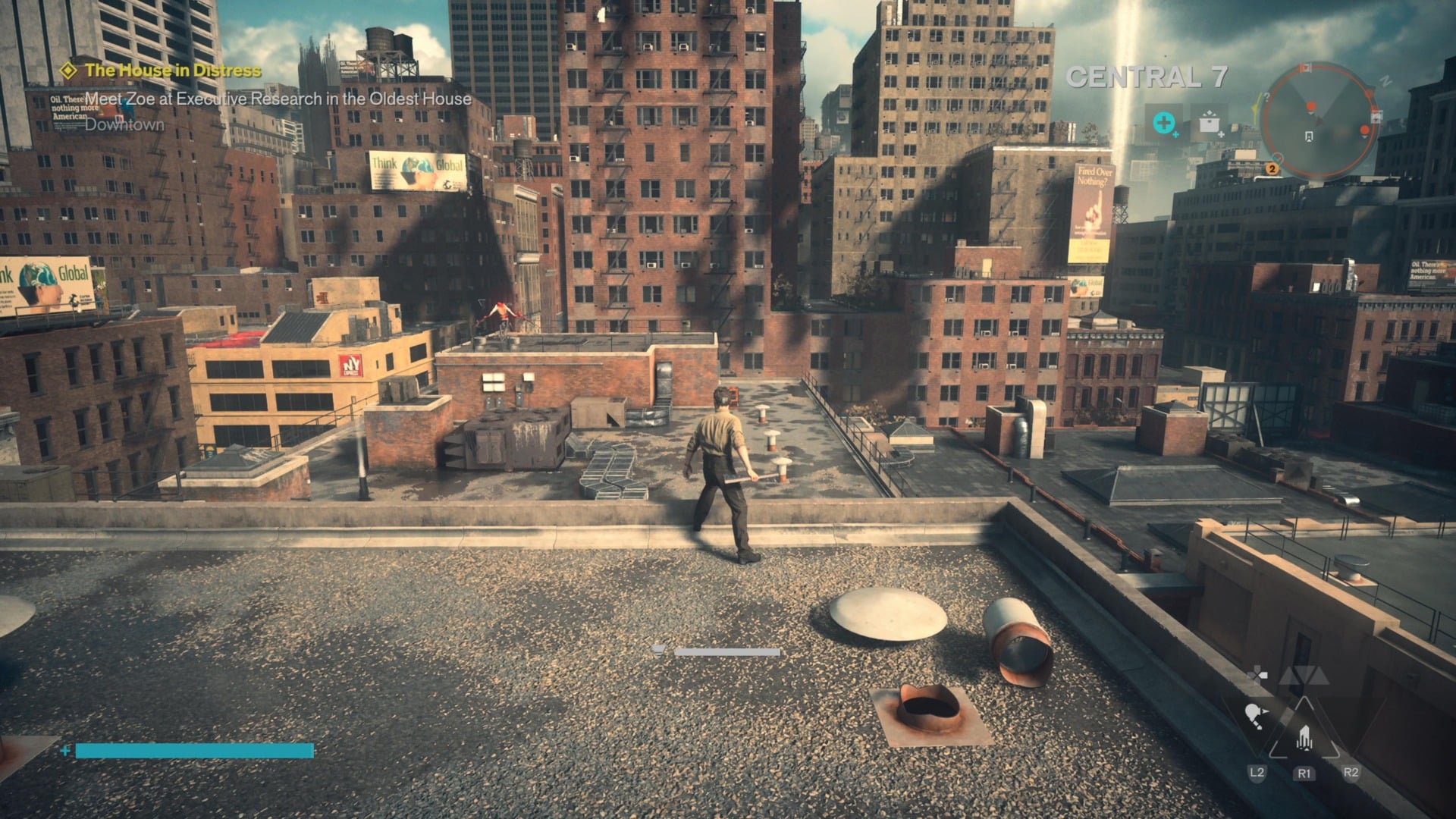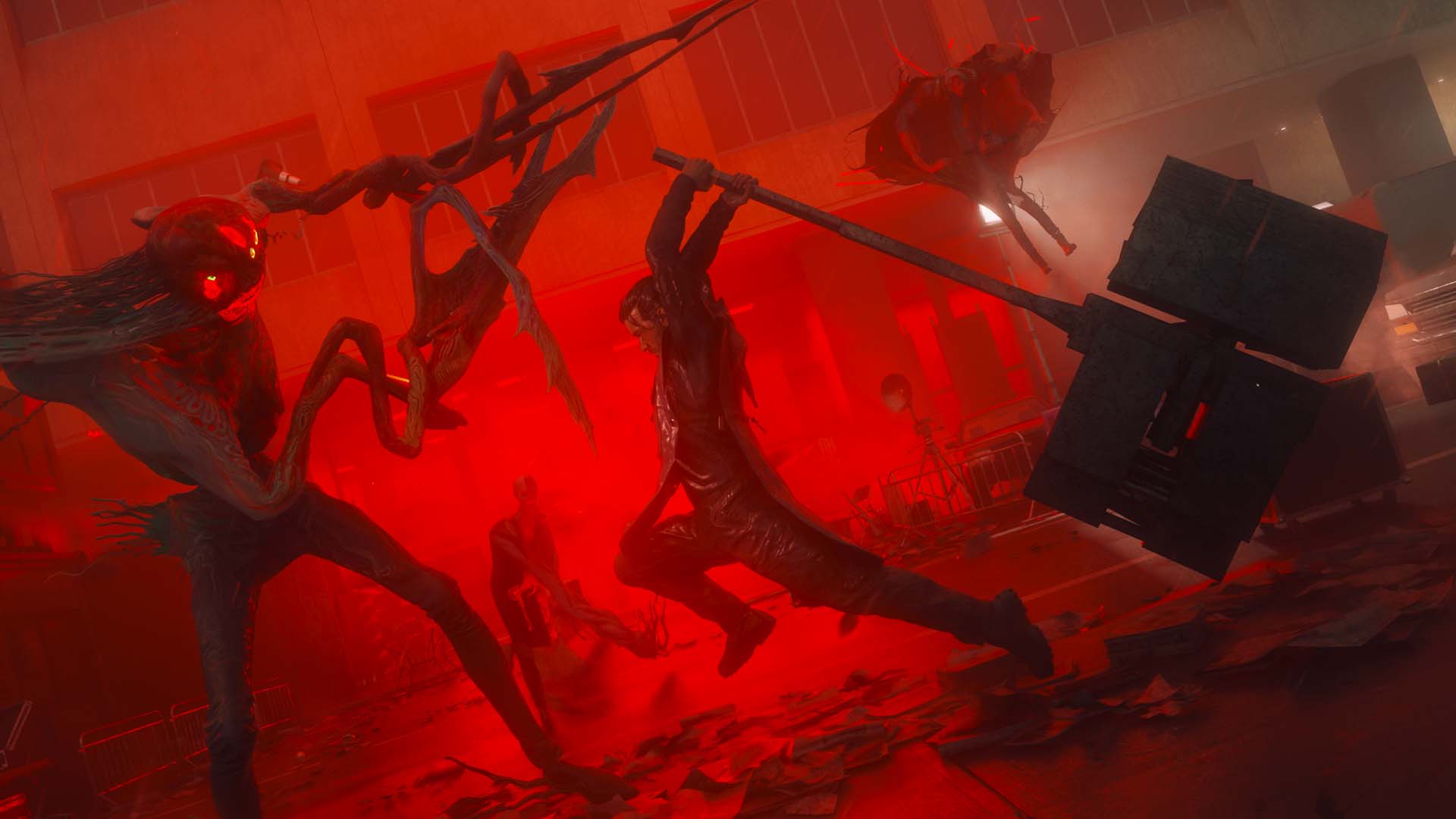
Control: Resonant is a very cool open-world game that doesn’t feel the need to tell you everything or always clearly point you in the right direction. Instead, as recently explained by the game’s director, the Remedy-developed sequel purposely avoids covering ledges and doors in yellow paint because the team wanted players to “participate in the experience” of playing the game and finding their way through it.
Out now on consoles and PC, Control: Resonant is Remedy’s bigger open-world action RPG sequel to 2019’s Control. Yet despite the shift to a much bigger map and a bigger focus on exploration, the devs working on Resonant didn’t paint big yellow spots and splashes on climbable ladders or important doorways or chests. The game avoids the controversial yellow-paint method of telling players where to go and instead uses lighting, in-world props, and more to guide players in the right direction.
“It was a conscious decision, obviously,” said Control Resonant director Mikael Kasurinen in a new interview on the Dropping Frames podcast.
Kasurinen then explained his theory of what makes a good game, which is a balance of competence, autonomy, and relatedness. When it comes to yellow paint and guiding players, autonomy is the most important factor, and therefore Resonant’s director prefers to avoid obvious markers, directly referencing the “fart trails” seen in Wolverine that guide players to the objective.
“It’s so important that the players feel like they’re the ones figuring it out,” said Kasurinen. “It’s the job of us as creators to…I mean, it is a crafted experience at the end of the day, right? You have to find the right balance between ‘here’s the world’ and ‘here are the different themes and elements that you have to pay attention to.’ But it has to feel like it’s on you to make a decision on what to do with those elements that you see within the world. If it feels like it’s like ‘go here,’ it’s not anymore a decision for the player. Somebody already decided for you.”
“[There’s] nothing fucking better than it feels like I found my way to do it,” he added, while also acknowledging that for some players Control Resonant will feel “impenetrable” at first. They likely won’t know what to do or where to go. But that’s not necessarily a bad thing, as Kasurinen genuinely has a “desire for the players to participate in the experience.”
“They can’t be outsiders who just kind of look at stuff,” he explained. “They have to be there, participating in the work of figuring out what to do. And that we’re not going to tell them necessarily directly, and that’s a difficult thing because it can alienate a lot of people really quickly with that. So yes, it is a bit of a risky thing, but I ultimately believe that that’s the right way to go about this, and that’s the right approach, and it’s the thing that will truly, at the end of the day, stand the test of time.”
“People will be coming back to this game, exploring, trying to kind of find out things and so on. It’s not something that you kind of go through, you did what you were told, and you’re done. It feels like, no, I made some choices in this game and you have that little little question: Did I make the right choices? And I want that fucking question. I want people to think like that. I want them to kind of, you know, doubt, go back, check again, see what they could do differently, because that’s life. That’s what makes it sticky and interesting.”
“If you want to get the most out of this world, you have to participate. That’s the key thing,” summed up Kasurinen.