The Pipebomb
It was another ordinary episode of Monday Night Raw in 2011. Until it really wasn’t.
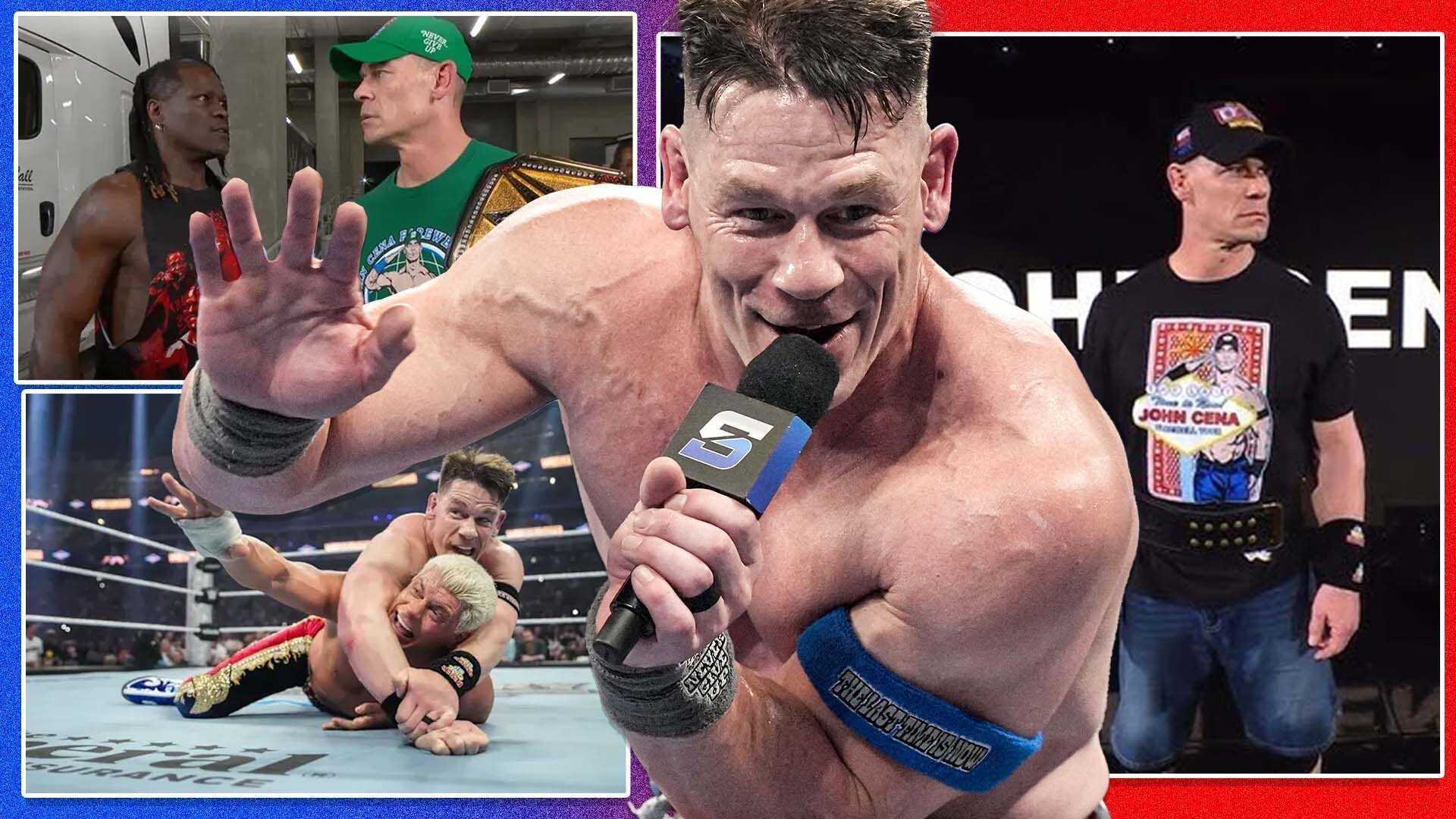
After interfering in John Cena’s tables match against R-Truth, causing the leader of the Centation to *gasp* lose, CM Punk grabbed a microphone, walked up the ramp, sat cross-legged in front of the Titantron, and delivered the most industry-shifting promo since Austin 3:16—which coincidentally occurred almost exactly 15 years to the day prior.
Punk fittingly donned a Stone Cold tee and aired out his list of grievances with the company. He also predicted a victory over John Cena for the WWE Championship at Money In The Bank the night before his contract with the WWE would end.
It quickly seemed that Punk was maybe, possibly going off script when he compared John Cena’s ass-kissing abilities (very not PG) to Hulk Hogan’s, who at the time was a persona non grata in the WWE. He strangely admitted that “I’m breaking the fourth wall” while waving directly to the camera and claimed he was the best wrestler in the world—a word that then Chairman Vince McMahon apparently forbade his talent to use.
Punk claimed he would defend the WWE Championship he won from Cena in rival promotions, mentioning Ring of Honor and New Japan Pro Wrestling by name (something that never happened in the WWE). Shit felt really real when he began taking personal shots at McMahon: citing Stephanie (his “idiotic daughter”) and Triple H (his “doofus son-in-law”) as the reasons why the company won’t be any better after Vince is dead. Whoa.
When he threatened to reveal a true story about McMahon and the hypocrisy of his anti-bullying campaign, his mic stopped working. What the Hell happened? Fans were left genuinely wondering if “the boys in the truck” were told to cut him off.
Pulling off an effective worked-shoot promo (i.e. a promo where it’s unclear whether the wrestler delivering it is going off script) is the smallest of needles to thread. Punk did it masterfully. He grounded everything he said in at least some kernel of truth, but never really crossed a detrimental line. He complained about the stale, predictable WWE product—which ironically, felt very fresh and warranted—while also promoting an upcoming pay-per-view.
The influence of Punk’s pipebomb is clear in promos we see today in the WWE: fewer catchphrases and more (seemingly real) personal shots directed at fellow talent. Punk’s career is filled with accolades, but this is truly his shining moment on the mic.