Directive 8020, the latest title in the Dark Pictures anthology series, launches the immersive narrative horror experience Supermassive Games is known for into space. While the novel sci-fi setting is a nice change of pace from the terrestrial adventures of Man of Medan, Little Hope, and Until Dawn, Directive 8020 tries but ultimately fails to make good use of what should be the scariest place not on Earth.
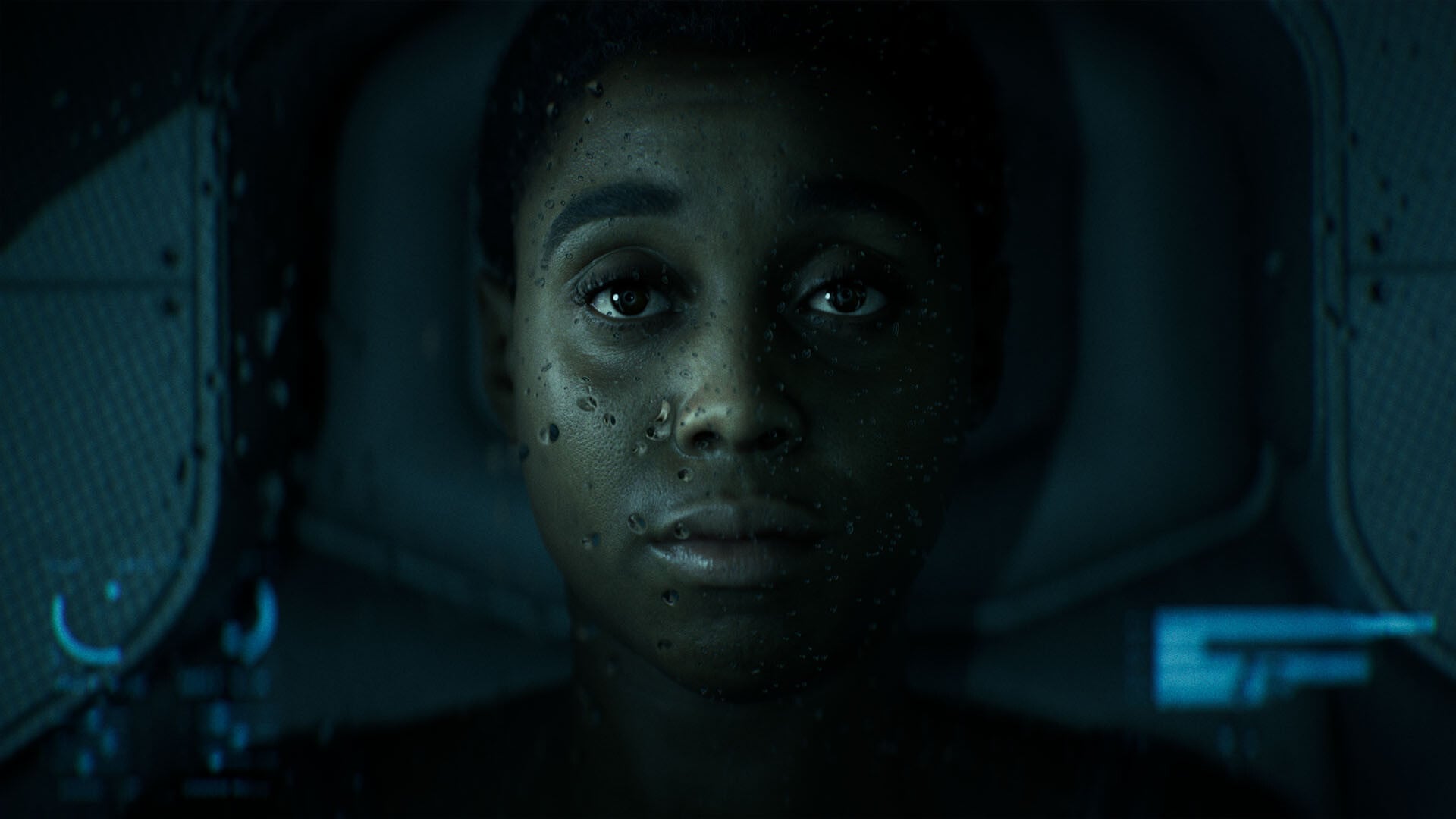
You play as one of several members of an advance party sent to prepare the planet Tau Ceti for future terraforming and colonization expeditions. As so often happens in space, Things Go Wrong, and it’s up to your quick action and decision-making skills to save the day.
Directive 8020
-
Back-Of-the-box-quote
"In space, no one can hear you sigh."
-
Developer
Supermassive Games
-
Type of Game
Choice-driven narrative survival horror
-
Liked
Excellent setting and character performance. Had some really thrilling horror movie moments.
-
Disliked
A story that feels like an entire movie made out of the third act of Sunshine.
-
Platforms
PS5, Xbox Series S and X, Steam
-
Release Date
May 12
-
Played
11 hours. Completed one full story playthrough.
Most of the gameplay revolves around stealth and extremely simple puzzle solving. There are loads of chest-high obstacles to hide behind when a baddie is chasing you and your biggest challenge is stringing together a path with those obstacles to avoid detection. And although this process is generally so easy that their presence feels largely unnecessary, you’re given some tools to help. Each character has a device on their wrist that you can activate like sonar to reveal hidden enemies, potential escape routes, or points of interest. Characters also have a stun baton that unlocks doors and temporarily disables an enemy if it grabs you.

Like most of Supermassive’s story games, Directive 8020 lays out its narrative like a road with multiple branching paths. At certain points you’ll be presented with choices that can determine the path you take and the fates of your various crew members. Some of those choices have immediate consequences resulting in a character’s death. Other choices help shape a character’s personality, ultimately impacting the choices they’ll have available to them later in the game while closing off or opening up different story branches. Despite the game’s many branches, however, it’s a relatively short experience, with a full playthrough completable in seven to 10 hours.
Turning points are a new feature implemented for 8020, allowing you to go back to pivotal moments to make different choices. This makes it easier to unlock all of the game’s paths without multiple successive playthroughs, or to just undo a troublesome death. There’s also a setting that disables that feature, leaving you permanently stuck with the choices you make. I followed the game’s recommendation to play with the ability to rewind your decisions enabled and it’s ironic that the first choice I would make for this game, before it even got started, would be the one I regretted the most.
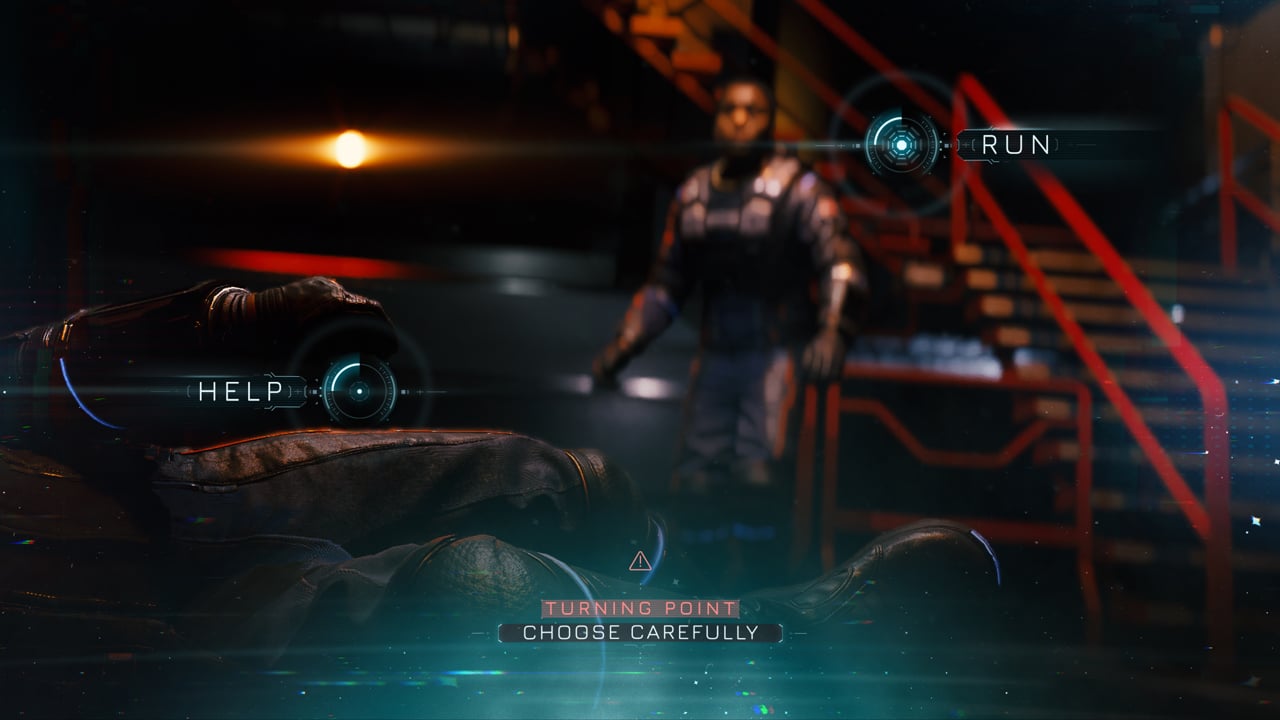
Turning points are moments in the game you can return to in order to make different choices.
Decades of gamer conditioning has instilled in me the idea that everyone needs to survive to get the good ending, and I achieved that goal. Everybody that mattered survived and I only had to undo two deaths to get there. (I did let one party member die but it was his choice at the very end, so while it technically counts as a death, it doesn’t to me.) I didn’t realize it at the moment, but a near-deathless run erased every bit of narrative tension. It’s like the game needed people to die to be interesting.
With the stalwart captain still alive and in charge, there’s no need to question or doubt the capabilities of his second-in-command, which could have led to a juicy bit of conflict. And while the game did try to introduce tension via simple character exposition, it fell flat. There was one guy who wouldn’t stop questioning a late addition to the team. But we’re trying to survive in space, jackass! I didn’t have time to listen to what felt like an interpersonal conflict. Turns out, the guy was right to be suspicious, but the reveal had no impact on the story.
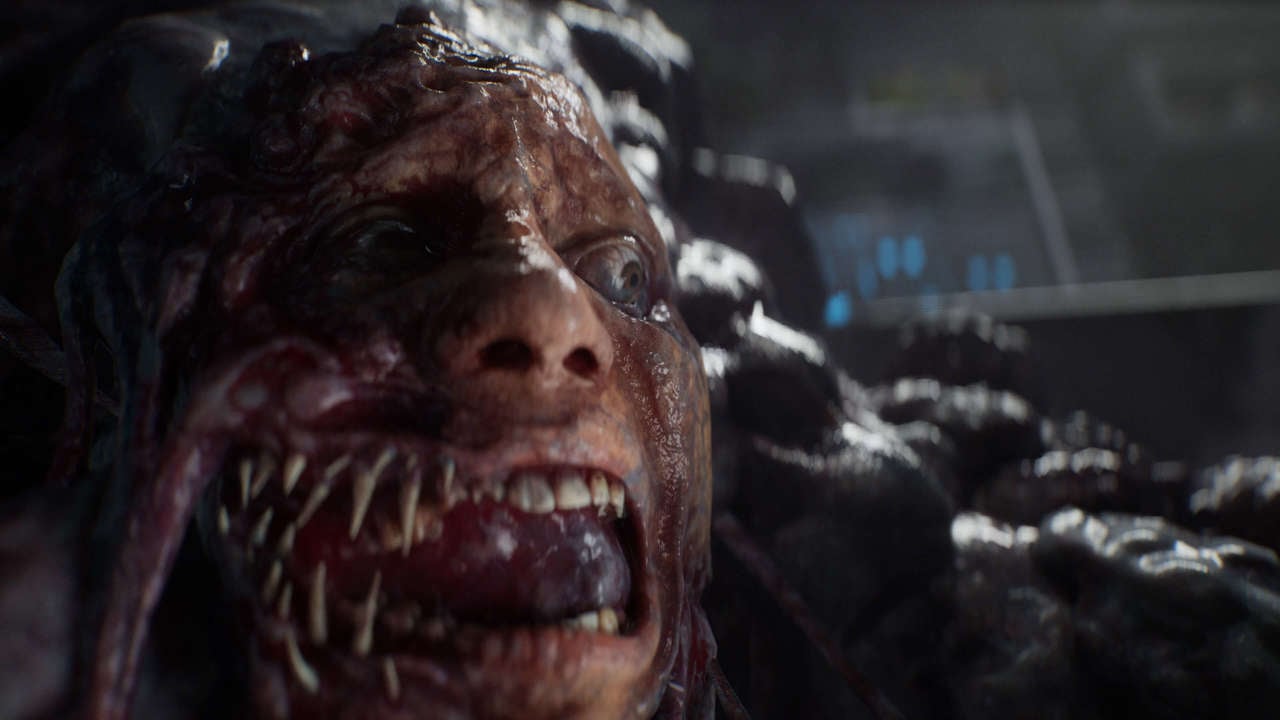
While I find most horror media tedious, space horror is very much my jam because there’s nothing so existentially dreadful as space. The most disappointing thing about Directive 8020 is that it doesn’t take full advantage of all the mundane ways space can kill you, opting in favor of a generic murderous alien narrative. That’s not to say I didn’t enjoy any of my time with the game. In the latter half, stepping on broken glass will alert an enemy to your presence. I had one of those classic horror movie moments where I noticed the obvious glass only to step on it later in my haste to make it to a door undetected. The early chapters do make you contend with space disaster staples like explosions that launch you into orbit, but all that quickly takes a back seat to a story that’s essentially The Thing in space.
And that’s ultimately the thing that makes Directive 8020 a bit underwhelming. I’ve seen this story before, and the part I haven’t—the game’s biggest, most interesting twist—comes so late in the game that it’s largely inconsequential to the plot. Moreover, I made the story worse by sanding off all its edges in an attempt to Be A Good Gamer, realizing too late that a “good” ending isn’t always the best one.