DENVER, 10:38 AM, WED JUL 9 | 64 POSTS IN THE LAST 24 HOURS | tips@kotaku.com | RSS
AU

'Are Games Going To Grow Up?': A Debate

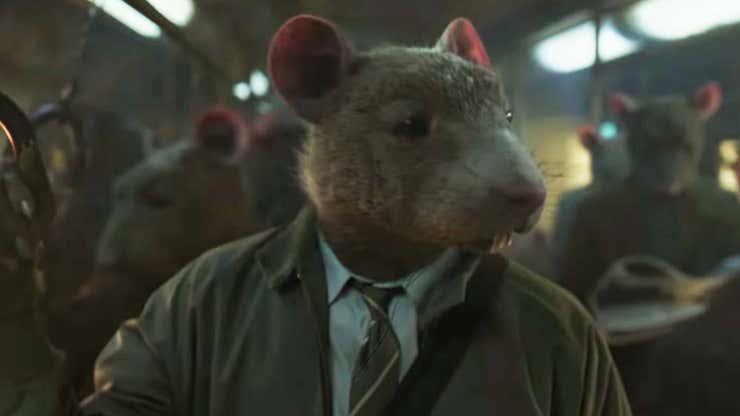
mousetrapgame.jpg Speaking of games being juvenile (maybe), Steve Gaynor threw down the gauntlet over at Fullbright with some incendiary comments that were of course going to start a firestorm, and were indeed designed to. His contention? The video games are going to be stuck in the same ghetto as comic books — always marginalized, forever juvenile, doomed to never being 'a relevant cultural medium':


But comics and video games are alike in another way: they both remain marginalized, infantilized media, where the Wares are the rarest exception and the medium in general holds little to no value outside of very specific circles. The highest ideal of the vast majority of creators is to force the medium into being something it's not, and the largest segment of the audience consists of juveniles, in age or mindset, who haven't "graduated" to more respected forms of entertainment.

Browse the racks of a standard comic shop, and the books on the mainstream shelves will be filled with flashy illustrations depicting laughable actions stories, absurdly-proportioned women, and superheroes. Likewise, browse the racks of an Electronics Boutique and you're bound to find mostly sports stars, Japanese children's cartoons, burly men with guns, and women in shameless, implausible dress. The medium infantalizes itself through its chosen subject matter. Based on surface alone, I can't blame the outside viewer for thinking little of the medium at large.

Bad movies reign at the box office, bad books remain on top of the NYT best seller list for months, bad games get more press than the little gems. Still, no one would accuse cinema or literature at large of being juvenile, infantile, doomed to a ghetto. People like consuming crap, and 'low brow' sells; this is not news, and has caused legions of connoisseurs to throw up their hands in despair.

Borat Pfeiffer fired back at The Plush Apocalypse:

I've certainly had days where I'd agree with most everything he says. I get where it's coming from. Whether it was a frustrating day at work, or sometimes just going to a particularly rough GDC, I am not immune to that brand of despair. But, overall, I gotta say, games still have much more to achieve as a medium - if I didn't think so, I wouldn't be working on them.

He goes on to refute several points of the original, addressing issues of accessibility, infantilization, and engagement. I think plenty of us have felt frustrated at some point or another with games and gaming culture at large, but the day I feel like we're really stagnant, not going anywhere, and stuck in a juvenile ghetto is the day I give my setup away and walk away.

N'Gai Croal spread his rebuttal out over two articles in Level Up; if you're going to read any response to the original, this one is it. As he astutely points out, many of the issues Gaynor is complaining about are simply endemic to mass audiences for all forms of art and culture (how else to explain the wild popularity of an 'artist' like Thomas Kinkade and faux oil paintings?). Do we think that more artistic and independent film makers aren't lamenting the same exact issues, or literary authors don't wish Danielle Steele wasn't ruling the best seller lists?

The very thing Gaynor decries—a lack of willingness among the audience to work for their entertainment—isn't inherent in to this medium. It's almost intractable among mass audiences no matter what the medium. Popular fiction generally outsells literary fiction. Summer blockbusters generally out-gross arthouse films. Is this any different from, say, Call of Duty 4: Modern Combat out-NPD-ing BioShock last year, or Madden doing the same to Shadow of the Colossus in 2005? Does it truly matter that in aggregate television is more mass a mass medium than videogames, when on an individual level, its practitioners are faced with the same challenges that plague those who work in other media?

John Walker adds his own take on the issue at Rock, Paper, Shotgun:

I think there is a missed target in all of this. I think we, the gaming press, and we, the gamers, expect far too little of games. BioShock was a great game, but really, its commentary was a pamphlet. And yet it was heralded as an intellectual goliath. Of course there was a backlash to this - no, most of us won't have read Ayn Rand, and will learn something. But it isn't good enough for the adulation it receives. However, it's a perspective thing, and when compared to the rest, we feel we've no choice but to get excited. "Good grief, this one tried!" I stress again, I thought BioShock was an excellent game, but one with a poor narrative structure, and many failed ambitions.

And at entirely the opposite end, I think we expect far too much of games. We do not lament Scrabble for its lack of Brechtian estrangement. We enjoy playing Mousetrap because the pieces go plonky plonky plonk and then the diver falls in the cup. Games so often should be visceral fun. I think that once we relax and let games be this, we'll perhaps develop the confidence to let other games aim higher, and achieve more, without feeling the need to pretend they're our Citizen Kane.

I think we have more than enough smart and talented people in all sorts of roles to 'aim higher'; that doesn't mean 'visceral fun' is going to be replaced by high brow topics. But diversity is never a bad thing, and I trust that in years to come, there will be an ever increasing array of options, from the high brow to low brow, from the emotional to the emotionless.

The whole debate is interesting to page through, and more people weighed in than listed here; if you've got the time, it's interesting to read how intelligent people are responding to a debate that does get played out over and over again, just usually not with quite this domino-chain reaction.

Wager [Fullbright]; Is the Cultural Trajectory of Videogames Doomed to Parallel That of Comic Books? Part I and Part II [Level Up]; The Cultural Significance Of Video Games [Rock, Paper, Shotgun]

3:30 PM on Sat Feb 16 2008
By Maggie Greene
7,035 views
140 comments

Comments

  • no?

  • I feel games have become more and more widespread amongst youth culture that as time goes on, they will become more and more mainstream.

    When I was younger everyone I knew (certainly amongst the males) played video games regularly. It certainly wasn't that case with comic books.

  • appearantly this guy hasn't read Watchmen. Comic books juvenile? PShaaaaw.

  • Are games going to grow up? - A Troll Topic

  • Next on Kotaku: "Why gamers are all retards. - More topics to piss of our readers."

  • Someone get Gaynor some Silent Hill, stat!

  • Image of NeoAkira NeoAkira at 03:51 PM on 02/16/08 *

    But Gaynor's argument, as stated in the article, can be substituted into an cultural medium really. Why are misogynistic rap songs on the top of the charts for weeks? Why are some of the most popular tv shows the ones with the most savage content?

    "Likewise, browse the racks of an Electronics Boutique and you're bound to find mostly sports stars, Japanese children's cartoons, burly men with guns, and women in shameless, implausible dress."

    That just about describes most movies today. If he wants to rant about things like that infantilizing video games, then perhaps he should realize it exists in every medium. I mean I've been to a sex museum in new york where one floor was just pictures of vaginas on a wall. Explain to me how that's no infantilizing the art medium.

  • Gaming is an incredibly young industry in comparison to other forms of media. Comic books (and a lot of the perennial characters like Batman and Superman) didn't really take off until the 1930s and 1940s, but it wasn't until the early 1970s that Maus - one of the first critically acclaimed comics - was published.

    It took time for comics to evolve and to start to move beyond pure entertainment value, just as it did books and movies. Games have already started to enter that phase, and the fact that they've done so in the ~30 years they've been around in our culture seems like a promising step.

    Right now, it's too early to say anything either way, but given the reception that games like Bioshock and Portal have gotten, I think we're in good shape at the moment.

  • @NeoAkira:
    But, wait, you don´t like Vaginas? I like vaginas.

    lol j/k

    You know, I´m tired of those gaming related "an analisys of why we should ban games and keep the rest of the idioticy of the world intact" essays.

    I´m here to read news of games, not news of "people who hate games". Those are more than .. I dunno, 5 per day?

  • @TinyLightning: My thoughts exactly. Give him a copy of Preacher . . .

    I can see where he's coming from with sentiment, though. Not necessarily the truth, but video games and comics both find themselves in this sector of entertainment that everyone who is not a part of it thinks is "for kids." I still don't understand how it's "less childish" to see a movie based on a comic book than to read the actual comic book, or see a movie based on a game than to play it. If anything, it takes more effort to read a book or to play through an entire game. And this is coming from someone who loves film as well! It all boils down to frustrating stereotyping, something that's unfortunately difficult to avoid in this world.

  • Why not ask whether true art has any relevance to real life? How deep does somebody have to be before they will help you move your couch? Or could it be you don't care. 99% of so-called meaningful content could be reduced to the phrase "courage in the face of the void". Of course, you may never get to the point of facing the void, which is really what the gripe is here. You might be infantilising your psyche by squashing head-crabs without pondering whether we're all just head-crab zombies in the end. And oh how terrible that would be. It starts to skirt very close to the twisted screeds about Man-teens again; except instead of twisting on the end of the relationship wire, you should be twisted on the rack of the self-examined life...and somehow, videogames could join in the fun were we to replace shooting and jumping with ...er, um...pondering and uh, pontificating? Or maybe just replacing happy endings of victory with unresolved quasi-defeats that make you think (or is that Half-Life again)? Or maybe, if you look close enough, certain games actually ARE already works of art, and just because certain folk are too stuffy to consider that, doesn't make it not so. Think about it.

  • @Wyld:

    Yeah, we've got game politics for that. I tend to come to Kotaku for actual game news/opinion, not my daily 2 minutes of hate.

  • @NeoAkira: That was my reaction and N'gai Croal says it better than I could. Look at any form of media and you'll find the same things.

    John Walker's perspective is intriguing. Having played through BioShock I wonder if it was praised too much because there isn't anything else out there. Like he said: when compared to the rest, we feel we've no choice but to get excited. "Good grief, this one tried!"

  • It's funny how people talk about games like this and just totally define the genre by games like Mario, Madden, Grand Theft Auto, etc.

    What about Bioshock? What about the Civilization series? SimCity? Games that legitimately make you THINK while you're playing, games that have a real purpose, games that will really challenge you mentally. I'm not saying that other games don't challenge you mentally, but if you're going to define Civilization as a "kids" game, then you seriously have no idea what you're talking about.

    I hate these generalizations so much. There are kids books, kids music, kids TV shows, kids movies, kids comic books, and kids video games. And there are damn sure adult books, adult music, adult TV shows, adult movies, adult comic books, and adult video games.

    People who generalize are just ignorant and have no idea what it means to think in a broad sense. Just narrow minded, ignorant fools.

  • @GregoriusH: With a side of MGS2?

  • I think the response that there is a lot of bad music and movies selling like hotcakes is pretty much a debate killer, except for the nagging feeling that there *IS* a lot more crap on the comic book and the Gamestop shelves.

    "Why aren't we over first-person shooters yet?" is an interesting question to me, I must admit. These things have dominated probably even longer than platformers dominated during the 80s...and if you release one that actually has a story..you get the game of the Year Award still in 2007! (How Bioshock is a better and more memorable game overall than Portal I'll never understand...)

  • Who says low brow > high brow? It takes all different types and moods. Even though our culture is what apparently separates us from animals (apparently), we still have our basic animal functions and our instincts. Games, as an interactive medium, more often function to interact with our fundamental animal behaviour (violence, reactions, sex appeal), rather than challenge us at an intellectual level - but who says that is a bad thing?

    I personally think one needs exposure to both low brow and high brow to maintain a healthy mentality. Anyway, more often than not a game is needed to kick back and relax rather than provoke intellectual thought.

    Just my two pence.

  • "I thought BioShock was an excellent game, but one with a poor narrative structure, and many failed ambitions."

    My thoughts exactly! The game was great but it failed at presenting the storyline well. And the dissapointing ending was one of the failed ambitions.

  • A far as the mainstream game goes, no, it will never grow up, for the same reason that a mainstream action movie or mainstream romance novel will never grow up. It's when you go past the AAA, past the mainstream top ten lists that you see the true quality; most quality movies are B movies, and most quality games are indie or amateur (Dwarf Fortress and Narbacular Drop are excellent examples of great games that don't fit the "boobs and booms" stereotype). Not to say that there aren't quality AAA games, but those are few and far between compared with the Halo 3s and Soldier of Fortunes of this world (not to put those at the same level, of course).

  • I found John Walker's response interesting. All these high-brow "intellectual" games that sometimes do decent, sometimes not, and gain the marvel of the industry without any outside attention.. they all attempt to walk a line between the typical entertainment we've come to expect from all games while at the same time going a bit deeper. It could be argued that the real artisic endeavors of other mediums are not quite so broad in focus, where some independent films, experimental music, and post-modern art will give up any sense of accessibility away from the mass audience, and rather fulfill the intellectual cravings of their niche followings. If making these deep serious games is really what we want to happen, then maybe we need to focus more on what we don't expect from a game, rather than what we do. If developers keep trying to simply make the best game they can, the risks involved with solving this problem will never be realized.

    Or in other words, maybe we just need to pay more attention to indie-games.

  • what he said?

  • i don't think that his point was that ALL videogames are juvenile, or lack any form of intelligence. he's just saying that people will never see them as "high art."
    and as of now, that is true. not with everybody, but with a great deal of people. the only way to get past this perception is to, well
    -convince people that games don't make maniacs/don't currupt our ever so innocent youth.
    -convince people that games can have value without having a gimmick or childish pizazz to it.
    and considering that the "general public" is only getting into games because of motion controls (thanks to the old-person-friendly-wii), i say it's not going to happen anytime soon.


  • I'm going to say one word, just one word: Watchmen.

  • @Huxleyhobbes: Quasi-edit: To defend games themselves; Suikoden II.

  • Oh well, the largest market of gamers is still 18-25 year olds in most of the markets.

  • To be honest, I only glanced over this, but it seems that his arguements are based on simple generalisations. Of course some games are juvelnile, yes, some comic books are childish. But not all. That is the important point, and I think it's being ignored here.

  • I must say, I'm still enough of a gamer to enjoy the best of what comes out each year, but as I get older I definitely notice more that most games aren't created for me at all, or for other grown-up gamers. I don't really object to the vast majority of videogames being aimed at younger men and boys if that's where the market is, but I do wish there were a few more games aimed at grown-ups. You know, games that aren't so... moronic.

    If anything the situation seemed better years ago when the industry was smaller and more dynamic - you'd get more left-field ideas made by guys who are adults themselves and who weren't under relentless commercial pressure to pander to - or dumb-down for - a specific audience.

    Will I still be playing games when I'm 40+? Definitely, but unless we start seeing more games which are a bit more interesting, a bit less childish, I'll probably drift away from gaming a bit and be much more fussy about the titles I spend time with.

    Right now, if I had to make a prediction I definitely think videogames will continue to suffer the same fate as comics and graphic novels in the west, remaining a primarily juvenile pursuit which, regardless of some notable attempts to break the mould and be more original and intelligent, ultimately fails to grow up at the same rate as its audience. It isn't just an age thing either - it's mainly an intellignce thing. In the same way, Hollywood mostly churns out terrible movies for idiots, but at least we get some occasional decent independent movies too. In print we still get some great new novels each year to make up for the thousands of crappy ghost-written celebrity endorsed biography bullshit. With games though...

  • Also I think John Walker's comment really nailed it.

  • Hey man, don't diss Mousetrap! Even for a non-electronic game it kicks ass!

  • Do the people that write this stuff actually realize that the large group of people that play video games takes this stuff kinda personally?

    No, they don't. Because they're too egotistical to realize that nobody cares what their viewpoint on the world is. They write, and suddenly that's the final verdict? i just can't picture someone reading this crap and saying "Oh, it all makes sense now, glad someone looked into this".

    If anything, it's just someone who's never played games trying to make themselves feel better that they aren't in on something fun. Sure, everyone watches movies, plenty of people read books, but just because they've been around for tons of years, they're respected? I have no respect for modern Hollywood. The movies suck, they aren't usually new or entertaining. So because Games haven't had 100 years to turn into reused crap, that makes them lesser?

    People should think before they write their articles. It just makes them sound more like douchbags when they spout out their thoughts using words that make them sound like they're upper class, mature, and from high society. Guess what? You're a so called "journalist" who uses your publication to make yourself feel better about NOT being trendy and into new stuff, because you still sit at home and watch VHS tapes with your mom every night.

  • "Browse the racks of a standard comic shop, and the books on the mainstream shelves will be filled with flashy illustrations depicting laughable actions stories, absurdly-proportioned women, and superheroes. Likewise, browse the racks of an Electronics Boutique and you're bound to find mostly sports stars, Japanese children's cartoons, burly men with guns, and women in shameless, implausible dress."

    The same can be said of your average bookstore's fiction section, as well as the racks at your average movie store. I don't see what he's on about.

  • Image of Witzbold Witzbold at 04:44 PM on 02/16/08 *

    @kiigan: Good post mate.

    On a side note of my own, I think there will always be more grown up games, but the problem is that they are usually overshadowed by the more "hip" titles that all the kids n shit dig. So eventually those well written titles for us older folks get either shoved somewhere where most people cant find it or not stocked at all due to low sales with the initial batch.

    Its kind of why I enjoy the more "off" titles and such here in Japan, also back in the early days of PC gaming I think there were a lot of mature titles in terms of design and storytelling. Perhaps console gaming in general will be a harder market to make "grow up" in a sense just due to the larger demograph being younger folks which devs need to make up the insane costs of development by tapping that larger market.

    At least though there are games recient games like Bioshock which have helped push the ideals that more mature games can be profitable also. As with anything I think it will still take a lot more time though.

    But one thing for sure when our hobby grows up and such, I think thats when the media will finally leave us alone.

  • Image of Witzbold Witzbold at 04:45 PM on 02/16/08 *

    On a side note, if all games were like mouse trap I dont need the industry to grow up. ;D

  • I think the primary reason gaming is in danger of being forever infantilized is the industry's reliance of violence as the primary gameplay factor. 99% of games out there involve shooting, bashing, stomping, cutting, and so forth. Even the ones with great, mature stories -- BioShock and Mass Effect, for example -- require you to go blasting away through waves of enemies to get to it. When a game comes out that doesn't feature violence, it's derided by the fanbase and met with low review scores, while games that overemphasize violence are lauded. It's the same thing with comics. There are exceptions to this, of course, but those are too few to make an impact on the overall perception of the industry.

    The majority of books and movies, on the other hand, focus on drama. Sure, there are lots of action movies out there, but there are a lot MORE comedies, dramas, mysteries, thrillers, and so forth, that rely on character and internal conflict, instead of pure power fantasy. For every violent action film that gets released, there are ten non-violent films.

    Quality of content aside, this is why movies, books, TV and music are viewed as being "legitimate" forms of entertainment: they address a broader range of topics about the human condition, and they do so in a manner that doesn't evoke the image of a three-year-old throwing a temper tantrum.

    Remember: violence is considered juvenile, and while being juvenile isn't a bad thing, being TOO juvenile is. Currently, the gaming industry is too juvenile -- we focus too much on violent gameplay. Things are changing, but we do have to tread carefully, otherwise we WILL end up permanently living in the kiddie ghetto with comic books and no hope of moving on up.

  • Comic books are pretty widely accepted as a legitimate art medium with it's own share of non-juvenile works.

  • Maybe we should feel lucky videogames are not a mainstream media, I mean, Wii was made to atract a broarder public, and it did. A lot of companies saw the posible money, and as a result the Wii has millions of bad games. And it may not necessarily happen now but millions of bad games was what caused the videogame crash of 1983.

    I know I'm exagerating a bit here, but you know, I'm kind of glad about not being able to hear people commenting on how "Bran Training version 276509" is great. That would just make my ears bleed.

    Back to the quotes, I completely agree with John Walker. But I think Steve Gaynor was jut bullshitting, I mean, having superheroes and unreal women is what every mainstream media does, hollywood actresses are chosen for their looks too. I'm not saying they're not good at acting. They are but they do not undergo surgery for fun. And love films are so unreal Gambit would seem misplaced if he sudenly appeared.

  • And yet comic book based movies have been some of the biggest grossing movies in recent years. He does have a point in his poorly stated way, but on the other hand he's totally full of shit.
    Hwever i'd love to see games with story on the level of some of the great books out there. but does anyone really see a game that does a good job of telling the story of something like Dune actually selling to the normal gamer market. I don't want this to come off like an insult to everyone, but a very large number of people that play games are blazing idiots.

  • Thanks for the link, but it's spelled Borut Pfeifer.

  • I would argue that the first 'game as art' has already been achieved - Shadow of Colossus. It's not a great work of art but it is very good, the biggest step I've seen in 20 years. (If anything the game mechanics take away from its power slightly). But it expresses ideas that only the medium of video games could achieve. Although not the focus of the game it examines the idea that humans can kill by choice and not for reasons of instinct or survival (of ourselves or offspring). The fact that you, the player, must do the killing of the Colossi brings this feeling more into focus than if I read the story in a book. There are other reasons too, which I won't go into here, but the game, and the feelings it stirs in someone receptive to them, stay with you for a long time.

  • I'll grow up when video games stop being so goddam fun. If I ever get to the point where my job or school permenantly prevents me from playing video games, I'll just know that I've done something wrong with my life.

  • Rez was the first game as art. The entire point of the game was to create synaesthesia. I don't know about anyone else but that's usually a pretty lofty goal for any artistic endeavor.

  • MGS 2 was very stimulating on an intellectual level with real philosophy, and real introspection into the human soul. Also, Call of Duty 4 > BioShock.. Sorry.. must be said.

  • It never bugs me when someone writes off gaming or fanboy culture. Comics and Video Games belong in subculture. It's awesome to be part of something that only a certain subset understands and appreciates because it's like being in on an inside joke. The rest of the world and this douche Gaynor may not get it, but we do.

  • I am going to have to disagree with John Walker on this. No one is pretending Bioshock is gaming's Citizen Kane, but ironically with what ground it breaks it is very similar to that film. Let us be honest here, since Citizen Kane came out there have been many much better films made, but it was Citizen Kane that broke new ground and allowed those films to be exist. Citizen Kane is often looked upon as the film that allowed movi