Over the holiday weekend, pop princess Taylor Swift and football star Travis Kelce got married at Madison Square Garden in New York City. The richer-than-god pair filed permits with the city to close off streets surrounding the venue during a holiday weekend, affecting nearby local businesses that typically rely on Midtown Manhattan’s heavy foot traffic for patrons to pass through and make purchases. Meanwhile, the blockades made navigating the densely populated area much more difficult, all so Swift and Kelce could exchange vows in one of the most widely-known music venues in the world.
The huge reception featuring some of the wealthiest folks from music, film, and other industries was blocked off from public viewing, but that didn’t stop Swift mega fans from flying out to New York City during a historic heat wave in hopes of being “part” of the event from blocks away.
@apnewsentertainment “It’s our version of a royal wedding.” Taylor Swift fans gather outside Madison Square Garden for the pop megastar’s marriage to Travis Kelce. #TaylorSwift #TaylorSwiftWedding #TravisKelce #Swifties
In a lot of ways, this is the end result of Swift’s mythologizing of her own love life across her discography with references, both overt and covert, to her past relationships. Fans view her wedding as if they’re finally getting the closing chapter of a decades-long series they’ve kept up with since day one. In their eyes, this is akin to one of their favorite books getting its final entry and the writer holding some kind of exclusive “launch” party. As fans say in the above video, they view this as the equivalent of a royal wedding, and given that consumerism rules America with the iron grip of a monarchy, it makes sense that two incredibly rich people with multimedia empires would be viewed as such. Though anyone who flew up for the wedding was kept away by barricades and security, the couple still plastered electronic billboards with “JUST&T MARRIED” around the venue so even those who weren’t allowed in Madison Square Garden were allowed to be “in” on the story.
I’m not a Swiftie, but I am a fan of some of her music, am a gay man who the algorithm knows likes pop music, and have several hand-to-god stans in my close friends and family. As such, even when I’m not actively keeping up with her work, I’m usually aware of the discourses surrounding it. So while I’m living in New York City and aware of the very tangible effect Swift and Kelce’s wedding is having on the locals, I do get to hear Swifties flipping through their rolodex of prewritten defenses for the two’s elaborate displays of wealth, almost as if they’re reloading saves in a dialogue-driven game in an effort to find the “right” one that will exonerate their faves of any wrong doing.
Swift has dealt with plenty of bad faith criticism over her career, so her most stalwart defenders have a few pre-saved arguments loaded up into a clip, regardless of what is actually being said about her. Usually those arguments fall back on accusations of sexism, claiming that no one cares when a man flaunts his wealth, but that folks are ready and eager to pearl clutch when a woman does it, as if no one has ever criticized a billionaire like Jeff Bezos or Elon Musk before. They’ll use her altruistic use of her money as a shield for criticism about her private jet’s carbon footprint. Ultimately, there are a lot of Taylor Swift fans who revere her in a way that is frankly delusional for a person to feel about someone they’ve never met, but that’s also the relationship the singer has cultivated with her fans by involving them so deeply in her life through her music.

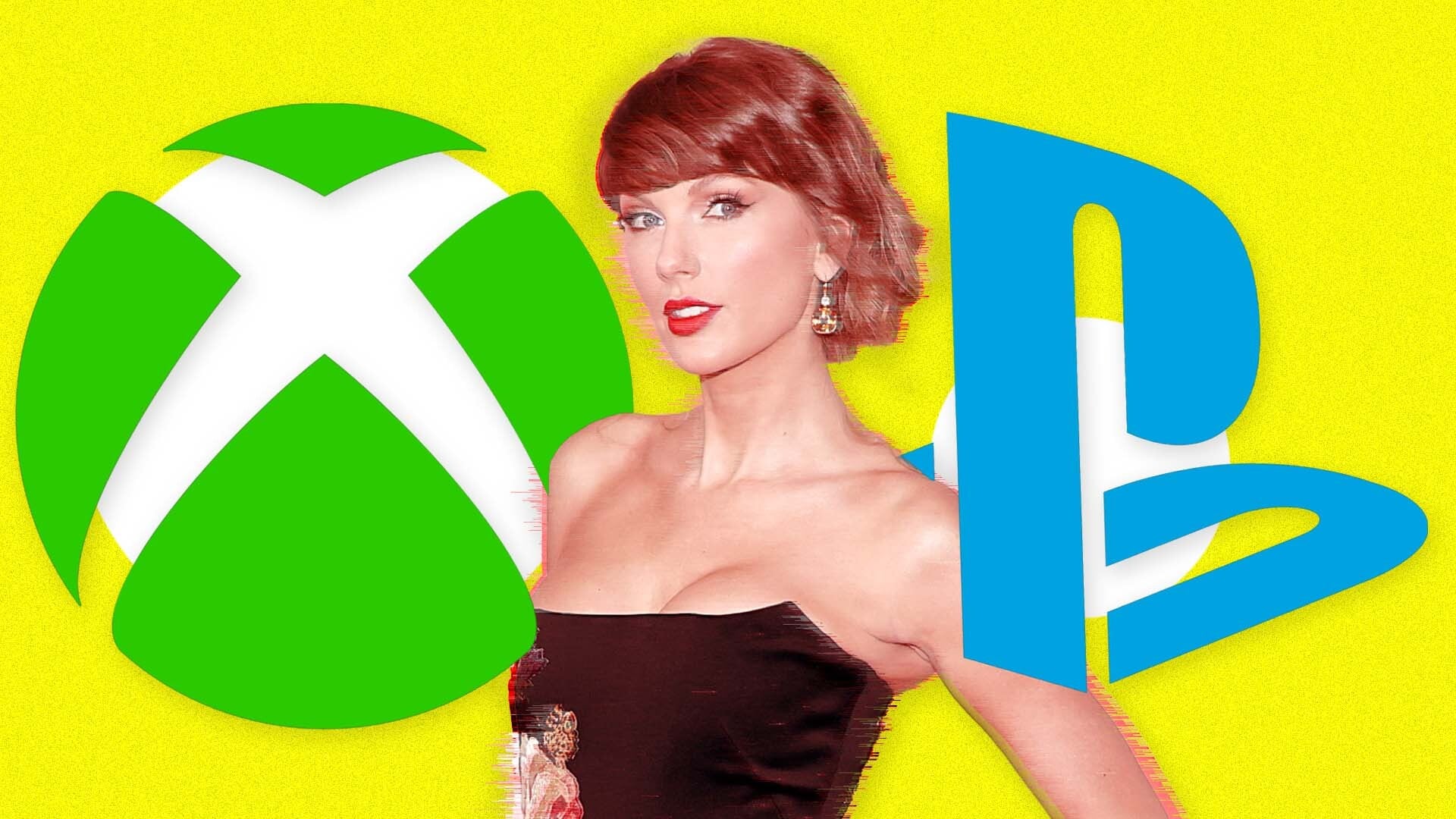
But why are we talking about this here on Kotaku? Because as much as people want to ridicule Swifties for their undying devotion to the figurehead of what is ultimately a billion-dollar corporation, this level of devout corporate loyalty is what allows companies like Xbox and PlayStation to spin objectively bad news in ways that will make their biggest supporters defend them with the tenacity of someone on their payroll.
Today, Xbox announced it was laying off thousands of employees as part of a massive restructuring, and while there is some “I guess it could be worse” news in that some companies are being freed from Xbox’s shackles rather than closed outright, the speed at which people are rushing to defend the company doing a bad thing because it could have been much worse matches the level of blind loyalty shown by any Swiftie who hops on an airplane to stand a few streets away from a “private” wedding during a heat wave. We don’t need to spend our days coddling a company that has played with the lives of thousands of people for years now while continuing to create an actively worker-hostile business model.
Last week, PlayStation announced its own terrible news, revealing that it would no longer produce physical discs for PlayStation games starting in 2028. This has created an uproar so catastrophic that Sony’s various affiliated branches can’t so much as post on social media without gamers yelling at them. And yet, we still get thinkpieces playing devil’s advocate about how something that has a major impact on the medium’s preservation and the access that people in low-income communities have to it is actually not that bad. If you’re willing to overlook the inconvenience of others to maintain your dedication to a brand, how is that, in any way, fundamentally different from a Swiftie excusing shutting down New York City streets for a wedding because it won’t affect them?

As the consolidation of the video game industry falls apart around us, and the rise in AI costs results in increased prices across all forms of tech, no one gains anything by trying to justify everything these corporations do. Xbox and Sony would not show up to defend you if you were on trial, and would not know or care if you died tomorrow. If you truly wish to advocate for the impact video games have had on your life or the lives of others, you do not need to be going to bat for faceless corporations or trying to personify them by revering CEOs who don’t even make the games you love in the first place. Asha Sharma isn’t going to “save” Xbox, because the Xbox you knew and loved died a long time ago. Now, under her lead, Microsoft is dragging its flailing corpse and pantomiming Halo and Gears of War in hopes that it will distract from the real damage the company has done. PlayStation massacred its first-party output chasing live-service trends that haven’t worked out, and still hasn’t learned anything from all this carnage.
What are we defending here other than some distorted, rose-colored image we’ve made in our heads of friends we’ve never had? You don’t, under any circumstances, have to hand it to them.