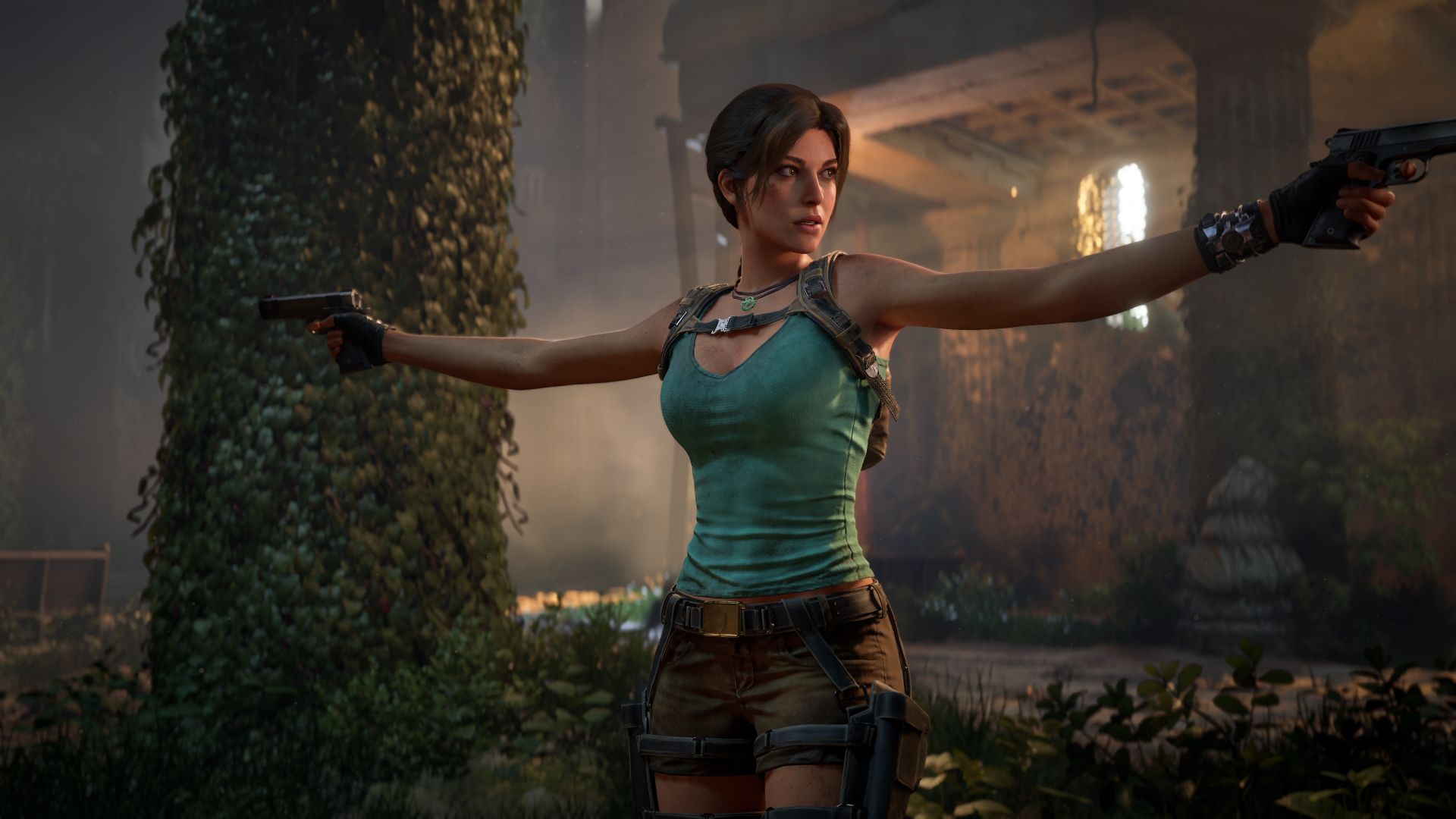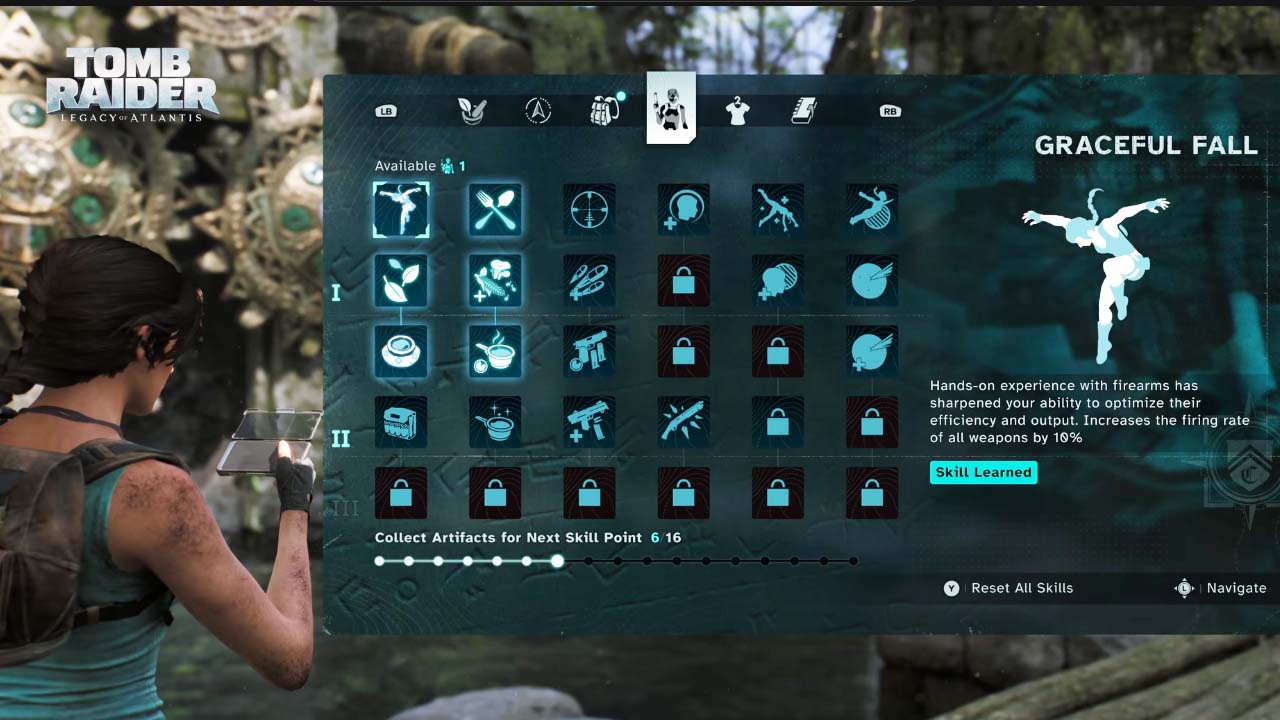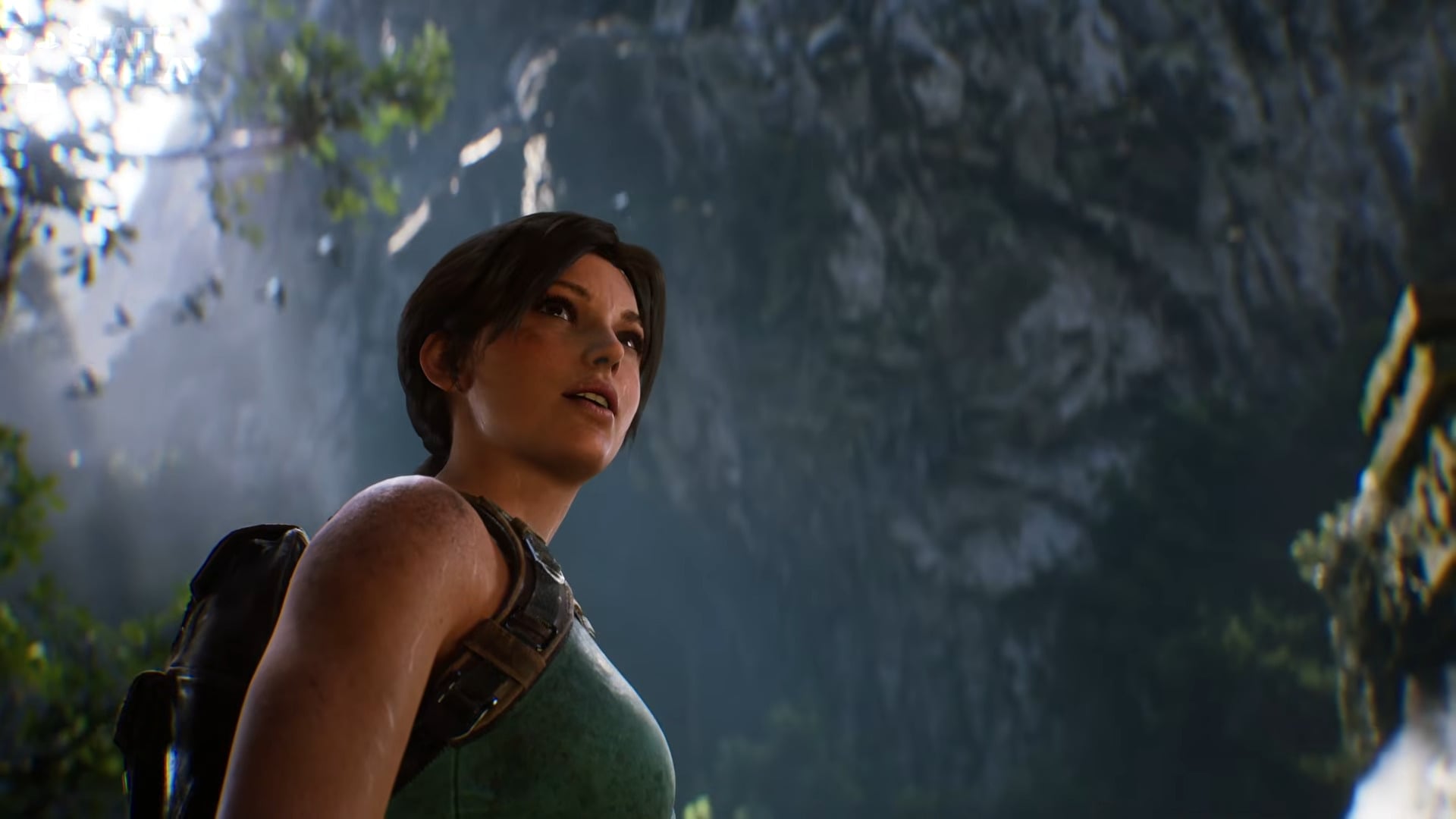
Tomb Raider: Legacy of Atlantis seems fine, probably. Or, at least, it probably will be when it comes out now that it’s been delayed into 2027. The short time I had with the game at Summer Game Fest left me unmoved, as one might feel playing a prettied-up redo of the original Tomb Raider for the second time, but also sure that if someone did want such a remake, they’d probably enjoy it. Part of my frustration with it came from the inevitable awkwardness that results from being dropped into a game without being taught some basic mechanics, which resulted in me spending several minutes thinking I couldn’t make a particular jump that I actually could make if I sprinted first, something I hadn’t been formally taught in the demo.
But my frustrations didn’t end with the lack of clarity. Legacy of Atlantis’ gunplay feels a bit flimsy, even when you’re using the game’s bullet time mechanic to slow things down so Lara Croft can empty her dual pistols into the side of a rabid dinosaur like in a sick slo-mo shot from an action film. This was another mechanic I didn’t learn in the demo, so I spent a couple of minutes shooting at enemies in real time before being told by a dev that I could slow down time. As a result, I spent a fair bit of time with the raw shooting, enough to know it needed some work (though the dev did compliment my ability to take down a dino or two without going all Max Payne). Those flourishes keep Legacy of Atlantis from feeling like merely a retread of the original game, though it also has throwbacks to classic Tomb Raider, like making Lara an acrobatic Fergie flipper every time she dodges an incoming attack. It’s clear that the devs are aiming to marry the present with the past.
However, even as it seeks to modernize something old, Legacy of Atlantis feels like it’s missing some of the modern clarity necessary for games with environments that look so good it’s hard to tell what you can actually touch. Its environmental design is a bit murky, and it was sometimes difficult to parse what structures Lara could or couldn’t climb up. I can see these issues being addressed now that Legacy of Atlantis has been pushed out of its originally planned 2026 release date, so I don’t feel particularly enthusiastic about dunking on it; the team involved already got ahead of the criticism and are giving themselves more time.
The real downer is the reports that the team at Crystal Dynamics is using generative AI during Legacy of Atlantis’ development, a practice more and more developers are starting to acknowledge publicly as part of their pipelines. The explanation the team has given to outlets like Polygon and Game Informer is that they have primarily been using it to create placeholder assets in order to “get the right answers faster.”
“In early level development, we might have the idea for an in-game object, but we might not be sure if we want to take the time to have devs build it,” experience director Jeff Adams told Polygon. “What we can do is use a generative AI tool to visualize it in the world. If it works, we can move it into our traditional pipeline. From there, the team can concept it and build it. At the end, all the finished product in the final game will be human-crafted. We want to make it as easy as possible for our team to be able to make high-quality experiences. That’s what the fans deserve.”
Ultimately, I came away from Legacy of Atlantis feeling deflated, on one hand holding out hope that the extra time will iron out those wrinkles, and on the other knowing that even if it does, I’ll still have to live with the plagiarism slop machine being part of whatever the final product looks like.