The video game studio Mages has, over the years, defined itself as one of the most beloved Japanese visual novel developers. Stories like Steins;Gate have become successful international successes for the studio, not just as games but in adaptations to new mediums such as anime. While certainly not averse to experimenting in other genres—they released a rhythm game last year—the company has generally been known for its attention to detail in creating visual novels, or for creating small-scale spin-offs of recent anime. It’s particularly strange, then, that its latest game, Juggernaut, is an AI clone of Quake.
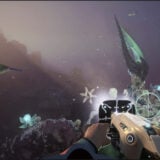
Announced rather suddenly via the company’s social media feed, Juggernaut promises to allow players to “jump back to the 90s” with a game that “looks retro, plays retro, because it is retro.” A quick glance at the game immediately conjures up a weird blend of Quake and Doom with zombies, the objective being simply to kill 5000 enemies, and the distinct sheen of AI art makes everything feel off. According to the company’s own AI disclosure on the game’s Steam page, the way the company has been able to shift so effortlessly to an unfamiliar genre it has never previously worked in is through heavy use of AI technologies. In its AI disclosure, they confirm that 100 percent of the game’s source code and effects, as well as 60 percent of the graphics and 50 percent of the sound, has been created using generative AI models.

Reaction to the game’s announcement from English-speaking fans of the studio has been unanimously negative, many not just critiquing the look of the game but expressing surprise at the extent to which AI has been used in its development. However, it should be noted that Mages is not alone among Japanese studios in taking a major interest in generative AI—a report last year showed 51 percent of Japanese game studios were experimenting with the technology, while some like Level 5 have openly showcased the ways in which generative assets have been used in their work.
Yet few have taken the technology to the extent of releasing a fully AI-generated game like this. It’s difficult to see why a potential player would purchase and play this over the games it feels so obviously derived from. The game is available to wishlist with a release date currently unannounced, if you do find yourself compelled to try it for yourself.