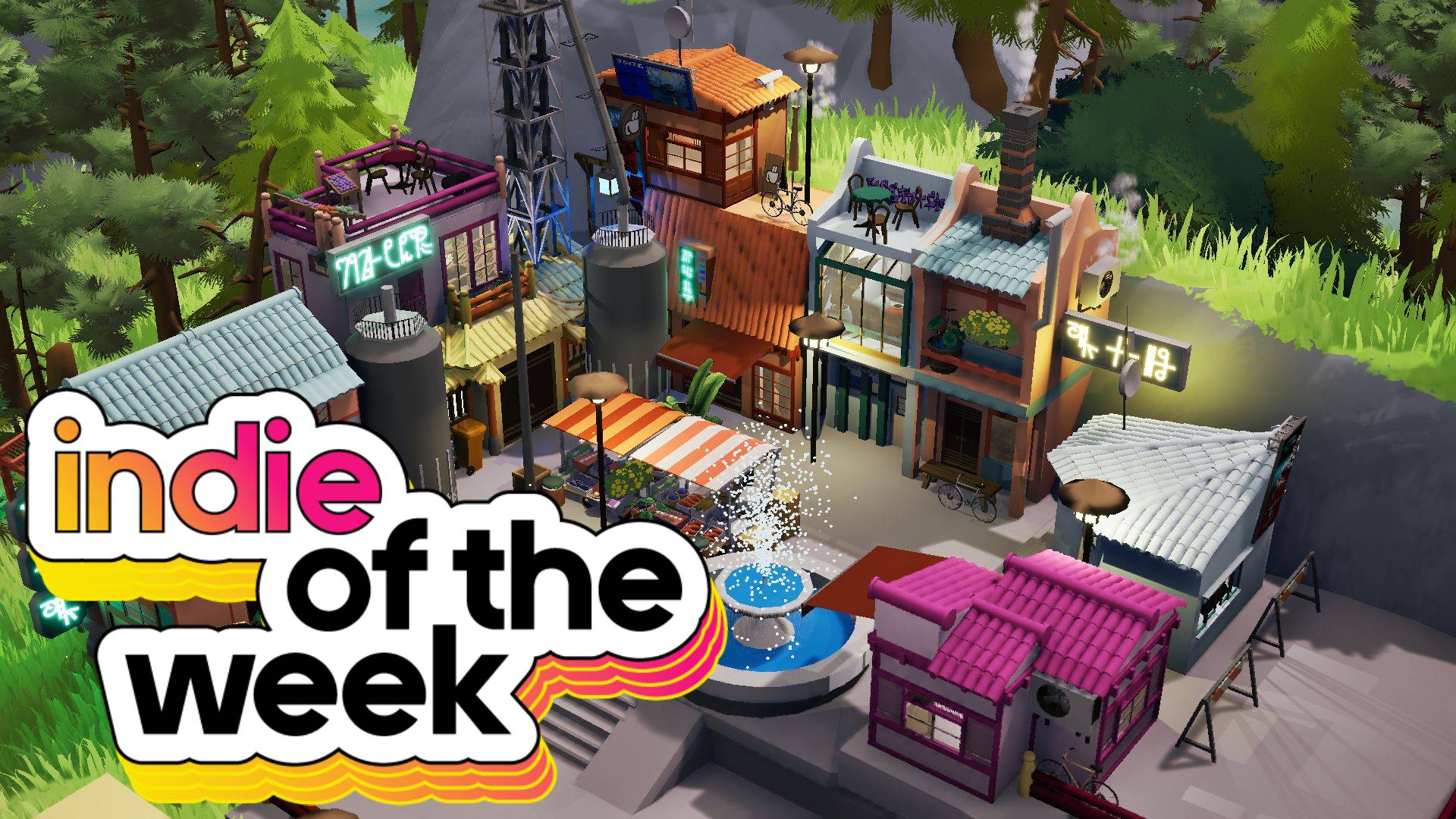
Cozy construction has very calmly and quietly made itself into a successful little genre, taking the methodical satisfaction of classic games like SimCity and Theme Park, but delivering them without all the stressful components. A lovely example of this, if a bit flaky here and there, is ShantyTown, a game about building upward as well as outward.
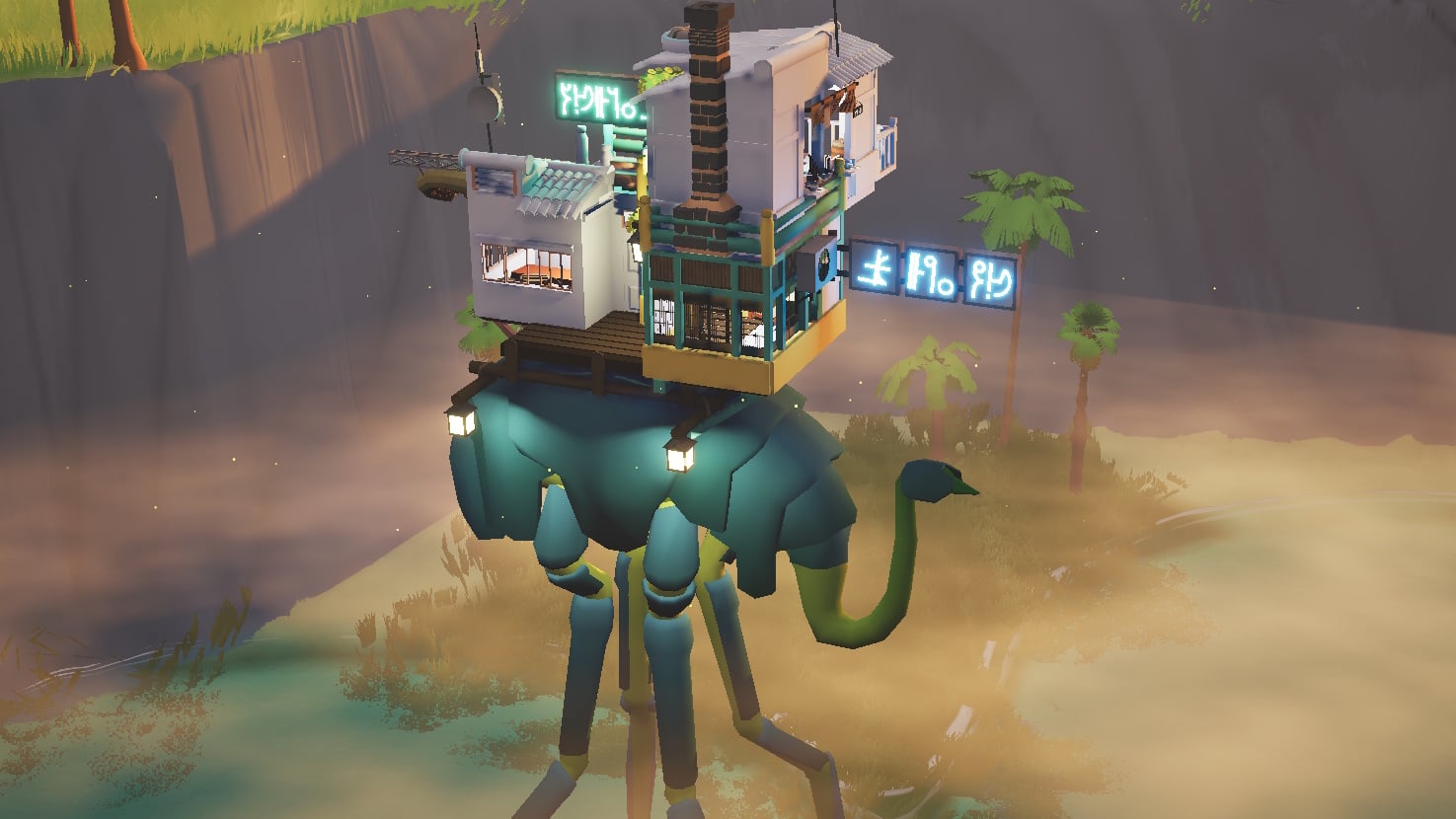
In ShantyTown (and we’ll get to the oddness of the name choice), you’re as likely to be building stacked micro-dwellings on the backs of roaming stalk-legged elephants as you are on a flat piece of ground. In fact, the vast majority of the game’s small levels are set on rocky outcrops, tiny islands or precarious cliff-sides, where you pile buildings atop one another and then festoon them with the decorations and facilities they wish for. And that, my friends, is the game. And I’m pleased to report it’s more than plenty.
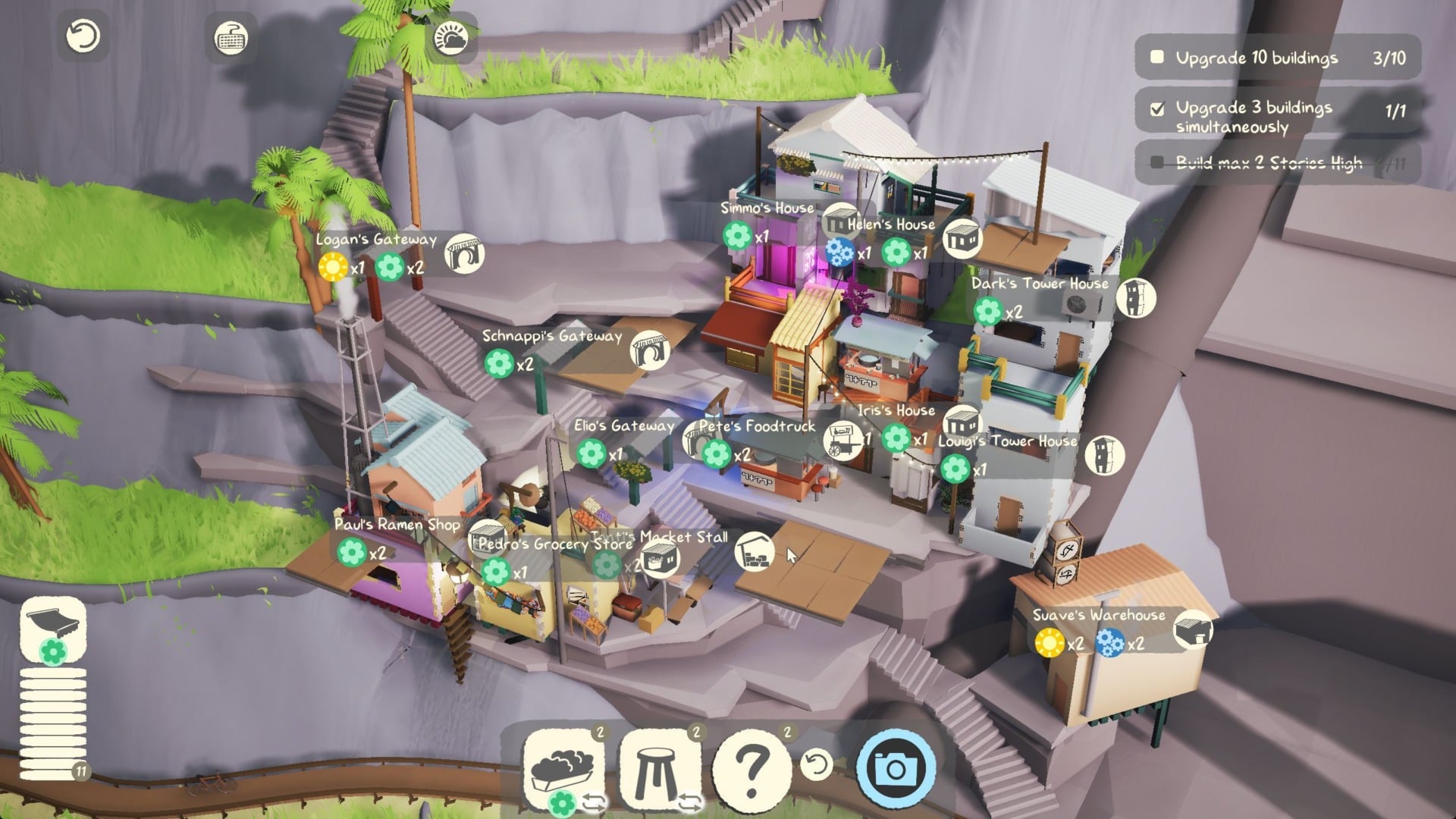
The twist here is that you don’t pick your buildings and items from an open menu, but rather are assigned items from a “deck.” You have three to pick from at any time, and you can see everything that’s coming in the un-dealt deck, which bizarrely doesn’t over-complicate or frustrate things at all. It forces you to improvise on every level, rather than just repeating the same building process each time, and encourages the cluster-y building style the game’s designed around.
This is very much a game about tin shacks and flimsy diners crammed into tiny spaces, often piled high, to make economic use of tiny spaces. But this also doubles up as a required technique for completing each level’s goals, where you upgrade each building by fulfilling all its thought-bubble requests. Not only do they transform into prettier buildings, but also offer you new bonus adornments to better decorate your little town, often vital for hitting all the targets. So a house may wish for one decorative item, one lighting feature, and one functional facility, and when it gets all three it dings and offers you the extra. Lighting could be anything from a new window to a street lamp to a string of fairy lights hung between buildings. Decorative items (a rather loose category) include plants and advertising billboards, but also washing lines and signage. A giant neon sign counts for both of these, and when hung such that it lights up multiple buildings, it’ll tick the list for them all.
Functional stuff is everything from metal pipes that can stretch along multiple stories to trash cans and rooftop aerials, and again, there’s overlap with the other two types of additions. The goal is to ding as many buildings as you can with judicious arrangement and placement, but at the same time, it’s not all that important. ShantyTown wants to be played, and isn’t going to gate the rest of the game unless you complete every given task—it just gives the process more purpose if you do. It’s just as important to arrange everything in ways that are aesthetically pleasing to you, creating splendid little dioramas that fizzle with light and appeal.
In this regard, almost everything you get given to place has multiple variants in shape, design, and color, and the way they will interconnect is enormously generous, bordering on the farcical (doors don’t appear to need to be accessible, for instance), which all ensures your focus remains on calmly crafting rather than busily worrying. There’s no stats popping up here, no concerns about electricity supplies or tax rates. It’s about completing morsel-sized challenges in a peculiar world.
There are all manner of delightful details, not least the lighting as the day/night cycle ticks around. You’ll also unlock special items that introduce bizarre helicopter-like landing pads, or crab-shaped crab shacks, all of which feel as if they’re from an entirely other world. All of these can then be deployed in the game’s endless mode, where you can just build to your heart’s content.
OK, so the name. I don’t love it. The term “shantytown” most usually defines areas of extreme poverty; crude, shack-like living areas on the edges of cities where the poorest people live in the worst conditions. These are not homes of choice. ShantyTown‘s developer says the “game is inspired by my love for densely built cities around the world—the kind of places where every wall, alley, and rooftop tells a story,” and that sounds all very romantic until you consider the reason such areas exist: grotesque inequity. This is all the more frustrating here because the game doesn’t speak to poverty and struggle, but instead simply peculiarity. These areas you build are weird, letting you tower buildings into impossible stacks, even when riding on the back of a massive, fantastical bird-like colossus that strides through the ocean. I wouldn’t even be having these thoughts if it were called StackTown or something, rather than seemingly mythologizing the concept of the slum.
But this is a silly decision in nomenclature, and not a condemnation of the lovely little game you play. It has its flaws, the way electric lines and the like can be placed being utterly bemusing, and I’ve had it repeatedly crash on one specific side-quest. It also occasionally makes my PC run like a jet engine, which is bizarre given its low-end graphical demands, but hopefully that’ll get fixed in patches now that the game is out. Overall, however, it’s just brought me calming, gentle happiness.