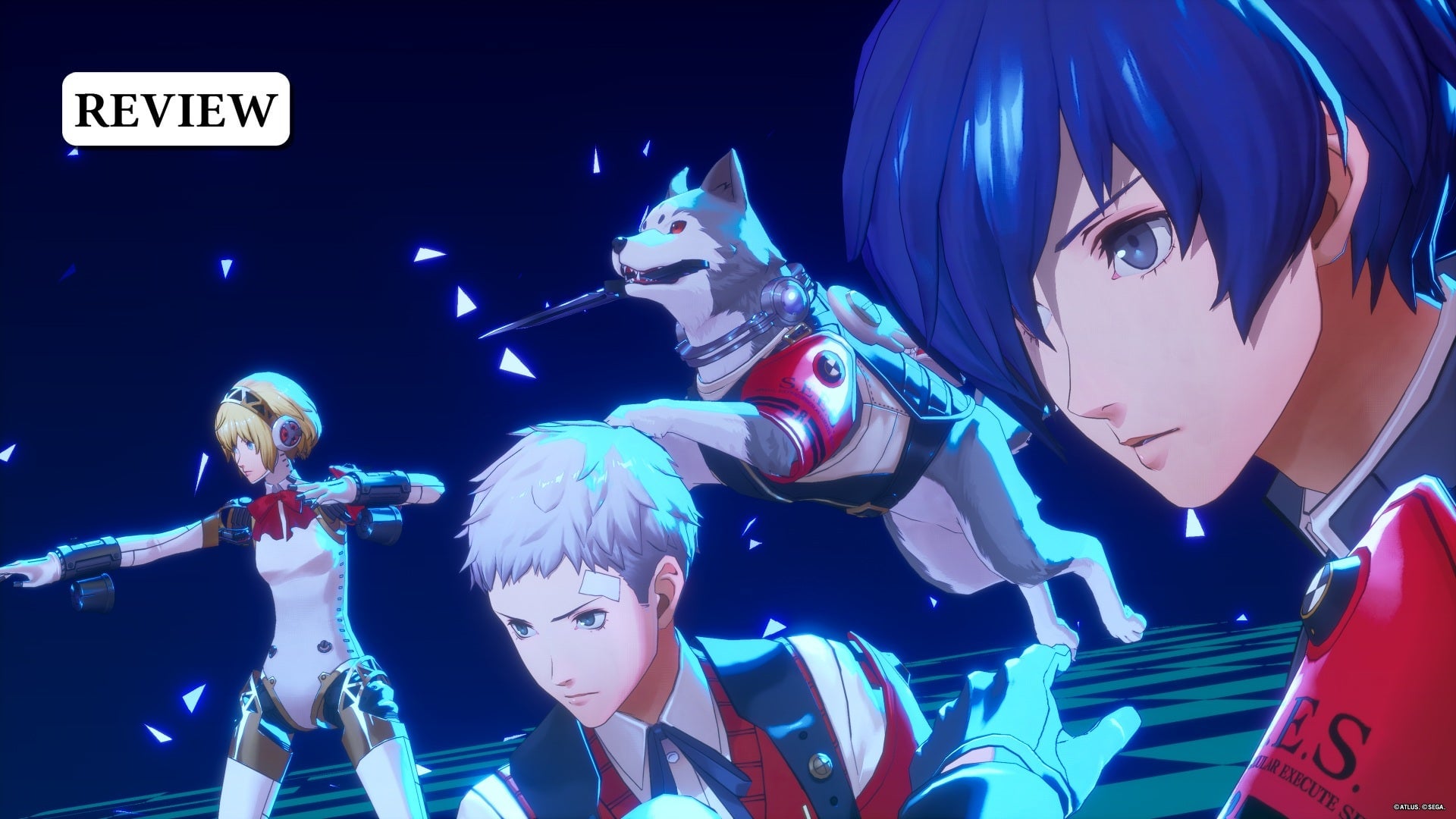
Persona 3 was always the best one. Persona 3 Reload, the from-the-ground-up remake of the 2006 supernatural, social sim-driven RPG, just eliminates any doubt. A complete visual overhaul, new mechanics, and new music all reinforce what made the original a stellar, poignant, and radical game for its time. However, Reload is more than just a prettier version of an old game; It’s the best-realized version of an iconic story that spotlights some of the magic that Atlus hasn’t quite lived up to since.
Persona has always been about high-school students fighting supernatural forces, but P3 was the progenitor of the life-management elements that have become central to the franchise. Reload is a fascinating way to revisit a moment when Persona was more in touch with its roots as a Megami Tensei subseries and still establishing its own unique identity. The remake is a testament to how far the series has come and how far it still has to go.

Broadly, Persona 3 Reload’s story is unchanged. You play as a transfer student named Makoto Yuki (or another name of your choosing), who starts attending Gekkoukan High School in the coastal city of Iwatodai. Once there, Makoto is confronted with a supernatural phenomenon called the Dark Hour, a mysterious period after midnight in which most people transmogrify into coffins. Makoto and a handful of his classmates remain cognizant during this time and are able to move through the world freely, and they are able to summon Persona, or living manifestations of their inner psyche. The group uses this power to fight malevolent monsters called Shadows in hopes of ending the Dark Hour entirely. While the setup is the same, everything has been completely remade, and it looks, sounds, and plays beautifully.
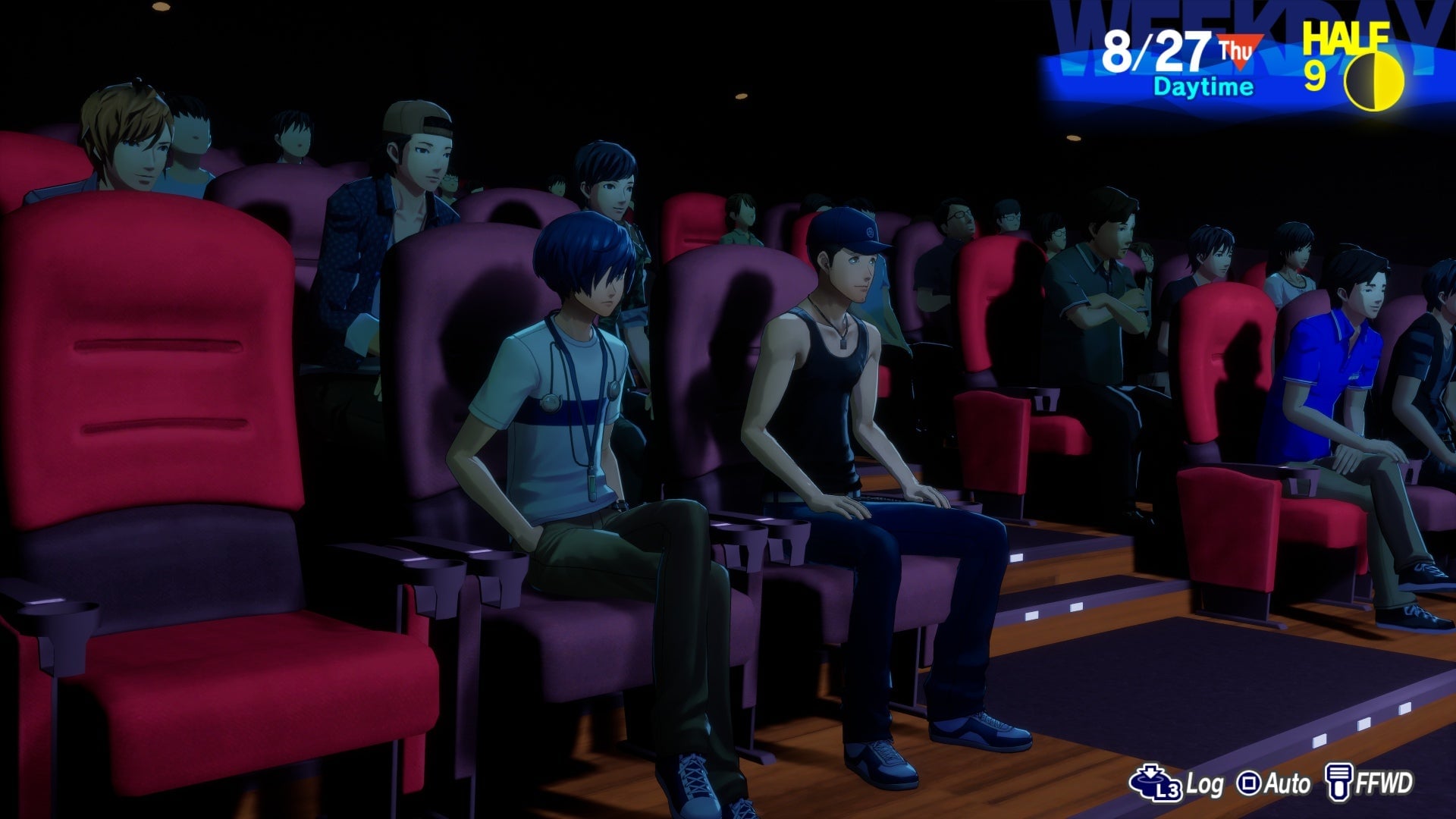
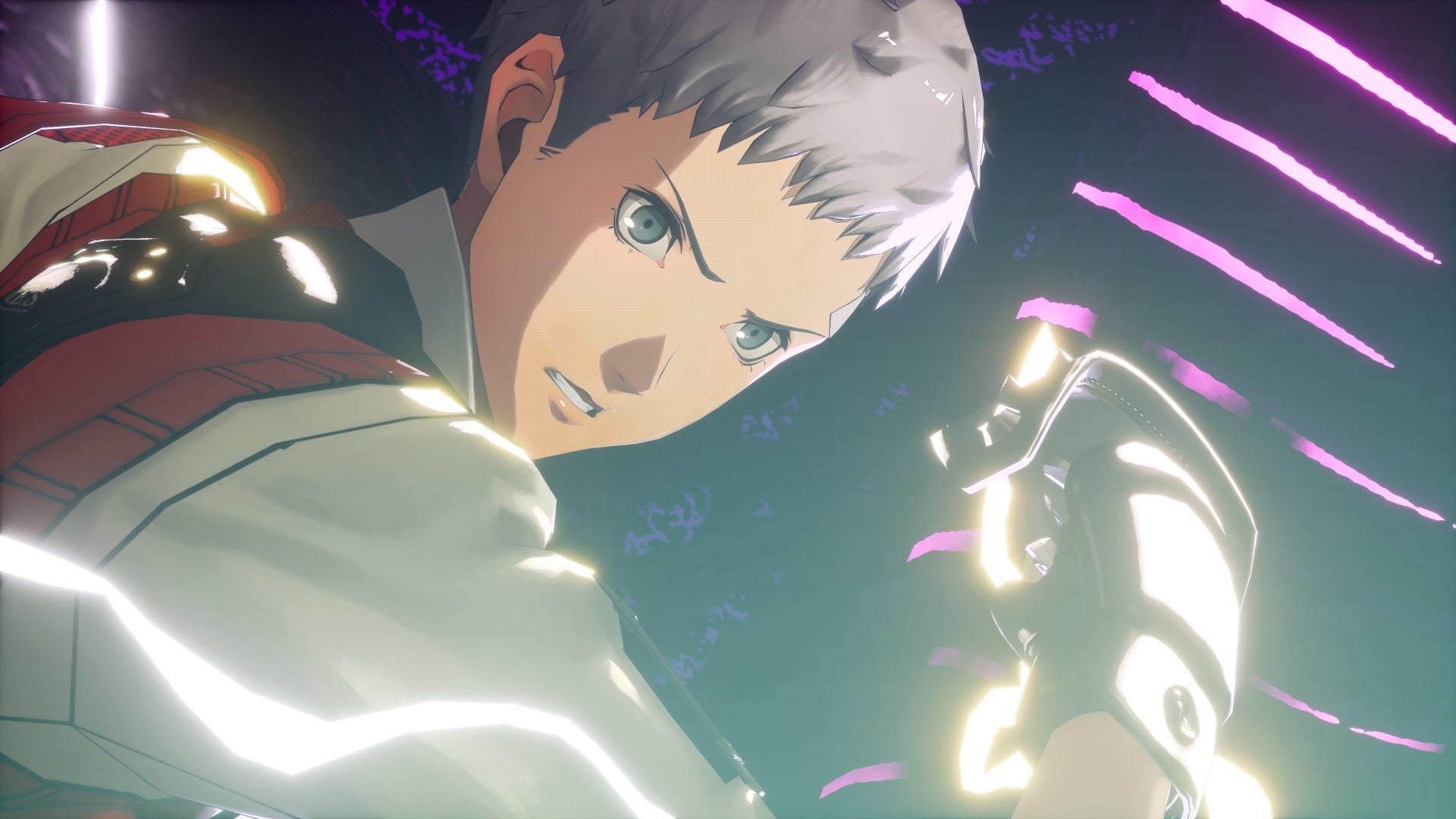
Reload is a case study in the “this looks like how I imagined it as a kid” phenomenon of remakes because this game looks stunning. The riffs on Persona 5’s stylish menus, gorgeous color palettes, and sleek transitions make it look like a truly modern Persona game while maintaining the original’s unique visual and tonal identity. It doesn’t feel like anything’s been lost in smoothing out the edges of an old game for a modern audience, it feels like a modern realization of what made it special in the first place.
Persona 3 is challenging in both its combat and narrative themes, and it’s easy to forget that as the series has become more popular and fandom-facing. The turn-based, elemental weaknesses-driven combat is dense and strategic without having to rely on gimmick fights like Persona 5’s bosses do. Nowadays, Persona tends to fall into the same trap Pokémon does, where a lot of fights are just about finding the right elemental weakness to poke at until enemies die, but Persona 3 balances enemies who can absorb, resist, or reflect certain abilities, as well as use status effects and predictable behaviors to ensnare me in a fight. The Theurgy system, a new mechanic that gives each party member a unique, ultimate ability, bring new layers to the old system.
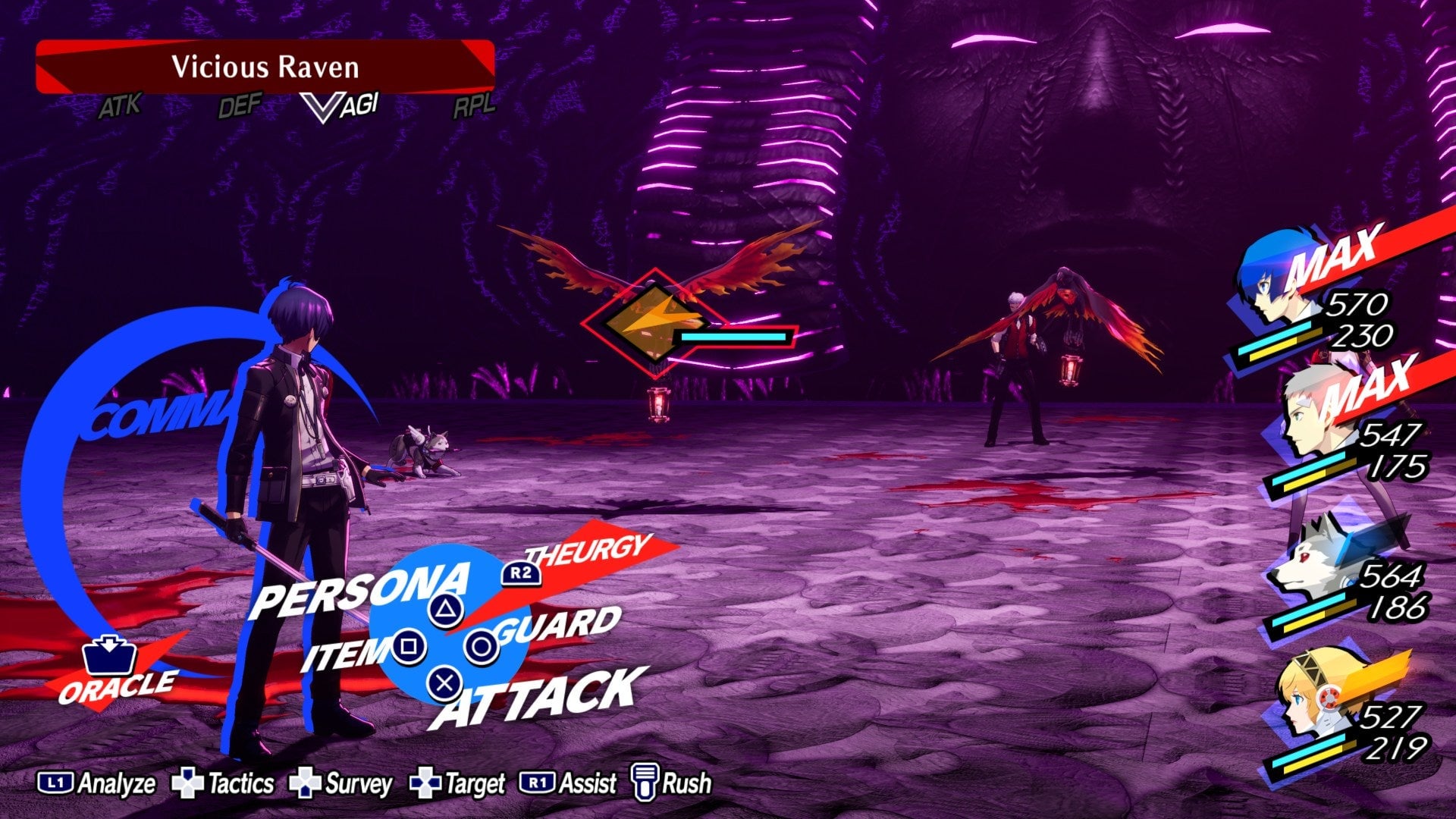
One fight I went through during the Dark Hour really drove this home for me. I was confronting a shadow who could absorb all physical attacks, allowing it to heal with each punch or slash of a sword. Thus, my team had to rely on magic attacks to take it down. However, it also was able to inflict Rage, making it so that I couldn’t control what my party did for a turn or two. By the time I regained control, it had completely healed itself by manipulating my party into attacking it.
This wasn’t even a huge, climactic fight, but I don’t remember a lot of moments like this in my playthroughs of Persona 5. I think I’d forgotten how challenging Persona games could be. Those changes have made Persona 3 more distinct in the long run, but it’s not the only way recent entries haven’t quite lived up to the game that set Persona on its current path.
Going back to Persona 3 after years of Persona 4 and 5 spin-offs makes it really apparent how the series got caught up in a formula. Makoto and the rest of the SEES’ story is refreshing to revisit because its setup and payoffs still feel singular. The party stands out because, unlike their Persona 4 and 5 counterparts, they aren’t dropped by the plot after their designated chapter. Their stories are intertwined in ways that make each of them important rather than coming off like afterthoughts in the second half of the game.
Persona 3 Reload feels more in tune with just how much the series’ fans would grow to latch onto its party members and social elements without compromising narrative weight or integrity. Some of this comes from hangouts you can have with your party members, such as making tea with the typically walled-off Mitsuru and learning more about her rich upbringing, or watching old boxing matches with resident jock Akihiko. Each of these has both a tangible benefit in terms of providing resources for a dungeon crawl, or bolstering social stats like my courage, charm, or academics. I’m most enamored by Persona 3 Reload when it finds ways to let me spend time with characters I already knew and loved but often didn’t get to just hang out with one-on-one without it being high stakes.

Those casual encounters are some of the best parts of Persona 5, so seeing them implemented here is a welcome addition. But it’s not just the small stuff that makes Reload feel like the most well-realized version of this game’s cast. The remake also goes out of its way to correct one of the original game’s greatest sins by creating full social link-style arcs for the male party members.
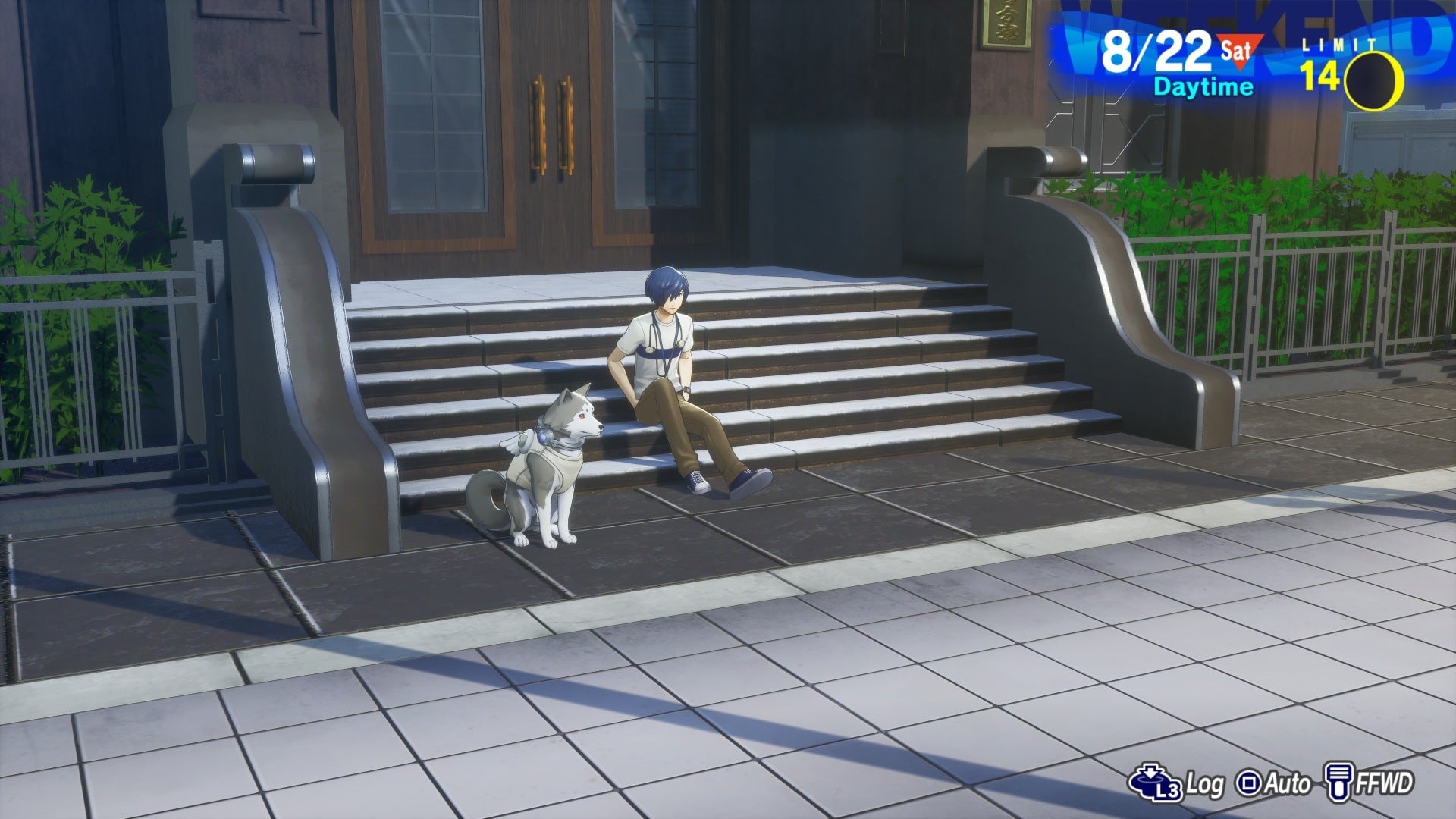
In the original, the men of SEES didn’t get to participate in the social elements that became the series standard, unless you were playing Persona 3 Portable’s female main character route, which is missing from Reload. This time around, Akihiko, Junpei, Ken, Shinjiro, and even the dog Koromaru all get new “linked episodes”storylines original to the remake, which let you really get to know each of these characters on a new level. It is far and away the best part of Reload
Unfortunately for everyone else you meet in Persona 3 Reload, there’s a stark gap in quality between the new side stories and the old ones. That’s probably where Persona 3’s age shows the most, even with a new coat of paint. Some of Persona 3’s original social links are pretty solid, such as the elderly couple who run a bookstore together while grieving for their lost son, or a young man who finds comfort in Makoto’s friendship while he deals with a terminal illness. But a lot of them go nowhere, don’t offer satisfying dialogue decisions, or fall into weird territory, like fellow student Kenji who is trying to date a teacher, and the game clearly wants me to nudge him in that direction. Don’t get me started on Maiko, the child at a local playground who opens up to you about an abusive home life, and all your dialogue options let you do is be like, “That’s crazy,” and let her go home.
The contrast in writing becomes most apparent when you compare the new stories for the boys with the old stories for the girls in the party. Each of these women are well-rounded characters in Persona 3’s main plot, but their social links are mostly the same as they were back in the 2006 original. While Akihiko and Junpei are dealing with heavy storylines that feel intimately tied to Persona 3’s themes of confronting death and not falling into nihilism along the way, Yukari, Fuuka, and Mitsuru’s arcs could have used a modern rewrite alongside their teammates. Aigis, the shadow-fighting android, is still a standout, but even her late-game revelations lack the same gravitas.
Even if the social links vary in quality, after all these years, Persona 3‘s story feels just as relevant as it did in 2006. Death permeates every facet of Reload. Some characters fear or embrace it, but the game’s whole ethos is about knowing it’s hanging over us all. Hell, the members of SEES summon their Personas by putting a fake gun to their heads and pulling the trigger. Death in all its forms shapes every moment I spend in Iwatodai. If I’m not staring it in the face speaking to a dying man in a shrine, I’m thinking about the threat of it as I head into battle.
But Persona 3, despite the motif and set dressing, was never really about death. It was about living. We each live through our own hardships and fight for every moment we get of this life, just as SEES climbs up the never-ending, shadow-infested tower that appears in the Dark Hour. Many of Persona 3‘s social sim elements exist to reinforce that life, however long it lasts, is worth fighting for because of the connections we share with others. In the time since Persona 3 originally came out, that’s only become more apparent.

The world is different than it was then. Walking through the streets of Iwatodai and seeing dozens of people overtaken by the mind-altering Apathy Syndrome feels different when you’ve lived through a pandemic that turned millions of people into a statistic to be routinely ignored. Experiencing the dozens of forms grief takes for each member of SEES and each citizen of Iwatodai is different when you’ve lost your father or your childhood dog. So the world has been forever changed, but so have I. Where once I might have been an angsty loner who didn’t care if I lived or died, I now push myself through my despair because I have people who lift me up, and I try to lift up in kind.
There’s a segment in Persona 3 where the words “The power of friendship surges within you” appear during a fight as your friends cheer you on. That’s the mantra that carries me through the neverending onslaught of hard times. SEES’ journey showed me every form fatalistic nihilism can take, but also underlines that connection is what keeps us moving forward. I didn’t feel like I had much to fight for when I first played Persona 3. But having something worth living for is all that keeps me around these days.
Maybe it goes hand-in-hand with how Persona 3 keeps every member of its cast as an active participant that it also feels more thematically consistent than the games that followed. Persona 4 posits itself as a game about accepting who you are, while also essentially calling the hard truths its heroes come to terms with a phase they’ll grow out of. Persona 5 wants to be all about fighting against injustice in service of the little guy, then puts the same victims it claims to be fighting for through similar abuses, but at the hands of their friends. By comparison, Persona 3 is always wrestling with what gives life meaning when we all know it’s barreling toward an inevitable end. That Reload manages to incorporate what made its sequels special without falling into the same traps speaks volumes about how strong the source material was and how timeless it still feels to this day.
Even when Persona 3 Reload shows the original’s age, I’m still amazed at how well it holds up after not having played it in over a decade. I’ll always adore Persona 4 and 5, but it does feel like they learned some of the wrong lessons from P3. The social sim elements remain the draw of the series, but despite the care those games and their spin-offs put into creating a party worth loving, it sometimes feels like the games themselves view them as transient. They have a dedicated dungeon that focuses on them, but then they sway in the background until you hit them up for their time off, or the whole group is getting together for a vacation or school trip.
In contrast, Persona 3 Reload feels like it’s learned all the right lessons in taking a double dip. Its original story keeps everyone in the foreground, while new additions to the social sim elements bolster each of them to the point where I sometimes feel like they were just acquaintances up to this point. Somehow, after over a decade of fighting, dancing, and dungeon-crawling spin-offs, I feel like I’ve met the ultimate version of Persona’s best cast.
Persona 3 Reload
-
BACK OF THE BOX QUOTE
"Gun to my head, I can't think of one!"
-
TYPE OF GAME
From-the-ground-up remake of Persona 3 with updated visuals, voice acting, music, mechanics, everything
-
LIKED
The best-realized version of Persona 3’s cast, looks incredible, brings everything that made the original special to the foreground
-
DISLIKED
Some of the writing has either aged poorly or doesn’t match the new stuff, doesn’t have all the story content from the disparate editions
-
DEVELOPER
P-Studio
-
PLATFORMS
PC, PlayStation 4, PlayStation 5 (played on), Xbox One, Xbox Series X/S
-
RELEASE DATE
February 2, 2024
-
PLAYED
~72 hours
To me, that’s what makes Persona 3 Reload the “definitive” version of Persona 3. There’s been a lot of rightful criticism of Atlus doing a complete remake of a game that has always felt fractured across multiple versions. It doesn’t include the female protagonist route from Persona 3 Portable or the playable epilogue from Persona 3 FES. (Even after throwing all this praise onto Reload, not including FES’ additional chapter still feels egregious.) But as far as SEES, their journey to end the Dark Hour, and how the power of friendship carried them through? Reload is the best version of this story, and only makes me appreciate the bold steps it took even more.
.