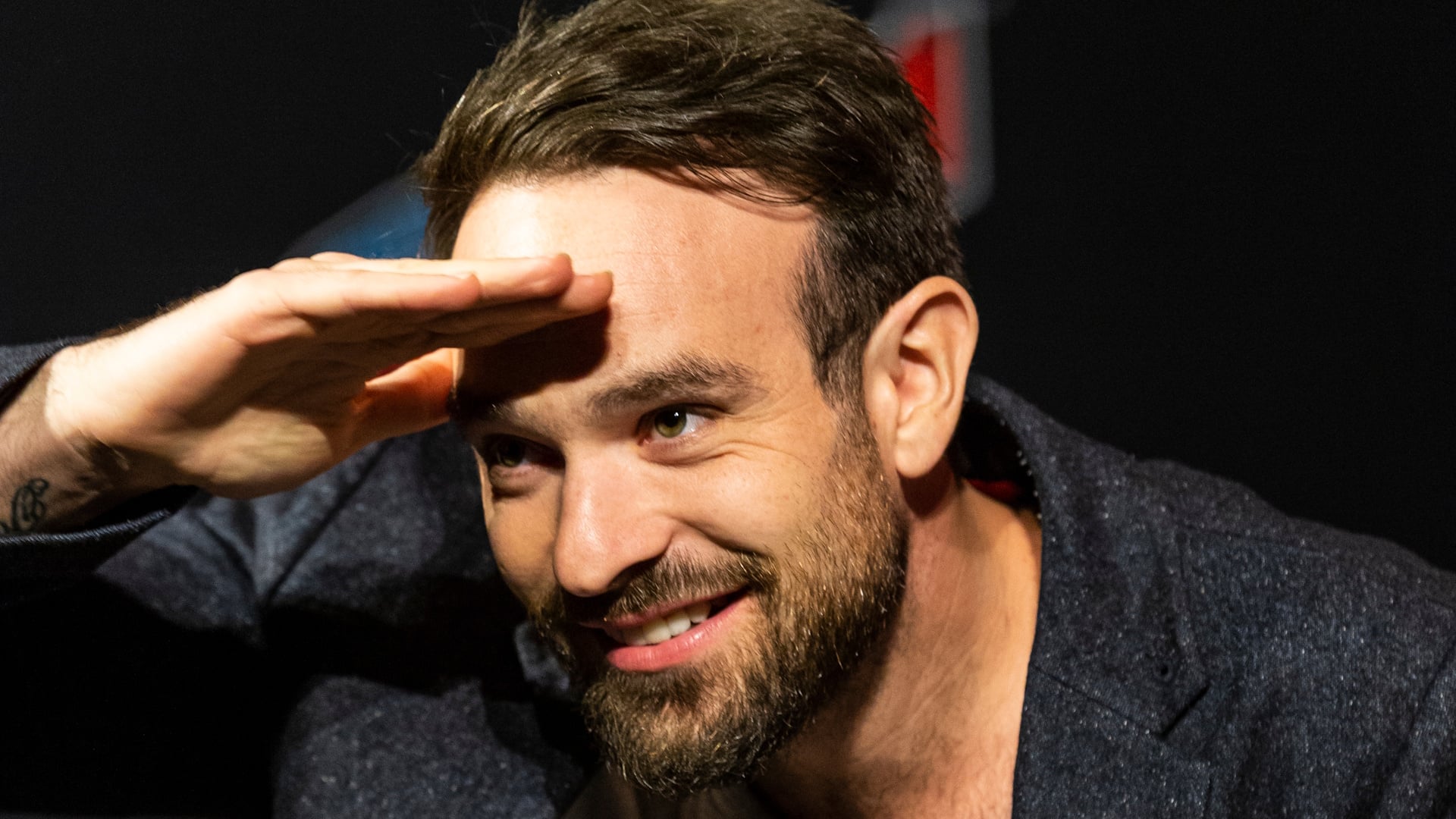
The saga of whether Charlie Cox has played 2025 GOTY Clair Obscur: Expedition 33 has been rolling along for a peculiarly long time. The Daredevil actor who plays the voice of Expedition 33‘s Gustave clearly thought he had a quick voiceover gig, just four hours in the booth, but has since then had that experience follow him around for the following year as he’s endlessly pestered about the game. Now, in an interview with GamesRadar, Cox says he’s spent a few hours playing the game (presumably just to get everyone off his back), adding, “I’m not very good at it.” And that’s OK! He shouldn’t have to play the damn game! Everyone just leave him alone!
To be clear, I have no great desire to defend Charlie Cox in particular. I’m sure he’s lovely, but I’ve never met the guy. I’m being driven here far more by the wider principle that pressuring people into wanting to play video games is such a tiresome dick move and I’d love to see it stop. Charlie Cox doesn’t want to play video games! That’s fine! That he had an acting job in one of them doesn’t change that in any way, and if anything is likely to come out of the last year of non-stop fuss, it’s the likelihood that he’ll never say yes to another gaming voiceover again. And who could blame him?
This is extra tragic given just how good of a job Cox is widely agreed to have done. Clair Obscur attracted a huge number of players, and that included some—let’s say—more enthusiastic fans. They tend to be the louder ones, the sorts who will then spend the rest of their lives policing the internet for dissent regarding their favorite game, the sorts of people who spoil something nice by liking it too much. This, to my mind, has driven this bizarre pressure on Cox to have an opinion on the game for which he read out some dialogue, and the man clearly didn’t want to. Given how good he was at the reading bit, you’d think people would back off.
Cox felt so uncomfortable with the attention his performance was getting that he tried repeatedly to redirect the focus elsewhere. In November 2025, when on a panel at Mexico’s La Conve 64, he was asked about his Game Awards nomination and stressed that while “thrilled,” he really believes the bulk of the work was done by the mo-cap actor for Gustave (and other characters!), Maxence Cazorla. At Galaxycon in July 2025, he previously tried to distance himself from all the fuss, explaining that he didn’t really know anything about the game’s plot, nor his character’s role in it, stressing that the last game he played was Super Mario 64 three decades earlier. So, from all of this, we can conclude that the super-talented actor isn’t interested in video games. And that should be fine. But it’s still the question Cox is getting asked on every panel, and in every interview, no matter the context.
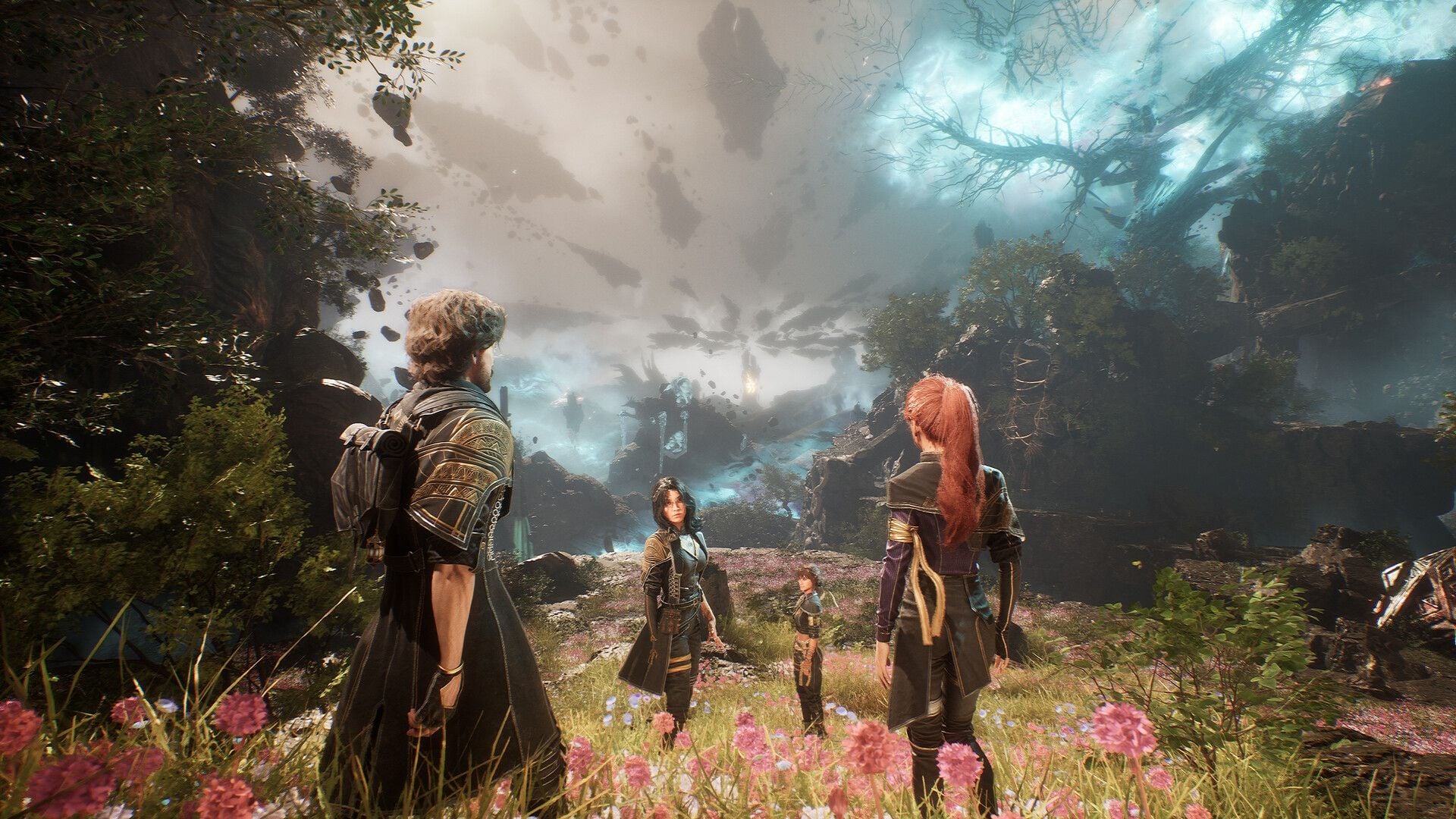
Of course, talking to GamesRadar ahead of the Bafta Games Awards for which he’s nominated for this specific role, it’s a more reasonable circumstance in which to ask. While I think I’d have leaned into the angle of how the weird experiences have felt, whether it’s put him off gaming performances and so forth, during the chat he reveals, “I’ve since played a bit of it.” Then quickly stresses, “Not the whole thing, I haven’t completed it.”
Nor indeed has he really started it, by the sound of things, and I don’t blame him. “I’ve played the opening bit for a while,” he then tells GR, “kind of walked around and met the people and garnered the information and all that kind of stuff.” He then concludes, “Not very well.” And I cannot imagine a response that more obviously reads, “God, yeah, I played it for 15 minutes just so everyone will drop it. It’s not my thing.”
It’s OK not to play games
My wife doesn’t play video games. The last game she played was Sonic the Hedgehog. She is married to a relatively well-known games journalist who has played games since he was four years old, and written about them for magazines and websites for 27 years. I am extremely aware that the reason she doesn’t play video games is not for the want of opportunity, but because she simply isn’t interested. It is not a way in which she wants to experience a narrative; she has no desire to beat a high score or master some reflexes; and she has many other interests that fill her time. It is not my life goal to make her play games.
Sometimes, when I experience a game story that I know would move her or mean something to her, I feel a bit sad that she won’t want to play it to experience it, and she has absolutely no interest in watching me play a game. From my perspective, she’s missing out on something. From her perspective, she’s not in the least bit bothered by that. And that’s fine. When our son desperately wants her to try to do something in a game using a controller, it’s an alien object in her hands and she’s immediately deeply irritated by it. As a person with two science degrees she’s enormously smart and quick-witted, and clearly could learn to use a controller, but has no incentive nor desire. She has other things she loves and from which she derives joy. So she deserves to be left the hell alone about it.
Charlie Cox, like anyone else in the universe, does not need to have played Clair Obscur: Expedition 33. It doesn’t matter how wonderful his performance might have been: it was giving that performance that was his joy, the thing he’s interested in. It’s his skill and his passion, and that’s why he was able to portray a character that meant so much to so many in just a four-hour recording session. And that’s enough. That’s the end of it for him. And he has no more obligation to play—let alone care about—the game than the lead violinist on the game’s score, or the person who set up the lighting in the mo-cap studio.
Parasocial play
I know why people want more. The parasocial relationship formed with the fictional character carries a lot of meaning for the player. A depth of feeling desires reciprocation, and given that it can’t be gained from the pixels on a screen, people then look to the humans behind the characters to receive that validation. The more usual response is for an actor to fake it, to say things like, “I’m just so delighted that people felt a connection with X, and I’m so pleased with how the character turned out. They’re an amazing team and I felt such a bond with X and their struggles…” Validation is ticked, and people move on. Cox’s bemused response to a gig he’d clearly not considered particularly life-changing didn’t offer people that affirmation of their emotional response, and instead created this batshit void that has dragged on for a year: We care about Gustave, so he should too! We’ve got to make him care!
So there you go. The poor man was bullied into cluelessly stumbling around the opening of the game, “met the people and garnered the information,” and I cannot imagine he’s lining up to take any other video game voiceover work for the foreseeable future. (I’d love to be wrong!)
The positive out of all of this? It’s opened up the discussion about the over-emphasis of voice actors and the complete anonymity of the motion capture actors who deliver everything from the subtlest movements to vital facial expressions. Cox’s push for these actors to be better recognized has caused the whole industry to take this on board, and there are serious pushes for awards ceremonies to start to honor these incredibly talented people alongside the vocal performances. I really hope that’s something that actually happens and isn’t just forgotten now that Cox has sort-of played a bit of the game like the screeching crowds demanded.