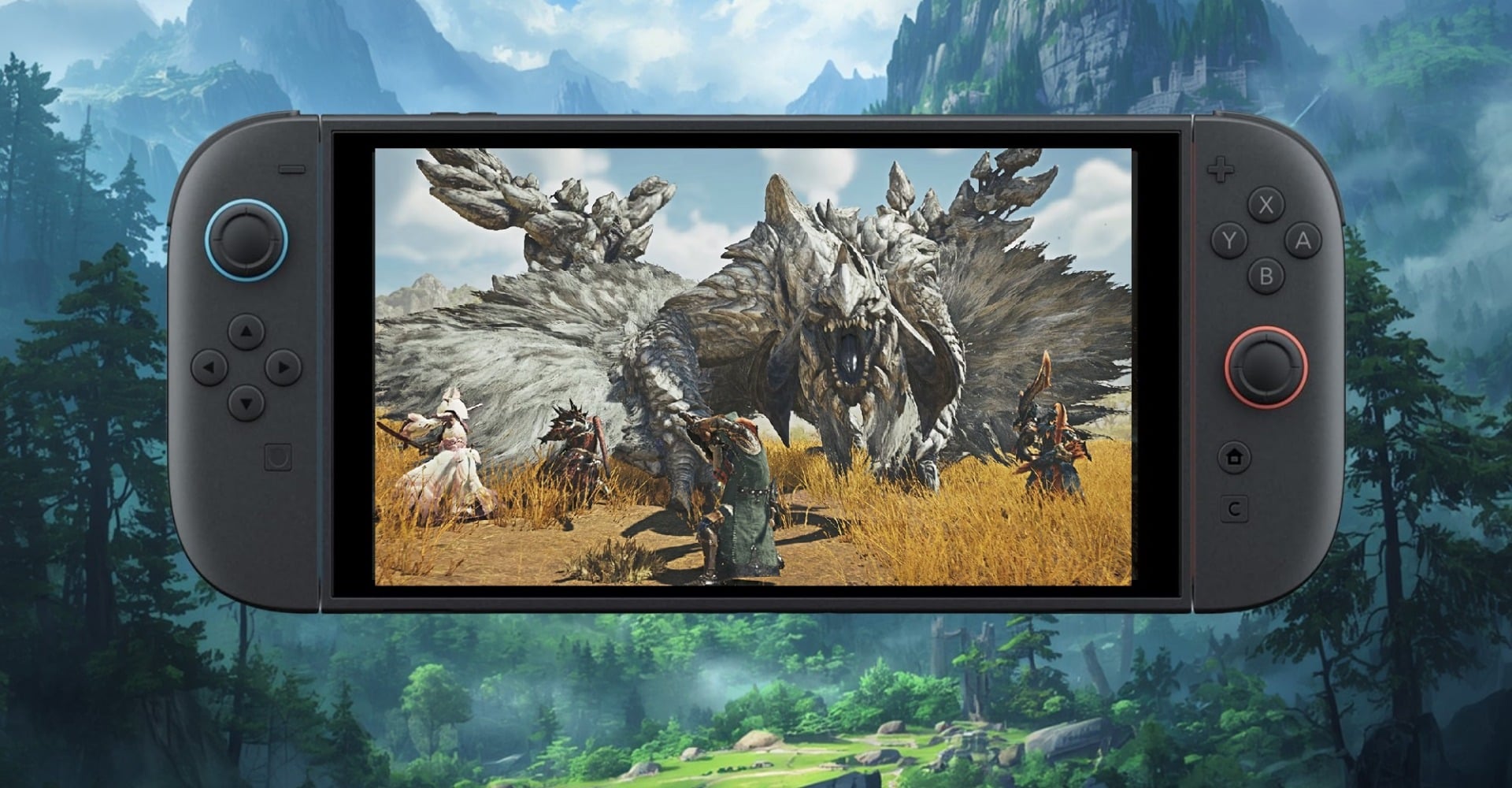
Of all the ports announced for Switch 2, Monster Hunter Wilds could end up being one of the most impressive. It features a big open world, tons of bespoke action animations, and seamless online multiplayer for big boss fights. Many Monster Hunter games have called Nintendo handheld devices home, but rarely ones that were originally made targeting high-end consoles and PC hardware. According to Capcom, the goal of the Switch 2 version of Monster Hunter Wilds isn’t to scale the game down so it can run on a weaker device; it’s to rebuild it from the ground up, with as few big sacrifices as possible.
“The Nintendo Switch 2 version of Monster Hunter Wilds was developed around the concept of delivering a natural Monster Hunter Wilds experience on Nintendo Switch 2,” producer Genki Sunano said in a recent interview with Kotaku. “In other words, we didn’t want it to feel like a simple port, where the graphics or performance had merely been scaled down to make the game run on Nintendo Switch 2. Instead, our goal was to bring the Wilds experience to Nintendo Switch 2 without compromising the experience of Monster Hunter Wilds.”
He said the performance target for Monster Hunter Wilds on Switch 2 is for it to run at a stable 30 FPS in handheld mode, even during four-player multiplayer hunts. “Wilds is packed with a tremendous number of elements, so we had to carefully evaluate the assets and underlying processing behind each one, determining what needed to be preserved and what could be adjusted without changing the overall experience,” Sunano said. “It was this painstaking, and at times seemingly endless, process of making decisions and optimizations one by one that proved to be one of our biggest challenges in delivering a comfortable handheld experience while preserving what makes Wilds feel like Wilds.”
One example of this painstaking process was rebuilding certain assets and shaders for the Switch 2 version from scratch. The team is designing “more efficient implementations” while making sure to preserve the game’s original look as much as possible, giving players on Switch 2 the same quality experience without any disadvantages compared to people playing on other platforms. When the team modified things like visual-effect assets, they made sure the new versions still aligned with existing hitboxes and collision detection.
“Through this process, we focused our resources on areas that directly affect the gameplay experience,” Sunano said. “At the same time, we took another, much closer look at areas we had previously considered sufficiently optimized for home-console hardware. To make the game run on handheld hardware, we reassessed every aspect of these areas and replaced certain visual techniques and internal processing with more efficient solutions. We plan to apply the knowledge and expertise gained through this project to the performance improvements that we will be making for existing platforms in the lead-up to the release of Monster Hunter Wilds: Ascendance.”
The Capcom producer said the benefits from this development process will remain unique to its work with Switch 2 ports, but that the learning exercise could yield benefits for how it thinks about development on other platforms as well. We’ll find out if it was all worth it once Monster Hunter Wilds comes to Nintendo’s console on December 4.