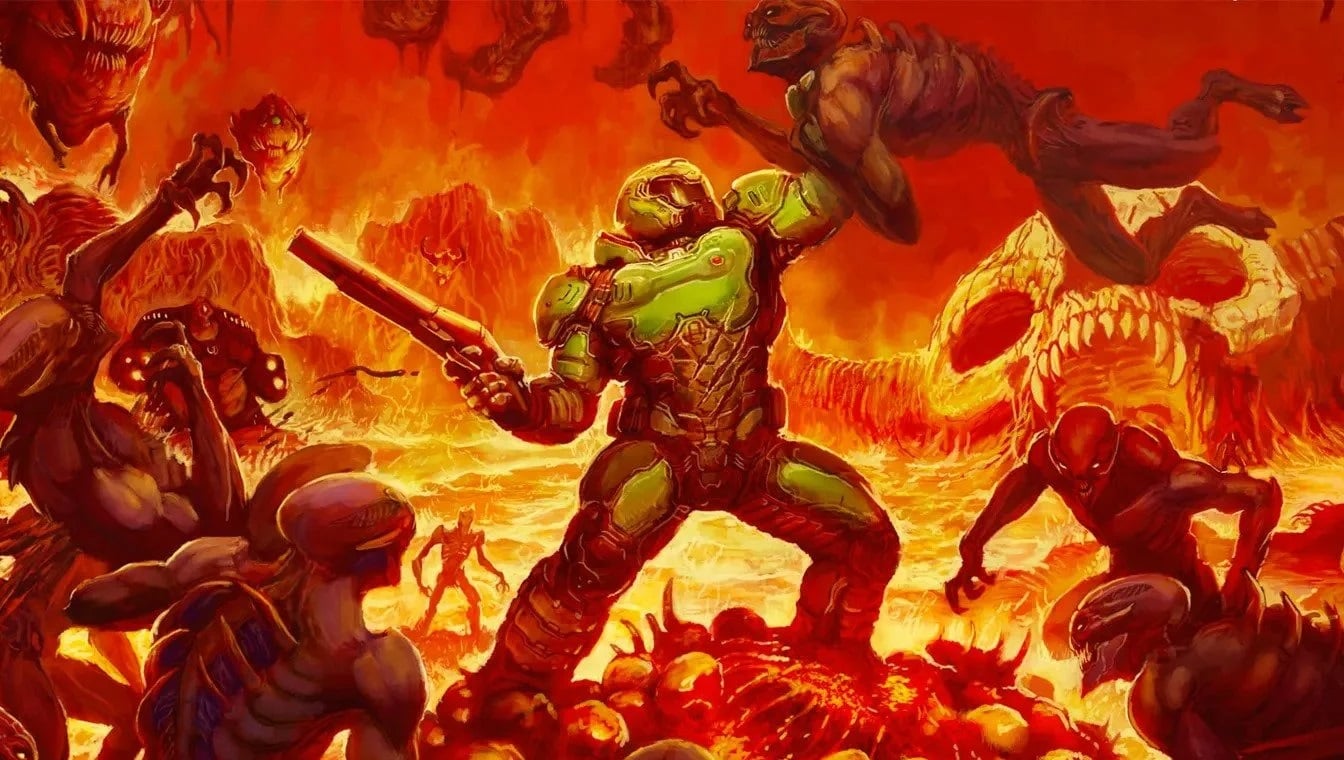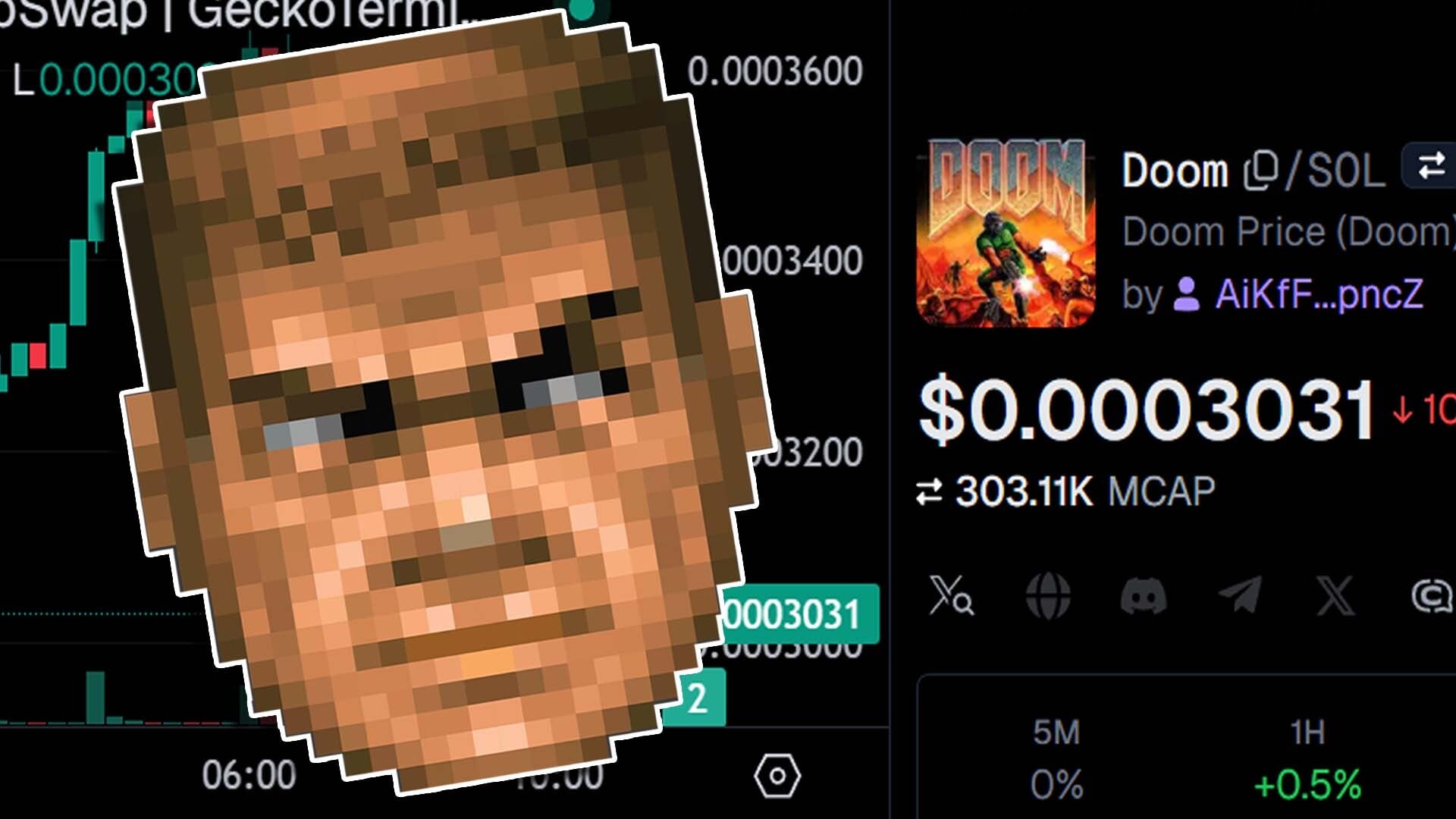
On August 3, well-known Doom designer (and frequent social media sparring partner of John Romero) Sandy Petersen posted a video on his X account of himself in a Doom T-shirt at a PC with a link to his profile on crypto trading site Fomo. “I’m thoroughly part of the community,” he wrote. “We can build this together.” In his video, he showed himself purchasing a token of the new “$DOOM” memecoin for over $187. In the replies, people responded with everything from utter glee to concern for Petersen’s wellbeing.
I'm thoroughly part of the community. We can build this together.
I just bought on @fomo. https://t.co/kpRdF9BV9o$DOOM Gymbmn9wwMKe4NnmVceyyfpncp9arbwPfSdBsyY9pump pic.twitter.com/PwbgPUKq6T
— Sandy Petersen 🪔 (@SandyofCthulhu) August 4, 2026
Later that day, he posted another video of himself putting in an additional $1000 into the token. Then still the same day, he posted a video and a link to a website where users can play a version of Doom in their browser…and earn Sol, the native cryptocurrency for the blockchain platform Solana. He continued promoting the coin and the game, called Doomsol, for the next several days, at one point claiming the game had thousands of players.
Just dropped another $1000 on Doom.
Gymbmn9wwMKe4NnmVceyyfpncp9arbwPfSdBsyY9pump pic.twitter.com/H8A5Zmojxe
— Sandy Petersen 🪔 (@SandyofCthulhu) August 4, 2026
Petersen’s exact role in both the $DOOM memecoin and Doomsol is a bit fuzzy, but based on his posts he seems to at minimum be involved in designing Doom levels for Doomsol and promoting the coin on his socials. His son, Arthur Petersen, also appears to be heavily involved, and at one point reshared a post from a crypto-promoting X user named @ALPHACALLEREMRE recapping an X Space (a live conversation that took place on X) saying that Sandy Petersen was “receiving fees” and “being paid very well” for making new Doom levels for Doomsol. They added that “This is SANDY retirement coin due to not being paid as well as he should’ve at doom.”
Petersen is well-known by the Doom community thanks to his level contributions to both Doom 1 and 2, as well as Quake. He’s a prolific poster and frequently engages with fans, but this turn into crypto struck a lot of individuals as very, very odd. It would have been strange enough for Petersen to suddenly pivot to promotion of a memecoin, but on top of that, there were elements that didn’t add up. For instance, this video he posted of himself allegedly playing Doomsol. This isn’t Doomsol. It’s Freedoom, a totally separate fan project, whose use in this video prompted the official Freedoom account to comment and make clear that it had nothing to do with whatever Petersen was plugging here. “We don’t endorse cryptocurrency scams and recommend people stay away from them,” the account wrote.
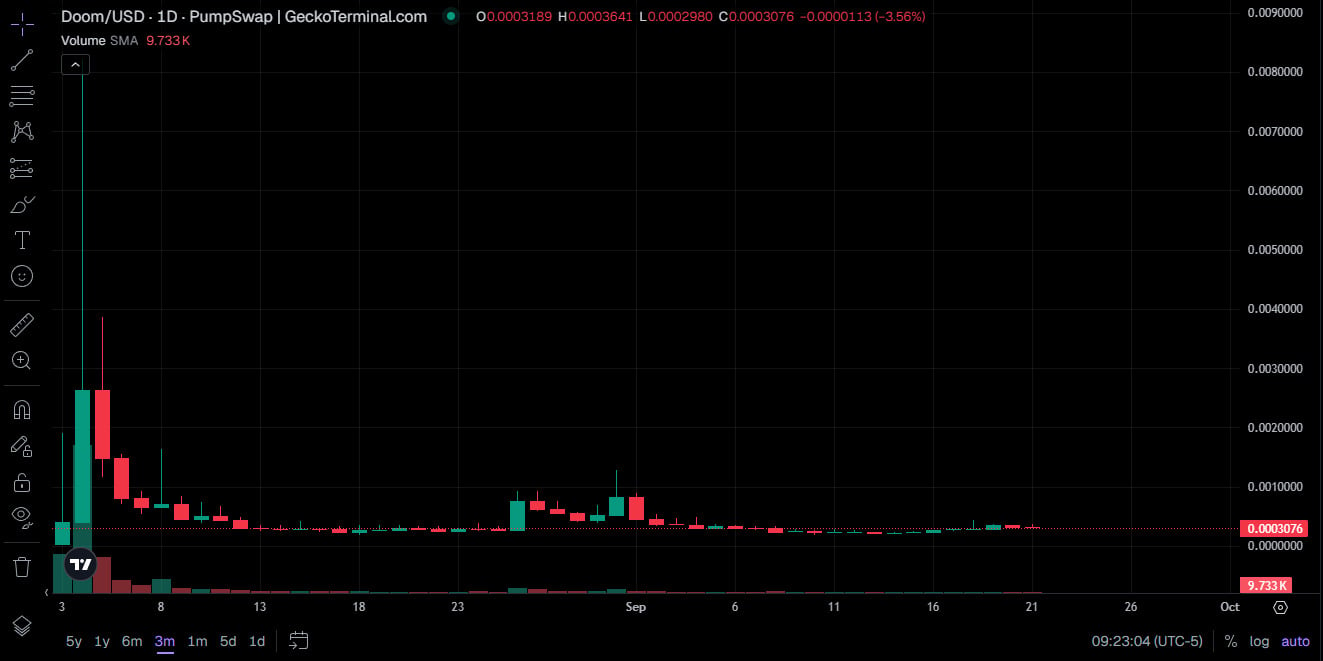
And indeed, almost immediately, whoever created the coin pulled the rug. As the price of the coin tanked, Petersen abruptly stopped posting about either $DOOM or Doomsol entirely. He began mentioning it again on socials at the end of August amid what seemed to be an attempt by several individuals claiming to be working on Doomsol to rally and repromote the game and the coin after its original creator bailed, but despite a brief jump, the coin’s value never reached its original highs, and both Petersens almost immediately fell silent about it once again.
What’s actually going on here is honestly very confusing. Sandy Petersen is listed as the creator of Doomsol on the archived website, though it is unclear if he also created the memecoin himself. Additionally, a Quakesol and a Wolfensteinsol that function in roughly the same way and have similar-looking websites have also surfaced, though it’s unclear if Petersen is behind the latter two as well. At the time this piece was written, all three websites had seemingly been taken down (you can still see them via Wayback Machine).
Sandy Petersen has claimed that Doomsol is legally safe due to Doom‘s open license; however, what that open license actually allows for are creative uses such as building brand new games or porting Doom to all sorts of other platforms. It doesn’t let you redistribute Doom or reuse its assets (such as its logo, which is used on the Doomsol website) for your own commercial gain. Which is why it’s unsurprising that today, Bethesda is sending legal counsel to confront the individual behind Doomsol, most likely with a cease and desist, though the actual content of the letter is unknown. Bethesda did not specify to Kotaku who the letter was being served to, though it seems likely to be Petersen, given his listing as the creator.
Speaking to Kotaku, a Bethesda spokesperson shared that the company’s concern is not with creative experimentation, but with consumer harm and confusion. Essentially, Bethesda doesn’t want people to look at either $DOOM or Doomsol and think it’s an official product, and it’s not legal for Doom assets to be used for commercial ventures like this anyway. Continued creative and academic uses of the open source engine are still, in Bethesda’s eyes, totally fine. Recreating and redistributing Doom in a web browser to sell and promote a memecoin is not.
“The strength of Doom comes from its passionate community, and we believe players deserve clear information about what is and isn’t an official Doom experience,” the spokesperson said in a statement. “Our focus is on helping fans understand which projects are produced by Bethesda and id Software, and which are not affiliated with or endorsed by Bethesda or id Software. When there is a risk of confusion around affiliation or endorsement, we take appropriate steps to preserve that clarity.”
Kotaku reached out to both Petersens for comment on Doomsol and $DOOM in general on Friday but did not hear back on our questions in time for publication. We have reached out to them again with this new legal development for additional comment and will update as soon as it is received.