Warcraft 3: Reforged is getting a second shot at winning over new and old fans thanks to a surprise massive update announced and released at BlizzCon this weekend. The Forsaken Kingdom, a 30+ hour campaign set to bridge the gap between Warcraft 3 and World of Warcraft, is giving players a reason to dip back into Reforged after six years, but it’s also frustrating a subset of those players in the process, because you can no longer play the game offline.
As a part of the update that came with Forsaken Kingdom, Warcraft 3: Reforged is now always online. Even if you don’t buy the new campaign. The LAN mode option has been removed from the game entirely, too, so now if you want to play locally with your friends without connecting to the internet, or even just play single-player somewhere without great internet, you can’t. A number of people are not happy with this!
https://www.youtube.com/watch?v=I1kXClUCyuA
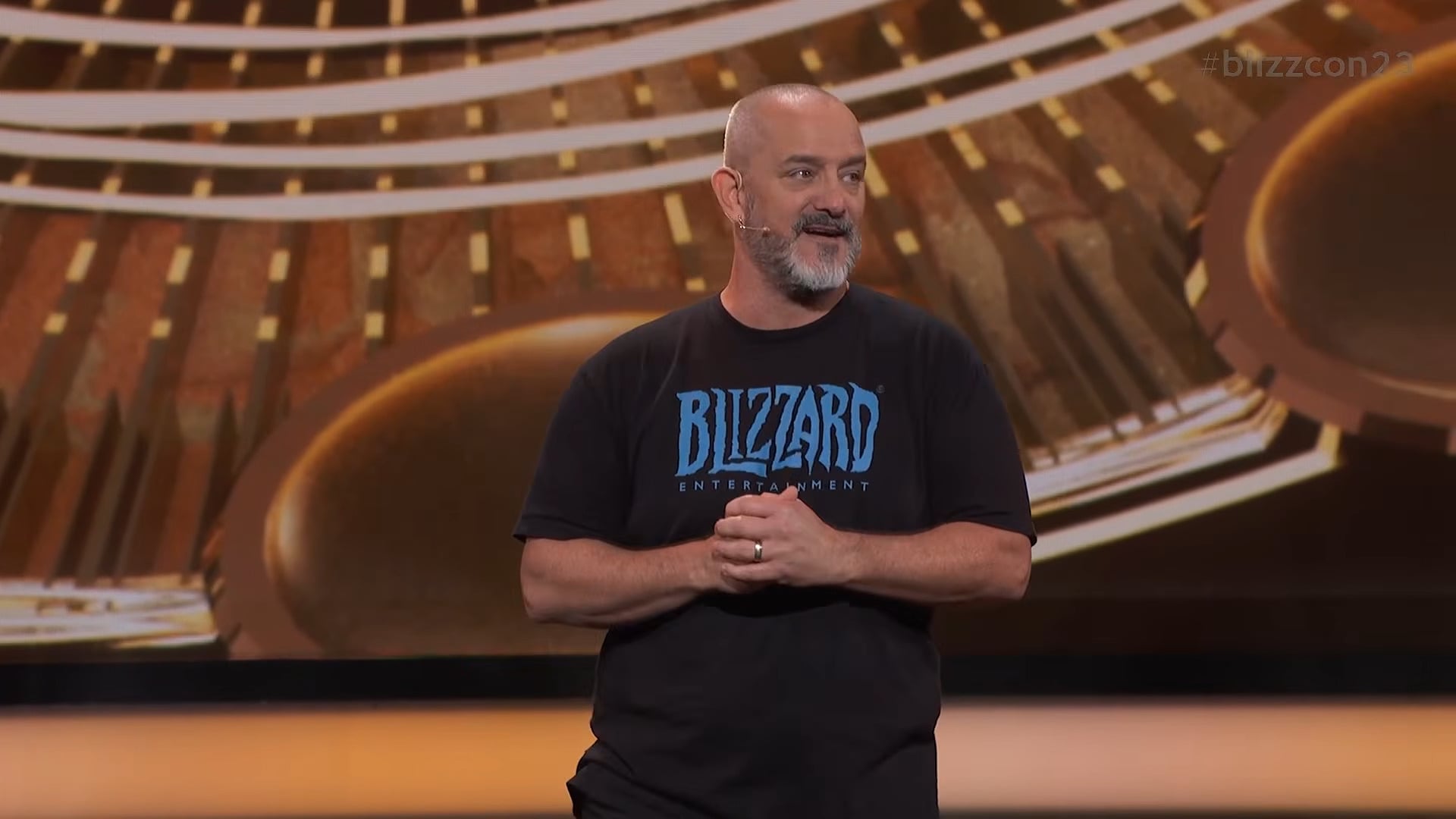
I spoke with Warcraft senior manager Brad Chan and game director Ion Hazzikostas at BlizzCon, and asked them why this change had been made. To their credit, the pair made a genuine effort to explain the technical side of all this to me, even though none of us are network engineers. I did my best to get a thorough explanation out of them, even though it’s a bit over my head as well. Here’s what they said, verbatim. To my initial question, why the game is always online now, here’s Chan’s reply:
“We did a lot of networking updates for the game when we launched The Forsaken Kingdom, and so one of the big networking improvements that we did was- I don’t want to over-technicalize it.
“So Warcraft 3 basically has initially three servers, originally. There’s North America, Korea, and Europe, which is based in Amsterdam. And so what we wanted to do was, because players are all over the world and we have global matchmaking, we need to have multiple servers in other locations so that people have better ping, so better connection between all the games. And so in order to actually build out the infrastructure to support all those networking connections, the game has to be online only.”
I asked him to elaborate further, because the “why” behind this did not make sense to me.
“You know how there’s Google Cloud?” Chan began again. “And then that stuff needs to talk to Battle.net, that needs to talk to the game. We have to lay out all the server technical infrastructure to support that type of stuff. And when you update that software, you update things so that they can talk to each other. There’s certain things that have to happen for that. I think, again, my layperson’s understanding, since I’m not a network engineer, but in building in those network improvements, there’s just core parts of the game’s DNA that require calling out, getting information down to do what it does and to connect. And basically duplicating all of that or building a whole separate structure alongside it just to support local play when the vast majority weren’t doing that.
“Ultimately, it comes down to not a question of literal impossibility, but resource prioritization and trying to serve the majority of our players as best we can and focusing on something that’s going to provide the best experience for the majority of players.”
Again, I want to give Chan credit for the effort here on a subject none of the three of us in the room were experts on, especially as his final statement seems to get to the heart of the matter regardless of the nuts and bolts of the why. I did push a bit though, asking them what players who have bad connections or who just want to play single player without being online all the time should do. Chan directed them to the Warcraft 3 classic client, which is offline only; though notably, that client won’t let you play the new content, The Forsaken Kingdom.
Still, I asked them both if this wasn’t a bit contradictory to the spirit of Warcraft 3‘s history as a LAN party game, something that became popular in part thanks to people playing locally with friends.
Chan answered first. “You know, Warcraft 3 is global, so like when you talk about the LAN party, the LAN party has gone global. And this idea of like, I like to play people against Korea. I play people in Europe. And in order to do so, we have to basically build out that infrastructure. Like it’s unrealistic for me to fly to Korea to do that type of stuff. And so we’re bringing more people together so that with all these improvements, people around the world can now play together with better connection and better security.
Hazzikostas jumped in here: “I think, broadly speaking, there’s some questions here that touch on how we approach transitioning from World of Warcraft: Classic to Forever, which I know is a whole separate conversation. But like there’s, as Brad mentioned, there’s the classic client that’s preserving and kind of curating and maintaining what was. We don’t want to take away that baseline experience that existed for years. But when you shift from curation and preservation of an old game to adding to it, to building new experiences, you often have to make new pipeline decisions about just maintaining what was is very different from a setup where we want to add new content, we want to add new features. And so you need to ultimately commit to a network architecture, you need to commit to development pipelines for certain things in order to give you the agility that you need to build new content going forward.
“I think what you’re seeing there is a bit of a shift in approach. And similar to how many graphics modes you want to support, other questions like that that arise, where you’re ultimately going to have to make trade-offs between your ability to serve the majority of people as best you can with the new offerings, versus having to duplicate or triplicate work in a way that’s going to slow down everything across the board and mean that everyone is getting less as a result.”