The VR Chat community has entered an uproar surrounding the use of Generative AI on the platform, following a volunteer community member’s announcement they will halt their activities in protest at the increasing influx of the technology in popular worlds. With debates on its impact to discovering new communities and the varied opinions on AI within the community on the app, the developers have launched a community policy regarding where to draw the line on generative AI usage in creative and player-facing spaces moving forwards.
With this also impacting discoverability and varied opinions on the technology, it has led the developers to issue a community consultation on creating a policy for the use of generative AI tools in the creation and player activities of the application moving forwards.
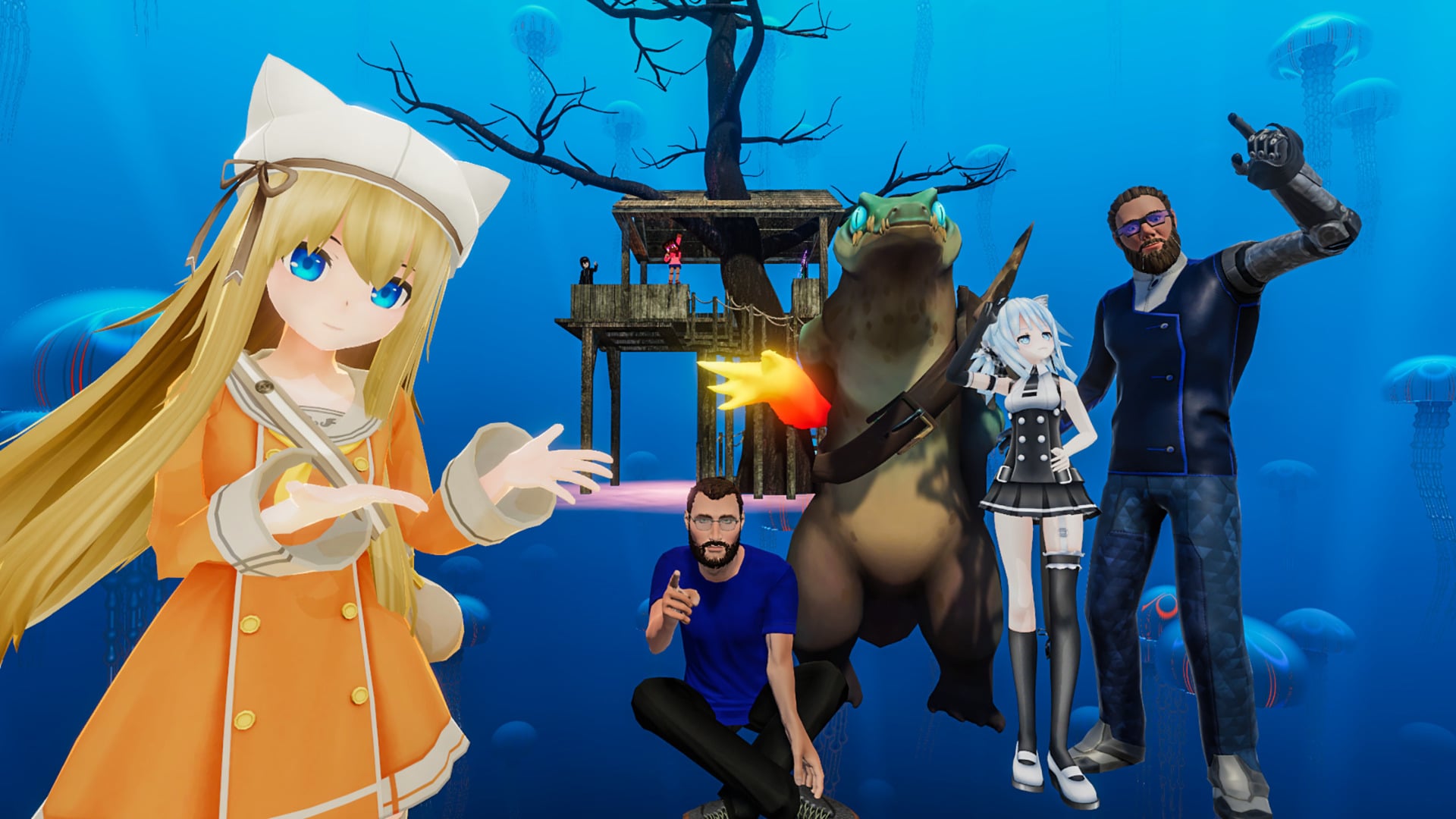
For its users, VR Chat has become the metaverse Mark Zuckerberg wished he could create: the free app is a hub for fan-created worlds and maps where groups of people can freely meet, talk and interact with one another, as well as conduct and share their own art or engage in dedicated niche communities. It’s even been adopted by some companies, with the tool being used as the basis for official virtual events and concerts. In-app purchases and subscriptions alongside merchandising keep the service running, with players themselves building an ecosystem for commissions on avatar costumes and free tools to support other users.
Of these community developers, Patroll is one of the most prominent, working on the application’s fan-run wiki and aiding with community testing and translation. Due to the “rampant plague” of AI-generated worlds and images, including the creation of AI-generated thumbnail previews for worlds in search that deceptively represent their content, they have chosen to step back from their community work, and requested other developers to include banners explicitly stating no AI is used in their work until more is done to aid in filtering out AI, minimize the use of AI internally at the developers VR Chat, amongst other demands.
AI's a rampant plague that @VRChat refuses to address. VRC promotes AI worlds & uses AI images. Until something changes, I'm stopping my efforts in VRChat translations, VRChat Wiki maintenance and Community Testers, as well as spending money on the platform. Join group NOAI.3843. pic.twitter.com/sTMssCor7j
— Patroll (@P4tr0ll) October 4, 2026
Many users joined this protesters, leading to many of the most popular worlds to display the banner prominently within the app. The strong community response has led the company to respond directly in their own statement, detailing what they view as acceptable usecases of AI while seeking to consult other users on how to address its broader use cases. Alongside immediately banning deceptive thumbnails, the company admits it finds itself at an “uncomfortable crossroads”.
“On one hand, AI can help accelerate development and ease technical burden, while on the other, it can generate endless streams of low-quality, low-effort content that erodes human connection,” they note in a statement.
Beyond thumbnails, their immediate policy shift condones the use of AI for translation, code help (using Copilot to write code), so-called AI-powered tools within development engines like Blender or Unity, as well as building tools for personal use. User-facing uses of AI, such as building physics of game logic for a world, using AI assets or fully generating a world, they feel there is “uncertainty” on how far to allow the use, asking users to share their views on whether to label or even fully-prohibit these use-cases. The company also promises to improve search to prioritize higher-quality discovery, in the hope it removes “slop” from searches. Full labeling of worlds, due to the risk of mislabeling and policing, remains an unconfirmed option.
The response has been mixed. While some see it as a step in the right direction, others question why the labeling as a filter is even a debate and not something the company immediately enact for those who want it. Patroll, the leader of this protest, has asked the team to go further, hoping for ways for players to build their own discovery systems.
For a service powered by its community and users such as this, as the debates surrounding AI become more intense amongst both the technology’s supporters and detractors, can there be common ground when some feel it is stealing their work and others believe in the technology? Consultations will continue for the next week, after which the team promise to share their findings and enact their AI policies moving forwards.