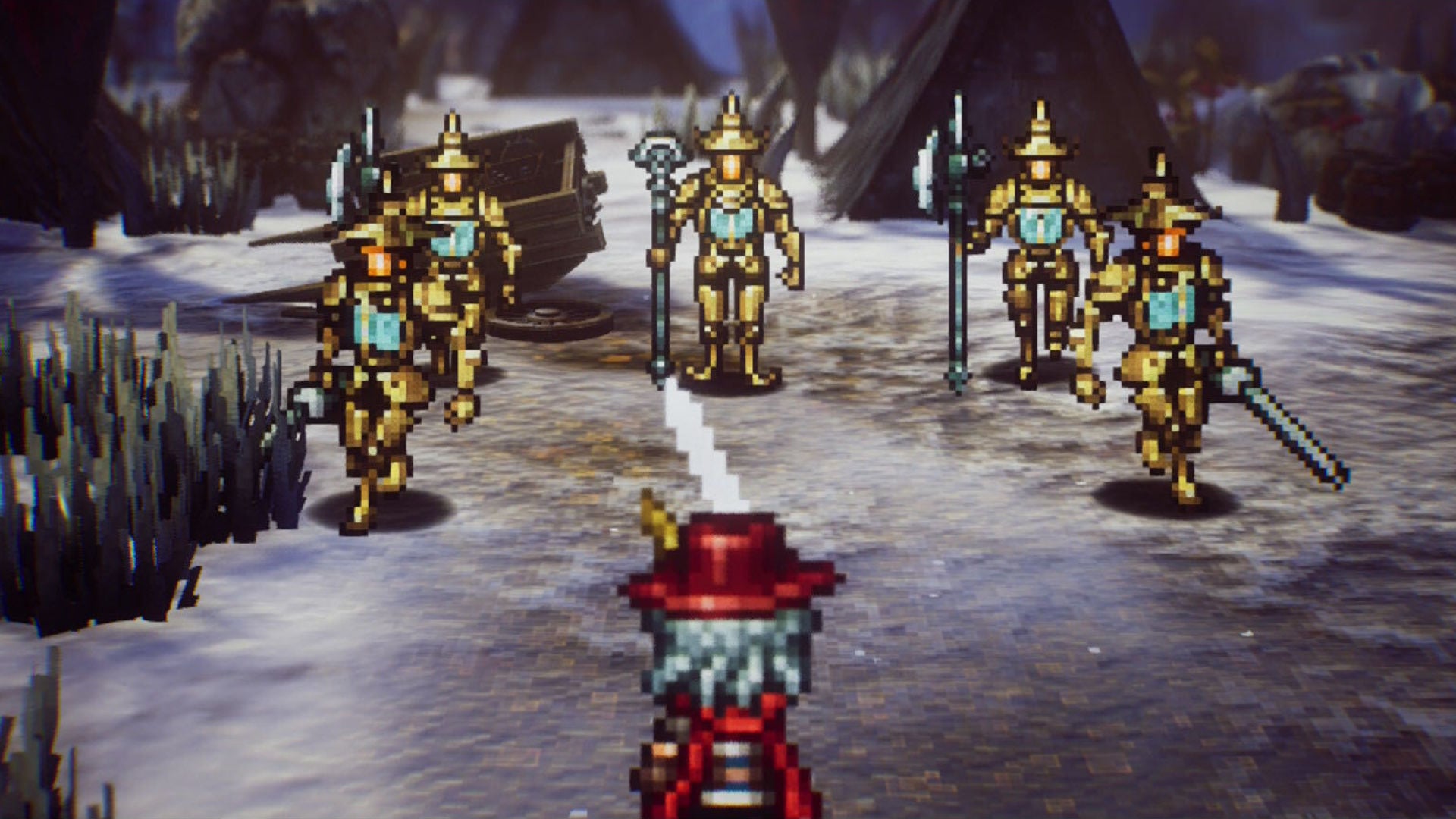
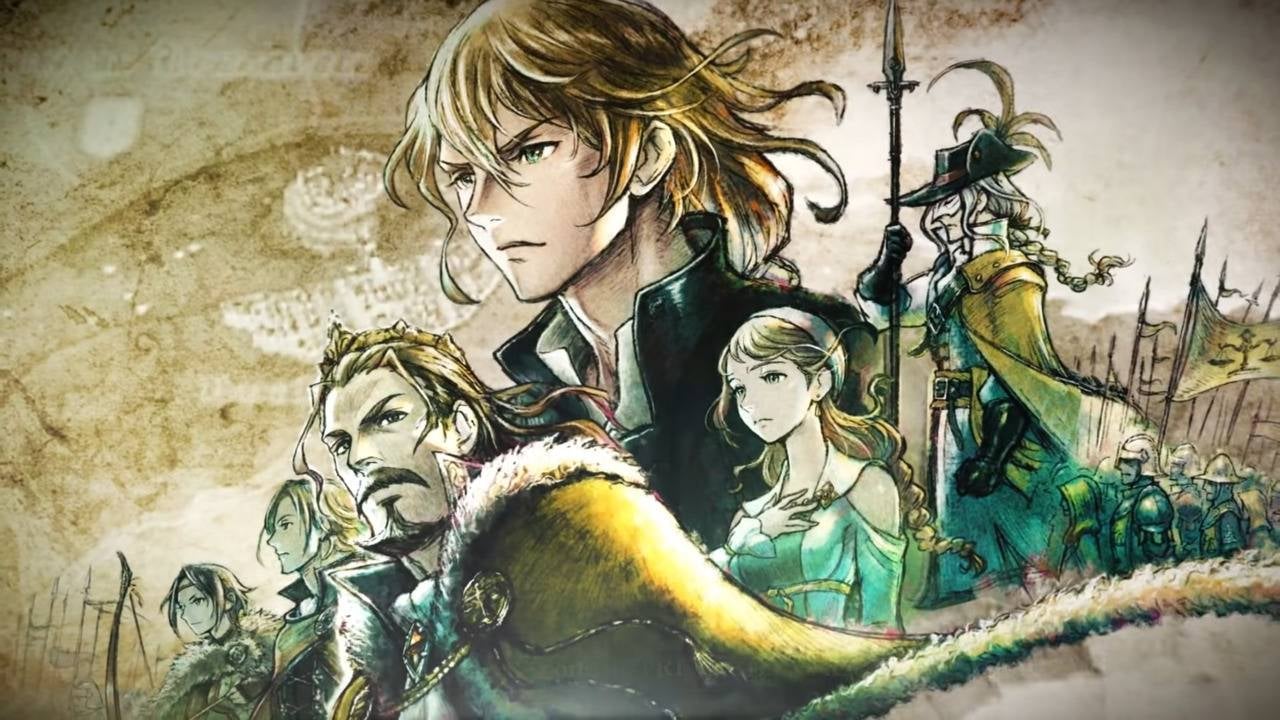
When I first saw the trailer for Square Enix’s new tactical role-playing game Triangle Strategy, I was excited about scratching my Fire Emblem itch (very normcore of me, I know). But now that I’m actually playing it, I’ve found that it’s more often reminding me of another game I love. After a few hours with the game, I realized that it was borrowing a lot more from Octopath Traveler–which was helmed by the same producer, Tomoya Asano–than just the warm color palette and the nostalgia-inducing pixelated art style. Like its predecessor, the game deeply humanizes its characters, fleshing them out and honoring their convictions, which makes them feel less disposable than most other tactical games about war. Triangle Strategy is a worthy successor to Octopath Traveler.
Here’s a confession: I waited years to play Octopath because of the negative reviews it received at launch. Even Kotaku panned it as “grindy” and “tedious.” When I finally started the game last year, I was engrossed for dozens of hours. Here’s why I put Octopath on my GOTY list: the developers had perfected the grind. Once you get into the “zone” of its turn-saving combat–improved and refined after first being introduced in Bravely Default, also produced by Asano–the game becomes a truly meditative experience. As I ventured through the gorgeous vistas and talked to some emotionally well-rounded NPCs, I stopped caring so much about the destination. I was having too much fun on my adventure
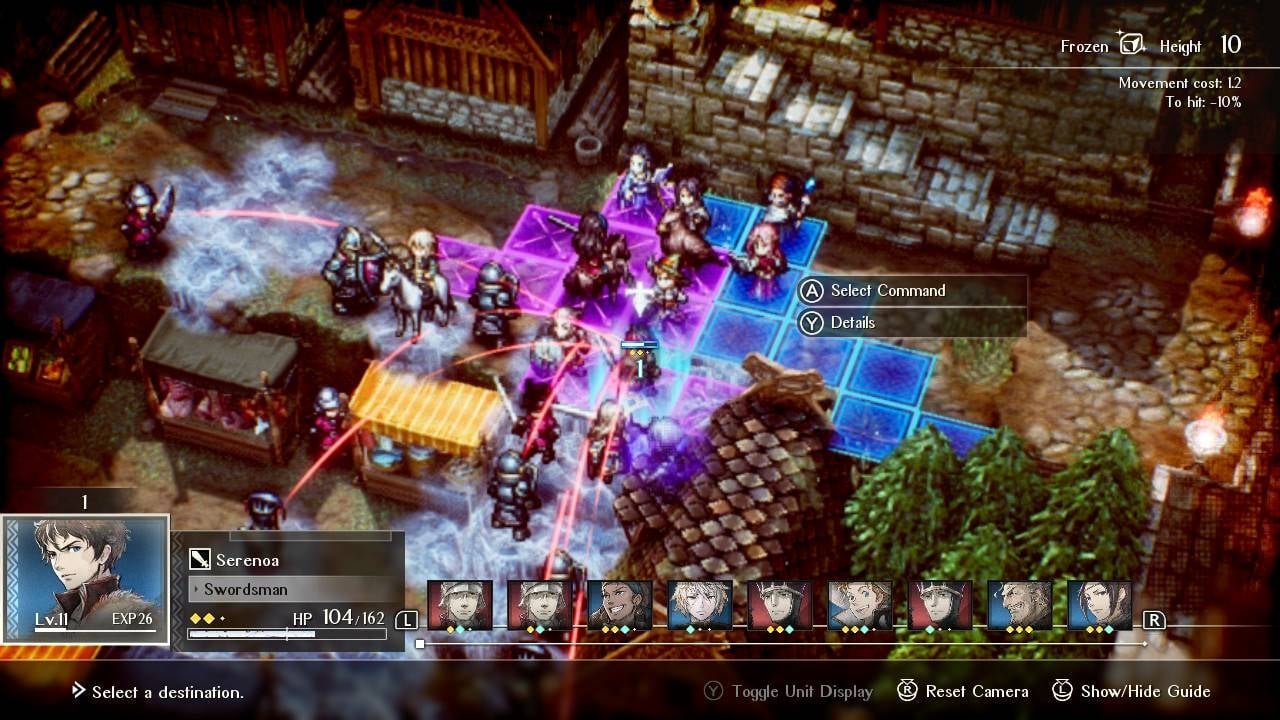
For some players, games like Final Fantasy Tactics are their primary reference points when approaching Triangle Strategy, and I recognize the validity of that, but for me, it’s Octopath, sharing the same signature visual style and made by some of the same people. So, does Triangle Strategy’s gameplay actually feel like Octopath at all? Well, sort of. Your army doesn’t act as a single entity–each character takes their individual turn depending on their speed, interspersed with the turns of your enemies. This makes it a lot harder to simply curbstomp every enemy before they even get a chance to hit you. And while in Octopath characters can store up turns to unleash more powerful techniques, here they can use abilities depending on how many TP (turn points? Your guess is as good as mine) they’ve accumulated. These points can be saved up for a more powerful ability, or they can be used immediately. There’s even a character who can give TP to his allies. You can stonewall the enemy by spending TP consistently, or you can use basic actions to build up a pool of points.
Playing the game, I kept trying to chase the “flow state” I experienced in Octopath as I stacked up my turns and then strategically used them to vanquish my foes. Getting into that state proved elusive here because tactical RPGs are far less predictable than traditional JRPGs. Sometimes I thought I’d achieved a comfortable battle tempo, only to have to scramble and shift my entire strategy when enemy reinforcements unexpectedly showed up. I’d spend points that I thought I could safely spare in order to survive immediate encounters, only to realize that I didn’t have enough points at a critical moment later. The gritty tactics are enjoyable regardless, but it’s an example of how mixing genre conventions can dilute the strengths of both. It’s nevertheless a fascinating experiment that has achieved the sort of complex risk-and-reward gameplay that I don’t get in most strategy games.
I know that Triangle is a war game, and people die in it. That’s just an ugly reality. And yet I can’t help but marvel at the beauty of it all as I rotate the camera around the three-dimensional battlefield. I thought Octopath was pretty, but Triangle truly sets the standard for beauty and production values in a modern pixel-art game. Yes, my soldiers were killing flesh-and-blood human beings. But have you seen the sparkling river? Or the craggy character of the reddish cliffside? When I got really stressed out about strategy, I took a deep breath and did some sightseeing around the battlefield. War never looked so good. And the lore outside of these maps is impeccable. I’ve played a lot of war games that ask me to care about fictional worlds out of a sense of heroic obligation. When I make decisions in Triangle Strategy, however, I’m not thinking about noblesse oblige. I’m thinking about the Roselle people who carved their villages into the Glenbrook cliffsides–a testament to their enduring resilience in the face of persecution.
There are no narrative tricks. The designers have simply created a world that makes you care by lavishing you with small, observant details. The doubts that siblings feel toward one another, the gifts exchanged before a character’s untimely death, the minutiae of how territories’ turbulent histories complicate what might otherwise be a straightforward moral decision–none of these are mere set dressing like in many bloated RPGs. Here, even generic NPCs lead surprisingly dignified lives like they did in Octopath. Unwilling to sacrifice even a single civilian’s house, my attachment to them led me to struggle with a single map for four hours, when I could have cheesed it much more quickly if I had been willing to give up their homes. While most tactical combat simulators like XCOM and even many Fire Emblem games treat each unique map as disposable puzzles to be solved, the game is determined to show that everyone’s dignity matters regardless of their station.
Despite a tighter story focus than its eight-protagonist predecessor, Triangle Strategy employs a similar narrative design ethos with an emphasis on worldbuilding. As you progress, you periodically have to use the “Scales of Conviction,” a system that determines which way the story goes at key turning points. Your path forward is decided by a vote, and the main character can sway their party members with logical or emotional appeals. Oftentimes, the only way to get key information for these appeals is by speaking to NPCs throughout your adventure. I like that caring about other people isn’t just a fun way to waste time in the continent of Norzelia. It’s key to ensuring your party’s survival.
Octopath tried to decentralize the solitary hero narrative structure of so many games by providing eight protagonists, and the result was extremely uneven. The stories often felt conflicting and unfocused–each party member had their own quest that felt entirely separate from the others, and so their willingness to travel together felt like a forced contrivance. But in Triangle Strategy, the voting system allows each party member to have differing views while retaining a concrete reason to stick together. The Scales of Conviction system also subverts the chosen hero archetype in that every person bears some responsibility for the outcome of each vote. Even when I didn’t like how my decisions panned out, I didn’t feel any of my usual temptation to reload my save file. Since the entire group had had a say in the party’s actions, I didn’t feel like an evil tyrant sending them to fight on my own personal whim.
If anything, Triangle made me realize how fucked up most tactics games are. Think about it: you play as a royal or noble who commands your friends to fight (and sometimes die) in wars simply because they had one revelatory moment in which they believed in you, or because they were bound to you by honor or obligation. In Triangle Strategy, everyone is motivated by their own goals and ideologies. Nobody is just a disposable pawn. It’s a worldview that more games could stand to incorporate into their stories, even if they’re dealing with the ugly business of killing fictional people over borders.