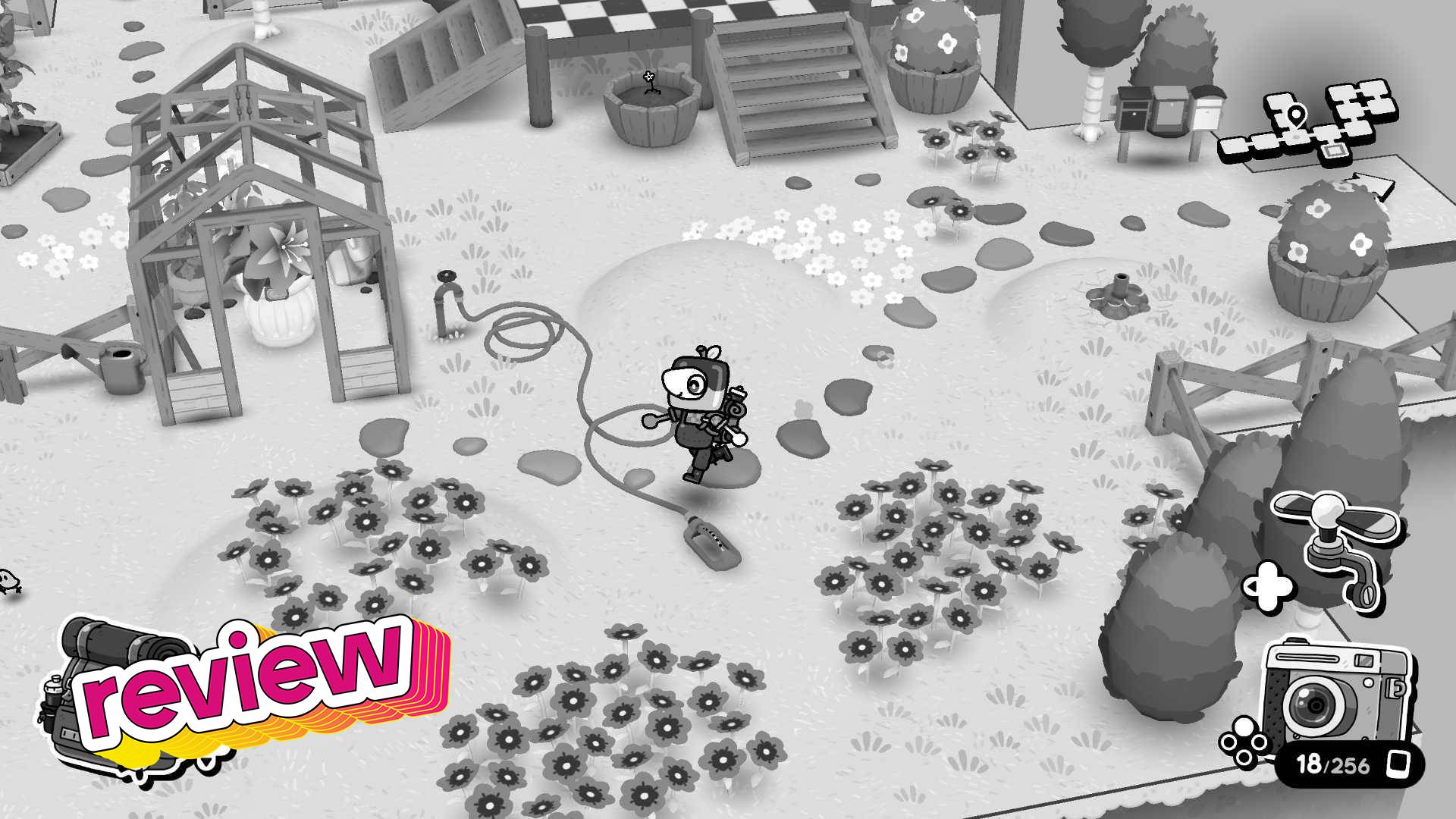
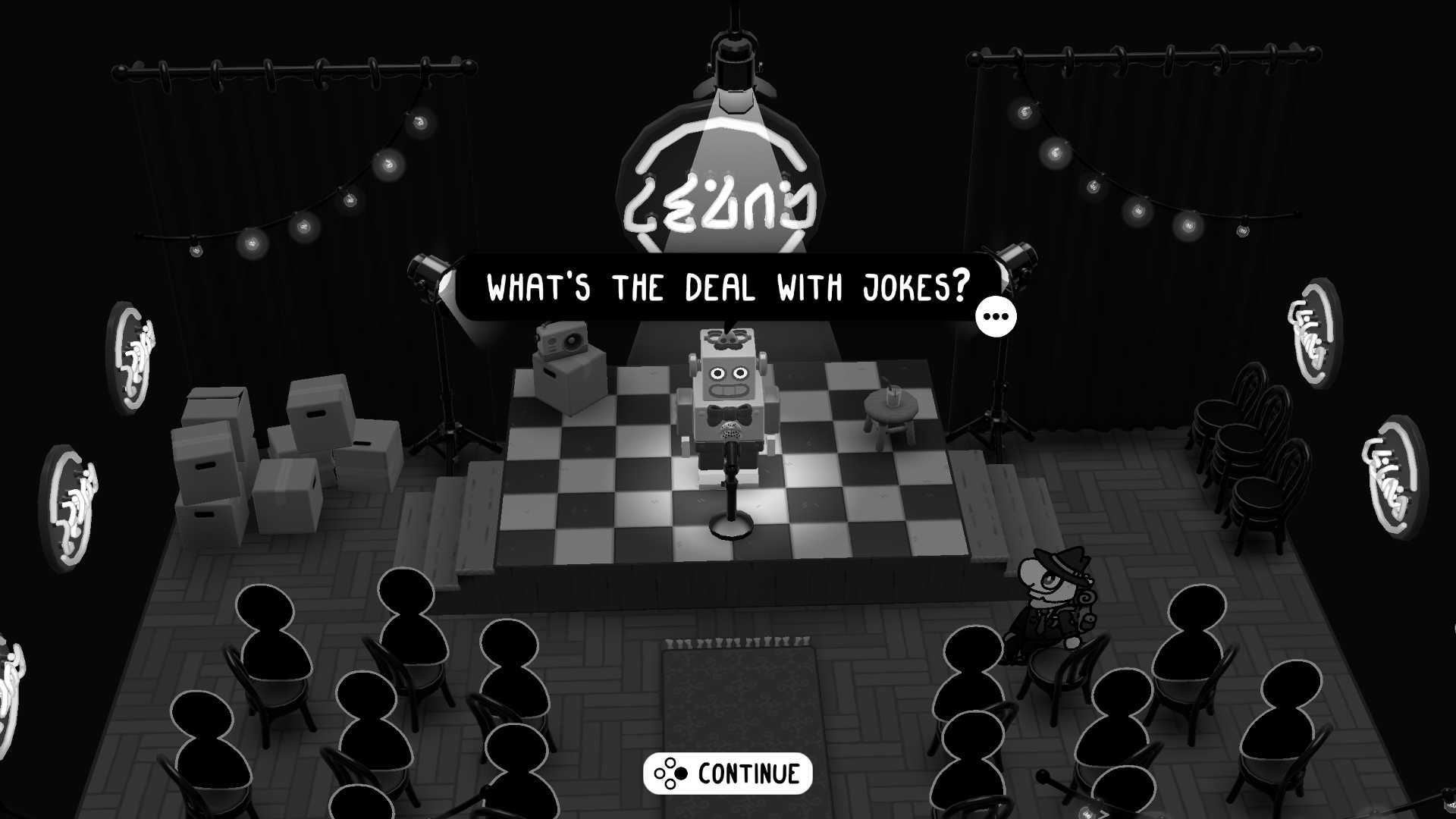
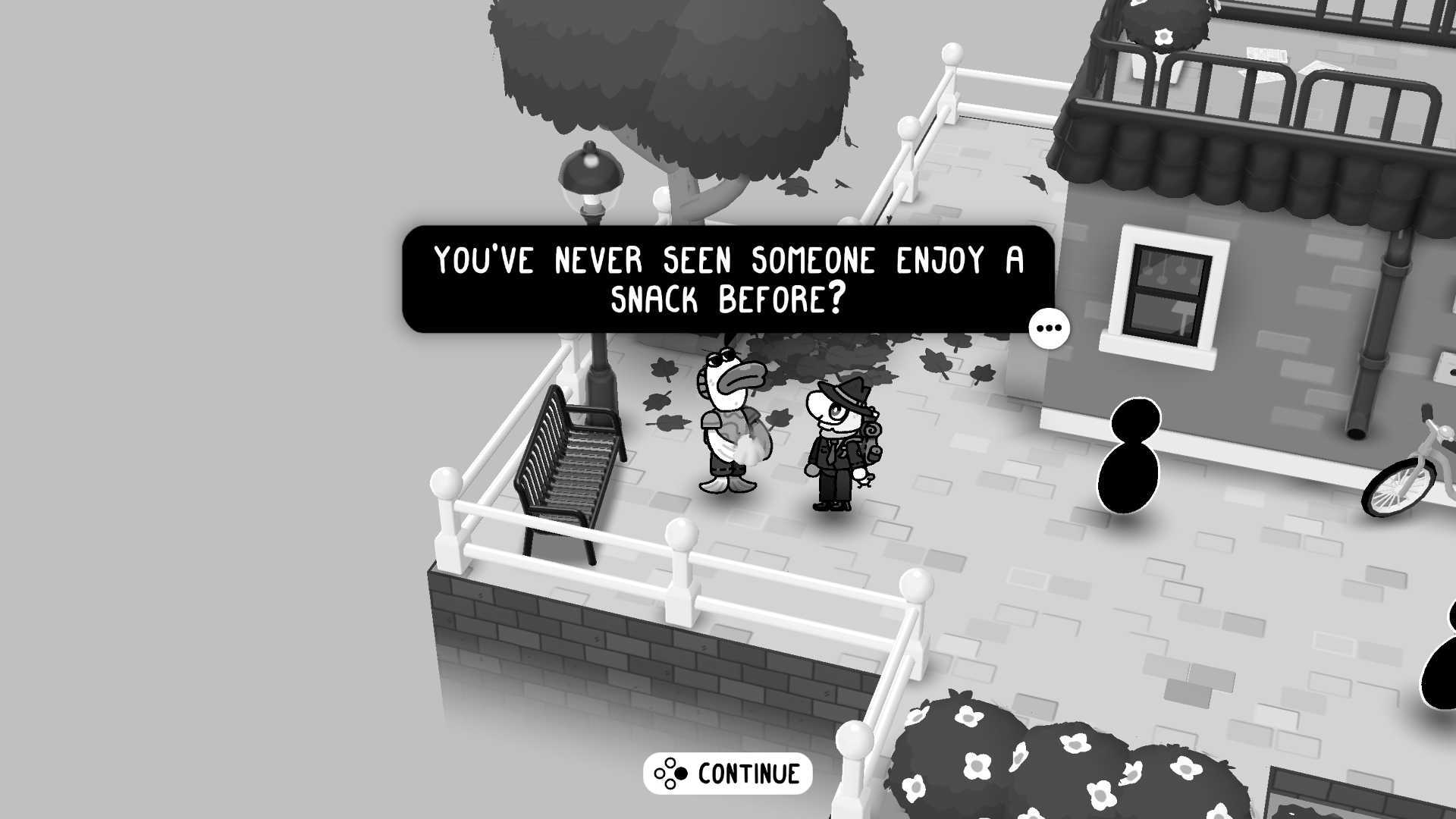
In TOEM 2, a little detail I like is that if you’re walking on a stone pathway in the farm town of Cropton, or cronching through autumn leaves on the ground in Deltburg, your little guy will hold out his arms like an airplane and do a nice little skip. Tap tap tap on the stones, cronch cronch cronch through the leaves. This is so small. It’s pointless. There’s no reason for this animation to exist, except to make me happy when I see it. I try to walk on the paths, or through the leaves, every time I can, just because I like to smile at it.
I’ve written about TOEM before, at a previous job, and am now in the awkward position of not wanting to send everyone reading this to a totally different website to understand this new review, but also not wanting to retread the same ground a second time. Because TOEM 2 is an awful lot like TOEM. An extension. Part 2. You could snap the two games together, like puzzle pieces, and there would be almost no friction, no seams. Both are games in which you go on a black-and-white adventure with a camera through four major areas, searching for something called TOEM. In each area, you need to collect stamps to move to the next one, and stamps are obtained by helping people in town solve their problems, usually by doing something with your camera, like taking a picture of something they want to see and showing it to them. Areas are made up of a bunch of interconnected little dioramas full of goofy little characters and goofy little scenarios. They’re also all full of funny little creatures (like the game’s adorable mascot bird, which I love with all my heart, gosh it’s so cute) you can take photos of for an additional collect-a-thon, if you like, and funny costumes you can seek out to dress your little guy up.
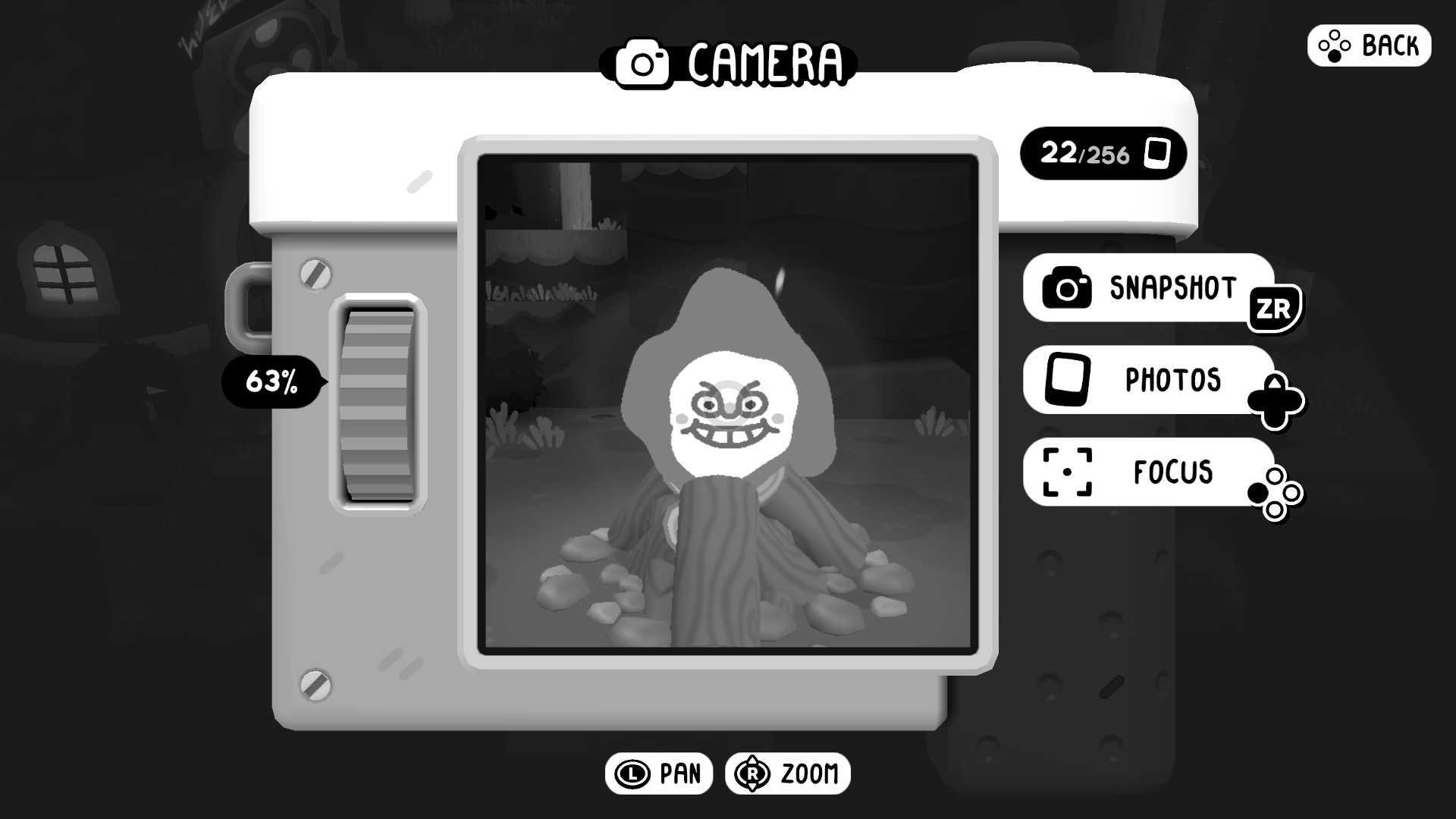
What’s new in TOEM 2? Well, TOEM 2 looks a little better: the levels have a more 3D style to them, and are more vertical, because you can jump and climb now, which opens up more opportunities to hide creatures and outfits and stamp quest objectives. The camera has a focus lens now, which you occasionally have to use to spot out-of-the-ordinary things and reveal their secrets. There’s a new little gimmick for each area, too, all attached to the camera: in one you get a wrench to change the direction of water pipes, in another you’re using a hammer to break jars and hammer in nails. Nothing major. TOEM is still TOEM. Someone just heard that we all liked TOEM, and could have stood a bit more of it, and gave it to us. What a gift!
What I love about TOEM, and also love about TOEM 2, is its insistence that you be here purely because you want to be. There are checklists to complete, yes, but both TOEMs revel in offering the player dozens of tiny details worth photographing with your simple camera for the sheer pleasure of it. Everyone’s dialogue is rife with cute little jokes. Characters light up and smile, or sometimes grow shy and embarrassed, when you point a camera at them. Some creatures move quickly, or only pop out of hiding if you spot their unusual hiding place and do something to trigger their appearance.
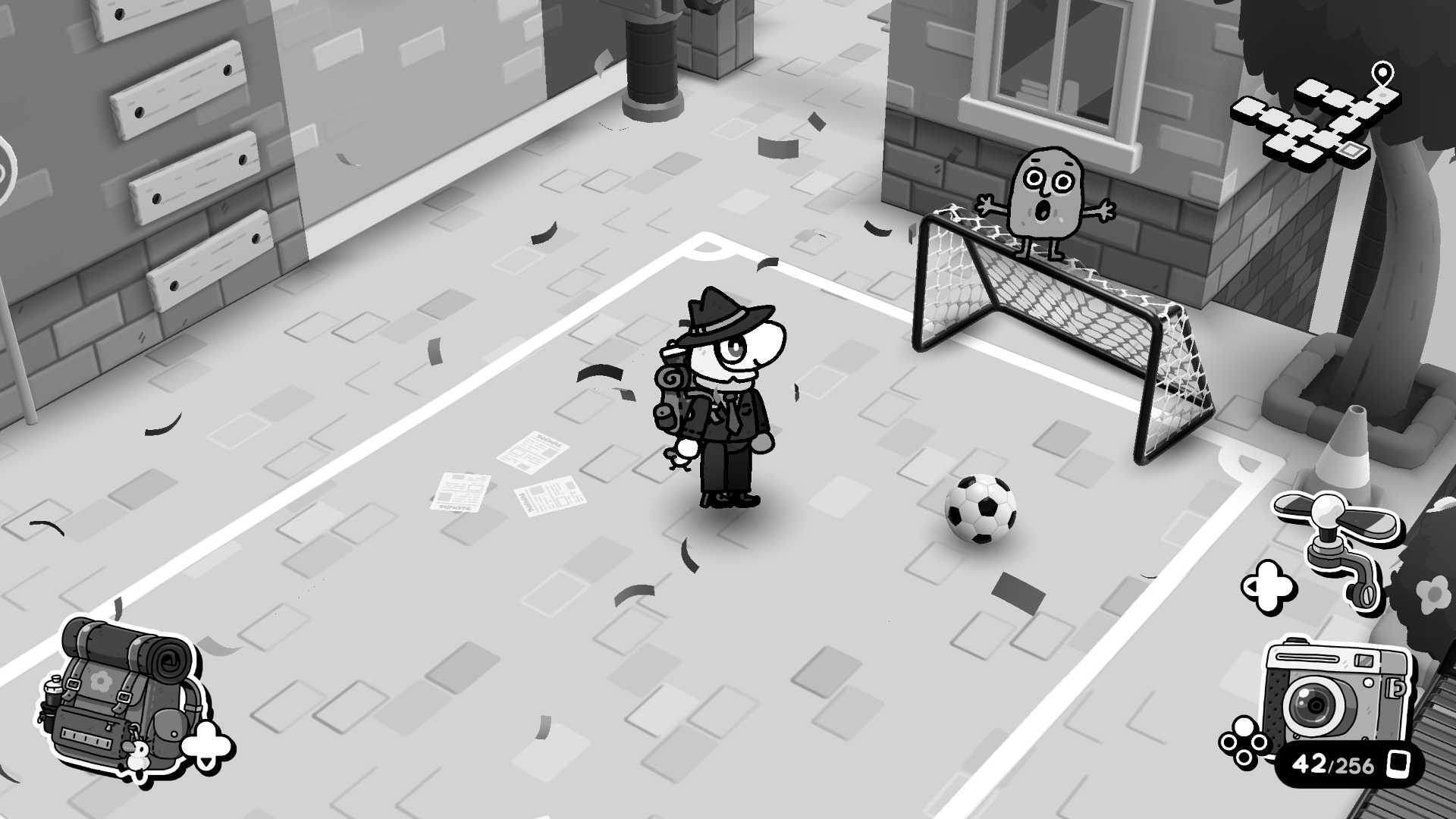
I like the quest in Deltburg where a guy wants you to photograph five smelly things for his smell museum, which forces you to really examine the details of the city to find things that appear to be stinky in unexpected places high and low. Another in the same area subtly uses audio cues (TOEM 2‘s sound and music is, like the first game’s, superb, don’t play this on mute!) to help you track down a series of singing fish hiding around town. There’s a quest in Cropton where you have to find a giant chicken. There is no giant chicken. Technically. It’s all in how you look at it. And at the very, very end of the game, one of the “sights” you have to collect is…not explicitly spelled out to you. You just have to understand what the game is putting down, and it’s a little moving when you finally do. There are so many funny little interactions and animations, if you’re looking and listening, and if you’re playing TOEM at all you really ought to be looking and listening, because looking and listening and really, really seeing and hearing are what the game is about.
I do think, just by a smidge, that TOEM 2 is weaker than TOEM. There’s a touch less challenge to the stamp quests than there was the first time. Now, neither TOEM is a difficult game. Progression is quite generous, only requiring you to finish a limited number of tasks to proceed, and always offering lots of very simple ones. Very good. But the first TOEM had a few quests in each area that required thinking a little longer about your surroundings, or using the camera to see things in a new way, or using logic to get them to react. It made you really stop, really look and observe and consider, to solve what was being asked of you. For instance, you had a little honky horn on your camera in TOEM that does not carry over into TOEM 2, and several puzzles revolved around knowing when, and upon what, to blow that horn to get an appropriate reaction. TOEM 2 leans on its little gimmicks, hammer and wrench and such, more, and I think that’s a net loss for the game. I miss honking. And I’d rather just take more interesting pictures than try to clank things together—breaking pots is something I can do in any ol’ video game.
It’s this, perhaps, that made me feel that TOEM 2 flew by me in a way TOEM didn’t despite being almost the exact same length. I didn’t stop as often to wonder, and to consider. It’s a game explicitly about slowing down, and I was able to whoosh through most of the levels by doing about two laps around them without really pausing to think about what I was doing. You might be able to chalk that up to my familiarity with and love of the first TOEM, but I do think there’s just a little bit less density in the level design (perhaps because the levels are now taller?) and a little bit less friction in the quest prompts. Not by much. I just noticed, is all.
TOEM 2
-
Back-of-the-box quote
"There are TOEMS everywhere for those with the eyes to see them."
-
Developer
Something We Made
-
Type of game
Third-person exploration/puzzle, first-person shooter (with a camera).
-
Liked:
Cute characters, excellent writing, attention to detail, area design, music and audio, ludonarrative harmony.
-
Disliked
Gimmicks like the hammer/wrench/scissors, overall pacing.
-
Platforms
PlayStation 5, Switch 1 and 2, PC via Steam
-
Release date
September 29, 2026
-
Played
Four hours, only missing three achievements.
But here’s what I will remember most about TOEM 2: the TOEM, and what it means. The TOEM games do not have deep stories. They are about a little fella going out and seeing a sight, taking a photo, and coming home at the end. Bit of rite-of-passage, bit of “get out of your house and see the world.” Sure. In TOEM, you were going to see what (and sorry for spoilers here) was effectively the Northern Lights: a singular blast of color in the black-and-white world. This was TOEM. At that time, the conclusion one could come to playing TOEM is that it’s good to get out of your house and see the world; that the journey and the destination are both ultimately worth pursuing, and if you didn’t do things that were a bit out of your comfort zone, you might miss the opportunity to absorb the best and most wondrous of what the world has to offer. Great! Nice, pleasant, easy conclusion!
TOEM 2 very immediately introduces a fascinating twist: the TOEM from TOEM is not the only TOEM. There are actually many TOEMs, and you can go see a different one in this game! What is TOEM, then, if not explicitly the Northern Lights? In TOEM 2, it involves a tree, but the actual definition of TOEM is something else you can learn as you travel. Perhaps the notion of multiple TOEMs makes one or both of your TOEMs less special, but I don’t think so at all. I love the principle that wonders are wondrous in part for their rarity, but blessedly aren’t as rare as one might expect, and that’s wondrous too. You do not need to feel that a TOEM is a once-in-a-lifetime thing, gone once it’s gone.
Life is difficult. We can’t all live for free in a mystical world with seemingly no money and no problems more complex than one’s donkey going missing or one’s pipes clogging up and ruining tea time. It’s not that easy to hop on a bus to go four towns away on a whim. But I do think there’s something to the idea that beautiful things are far more accessible to us than we at times might think, if we’re open to them. There are TOEMs all around us for the finding if we take the initiative. Perhaps this is also a pretty simple, even childish theme. But I still love how boldly and even breezily developer Something We Made revisited and grew the conclusion of the first game into something even lovelier.
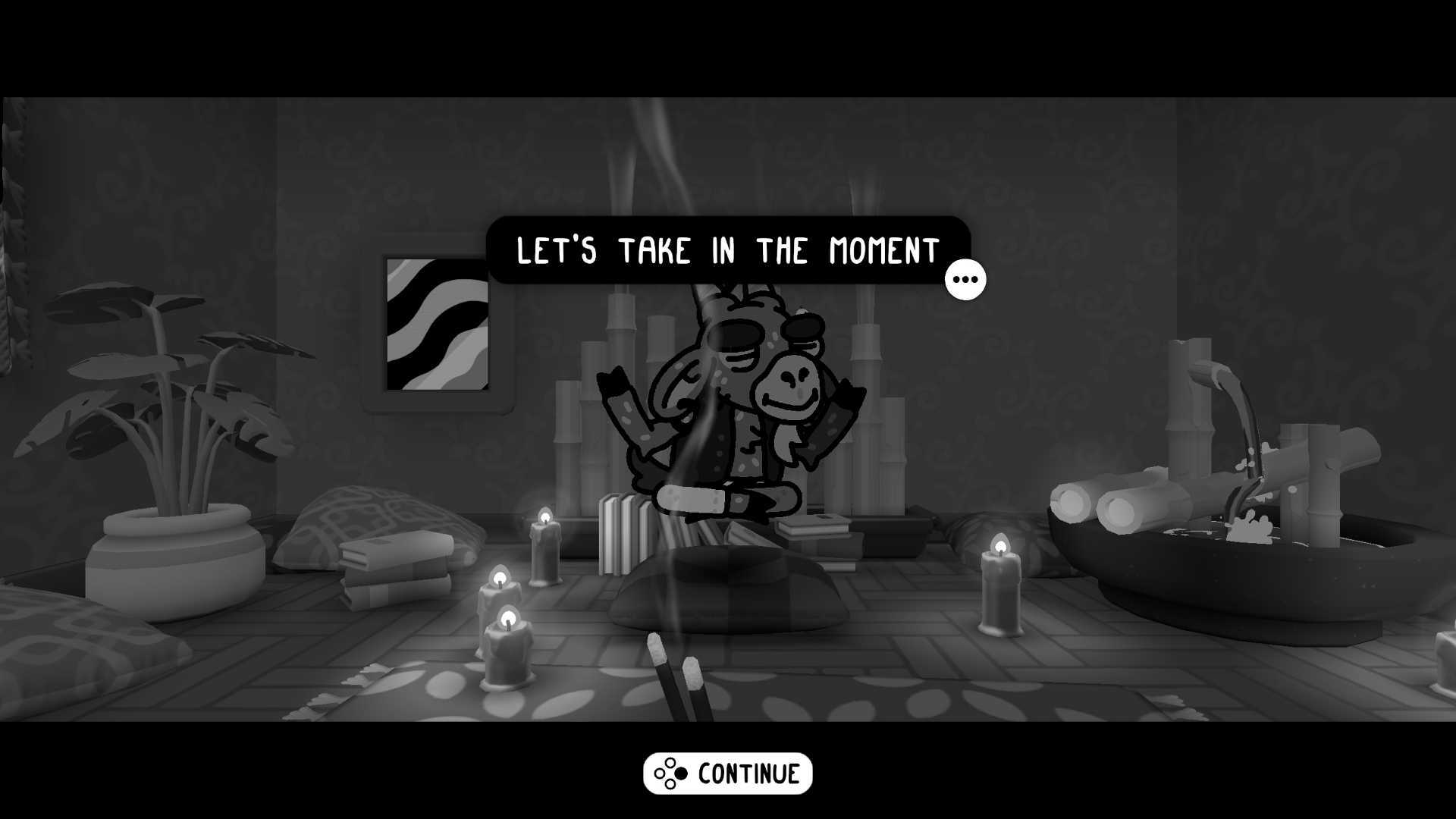
So while I do think TOEM 2 was a teensy bit weaker in its actual gameplay than TOEM, though still delightful in many of the ways TOEM was delightful, I actually think it might stick to the walls of my brain a little more tightly. I don’t necessarily want there to be more TOEM games with more TOEMs to find—at a certain point, you’ve done most of what can be done with the concept, you know? But I do want to bundle up the spirit of TOEM 2 very tightly and hold onto it for as long as I can. As I finish TOEM 2, the weather has changed outside. It’s cool, the windows are open. There’s a little adventure in the air, maybe. The autumn weather has me dancing through the leaves with my arms out, if no one’s looking, just like the little TOEM guy, just because it makes me happy. It might be a good time to travel, to another country or another state or to the post office, whatever. Maybe there will be TOEM there, maybe not, but I’ll never know if I stay in here.