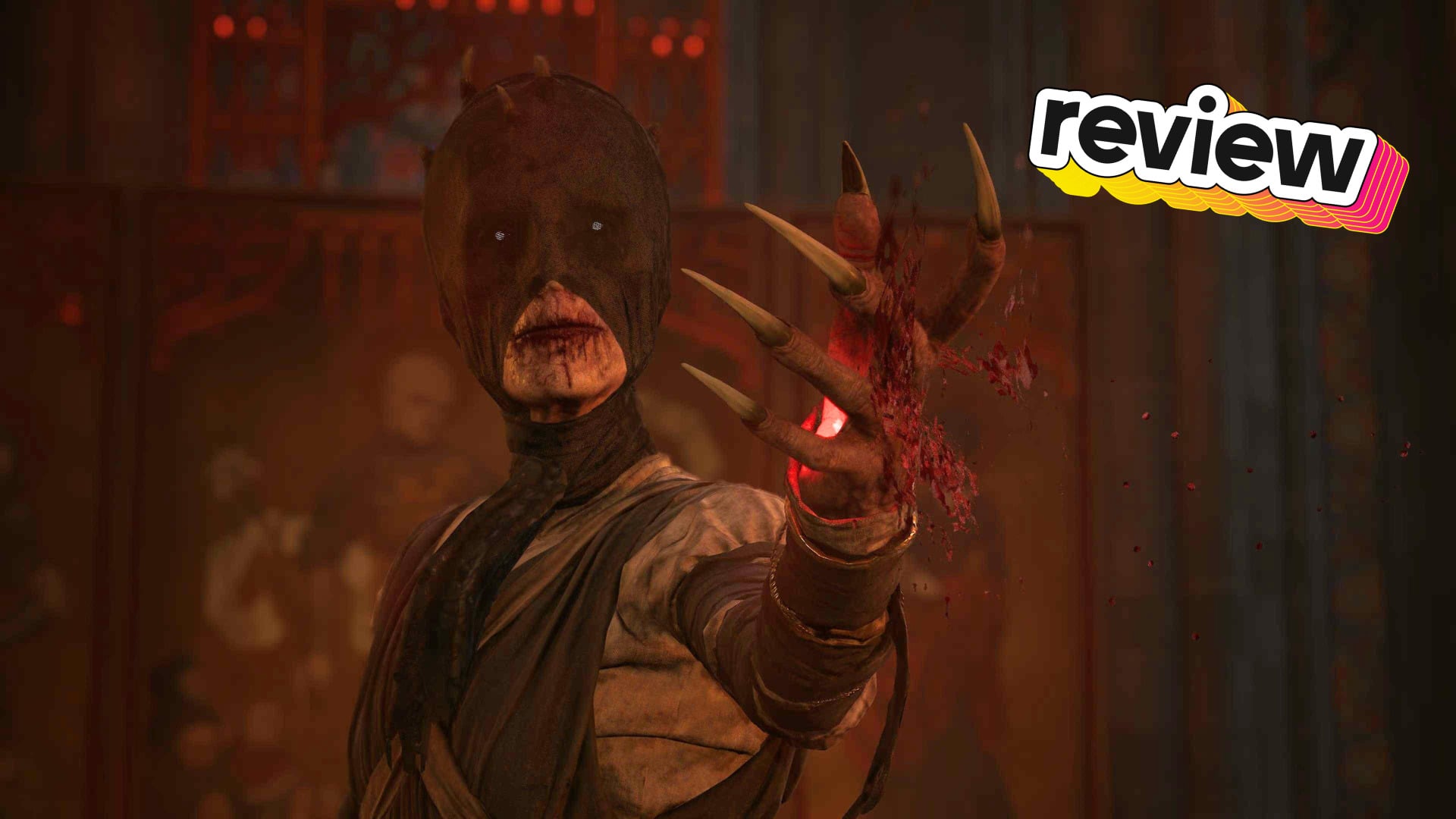
I have never felt more free than I do playing The Blood of Dawnwalker.
When you’re the kind of RPG player I am, there is no video-game sin more heinous than leaving a quest uncompleted. I so crave the satisfaction of being able to inbox-zero my long list of objectives that I often avoid the biggest RPGs because I know that I won’t be able to achieve this state within them—I’ll run out of either time or energy first. I know this is a me thing, that games don’t put the proverbial gun to my head and demand I finish everything. But there’s always a poisonous worry of “Will I get the good ending?” or “Am I gonna miss an important or fun narrative beat?” if I leave something behind.
Dawnwalker absolves me of that fear, leaving me free to pursue rabbit holes or the big, impactful events to my undead heart’s content. And that freedom, ironically, comes from some rather rigid restrictions. But honestly, they’re not rigid enough.
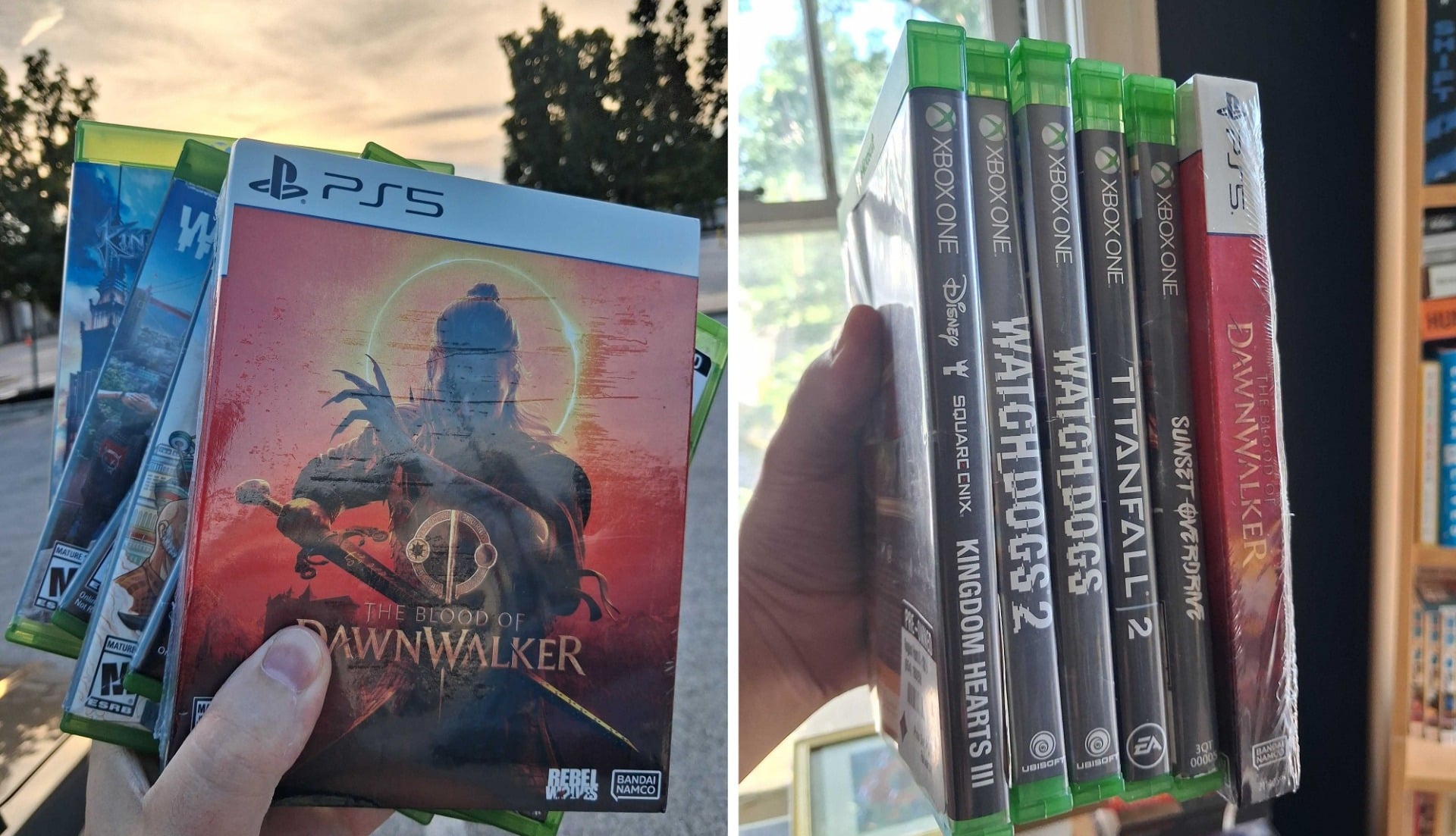
The Blood of Dawnwalker—and I can’t believe that I’ve been incorrectly calling it Blood of the Dawnwalker the entire time; Rebel Wolves, get your naming shit together—revolves around the idea that you, Coen of Laslea, a family man thrust into impossible circumstances, have 30 days to save your family from being sacrificed in a vampire blood ritual. Those 30 days are divided into day and night segments. By day you’re a normal man, but come nightfall you transform into a blood-craving vrakhir, and certain actions you take or quests you pursue will eat up those segments until your 30 days are spent.
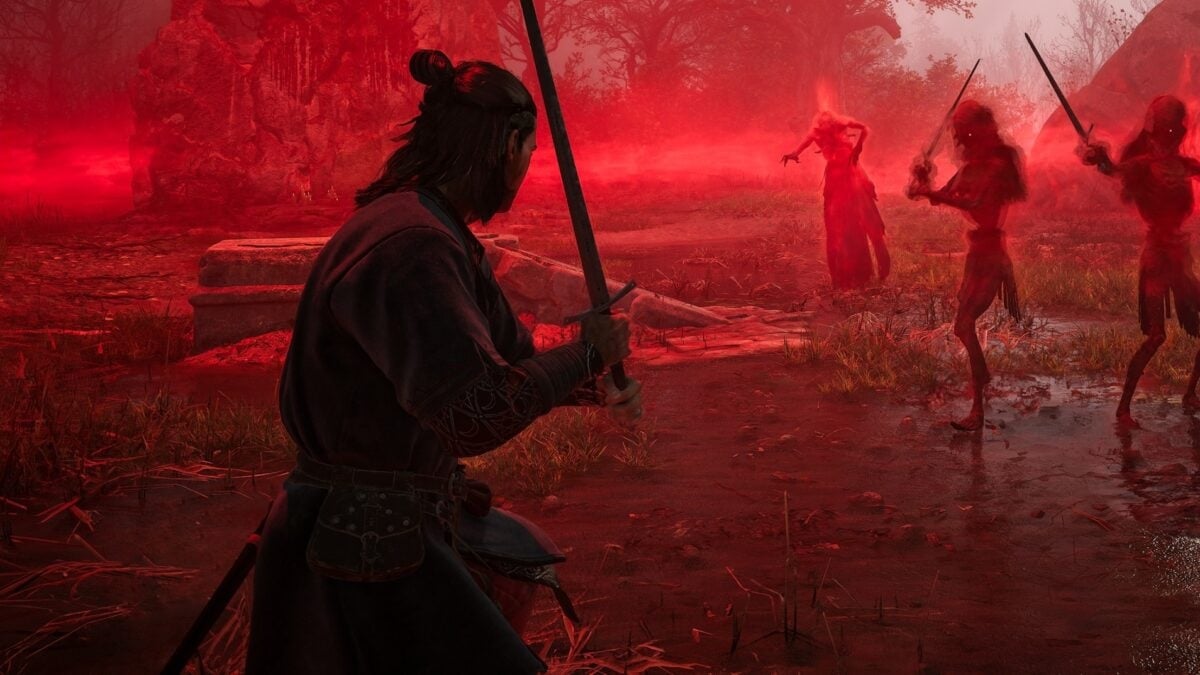
I love how the game weaves Coen’s blood-drinking compulsion into the narrative. At night if he’s not at full health, every conversation with an NPC is a dice roll with the option to “give into the hunger” getting harder to ignore (and easier to select) the more damaged he is. Combat is an engaged, thoughtful affair. You’re not just mashing buttons and slashing foes; you have to read their moves and respond in kind. Even on “fair” difficulty, enemies hit hard, but if you carefully select abilities and upgrades as you build Coen, he can hit back just as hard. It is delightful to deploy his Artery Strike move and see the real big damage numbers flash across the screen.
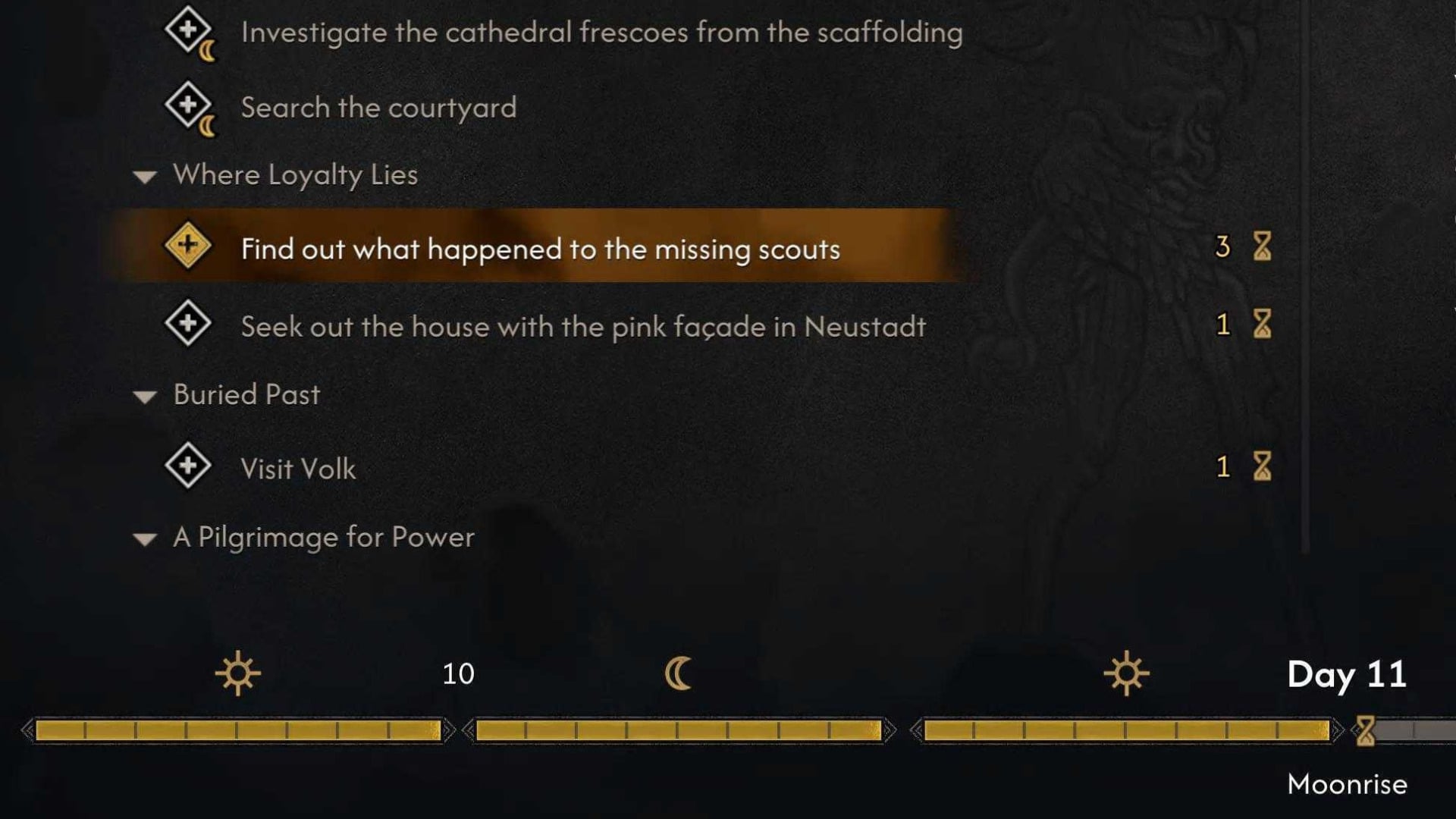
But whoever told you this game was an action RPG, lied. It is a brilliantly disguised time management sim. As Coen traipses about his valley, helping villagers with their mundane problems, acquiring allies in his fight against the vampire overlords, or generally fucking up their operations, you can hear a subtle “click click click” reminding you that you’re on a clock. There’s even a visual representation; as you draw closer to a time-consuming task, the time-keeping bar in a corner of the screen flashes, indicating the blocks of time you’re gonna lose if you choose to pursue it.
It’s like a hot stove to my curious hand. Whenever I stumble upon a quest or activity, ready to do it just because it’s in front of me, I get pleasantly burned. Is the reward I’ll get for saving this random peasant on the road worth the time it’ll take for me to do it? Will I later regret not having more time to complete some other, more necessary task?
RPGs that let you do anything and everything have their place. But I think they’d be more compelling with the kind of restrictions Dawnwalker forces you to contend with. Developers understandably craft their games for the ease and comfort of players. Dawnwalker forces players into discomfort. No, you don’t get to do everything this time. You have to make a choice and then live with its consequences (more or less). That friction feels good. Embrace it.

The Blood of Dawnwalker
-
Back-of-the-box-quote
"That definite article is really in the wrong place."
-
Developer
Rebel Wolves
-
Type of Game
Action RPG meets time-management sim
-
Liked
With either combat or questing, there is no part of the game you can mindlessly plow through. The fantasy races in the game are some of the most unique I've ever seen. Some really cool romances including a very fun vampire sex scene.
-
Disliked
The time-restrictions are too permissive. Ho-hum "good" ending.
-
Platforms
PS5, Xbox Series S and X, Steam
-
Release Date
September 3rd
-
Played
Completed roughly every major objective in 34 hours.
The time system circumvents typical player psychology and makes you think harder and more deliberately about how you spend your time instead of letting you just mindlessly Robin Hood your way through a map. Now that I’ve been freed from the expectation of completion, Dawnwalker forces a presence of mind that I’ve rarely felt playing a sprawling RPG like this.
But I don’t think it goes far enough.
Just like I take issue with quests rooted in moral choice having a third, secret, make-everybody-happy solution, I think Dawnwalker’s permissiveness through restriction is slightly undermined by how much time you’re given to save your family.
In the game’s prologue—and my goodness what a prologue, Dawnwalker’s opening cinematic punched me through the chest and yanked hard—you’re introduced to the time-keeping mechanic by having Coen help out neighbors in his village. There’s a woman distressed because her grandson’s grave has been robbed, one guy’s missing his pig, and so on. You’re given the day to complete as many tasks as you can, but it’s impossible to do them all. Day turns to night and you run out of time. I’m haunted by the fact I never found out who destroyed that little boy’s grave, in favor of finding a lost pig. Womp womp.
That delicious pain, the kind that comes from having to make tough choices about what to do and what to leave undone, never really returns in the full game. In Dawnwalker there are several ways to build your power and unlock the final confrontation against the vampires holding your valley hostage in the 30 days you’re given. I was able to:
- Get the most powerful legendary sword
- Complete two romances and unlock a third
- Obtain the most powerful armor
- Kill all three vampire lieutenants
- Obtain the highest infamy rating by disrupting vampire lieutenant operations and
- Unlock access to all four main endings
All with four days left to spare.
To be clear, there are some things I missed, allies I didn’t make and stories I left unresolved. But I think the overall conceit of Dawnwalker would have hit so much harder if the time limit didn’t allow for so much. Shaving 10 or even five days off the 30-day time limit would have caused me some real pain and suffering as I would have been forced to make consequential, game-changing decisions. Think Mass Effect’s Kaidan vs. Ashley rather than synthesis, control, or destroy.
That said, The Blood of Dawnwalker is my GOTY 2026 frontrunner. The internal friction it inspires, playing against typical RPG conventions, makes it a must-play. I’m excited that Rebel Wolves has already announced it’s working on a sequel, and the game’s end-credits stinger hooked me just as hard as its opening cinematic. I just hope the sequel is meaner to its players. We don’t deserve comfort; it’s time to make us hurt.