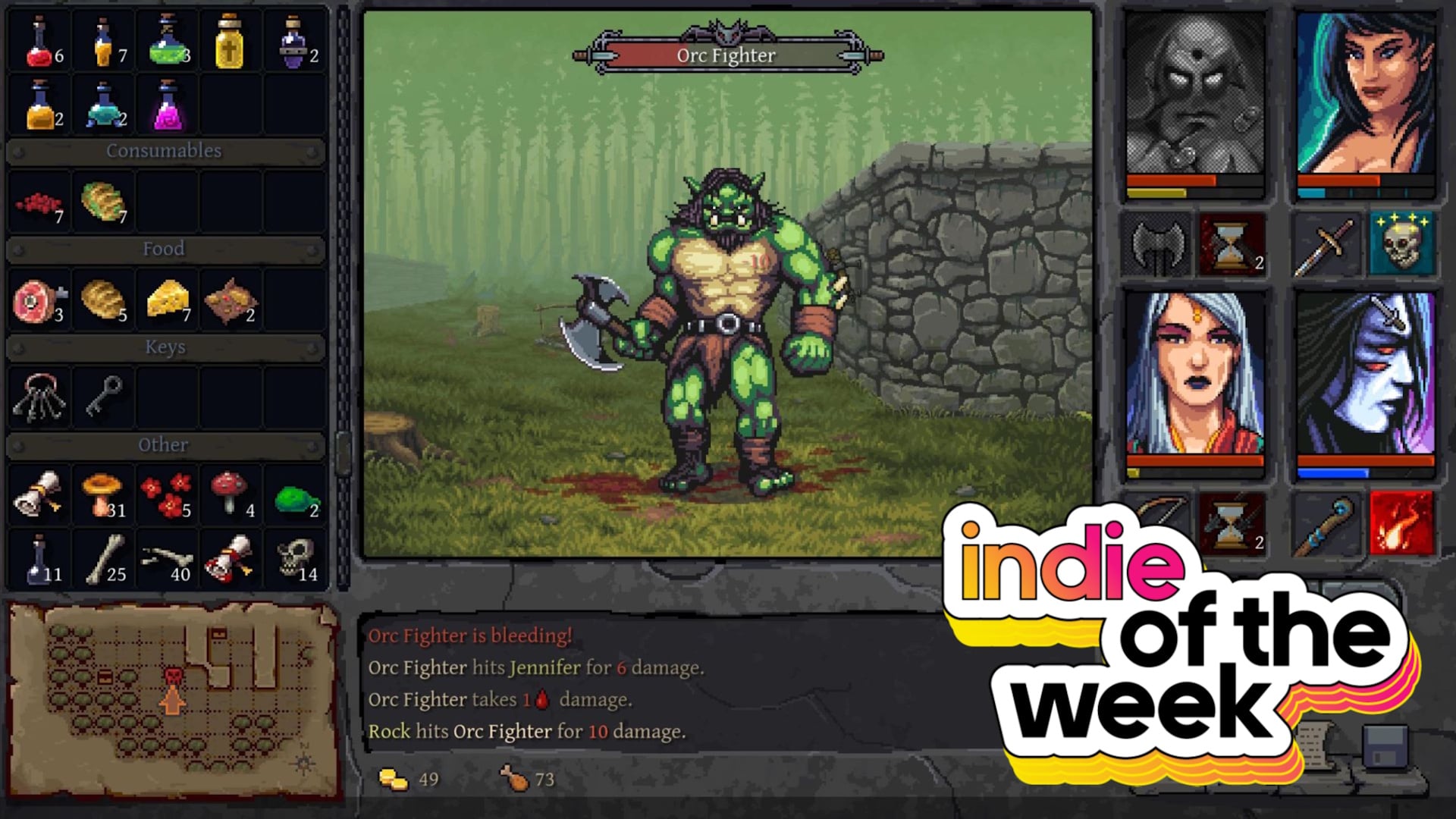
My delight with Underkeep was immediate, when I was still very early in the game’s first dungeons, I killed a worm creature and it dropped what looked like a wheel of moldy cheese. This is one of my overriding memories of playing 1987’s Dungeon Master, a game to which Underkeep owes a great debt, even if its outdoor zones perhaps are more reminiscent of 1993’s sequel, Skullkeep. Or, if you’re not a million years old, think Legend of Grimrock. Wait, that’s 13 years old? [crumbles into dust]
Underkeep is a very straight take on the old-school “blobber,” an RPG in which you move your party of multiple characters as a single entity or “blob,” and it is deeply welcome. Since Grimrock so successfully revised the adored format (best exemplified by games like Wizardry, Eye of the Beholder, and the aforementioned Dungeon Master, among many others), very few have followed in its tile-based steps. Underkeep very much does, and while I have a few reservations, it’s kept me enormously happy for the last week.
At the start you pick your four characters, created by mixing races and classes, then adding a profile picture, and are then immediately plonked into the woods. You need to reach the Village of Underkeep, but there are monsters, dungeons, and puzzles in your way. So off you go to do some classic adventuring, with a party of four taking it in turns to unleash their attacks on enemies you encounter. As such, you’ll want to pick your four characters sensibly, with tanky fighters up front and rangers and spellcasters in the rear.
Unlike some blobbers, Underkeep doesn’t let you move around mid-turn, so this isn’t about darting around in squares to dodge enemy attacks, but rather about planning the order of your four attacks, picking between basic whacks and arrow shots or more specialist moves that can be unlocked and upgraded when you level up. It’s only after all four of your characters have made their attack or other action for the turn that you can change tiles, and at this point the enemy can attack you back.
Once you reach Underkeep, things really come to life. Here there are a handful of stores, plus a few characters to chat with and take quests from. Then you can head off in a whole bunch of different directions to try to complete these tasks. Here Underkeep delivers its best and worst elements, with the free-roaming quest structure reminding me a little of Betrayal at Krondor or Might & Magic as it grants you a lot of enjoyable freedom in filling out your map, taking on new enemies, and stumbling upon mini-dungeons, fun little side-quests, and odd little puzzles with neat equipment as rewards. However, within all this freedom you’re frustratingly restricted by unpredictable difficulty. Heading north to the Caerlin Woods might seem like a good idea, until you encounter the griffins and realize you’re not even vaguely ready to be here. So you go south to the Cemetery and all seems well, right up until you hit another wall.
This process of elimination sometimes required to find the next direction you can actually handle going in gets irritating, and it’d be a lot better if the game were able to communicate whether you’re ready for an area in some subtle way. Then again, it is enormously satisfying to go elsewhere, gain a couple of levels and some better weapons, and then carve your way through a place that previously wiped you out far too easily.
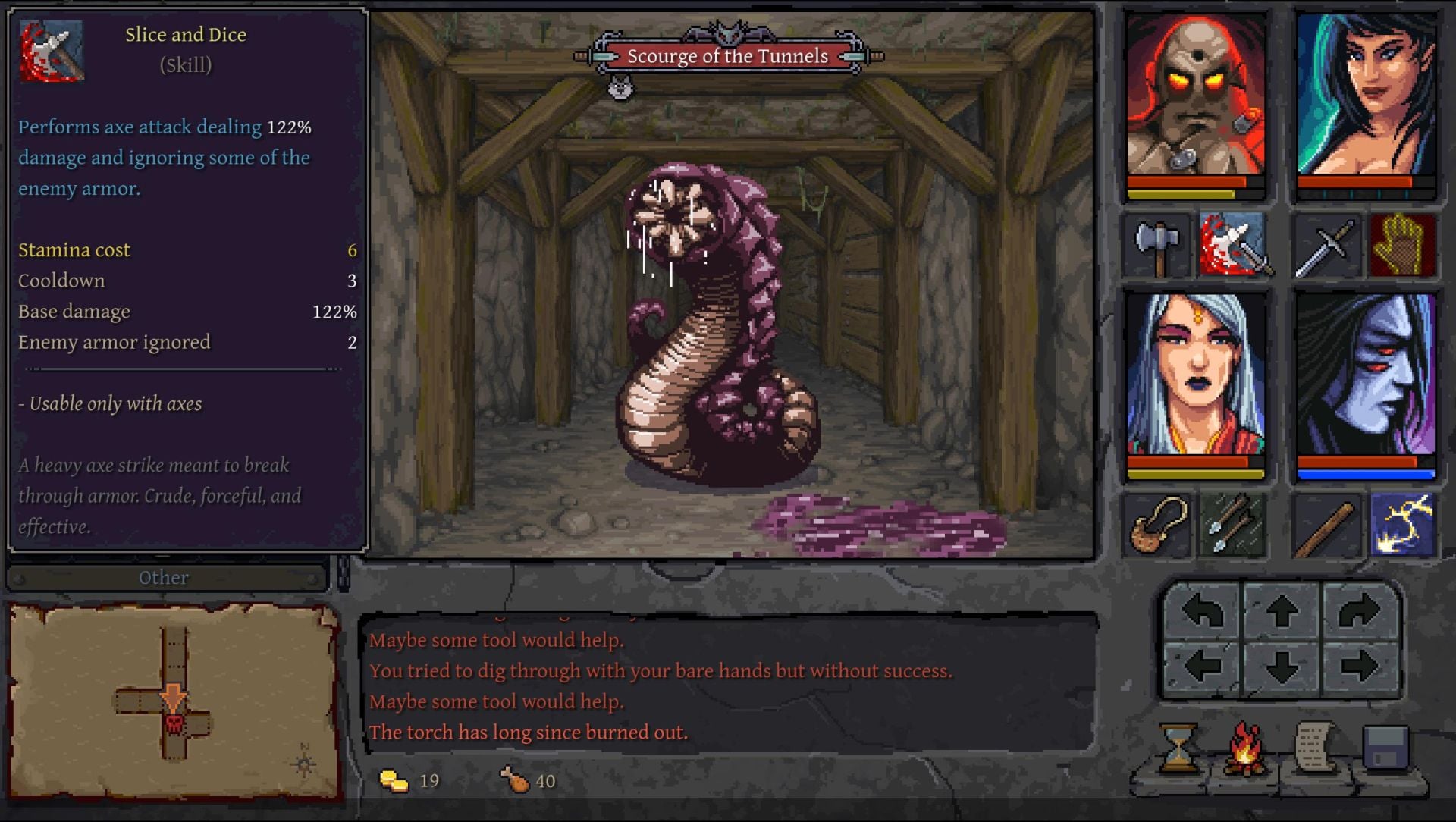
Talking of being wiped out, Underkeep is very generous with its reincarnation of fallen heroes. Unlike Dungeon Master which required you to find all-too-rare locations and cast certain potent spells, here you need only hand over a sum of gold to a statue that appears in each region and your friend will be back, albeit on one plip of health. Healing is also quite readily available, either by potions you find or craft, or more commonly through rest. But here again things are a bit odd. Resting requires food, and lots of it. Bedding down to recover health, stamina and mana can see you going through literally tens of meals, and given they’re quite expensive to stock up on, and unpredictable in the volume consumed, this also always feels unwieldy. That and the fact that you can’t interrupt rest midway. I would love to be able to see how much of my resources will be consumed before resting, and then choose to wake up so many hours/meals in.
Any more complaints? Well, I would like a more interesting spell system, perhaps casting by runes, but you can also pick from a fairly interesting spread when leveling up, and jump between them on the fly. You’ll need to focus quite intensely on one or two skills given how rarely level-ups come, and there’s no option to respec, but I found this need to commit or spread my bets interesting to engage with.
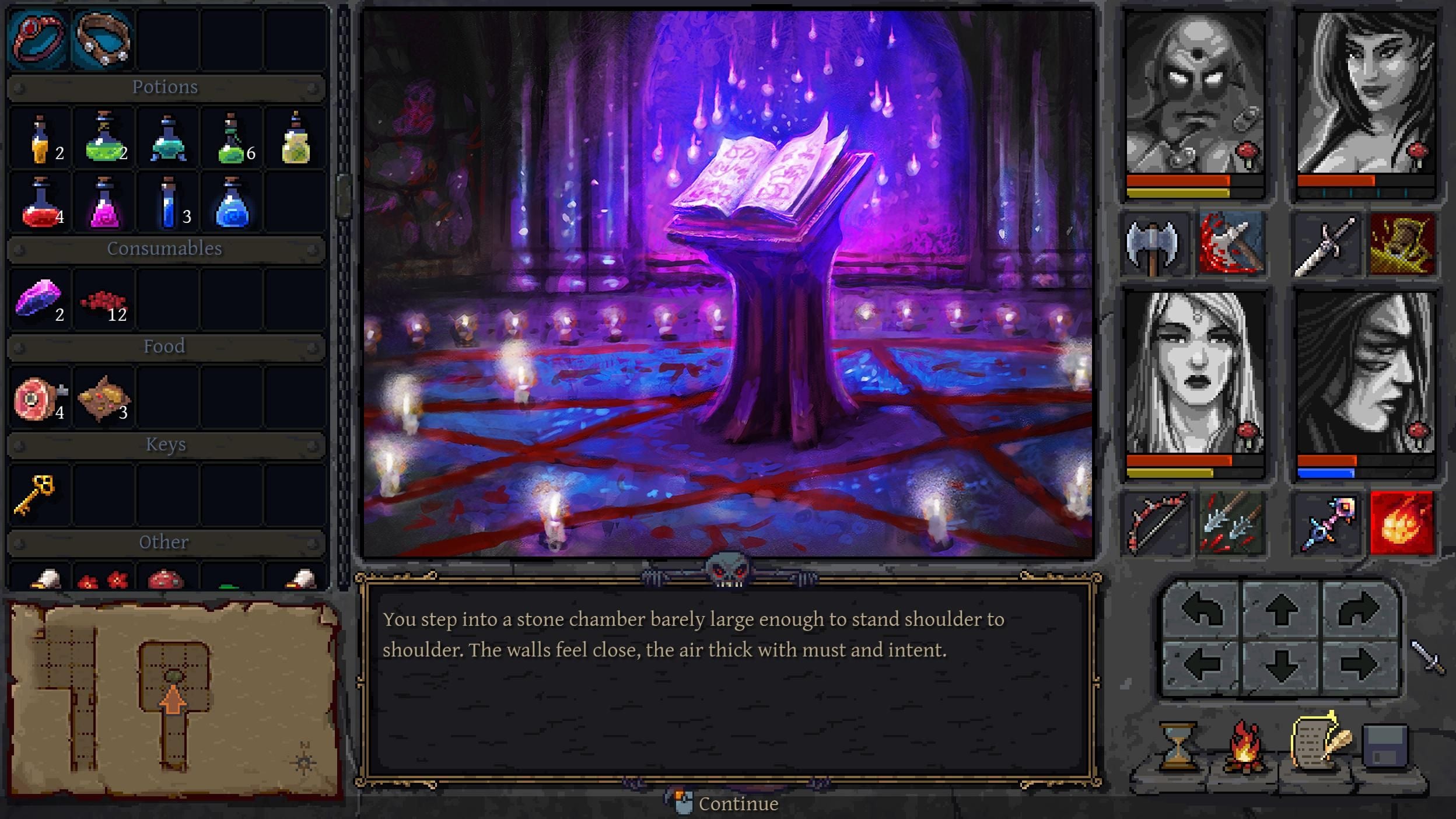
But back to celebrating. I love that there’s a decent amount of story here, and that the characters you meet are invested in the tale. I enjoyed finding a missing band of dwarfs, and getting involved in their disagreement over how to handle a furious dragon. It’s not exactly complicated or deep, but it’s a lot more than I’m used to in this genre, and works nicely and unobtrusively. I also really enjoyed the way the classes and races I picked make a difference in moment-to-moment encounters, my Elk ranger useful for picking up on danger in the woods, and my Raven wizard excellent at detecting errant magics. Also, at a certain point, because of how I handled a particular side-quest, all of my characters now occasionally turn into mushrooms. It doesn’t seem to be hindering things.
What a pleasure that such a game can still be made in 2026. This doesn’t have the ludicrous difficulty of a Wizardry, nor the in-depth lore of a Might & Magic, but rather feels like its own very deliberate thing. It’s not easy (although die-hard dungeon crawlers might say it is) but it’s perhaps more simple. I like simple. Ocarina of Time is in its own way simple, and it’s been a splendid week going back and forth between these two games, as hugely dissimilar as they are.
Oh, and it’s very pretty, the enemy designs are terrific, and the soundtrack is absolutely fantastic. So yay!