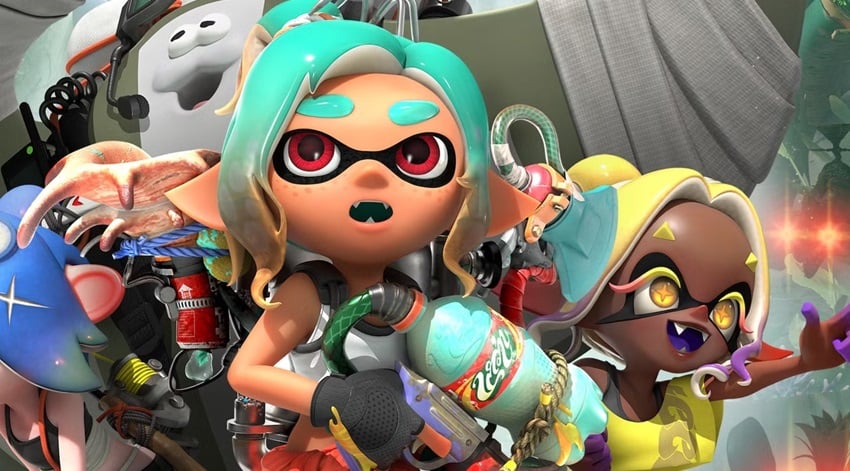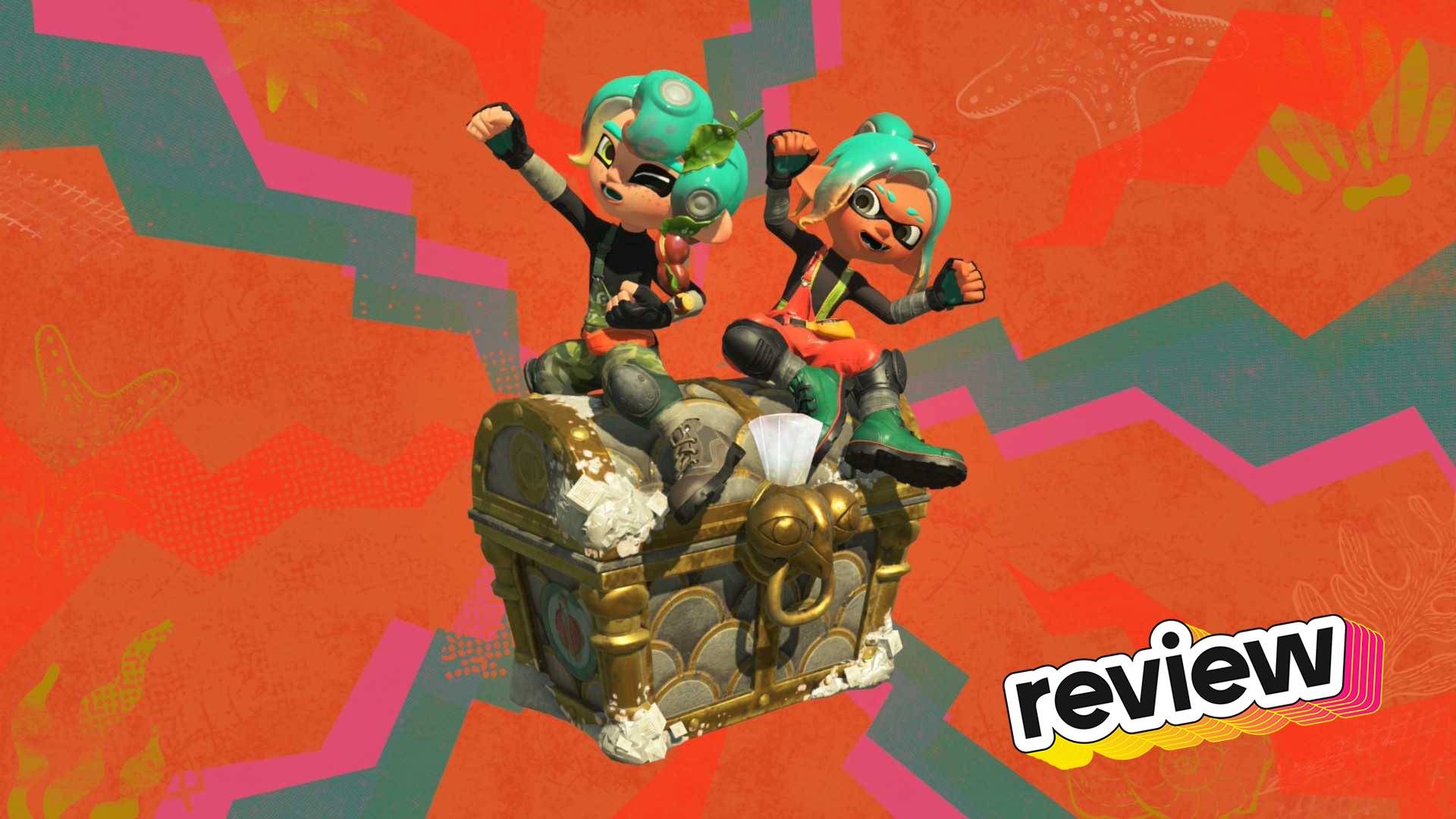
Splatoon Raiders reviews are up today and looking spiffy ahead of the game’s July 23 release, as is a fresh Nintendo Ask the Developer interview that goes into a deeper discussion of the game’s development. I love these even though they are heavily curated by Nintendo, as they always include cool concept art and details about scrapped content. This one also includes a pretty fascinating revelation about the design of Splatoon Raiders: it apparently used to be really, really colonialist.
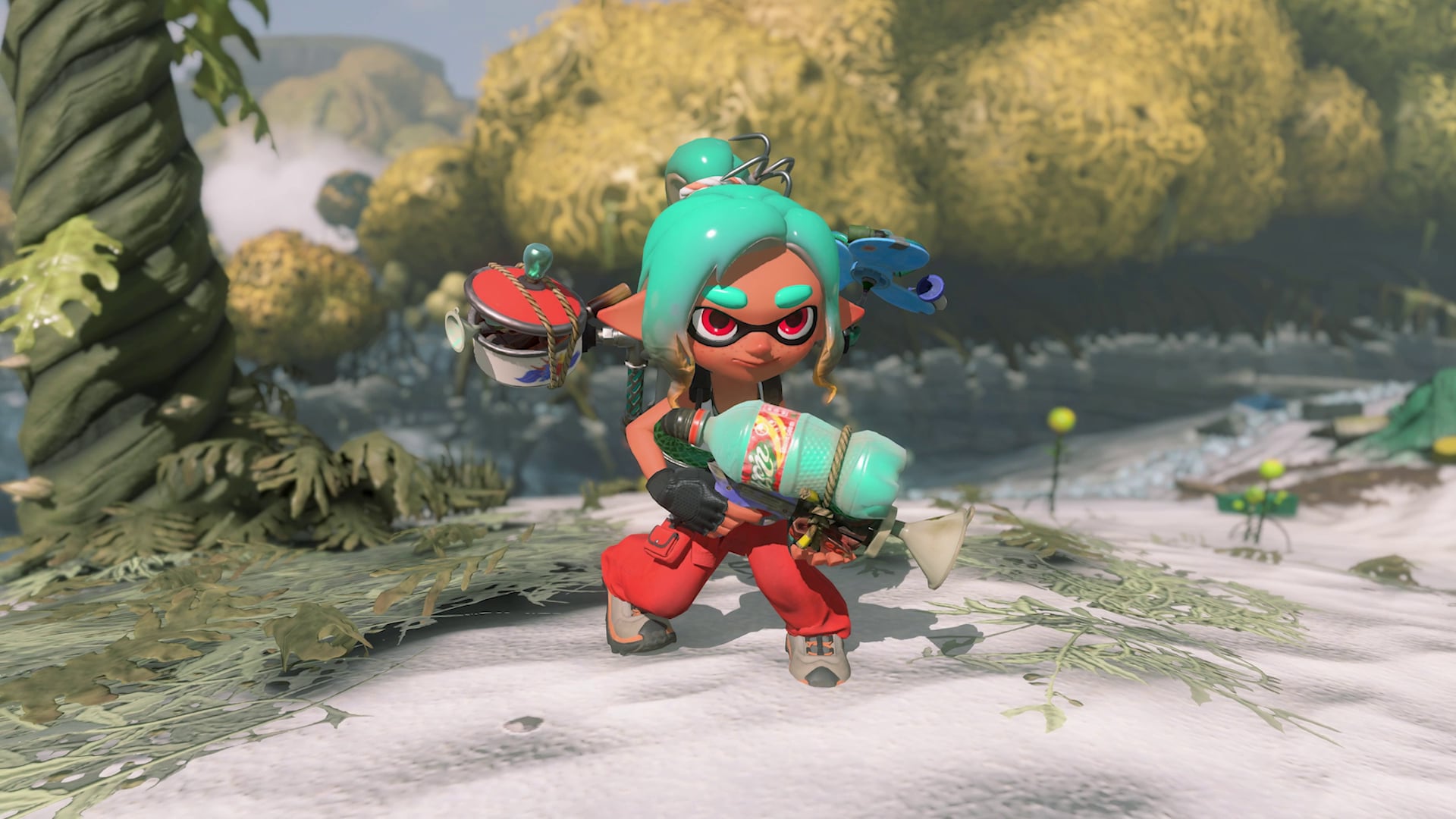
In the interview, art director Koji Sonoyama talked about some of the design of Splatoon Raiders‘ setting. The team decided to set the game on remote islands, in contrast to the urban setting of the other Splatoon games, in order to leverage the Switch 2’s ability to better depict organic and natural environments. You can ink over grass, for instance, which was apparently not possible on the Switch 1 (cool!).
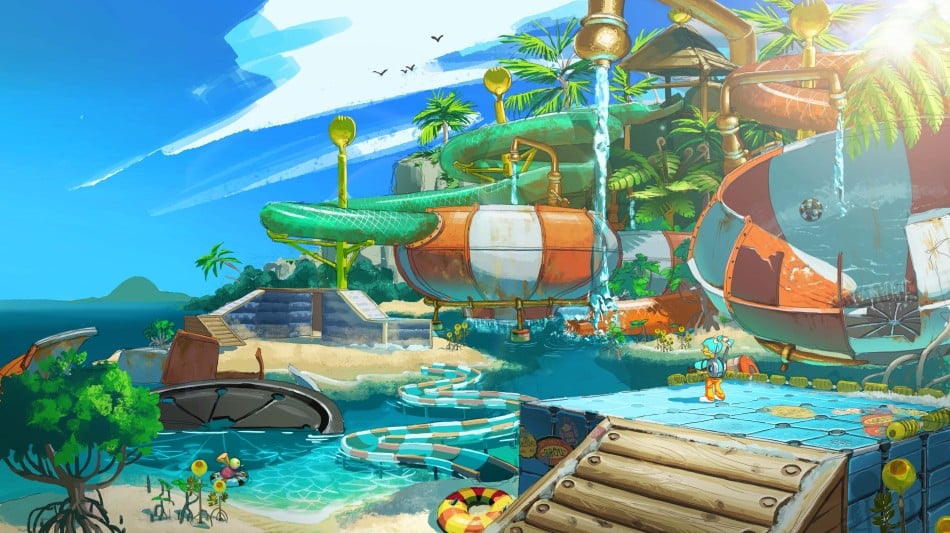
Sonoyama shared the concept art above as an example of the original idea, but said that this playful environment “didn’t work out at all.” Apparently, this was because the developers felt that the player invading the happy home of the Salmonids, the game’s antagonists, like this and taking their stuff was cruel or something.
“Somehow, with this setting, it started to feel like we were unfairly picking on the Salmonids, who were simply going about their lives happily on the island, and it became a bit difficult to accept emotionally. On top of that, it felt like we were attacking the Salmonids and taking their cherished treasures by force, and then basking in our spoils.”
Sonoyama isn’t using the word “colonialism” here, but that’s literally what he’s describing! He continues:
I still remember the feedback we received from team members about a scene where the Salmonids looked like they were chatting. Maybe it was because the Salmonids were depicted in a way that made people sympathize with them as living creatures, but without any prior discussion, everyone who played the prototype kept saying, “Poor Salmonids!” (Laughs) We thought we needed to do something about that feedback, which prompted us to significantly rethink the visual direction. However, development had already progressed to a certain point. We were in a phase where we couldn’t really change things like the line-up of Salmonid or the overall characteristics of the terrain, so we thought about what we could do within that scope.
Sound director Shu Tamura chimes in here, too. “Even when it came to the background music, when we were creating it based on the resort-like concept art, it had an adventurous and friendly vibe. That only added to the feeling that we were going out of our way to attack these cute, innocent creatures. We started to doubt if we were heading in the right direction, and the motive for progressing through the game became unclear.”
So what did they do to adjust, given that so much of the design was already locked in? They pivoted one key concept, Sonoyama says, centering it all on “I’ve wound up in an outlandish environment.”
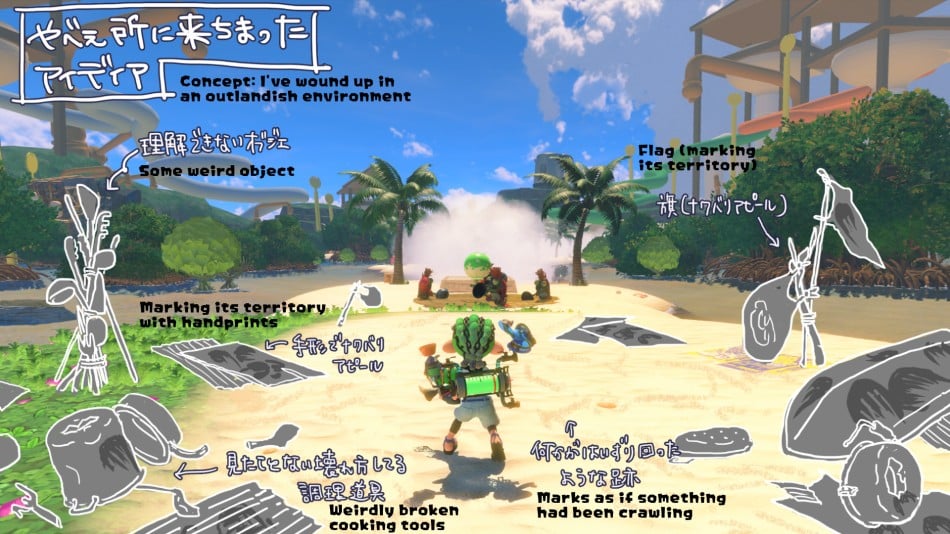
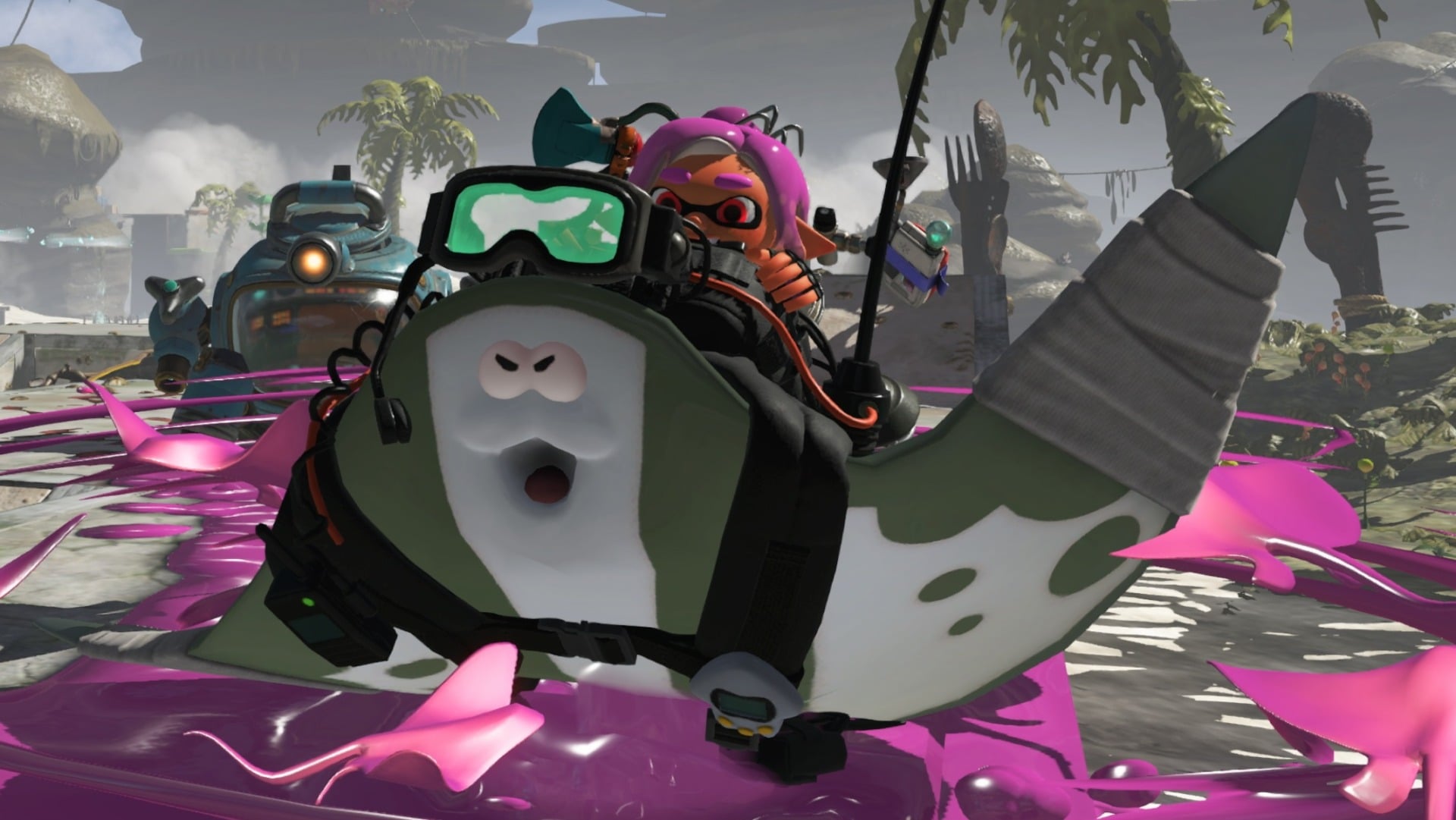
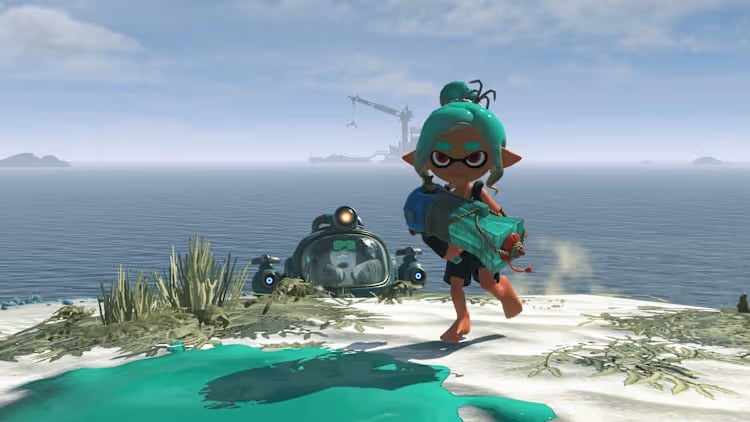
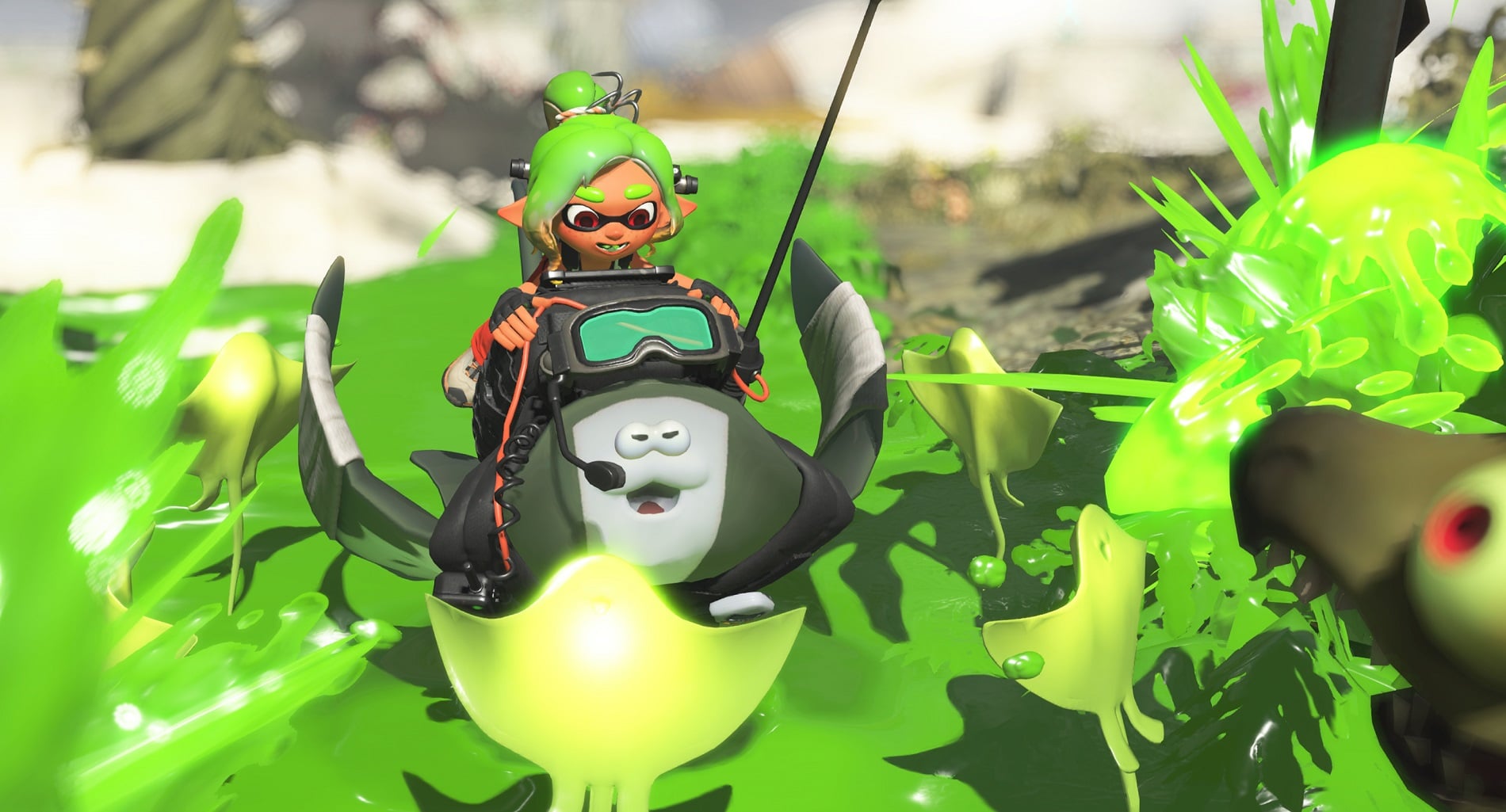
Unfortunately, this still didn’t really work out. While Sonoyama describes this as a “turning point” in design, the white sand and beautiful ocean still didn’t feel “outlandish” enough. So the team instead had to rework the design from the ground up, including adjusting the look of the Salmonids to be more “out of the ordinary” and adjusting finer details like lighting. They wanted a sense of eerieness and unpredictability, a landscape torn up by geological shifts, and Salmonids that are different from the ones we’ve previously seen in the series. They landed on this:
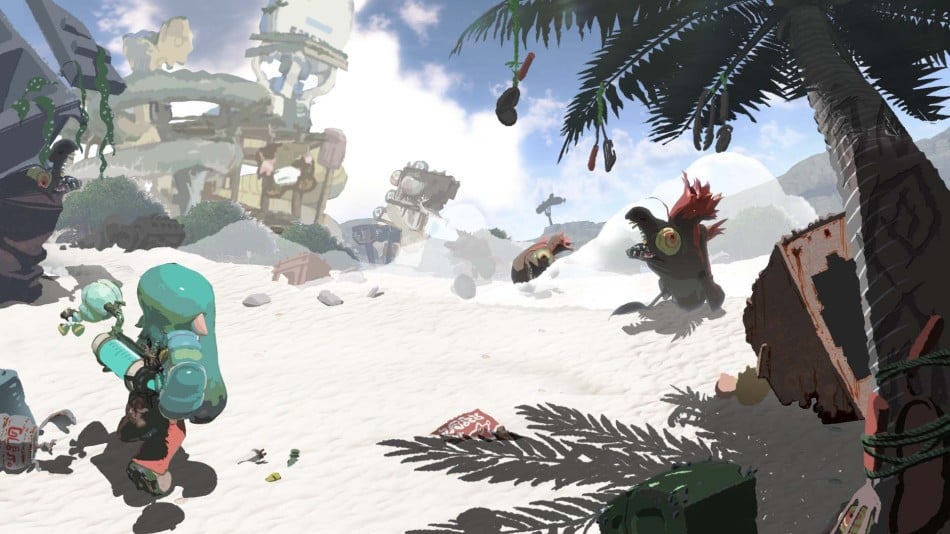
To give the game an even greater sense of eeriness (and, seemingly, give players less of a sense of invasion), they also made adjustments to the Salmonids themselves. Lore-wise, the “salt” found on the Spirhalite Islands makes Salmonids act aggressively, more and more so as they become increasingly encrusted in it. “We wanted players to feel like they’ve wandered into a place filled with Salmonids behaving in strange and unsettling ways,” Tamura said. “The Spirhalite Islands are located far away from Splatsville, and they couldn’t be more different.”
Wow! That’s all…really on the nose! I’m glad the team collectively recognized that the original approach would have resulted in n an extraordinarily weird vibe for a Splatoon game. Nintendo’s no stranger whatsoever to its games wandering, often inadvertently, into problematic themes, including colonialism specifically. I’m fascinated that this is the line they drew and thrilled that they drew it at all, though I’m also skeptical that these changes were sufficient. There’s always been a sort of weird dissonance in Splatoon between the competitive multiplayer side (which is, in-universe, just considered a fun sport everyone enjoys) and the PvE side that pits you against Salmonids, where you’re actively attacking encroaching enemies in order to score treasure for a corrupt company. Splatoon Raiders taking it a step further, turning it into a treasure hunt on an inhabited island, introduces some questions I’m not sure Splatoon is prepared to answer.
Splatoon Raiders is out this Thursday, July 23, at which time we’ll have a much better idea of whether or not Nintendo manages to get this game to come off as a weird mutant war instead of a horrific occupation.
Correction 7/21/2026 4:10pm ET: July 23 is a Thursday, not a Friday.