In potentially refreshing news, another big gaming company joins Capcom in (like we said, potentially) not being all-in on generative AI. As spotted by VGC, Sega senior executive officer Tsuyoshi Saito told Nikkei that (via machine translation) “we are being very cautious about [AI’s] use in the game development process, and we are not entrusting the creative aspects of games to AI.”
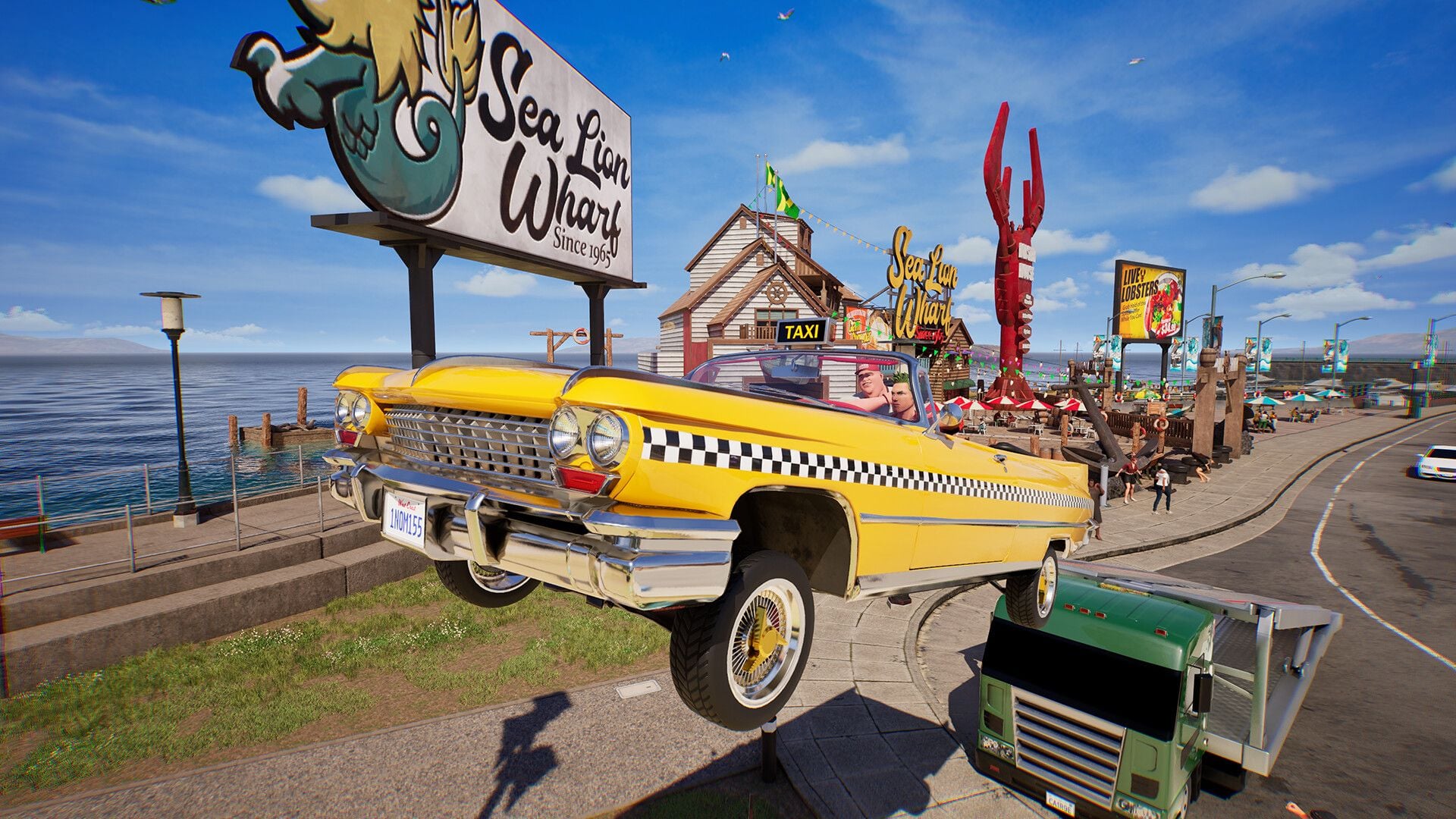
There was a round of controversy earlier this year when Sega’s Crazy Taxi: World Tour revealed that it had used genAI in the game’s creation, but also caused a lot of confusion over exactly how. The company’s AI declaration on Steam said that developers had used AI tools to support them, but it was unclear if genAI was used to create anything that appeared in the game. Then Game Informer got the word that genAI had in fact been used for “background assets,” and more confusion spread. It was then cleared up to Kotaku that no actual in-game assets were created by AI, but instead the tools were used only for reference…Sigh.
Based on Saito’s latest statements, it seems that the hard line now is that Sega will not allow generative AI to be involved in the creation of anything that actually appears in its games.
Corporate departments
Like pretty much every corporation in the world, Sega certainly isn’t outright banning the use of genAI and associated tools within the company. With dull inevitability, Saito also says that “We are using AI to improve efficiency in areas such as publishing and corporate departments, as well as for generating business ideas,” which must be a complete treat for all the employees working behind-the-scenes at Sega, having their jobs compromised or compartmentalized by all this “efficiency,” but it remains extremely good to hear that the Sonic company appears to have a solid wall between the content of its games and the plagiarizing technology.
As VGC points out, this is not to say that Sega’s c-suite isn’t as sucked in by the nonsense as any other, having created a “Generative AI Committee” in 2025 to oversee the company’s use of AI. At a conference in July of last year, the company explained that “generative AI is already deeply integrated into daily operations,” adding, “its specific applications are diverse, including chatbots, image generation, and video generation.” At the same time, it noted concerns over the tech’s wanton consumption of energy for the slightest of tasks. At that point in time, there were references to “internal testing” for “code generation, image generation, and motion generation.”
It seems like, we hope, this testing has resulted in a decision to not use genAI for these purposes at all, if today’s latest comments are true. “We are not entrusting the creative aspects of games to AI” seems like a fairly emphatic ruling-out of that possibility.
Independent thinking
Another interesting tidbit to come from this interview is Sega’s interest in working with independent developers. “We have been considering how to engage with indie game developers for some time now,” Saito told Nikkei. “We believe there is potential if we can find a win-win situation where indie games can thrive by leveraging our distribution network and marketing expertise.” There are no immediate plans to sell indie games “under our own brand,” the company says, but “indie games have their own merits, and we have our own methods that we have cultivated so far, so we hope to coexist while utilizing each other’s strengths.” It’s not entirely clear what this all means, but the idea that Sega might be open to working with indies is a compelling prospect.