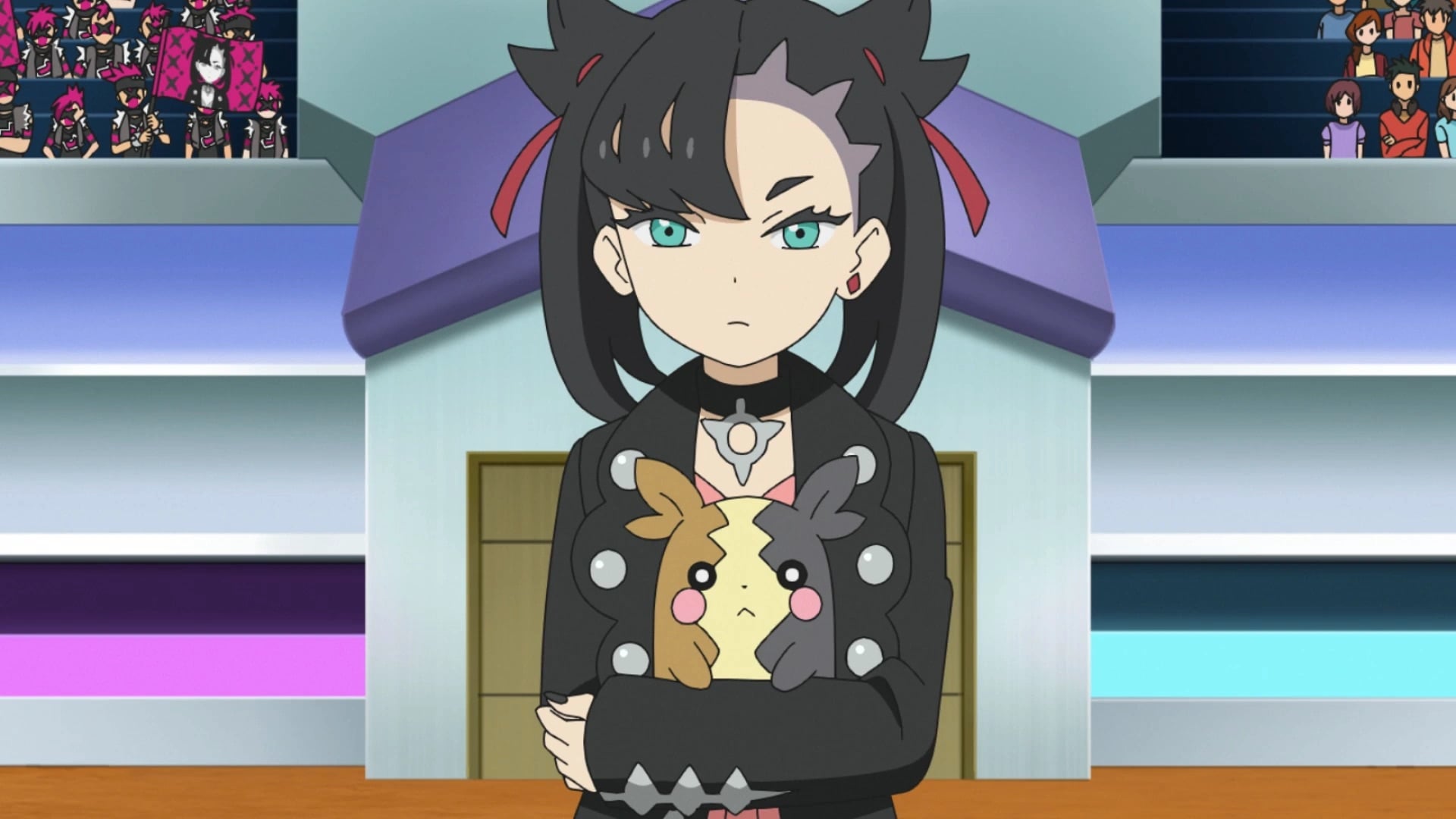
Pokémon Sword and Shield saw its ninth anniversary this weekend, providing the opportunity for some of its creators to reminisce on the title’s success and their own feelings surrounding their work on the project. Nowadays, the game is heralded for introducing some of the most beloved Pokémon and human characters of the series’ modern era, including Marnie, introduced as one of the rivals the player must face during their adventure. A recent viral social media post ignited controversy, however, as Marnie’s designer used the anniversary to reflect on the more muted response this now-adored character received at the time.
Yusuke Omura, who is also known for working on major series such as Mobile Suit Gundam GQuuuuuuX and the more recent Neon Genesis Evangelion movies, as well as designing the mighty Piplup, has mixed feelings over how the character was first received. “Marnie eventually became popular and went viral,” he recalls, “but when her character art was first shown off, the reaction wasn’t all that big. She only really became popular after people played the game and got to know her more. I dislike that sort of thing, but now I often remember that moment, and I reflect on it thinking, next time, I’ll make a character who can become popular from her design alone!”
マリィは最終的に人気者になり、すごいバズりも体験させてもらったけど、ビジュアルが発表された時はとくべつ反応が大きかったわけじゃなく、ゲームがプレイされて内面が分かってから人気が出た 僕はそういうことを嫌だけどいちいち覚えていて、次は絵だけで人気を取るぞ!と思ったりしています https://t.co/RKnusploN2
— 大村祐介 (@yusuke_omura) November 15, 2026
It’s a surprisingly honest reflection on one of the designer’s most popular characters, which led the post to get tens of thousands of reactions on X, and many responses from Japanese social media users. Today, with merchandise plentiful for Marnie, people love both the character and Omura’s work, and forget the character was mostly overlooked in pre-release conversations. The admission led to some being critical. “Why do artists say such unnecessary things on social media?” one user replied to the viral post. “Especially when you’re working with other people’s IP, am I the only one who thinks it’s really rude to share comments like this,” asked another.
A third was more blunt. “I feel like shouting at them like, this isn’t your original character, so just shut up. Illustrators working for other companies shouldn’t let their egos get in the way.”
Others were more accommodating to Omura’s feelings. Yusuke Kozaki, a fellow character designer whose worked on the Fire Emblem series alongside Pokémon, recognized the emotions being expressed in this post. “As a character designer, I really relate to this feeling and think like this constantly,” they noted in response to Omura’s post. “Most of the time, a character’s popularity is decided based on the story and a character’s motivations and how that aligns to their role in the game after its been released. Sometimes though, there are times where a character’s design causes them to become popular even before release, and in those moments as a designer I think, yes, I was able to contribute to a project!” They cited Tracer from Overwatch or 2B from NieR Automata as examples of this.
Others were similarly sympathetic. Rather than seeing it as a criticism of the character or the franchise, many saw it as a comment from a designer reflecting on how they ultimately want people to resonate with their work, and to have an impact on people through their art. They’re still grateful for the success, and just remember it taking time to be recognized—nowadays the design is praised as much as the character.