
It’s been nearly a decade since GamerGate, the misogynistic game industry tantrum that harassed women under the guise of demanding journalistic ethics—yet 2023 has felt like we’re not that far past it at all.
There are certainly more women working in the industry today than there were in 2014, and many of them are innovators in the space, like Sony Santa Monica’s Mila Pavlin, or Emilia Schatz at Naughty Dog, both of whom are leaders in accessibility. Esports organizations are creating women-led teams, Sarah Bond is now the VP at Xbox, and women streamers are raking in cash with exclusive deals. Women journalists are doing some heavy lifting when it comes to breaking stories and examining cultural issues, like IGN’s Rebekah Valentine on the Games and Online Harassment Hotline, or Bloomberg’s Cecilia D’Anastasio on the demise of FaZe Clan, or The Verge’s Ash Parrish with coverage of the now-defunct Overwatch League
And yet, this year has been full of disheartening, upsetting, and downright traumatizing events, from allegations of inappropriate conduct towards women at GDC 2023, to a complete absence of women on-stage during Summer Game Fest, not to mention a deepfake porn scandal that targeted popular female Twitch streamers, and, most recently, PC Gamer’s woman-less round-up celebrating the publication’s 30-year history. Where the fuck do we go from here?
Representation, again and always
Throughout the year, I’ve been struck with a very frustrating form of deja-vu on more than one occasion, as myself and others rush to explain the importance and prevalence of women in the video game industry yet again. We’ve walked this path before, in the aftermath of GamerGate, as women developers, journalists, content creators, and just casual gamers fought to establish their right to exist in the space without rampant harassment.
The fatigue I feel seems almost universal. The responses to PC Gamer’s post on X(formerly Twitter) announcing its celebratory print issue are almost uniformly negative, with women all across the industry panning its complete lack of featured femmes. “There are no women named in pc gamer’s list of influential voices over the past thirty years. NOT ONE?,” wrote Dr. Rachel Kowert, research director at Take This. “Feels like an intentional troll to not include any women in their list of ‘influential voices’ over the last 30 years,” suggested What’s Good Games co-founder Andrea Rene. Firaxis writer Emma Kidwell trotted out the tried-and-true Billy On The Street meme, where the host holds a mic up to someone’s face on a NYC city street and shouts “for a dollar, name a woman.” The ire doesn’t stop there, and understandably so.
https://twitter.com/embed/status/1724103137508630769
Though the GamerGate trolls have lessened in number since 2014 (or perhaps many of them have slunk back to their dank caves to hit their Juuls, wank, and blow the embedded food crumbs out from the crannies of their keyboards), the harassment that women in gaming experience is no less intense than it was nine years ago. The only way to stop that harassment is to make the existence of women (and BIPOC and LGBTQIA+ people) so normal, so obvious, so in-your-face that objecting to it would be like fighting against a rip current. The phrase that we repeat, ad infinitum, until we’re blue in the face: Representation matters.
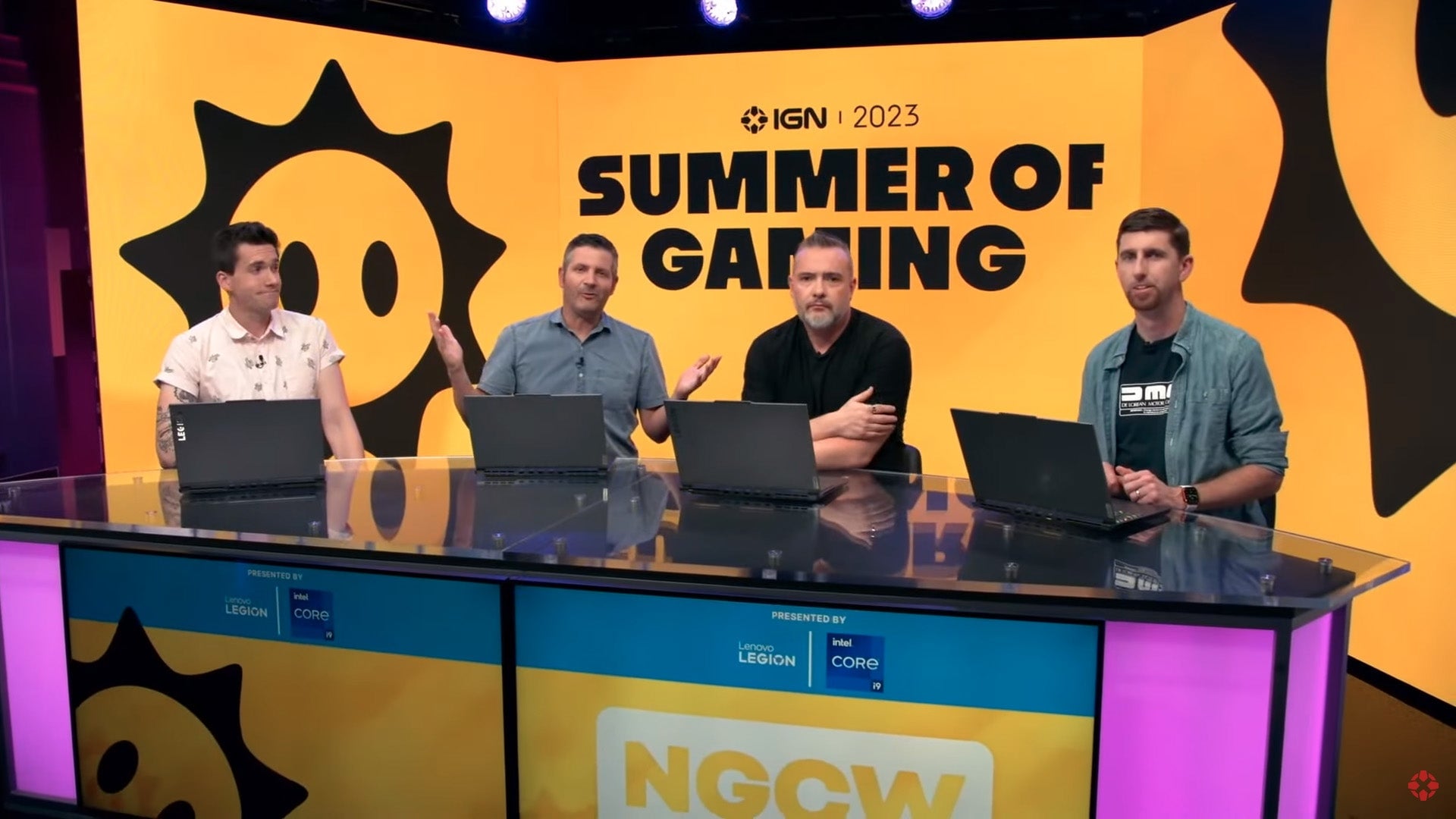
That means that The Game Awards shouldn’t just trot out the same, well-known male developers it does every year (like Hideo Kojima, or Ben Brode, or Sam Lake), or relegate co-host Sydnee Goodman to a side stage where she hands out the small awards like best esports coach or favorite community. It means that IGN’s Summer of Gaming livestream desk shouldn’t feature four white men, and PC Gamer’s exhaustive look back at its 30-year history shouldn’t be devoid of women contributors. It means that there should be more female voices elevated on Twitch, at industry events, in developer meetings, at conventions.
And women should not be the only people doing the work to ensure this happens—men, who already hold the positions of power, who wield all the playing cards, need to do their part in ensuring that they are centering female voices. It’s easy for women to name fellow women—I challenge men in the industry to do the same, loudly, until our existence is no longer up for debate or discussion. Until then, we’re doomed to relive and rehash the events and ideologies of the GamerGate era over and over again—and I, quite frankly, am too old and too tired to do this forever.