Thane
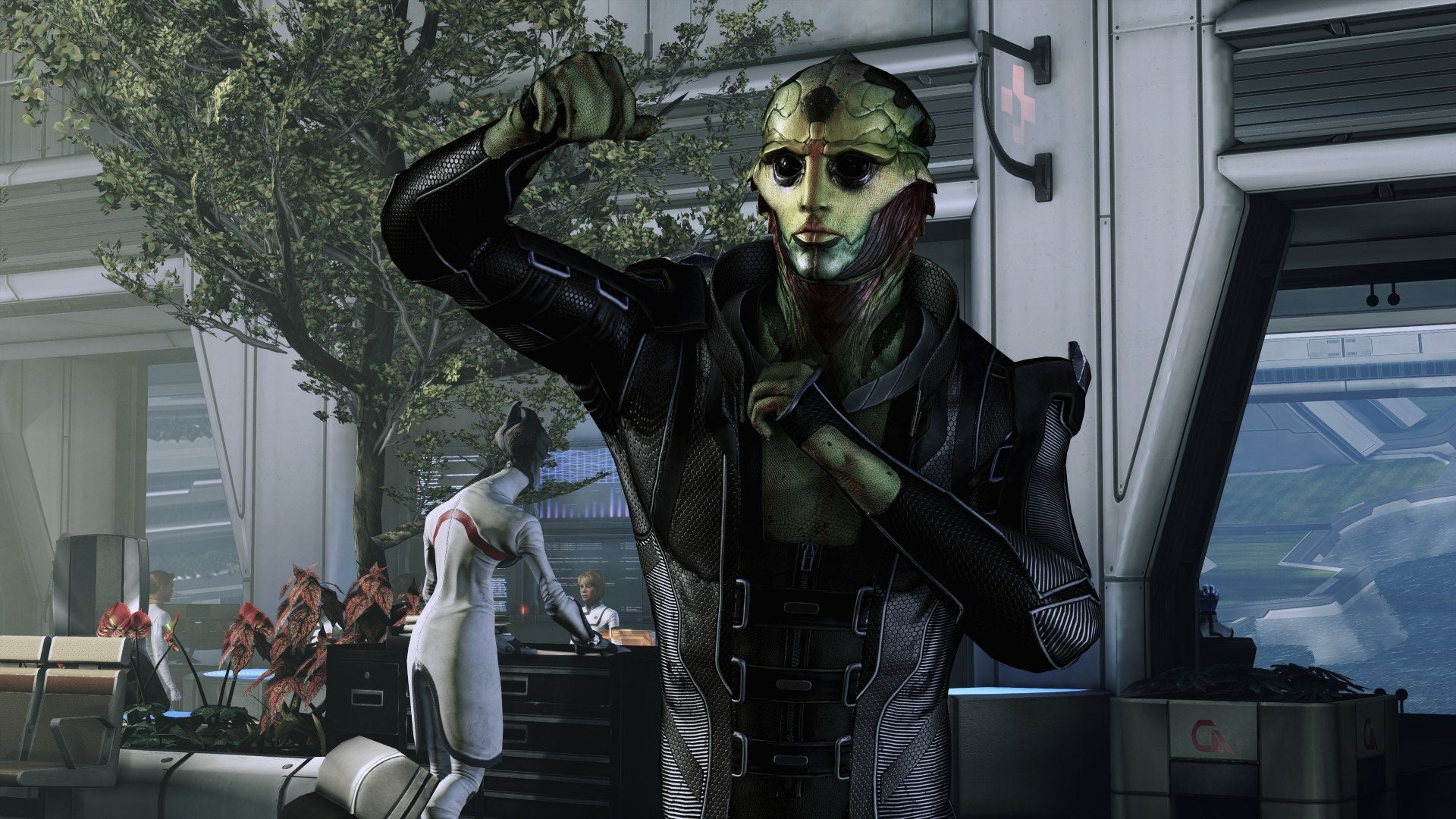
In all my years of having deep talks with folks about the Mass Effect series, I don’t think I’ve found a character more surprisingly divisive than Thane Krios. The Drell assassin is introduced in Mass Effect 2 as a religious, terminally ill, absentee father, who could have easily been an edgelord stereotype. He can often be frustrating to talk to, as he uses his being a tool for someone else as a justification for his actions as an assassin, which feels like a sorry attempt at renouncing all personal responsibility. But Shepard has killed plenty of people without monetary incentive, so who are they to judge?
Thane’s conversations center around the morality of killing, but while he can be a bit immovable on the subject, the guy isn’t immune to the introspection that a suicide mission prompts. As he attempts to reconcile his relationship with his son Kolyat, Thane finds meaning in his last days.
His final day is one of the most memorable in the trilogy, as he saves a prominent politician from the worst BioWare villain ever, Lieutenant Bastard Kai Leng, but is mortally wounded in the process. Thane’s final moments, in which he, having repaired his relationship with his son, dies in a Citadel hospital, still has me in a chokehold 12 years later. He, Kolyat, and Shepard (if you choose) recite a prayer. Initially, you do this under the impression that it is for Thane’s comfort in his moments of passing, but when Shepard asks about the contents of the prayer, Kolyat clarifies that the prayer wasn’t for Thane, it was for the commander. That shit still hits, get the fuck out of here.