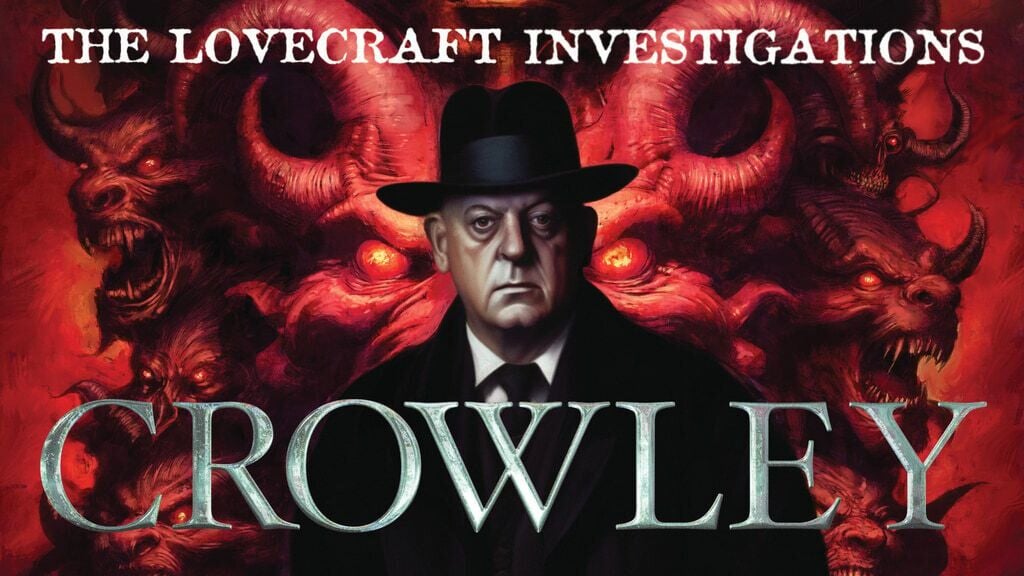
There is a podcast that, if you live outside of the UK, you likely have yet to encounter but will be so delighted to find. It’s called The Lovecraft Investigations, a series that began on the BBC and has recently broken out into crowd-funded independence. Its latest series, Crowley, just launched last week, making this the perfect moment to discover this wonderful long-running show about two fictional true-crime podcasters who try to solve mysteries inspired by the works of H.P. Lovecraft.
Created and written by Julian Simpson (Spooks, New Tricks), The Lovecraft Investigations (TLI) follows two fictional podcasters—Matthew Heawood and Kennedy Fisher—as they set out to create a Serial-like podcast investigating the unsolved disappearance of Charles Dexter Ward, a young patient from a Rhode Island mental health facility who seemingly impossibly vanished from a locked room. Heawood (British) and Fisher (American) split their reporting duties between the two countries as they find themselves mixed up in a far more peculiar and unsettling story than they imagined. And so begins a program that has gone on to involve a massive cast of fan-favorite characters, spin-offs into other shows and realms, and a growing story that operates like a grand unifying theory of the weird, as myths and mysteries from across the centuries and all over the world are pulled in.
“It was meant to be only one season,” Julian Simpson tells me over a video call. “It was such a punt by the BBC, and they resisted doing it for ages.” However, following on from the massive success of Serial, and the launch of the BBC’s audio app BBC Sounds in 2018, the corporation budged and decided to give the series a try. Podcasting was suddenly massive, and here was a pitch for an audio drama designed to sound like one. So The Case of Charles Dexter Ward was commissioned and went out in January 2019.
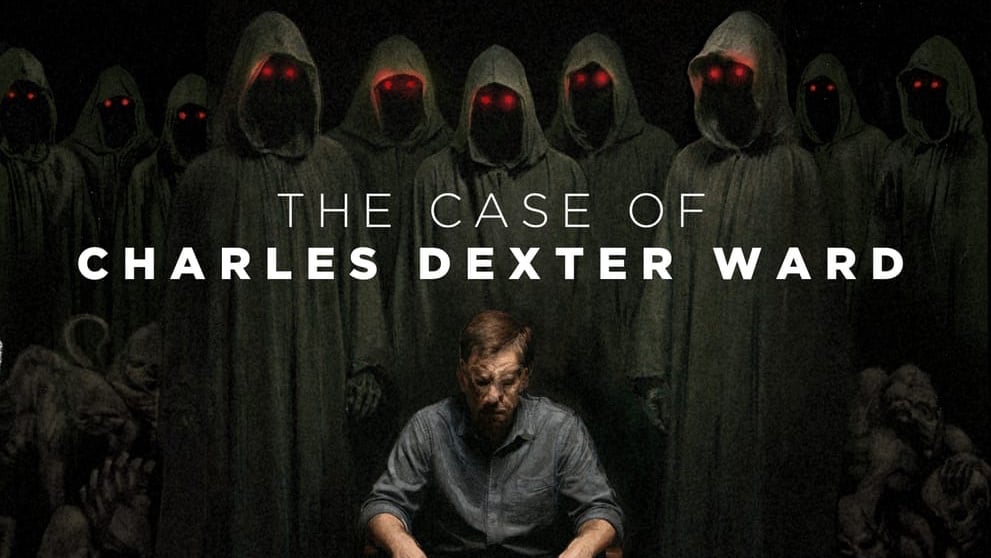
Lovecraft fans will have already clocked that The Case of Charles Dexter Ward is the title of the author’s 1927 short novel, and was indeed about a young man who disappears from a mental asylum, following his obsession with an ancestor and apparent wizard called Joseph Curwen, and TLI follows the same path, albeit set in the 21st century and explored through far more cynical eyes than those of Doctor Marinus Bicknell Willett. (In fact, he becomes Dr. Jonathan Willett, whose recordings of Ward are discovered by the podcast, made before he too was driven mad by his experiences.) The result is a show that is inspired by, but in no sense beholden to, the source material. Heawood and Fisher are determined to find rational explanations until they absolutely cannot, along with the help of a growing group of friends and guests with specific expertise.
The series went so well that the BBC asked for a second season, and Simpson agreed on the condition that it would be a whole separate story. Matthew and Kennedy had reached the end of their Ward investigation, as bewildering as they may have found their results, and Simpson had no interest in continuing it. Things would now move on to a new mystery called The Whisperer in Darkness. “Which, as you know,” says Simpson, “is a Lovecraft story involving the case of Henry Akeley, being plagued by stuff banging on his door in his house in the woods. And in our version, Akeley’s disappeared and they go to look for him.” That is, until the pair enter his house (now in Suffolk, England, rather than Townshend, Vermont), and discover Akeley had a murder board up on a wall. “At one point, they take down a photograph, and I was like: what’s on the photograph? I’m making this up as they go along.” It was the next decision that made everything change, and brought us the Lovecraft Investigations we’re still enjoying six years later. “It was a photograph of Amelia Fenner, a character from the first series. And if [Akeley] knows her, then this all starts to tie together.”
Fenner was a 20th-century witch Simpson had created for the first season, a part of Joseph Curwen’s New Forest coven in the ’50s, now an elderly lady and one of the most fascinating characters in that story. Akeley knowing her connected the two tales, but it didn’t stop there. At that point Simpson found himself writing in the Blake House—a colossally deep dive back into a radio play called Bad Memories he had written in 2011 about a home where bodies were found in the basement dating from decades before their murders had taken place. This prior work was something that would have been completely unknown by the vast majority of people listening, but for Simpson it was the beginning of an interconnecting universe known as Pleasant Green.
“I made a conscious decision,” the writer tells me. “Pleasant Green was going to be a thing, and so it gets mentioned for the first time. It’s a code word.” A word so serious, in fact, that when Matthew Heawood says it on the phone to Jasper, a former British Army intelligence officer, Jasper immediately hangs up. “Because,” says Simpson, “it’s an ECHELON trigger word.”
Welcome to Pleasant Green
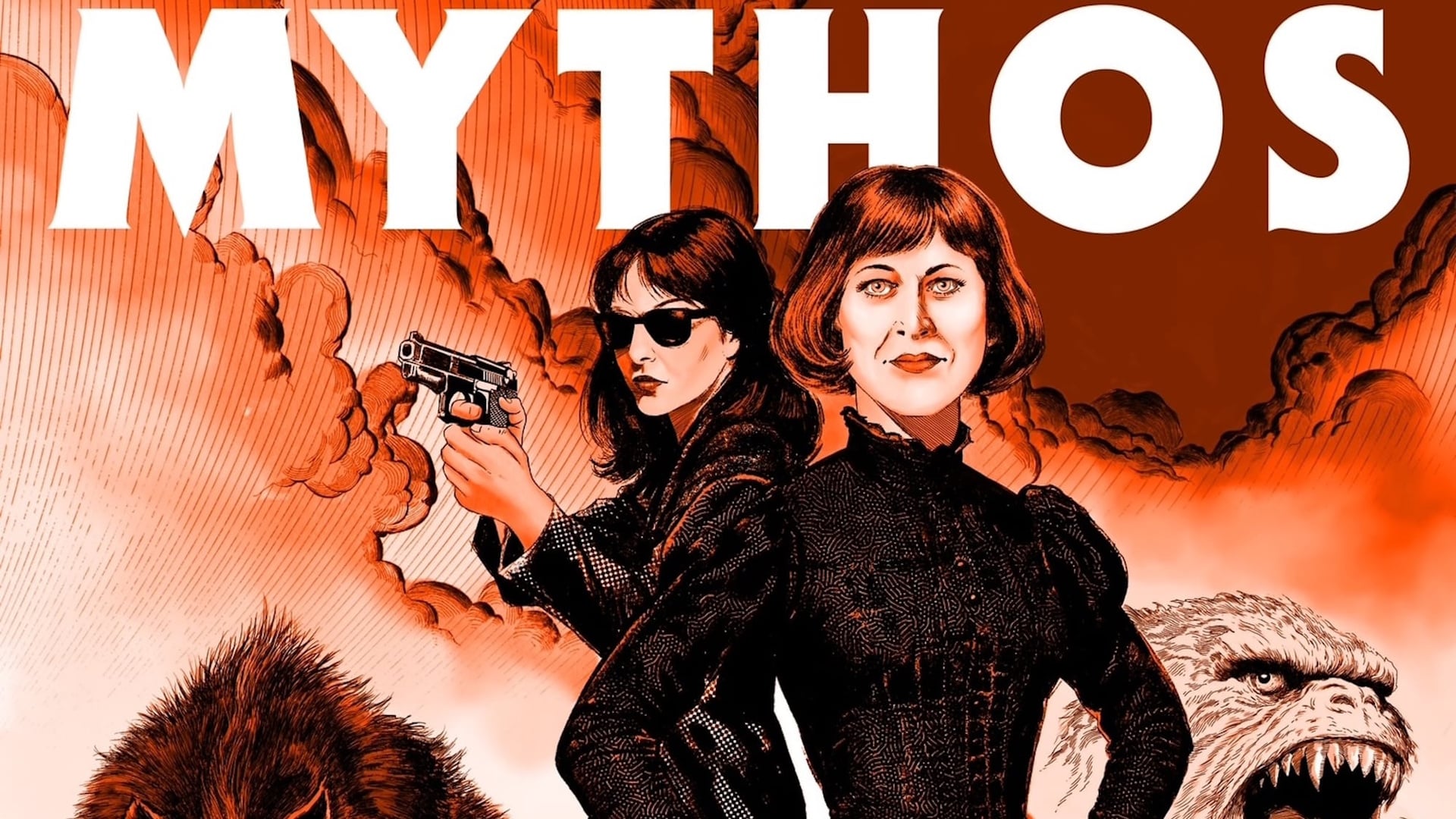
With the birth of the Pleasant Green universe, Simpson’s works all begin to pull together. Prior to TLI he had made a beloved three-part drama called Mythos (now available on podcast feeds), about a secret British government agency called the Department of Works, and two of its agents who investigated mystical anomalies. Simpson had pitched it to the BBC as a British X-Files, but then accidentally wrote a story about the ghost of a long-dead, bad-ass nun (Mary Lairre) and a chaos witch who takes on different personalities based on the skills needed (Parker), who battle against the manifested results of the shared ignorance of the British over their own cultural history. It’s wonderful, you should listen.
But crucially, it starred actors Nicola Walker (Doctor Who, Spooks) and Phoebe Fox (Task, The Great) as its two leads, and both are actors Simpson casts in pretty much everything he makes. Walker was already playing everyone’s favorite TLI character, Eleanor Peck, an academic with an encyclopedic knowledge of the history of witchcraft and the most ardent skeptic since Dana Scully. (Simpson says of her, “We have an awful lot of fans who are academics, which is quite odd to me because I never went to university, but an awful lot of academics and professors and heads of things are fans of the show and Eleanor Peck seems to have become a role model.”) Her role is to give exquisite monologue accounts of how historical characters link together according to myth and fact (a stunning amount of Peck’s speeches are entirely factual), but all with a disgusted sneer that anyone might take the magical aspects seriously. “It’s all bollocks,” has very much become her catchphrase.
So when Mythos‘s Parker appears in The Lovecraft Investigations to steer Heawood and Fisher’s research in new directions, eyebrows should be raised. She’s seemingly still working for the Department of Works, and things become impossibly interesting when she appears to recognize Peck…
It’s crucial to stress that none of this background knowledge is required to enjoy TLI at all. Each character is properly introduced in their own right, and the joy for the overly invested really occurs when going back to listen to those older dramas and realizing the connections. But everyone loves an interconnecting universe, and it’s all well worth listening to.
As for quite how involved this has all become, Simpson worries he might have created something perhaps a bit tricky to wrangle. Once you open the lid on the possibility that using the same actor in two different shows means they could somehow be connected, and you’re a writer who uses the same people so often that it could be considered a repertory company, that’s a Pandora’s box. “I’m not sure how clever it was,” says Simpson when I raise the topic. “I am kind of consciously slowly starting to back quietly away from that one. It exists. It’s canon. It was a moment of exuberance that I probably should have resisted…It hasn’t opened a can of worms yet, but I have peeked inside the can and seen the worms and—let’s keep that closed.”
Love The Craft
The works of H.P. Lovecraft are such a core part of modern storytelling and horror media that it’s now almost trivial to separate the terrifying stories from the horrendous storyteller. A racist, anti-Semitic and deeply misogynistic man, Lovecraft often infused his works with his hatreds, and much more so than the common excuse of a work being “of its time” can write off. But over the last one hundred years, society in general has done an amazing job of reworking his creations of ancient, uninterested gods and madness-inducing unfathomable beings. Incredible lore-based dramas like Malevolent can be set within the universe by a writer—Harlan Guthrie—who’s never even read the original Lovecraft stories and novels, so much have his Eldritch tails intertwined themselves into our culture, not least through tabletop games like Call of Cthulhu. Simpson’s relationship to Lovecraft is similarly distant.
“I am not the deepest, darkest Lovecraft fan in the world,” he tells me. “I’m fascinated by the ideas. I love a lot of the stories. But I’m not someone who sits there obsessively re-reading. I get the same ick feeling that anyone does reading him now.” The Lovecraft Investigations, of course, exists in a world without a Lovecraft (well, kind of, it’s complicated, we don’t need to get into it), and nails its progressive colors to its masts. “The awful secret of how we do these adaptations,” says Simpson, “is…I have read The Case of Charles Dexter Ward a grand total of once. I made some notes, and decided to use it because it was the most obvious story to do with the Serial template. We are not doing very faithful adaptations of Lovecraft.”
The title is a result of the BBC imposing it on the program, and it serves well enough as an umbrella—it’s never used in the show itself, the fictional podcast briefly being called The Mystery Machine before even that was backed off of due to fears of Warner Bros. But Lovecraft’s work is still of course incredibly important. “I like the ideas it conjures in my head,” says Simpson. “I like the vibe you get when you’re playing Call of Cthulhu or Trail of Cthulhu, I love the atmosphere of it and the cosmic horror of it. But I don’t need to go into great deals of detail into the specific stories because the idea that there’s something out there that is unimaginably big and doesn’t care about us at all is enough.”
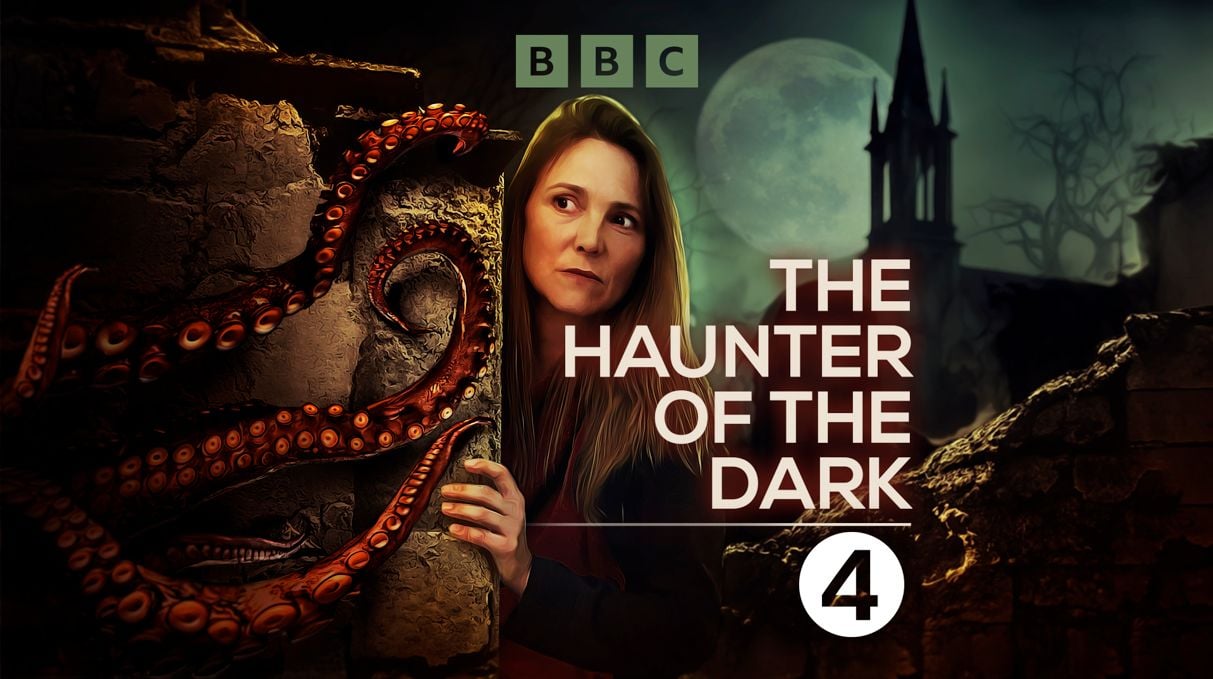
The Lovecraft Investigations went on to get two more series via the BBC, The Shadow of Innsmouth and The Haunter of the Dark, each more involving and far-reaching as the universe gains more characters, betrayals, and just so many unexplained mysteries from both U.S. and UK history. At the same time, Simpson made another radio program called Who Is Aldrich Kemp that took inspiration from spy novels and crossed it with impossible sci-fi technology, which was also mostly starring his regular actors, and is stunningly funny. And, of course, crossovers occur, with Kennedy Fisher showing up midway through a TLI mystery looking for Matthew Heawood (the BBC apparently wasn’t exactly delighted by this), as well as suggestions that The Department of Works exists in that universe too. And then, well, both shows came to an end at the BBC.
One of the peculiarities of BBC Radio, Simpson tells me, is that you’re never provided with ratings. So after all these years, and seven series of TLI and Kemp out there, he really had no idea if they were even popular. Wanting to continue their stories, especially those of Matthew and Kennedy and friends, Simpson nervously tested Kickstarter. Asking for £70,000 ($94,000), it made its money in the first hour of the campaign. Going on to make £130,000 ($174,000), that was enough to create a whole new five-part season and a brand new episode of Mythos. This surely must have been emboldening, I ask, after Simpson rapidly rejects my suggestion that crowdfunding a full season five of TLI shouldn’t be an issue (“I’m too superstitious to say it will be crowdfunded”).
“We had no idea how big our audience was,” he says. “I only had anecdotal evidence of people emailing me to know anyone was listening at all. So that emboldened me. Until about six or seven weeks ago, I was like full steam ahead for season five, and then Trump bombed Iran and the world economy tanked. So we’re hoping for more people paying less. I don’t want anyone to feel the pain of this.” But before any of that, we now have The Lovecraft Investigations: Crowley, a sort of bonus season in which the regular cast do a deep dive into the legendary fiend and occultist Aleister Crowley. So why him?
“We’ve referenced him in a lot in the show,” Simpson explains. “I didn’t feel like I knew enough about him. I read the bits that I needed to know to reference him, but I felt like I [only] had a vague sense of him…The idea of a documentary series made by fictional characters was really interesting to me. What if Heawood and Kennedy did The Rest is History, right? How does it work?”
It turns out, incredibly well. The series, while certainly different from a regular TLI story, allows these familiar characters to tell a true, fact-based account of one of the most extraordinary people ever to have lived, seen through their fictional eyes. Crowley, from his abusive childhood to his obsession with the occult, his astonishing role in getting the U.S. involved in the Second World War, relationships with so many key figures from early 20th century history, the part he played in the beginning of the California occult scene of the 1920s (that led to both the Manson family and Scientology), and his involvement with the completely batshit and somehow not fictional Hermetic Order of the Golden Dawn, make him utterly fascinating. In many ways contemptible, in others deeply pathetic, but undeniably riveting.
The new Mythos episode (a suggestion by actors Nicola Walker and Phoebe Fox, to Simpson’s delight and astonishment) is also a completely splendid time, reveling in the no-nonsense, sarcasm-driven characters in an adventure that rather neatly ties up some loose ends regarding the series’ relationship to the Pleasant Green universe. A large part of the reason these shows feel so natural and engrossing appears to be because of a cast that so enjoys making them.
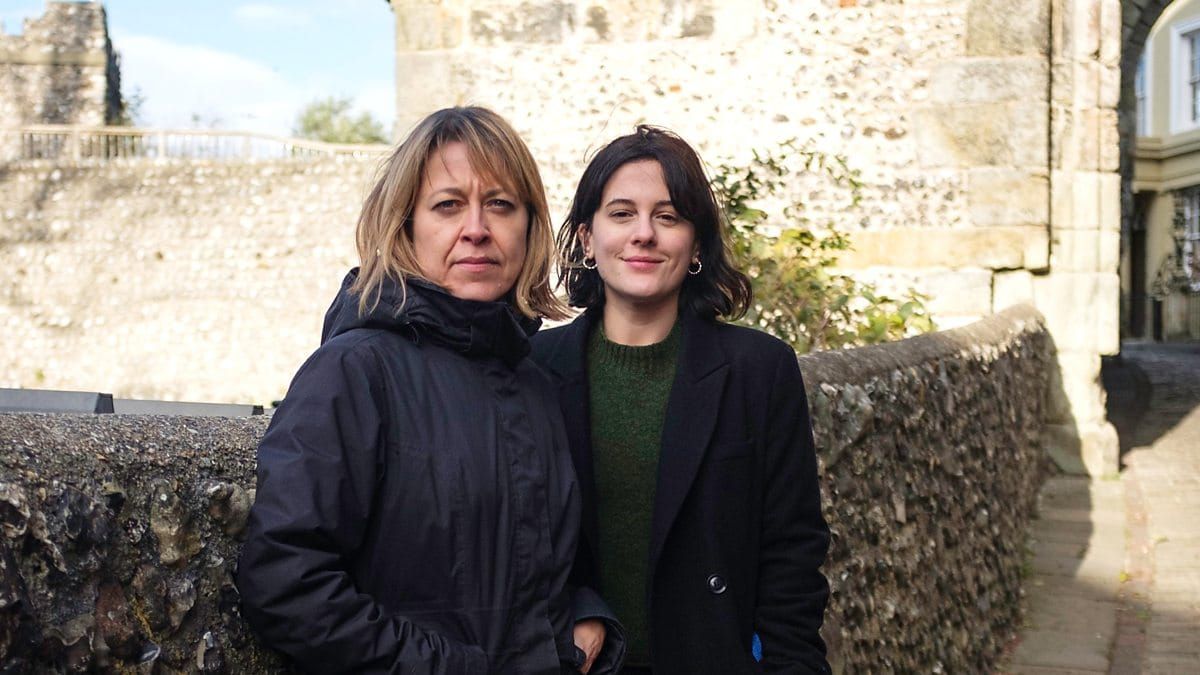
Simpson’s method of making radio dramas and podcasts never involves studios and lines of actors in front of microphones. Everything is recorded on location, so for instance when Matthew and Kennedy go to the cafe across the road, the cast are in a real cafe, a mic on the table, performing the scene surrounded by regular customers. For a season of TLI, Simpson says “We’ll normally get a big house and everyone will stay there, three or four days tops, we’ll all hang out and cook together. It’s like a holiday. And there’s no make-up, you’re not waiting for lights, you’re not fiddling with costumes. You don’t even have to learn the lines. You’re just you, and you’re doing it. We laugh a lot doing it.”
This weekend break get-together approach becomes more surprising when you recognize the careers of the actors involved. Phoebe Fox, for instance, is starring in HBO’s hit Mark Ruffalo series Task, while Ferdinand Kingsley (Slide in TLI and Aldrich Kemp himself) has regular roles in Reacher and Sandman. These people are far too famous for Kickstarted audio dramas, I joke. “They’re definitely too famous!” Simpson replies, laughing. But he attributes their returning to the projects due to how much of a good time everyone has during the recordings. I suggest it might also be because the scripts are so good.
Find the Love(craft)
If you want to get into the fantastic world of Pleasant Green, it’s remarkably easy to do so, despite the overlapping timelines. The simplest route is to start at the beginning of The Lovecraft Investigations which, due to deals expiring with the BBC, was more complicated until recently. However, Simpson has now made the first two seasons available as podcasts via this feed and this one. The second two seasons are on BBC Sounds, which is now available in the U.S. too. (Simpson tells me there’s hope the BBC will soon sort things out so all four seasons are back on Sounds.) If you want to dive into Mythos first, that’s also available in your favorite podcast app, via this feed. (And if you’re clever, you’ll find the even earlier stuff like Bad Memories and Fugue State by searching for “Julian Simpson” on the Internet Archive.)
To hear Crowley, you can now sign up as a late backer through BackerKit. It’s $23 for all five episodes and the new Mythos.