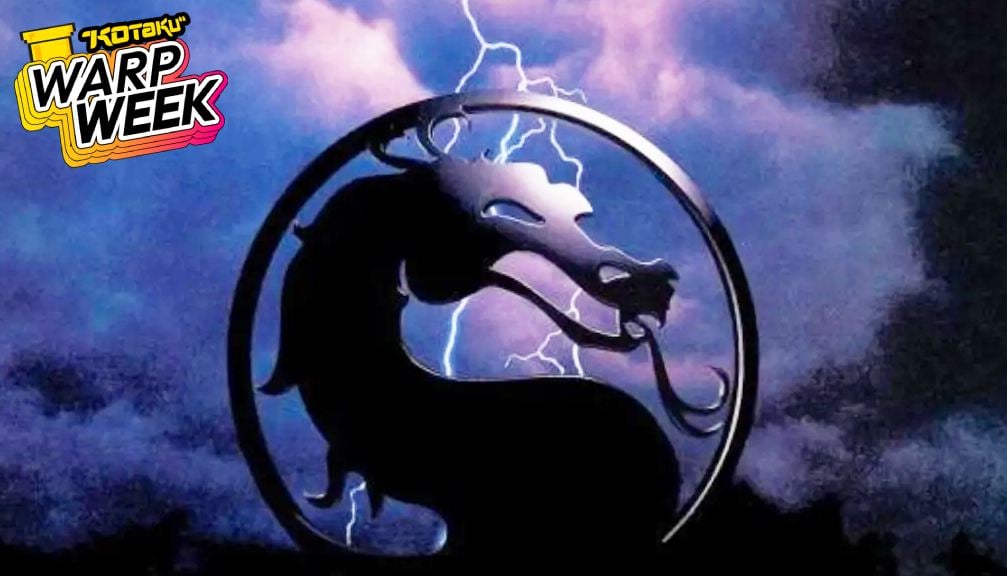
Video games are not products, so maker Midway Games cannot be sued under product liability claims, a Connecticut judge ruled Wednesday. As such, Andrea Wilson—the mother of Noah Wilson, who died after being stabbed—cannot sue the Mortal Kombat maker.
Andrea Wilson’s son, Noah Wilson, was stabbed to death by a friend, identified as Yancy in court documents, on Nov. 22, 1997 at 13 years old. Andrea Wilson, in her complaint filed exactly three years after Noah Wilson’s death, said that Noah Wilson and Yancy played Mortal Kombat together, and that Yancy believed he was one of the game’s characters, the cyborg Cyrax. She posited that Midway Games is at least partially to blame for Noah Wilson’s death. She filed the complaint alleging product liability, unfair trade practices, loss of consortium, and negligent and intentional infliction of emotional distress.
Noah Wilson was killed while he and Yancy were on their way to see Mortal Kombat: Annihilation, according to New London newspaper The Day. Days after Noah Wilson’s death, Andrea Wilson told The Stamford Advocate that she believed the incident was an accident; friends of the children said they found the knife and were playing with it. Yancy was arrested and charged with second-degree manslaughter.
Andrea Wilson described Mortal Kombat as “a virtual reality video game that uses sophisticated technology to make players physically feel as if they are killing the characters in game,” according to court documents. She described one of Cyrax’s moves—wherein the character puts another in a headlock before stabbing them—and said Yancy “used this same maneuver to stab her son.” She wrote that Yancy was “addicted” to the game, and that Midway Games designed Mortal Kombat “to addict players to the exhilaration of violence, and specifically targeted to a young audience, intending to addict them to the game,” according to the document.
United States District Judge Janet Bond Arterton ruled that Mortal Kombat is not a product, and granted Midway Games’ motion to dismiss because of it. “Mortal Kombat, as Wilson describes it, is protected by First Amendment speech,” she wrote. The judge said that because of that, Andrea Wilson failed to “state a claim upon which relief can be granted.” Midway Games argued that the definition of “product” does not include “ideas or expression,” which it believes Mortal Kombat falls under as a creative work. In other words, it’s not a product, according to Midway Games. The judge cited several other cases that supported this, including one in which original Dungeons & Dragons maker TSR, Inc. was found not liable for a child’s suicide.
Andrea Wilson, in her response to Midway Games’ motion to dismiss, argued that Mortal Kombat is a product of expression and technology combined.
“While Wilson has skillfully argued that Mortal Kombat is something more than motion pictures or television programs, the ‘something more’ is its interactivity,” the judge wrote in her decision. “She offers no persuasive reason for distinguishing the technological advances that led to Mortal Kombat’s creation from developments at the turn of the twentieth century that ushered in the motion picture.”
She continued: “Even accepting Wilson’s allegations that Mortal Kombat caused violence and physical harm to be visited upon her son and despite the seemingly minimal utility of such depictions of
violence, the First Amendment precludes Wilson’s action for damages unless Mortal Kombat’s images or messages are ‘directed to inciting or producing imminent lawless action and [be] likely to incite or produce such action.'”
Mortal Kombat has been somewhat controversial since it was released in 1992. The game is known for its over-the-top violence. Its “fatality” finishing moves have been particularly scrutinized; players can rip out another’s spine, for instance. Connecticut senator Joe Lieberman led the legislative fight against the video game. Lieberman led a hearing in front of the Governmental Affairs and Judiciary Senate committees. Previously, Lieberman had said violent video games should be banned, but that the First Amendment protected it, according to The Hartford Courant. Instead, video game industry representatives agreed to a standardized ratings system. Representatives from Nintendo, Sega of America, and the Software Publishers Association, among others, were in attendance.
The Entertainment Software Rating Board (ESRB) was born out of these hearings.
The story you just read is part of the 2002 edition of Warp Week, a Kotaku series that takes readers back to gaming’s past through a mix of time-dilated reviews, retrospectives, and on-the-ground reports.