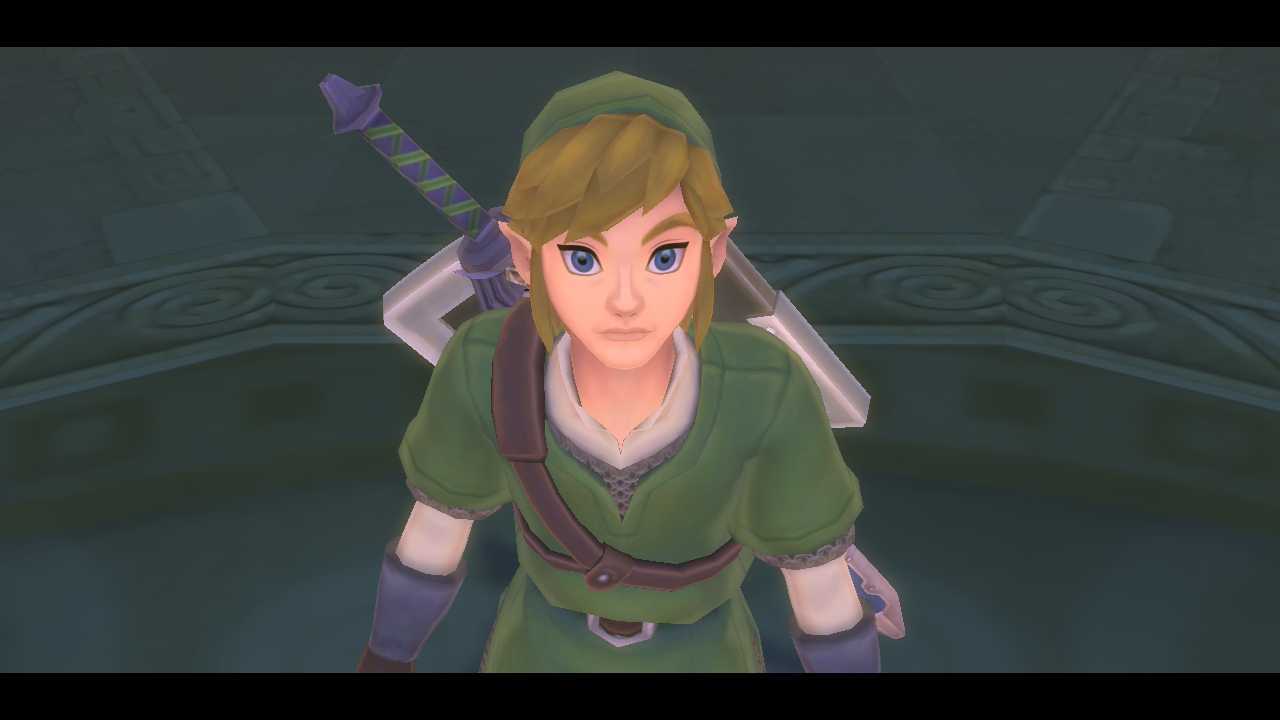
As I continue to work my way through Ocarina of Time, the same thought keeps bubbling up in my mind like an intrusive thought: I wish I was playing Skyward Sword. Unlike my colleagues, I did not grow up with The Legend of Zelda, coming to the series much later as a professional video game reviewer. It’s from that perspective that I’ve played a lot (though not all) of the big Zelda games and I can’t help but think that Skyward Sword does not deserve the bum rap it typically gets.
That’s a less controversial position to take now that the game has been ported from the Wii to the Nintendo Switch, easing the frustration associated with trying to fight your enemies while navigating the Wii version’s notoriously fussy waggle physics. Combat on the Switch is smoother, with thumb motion taking over for flexing your entire wrist. (If you want the old-school feel, though, you can play with detached Joy-Cons too.) With that upgrade, the directional combat, via which Link can only deal damage to enemies if he hits them at the correct angle, adds a new dimension to what’s been typically a standard sword-and-board affair.
Combat in Skyward Sword feels more like that in a soulslike, not in its difficulty, but in the way it requires a more thoughtful approach than that in most Zelda games. In games before and since Skyward Sword, aside from specific gimmicks like reflecting an octorok’s attack back at it, you’re mostly just flailing and whaling. Skyward Sword forces you to slows you down. You cannot beat an enemy with wild, unconsidered strikes. You must observe the way it defends and break through that defense.
Skyward Sword’s exploration cannot compare to that of Wind Waker or Breath of the Wild. But I think the lack of variety in overworld exploration on your companion bird is made up for by the game’s dungeons, which are some of the series’ best and most unique. I loved shifting forward and backward in time to navigate the Lanayru Mining Facility and the Sandship, and I appreciate how here, the series’ long-present motif of time travel has been shrunk down and made into a discrete game mechanic in a way the series hadn’t really done since Majora’s Mask (another fave of mine).
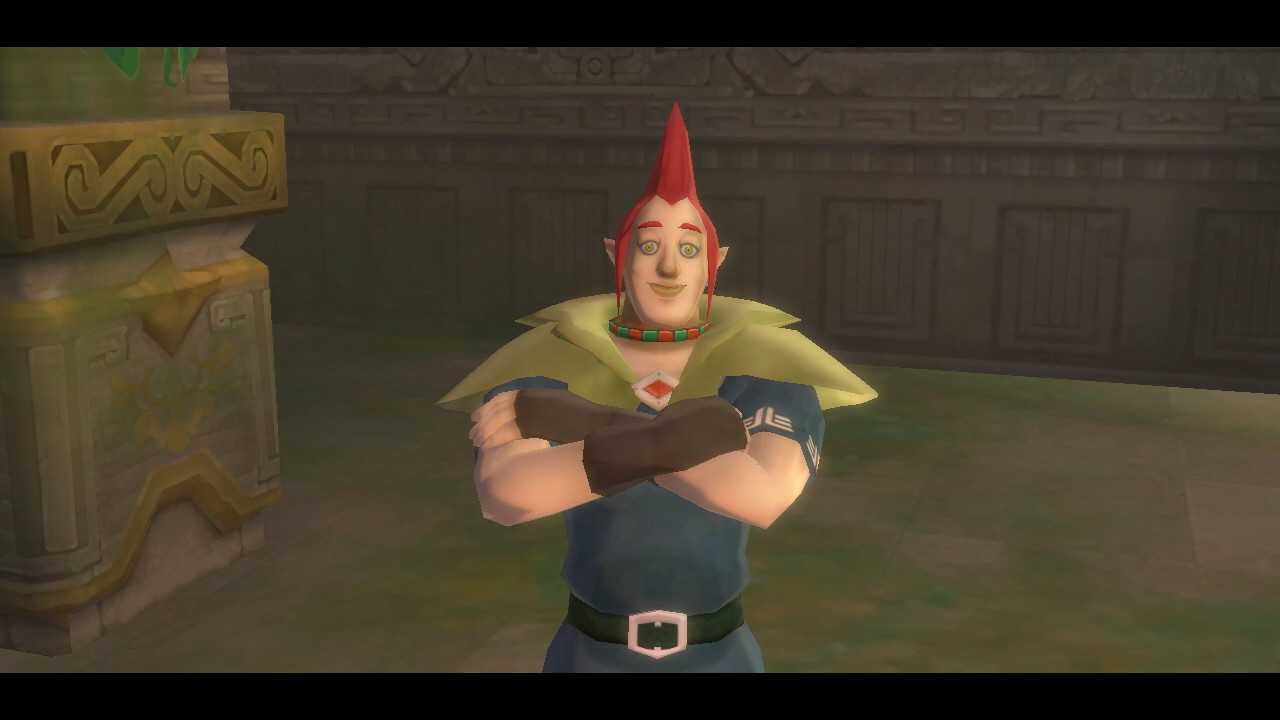
But honestly, the most enduring qualities of Skyward Sword are the stories and characters. This is the game that let the Groose loose! Groose starts as a petty, meathead bully jealous that Link has Zelda’s attentions. But rather than let that embitter him which, as video game tropes go, might have involved him showing up as a late-game midboss—Hi, Seifer from Final Fantasy VIII—the feeling empowers him to discover his own destiny, and he winds up lending Link a much-needed helping hand. (Hello again, Seifer from Final Fantasy VIII.) There have been other lovable Zelda side characters who go on their own journeys of self-discovery, but I think Skyward Sword‘s singular focus on one journey—rather than on retelling similar stories split across multiple characters like the champions in BotW, for example—makes Groose stand out that much more.
I also love this version of Zelda and Link—the bold girl and her best friend who are both transformed by their destiny and duties but remain connected due to their sweet and enduring friendship. They are always connected, that’s what the whole series is about. But some versions of them are closer than others, having a dynamic that’s deeper than simply a princess and her knight. Wind Waker had a little bit of that definition. Skyward Sword, though, deepens the relationship between Link and Zelda more effectively.
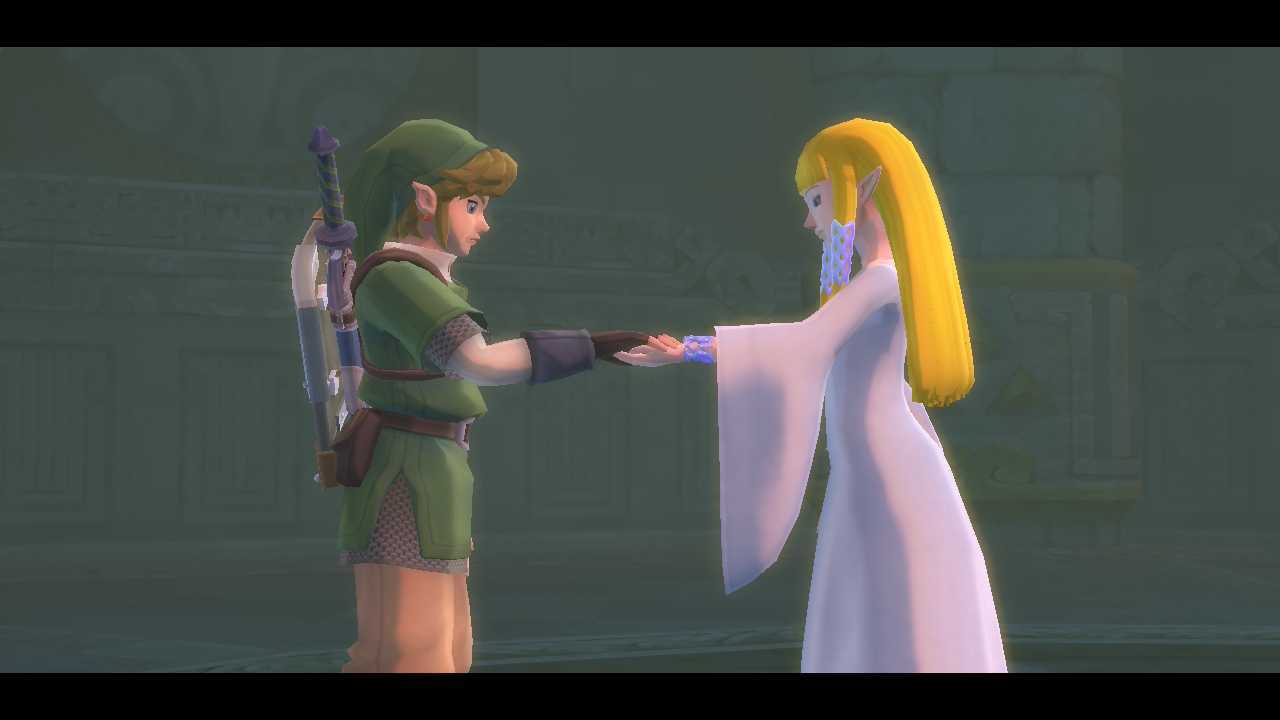
There’s a beautiful scene between them in which Zelda tearfully apologizes to Link for manipulating his feelings for her to force him to become the hero their world needs. She’s a true princess, taking responsibility for the pain she’s caused Link while acknowledging it needed to be done, and accepting an eternity of slumber as punishment to keep the evil threatening their world at bay. When he rushes toward her to catch her before she seals herself away, almost to say “I don’t care about that, I care about you,” I teared up, moved by how Link was able to convey so much emotion and love for Zelda without saying anything. More than any previous version of the central pair, Skyward Sword‘s Zelda and Link feel like they’re the genesis of the pair we get in Breath of the Wild and Tears of the Kingdom, arguably the series’ best versions of them.
Skyward Sword has my whole heart, and I know that makes me rare among Zelda appreciators. But so much of what we’ve come to love about later Zelda games, narratively and mechanically—remember, this is the first game that let you skydive and slow your fall with a sailcloth!—you can see Nintendo experimenting with in Skyward Sword. For that alone, it deserves your reconsideration.