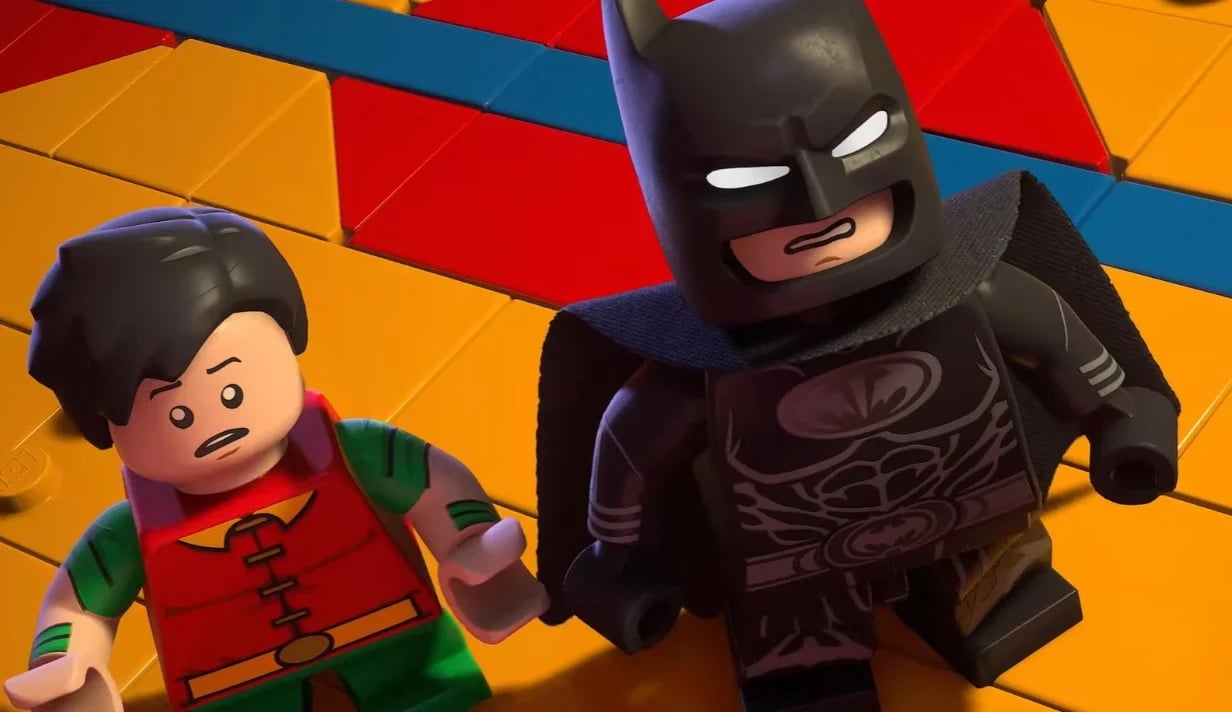
In the lobby of Gotham’s Iceberg Lounge, Batman and Jim Gordon brawl through a mob of criminals until there’s only one left standing. A prompt hangs over his head. With the press of a button Batman begins his finisher, sweeping the legs of the thug so fiercely his body forcibly spins upside down. I watch as Bruce punches him in slow motion so hard, his body disassembles completely. WHACK. Moments later, Batman descends down a massive rubber slide into a large ball pit. I’ve reached the underbelly of the underbelly: Falcone’s House of Fun. I smile.
I’ve been struggling to meaningfully capture just how well Lego Batman: Legacy of the Dark Knight manages to balance two entirely disparate tones. As someone admittedly too cynical to earnestly enjoy the satirical humor of the Lego games (or so I thought), I assumed the slapstick gags and madcap cadence would simply get in the way of the brooding tone that suffuses the Arkham games, from which Lego Batman takes considerable inspiration. But after playing three early-game chapters at my hours-long preview, I feel like Legacy of the Dark Knight meshes its disparate elements so successfully that everything benefits, including the game’s appreciation for Batman’s inherent goofiness.
My preview begins on the soaked streets of Gotham, with Batman and Gordon seeking to break into the Iceberg Lounge to capture and arrest mobster Carmine Falcone. At the door, identical twins stop the Caped Crusader from entering—a riff on a scene from Matt Reeves’ The Batman film from 2022, parodied here by having Bruce get slapped across the face by a fish. It’s the inciting incident that begins the fight through the dance floor of the lounge and eventually down into the basement.
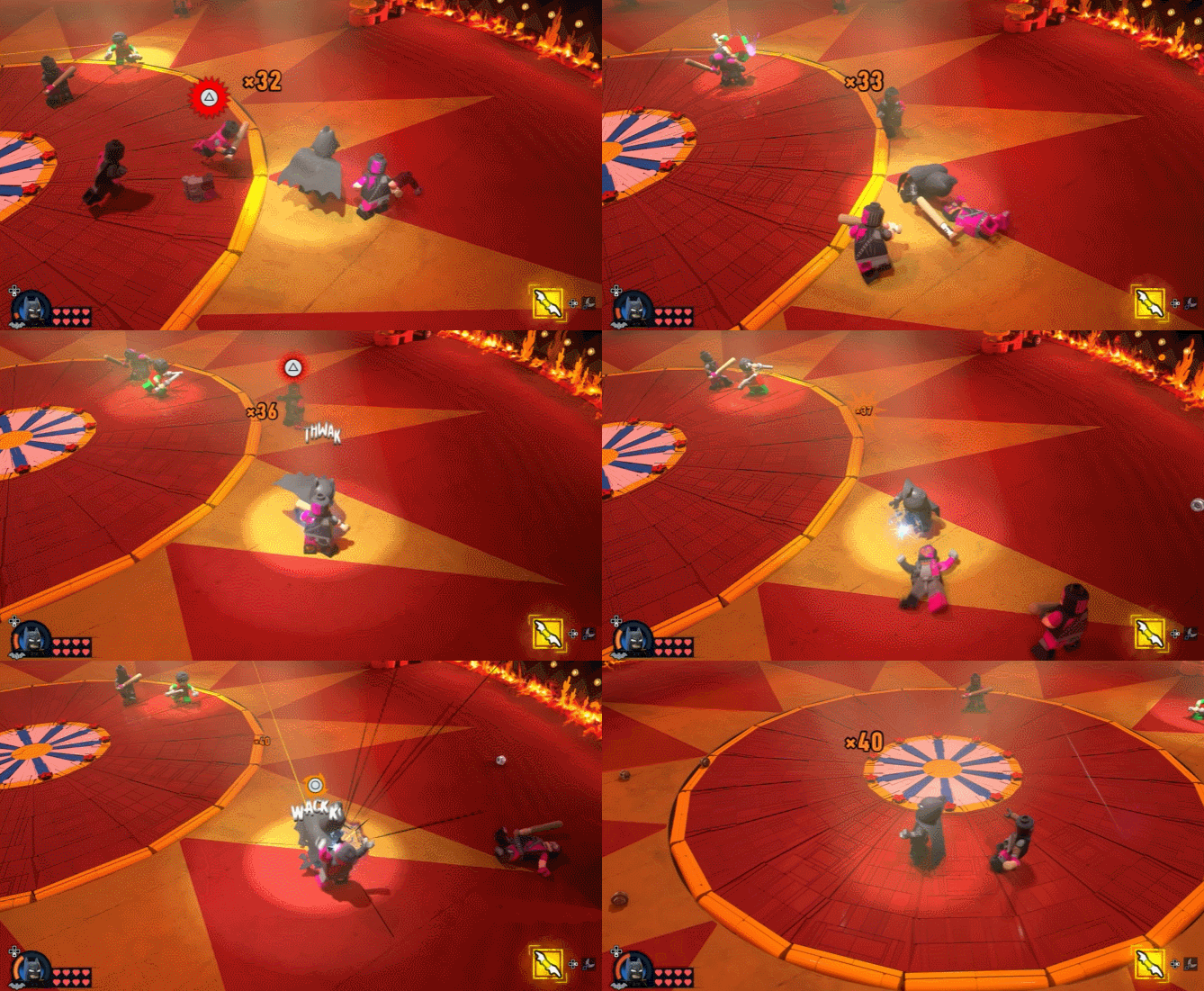
Throughout the mission, sections of linear exploration were routinely broken up by combat arenas, wherein swarms of minifigure enemies would immediately surround me. The pace of combat will be delightfully familiar to anyone who’s played the Arkham games, letting you juggle a beatdown on a goon with waves of light attacks while performing counterattacks by successfully pressing a well-timed prompt. Incrementally, thugs will add various weapons to their arsenal—like batons or shields—demanding a change in approach with an acrobatic move to create openings. To my surprise, the Arkham games’ vantage points also make the jump to the Lego version of Gotham, offering opportunities for stealth takedowns.
In a later mission, Bruce and Selina Kyle make their way to Haly’s circus, where an interruption by Two-Face sets up Batman’s introduction to Dick Grayson—soon to be Robin. Throughout the level, both characters have to make use of various gadgets to traverse lengthy platforming sections, culminating with the duo standing off against dozens of enemies in a massive brawl. By the time it’s over, you’ve learned how to seamlessly work the gadgets into combat, which also helps differentiate characters from each other. It all unfolds at the ideal pace to ease you into the Lego series’ new foray into increased mechanical depth.
Depth is relative, however, and while Legacy of the Dark Knight may chart new territory for Lego games, action aficionados probably shouldn’t anticipate the levels of creative expression in combat that the best games in the genre offer. It’s possible, though, that Lego Batman’s upgrade system may introduce new depth as you progress through the game, something my preview slice didn’t allow time for.
For all the forefronting of Arkham mechanics in Legacy of the Dark Knight, their presence here serves to elevate the classic linear design philosophies of Lego, and not the other way around. Each mission I played required constantly switching between playable characters in order to solve environmental puzzles, complete platforming sequences, and discover hidden collectibles and upgrade items. The result is a supremely engaging experience that preserves the core sensibilities familiar from other Lego games while also pulling in a collage of fresh influences to widen the scope of play.
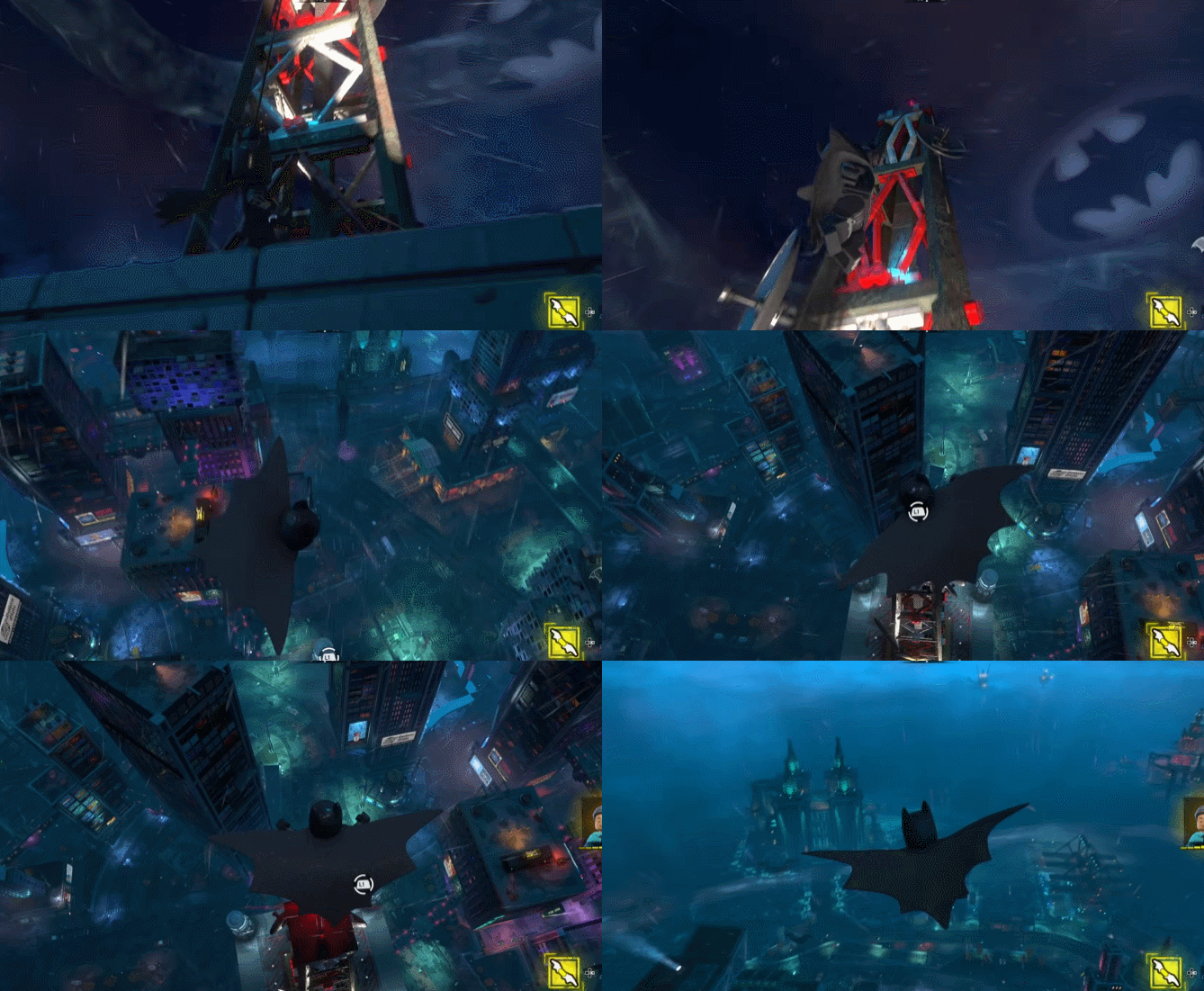
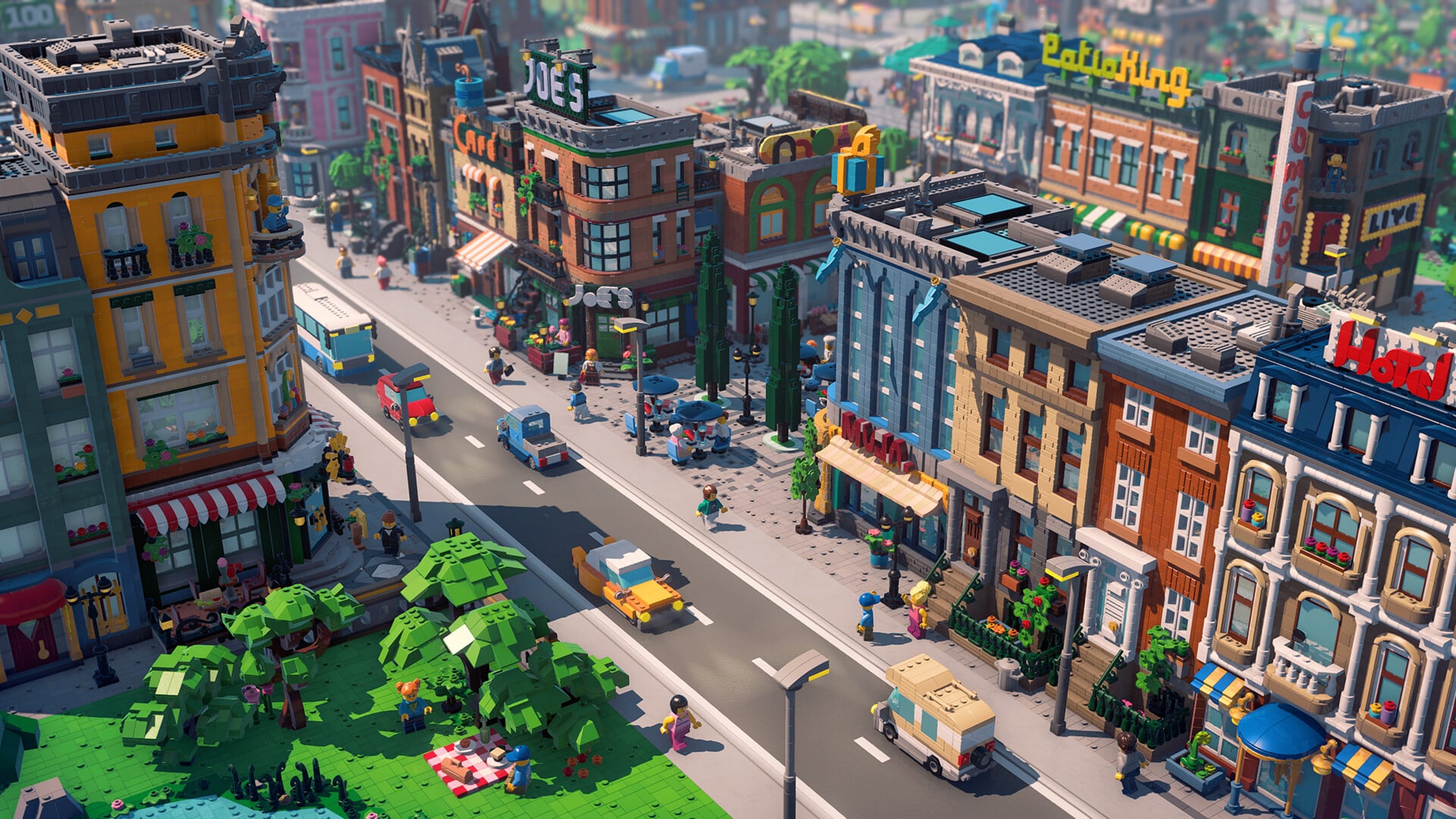
Of course, in addition to linear missions, there’s also the open-world sandbox of Gotham City. Broken up into four distinct islands, the game’s Gotham boasts a deluge of activities to discover and complete. From Batmobile driving challenges to timed combat trials and Riddler puzzle boxes, the core Lego experience here is mixed with the widespread open-world design approach of a map cluttered with tasks for you to check off and complete.
That’s not entirely a bad thing; activities in the open world feel fun and there’s an exceptional level of craft on display. In fact, my favorite mechanic was finally getting to freely use the grapple hook and glide across the rooftops of the city as I explored what Gotham had in store. There’s a terrific camera effect that makes use of blur to create a dramatic sense of speed as you grapple around—something I couldn’t get enough of. And while Gotham’s atmosphere may appear bleak—drenched in neon and sodden with crime—the experience of play while completing each activity could not have been further from melancholic.
I came into Legacy of the Dark Knight with my walls up against its typical Lego humor, only to find that it functions as a rebuttal to my proclivity for self-serious Batman games. Not only is it tremendously satisfying to play, but by making its linear scenarios so rich and absorbing, it also grants Batman the freedom to be as comically endearing as he is ruthless. Batman doesn’t have to be any one thing, Legacy of the Dark Knight reminds us, and Batman games don’t, either.