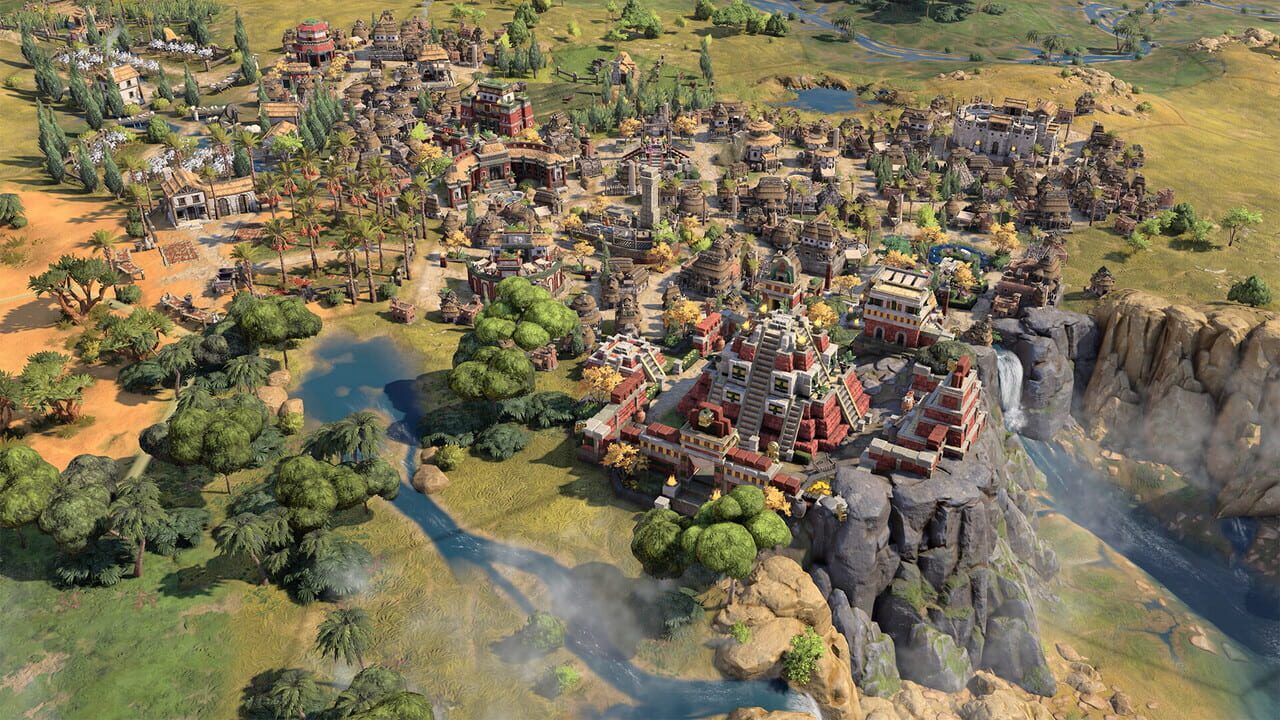
About Sid Meier's Civilization VII
Civilization VII is a strategic turn-taking game created by Sid Meier, where the player reigns over an empire through the history of humankind from time immemorial to the present. It has the usual formula of the Civilization license: build cities, discover technology, negotiate, or fight other countries, but it introduces a new pattern according to the ages. Civ VII does not start with one type of civilization and make you play that specific type to the end. It allows you to develop culturally as time goes by. All your decisions also affect the choice of civilization or culture to play at a particular time. This opens new bonuses, units, and strategies.
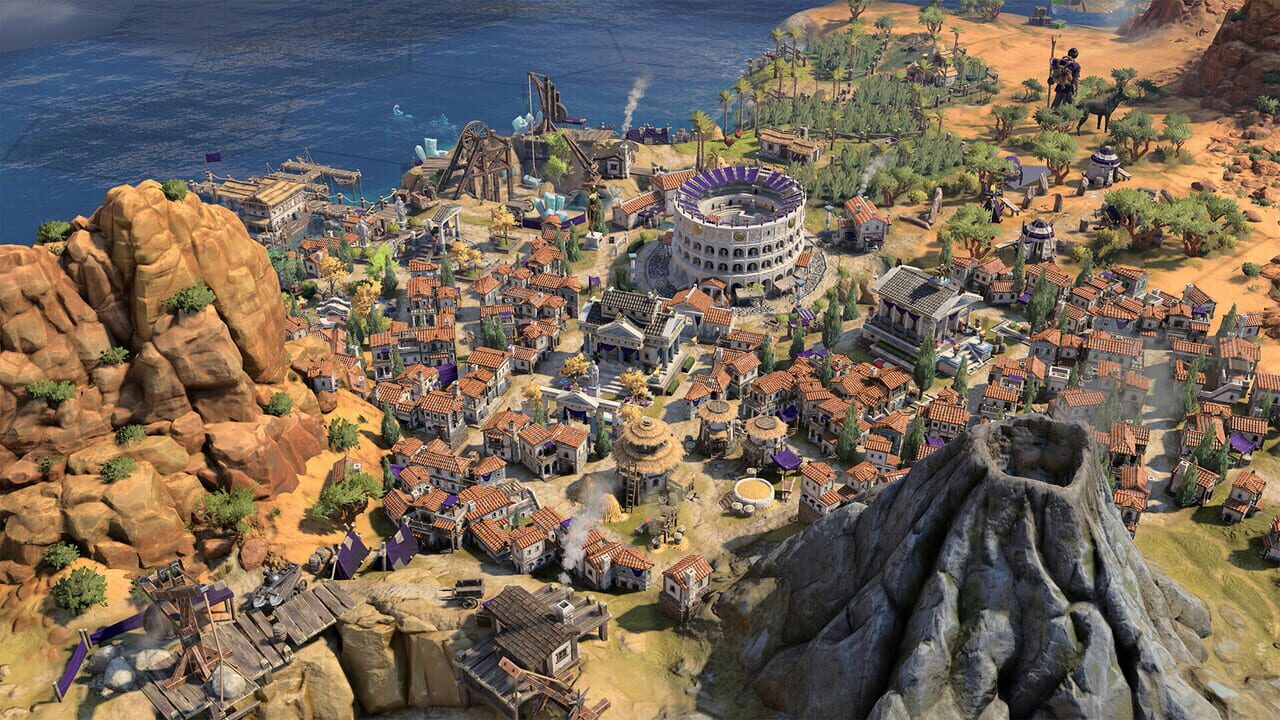
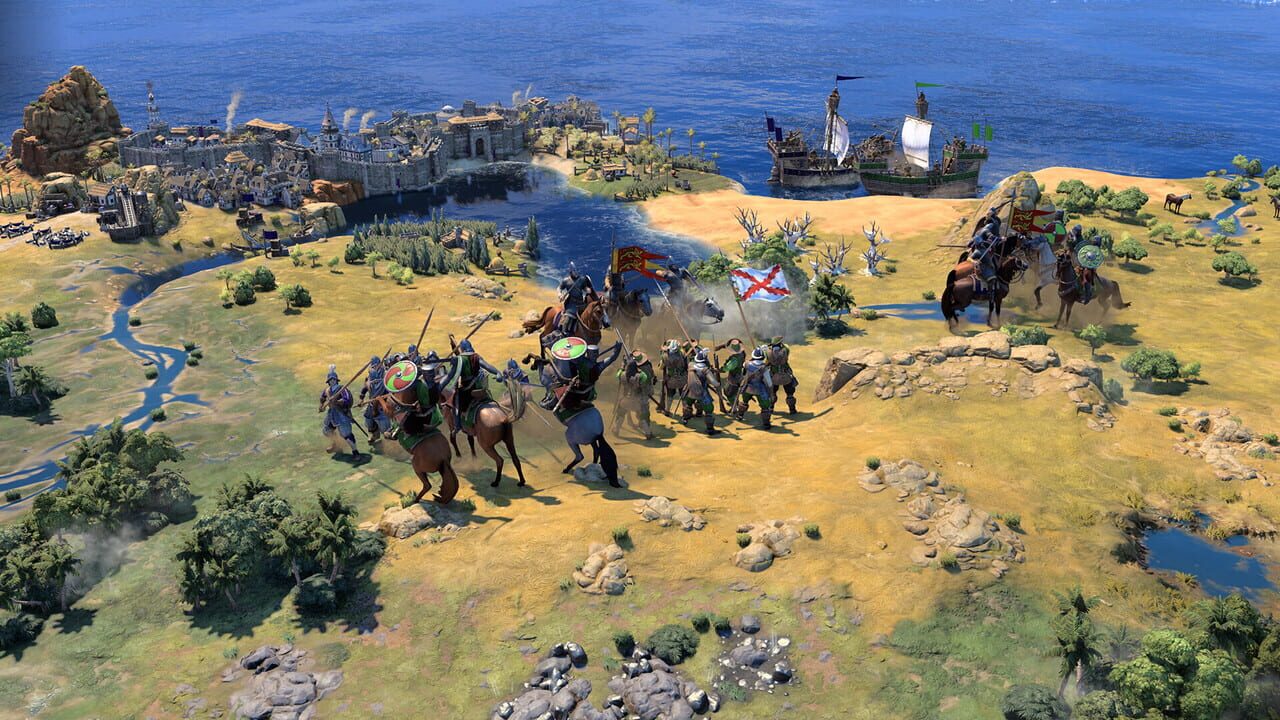
Its basic concept is not that complicated, but of enormous size: discover the land, colonize the land, till the land into food and production, expand your people, construct marvels, train armies, and fight or make peace with other rulers. The difference between it and the previous games is that it is flexible. The leaders are no longer bound to any one civ template, and thus you can combine the identity of a leader with another branch of culture and have varying economic or military results.
Multiplayer can play long campaigns or one-Age games. It is more of a game of planning and adapting than of fast reaction or response. A person who has never played Civilization can see it as a game of historical simulation where the legacy is shaped by the strategy.
Why Should I Play Sid Meier’s Civilization VII?
Civ VII is a slow-construction game where choices are made not within minutes but over hours. Some players take pleasure in the delight of establishing a city, seeing it grow all over the map, and extending the trade routes one century at a time. Others love the strategic game of cultivating food, creating culture, making science, building a defense, and implementing diplomacy, all without collapsing under the pressure of the rivalry.
The age system brings about mid-game change, and, therefore, you hardly play the same way twice. The civilization you have today would appear like one of the ancient times, yet your empire would be entirely different in the time of the Industrial or Information Age.
Experimentation is also interesting. A philosophical leader can be combined with a military-oriented strategist, and a diplomatic one with an expansionist approach. This welcomes trial, error, correction, and adaptation. Civilization VII is suitable for those who like strategy games where they are allowed to rewrite history, and they can test theories.
Single-player mode is more meditative because it provides time to think and revise. Having more than one player changes all that; human beings are not as predictable, and diplomacy is more savage. The game would be appropriate for the players who are willing to have a long and reflective game rather than one filled with immediate satisfaction. In case one wants to play something fast or reaction-intensive, Civ VII is practically the antithesis. It is more about planning than reflex, more about maps instead of combat, and results are built up instead of sudden.
Is Sid Meier’s Civilization VII Free-to-Play?
Civilization VII is not free-to-play. It is a high-quality release that has to be bought first before it can be played. Further expansions or leader packages can be released at hard; however, core access is not free or trial-based. There is also the online play, which needs to have an internet connection and a connected 2K account. No free tier model or demo is observed to be free at the moment.
Where Can I Download Sid Meier’s Civilization VII?
The game can be found in 2K-linked PC storefronts as well as on Steam, the PlayStation Store, and the Xbox Game Store. All digital versions are installed upon purchasing. Convenience in patching, support of mods, and scaling across different hardware are some factors why PC users normally consider using Steam, although performance remains dependent on the specifications of the system.
After buying them digitally, updates and balance patches are automatically applied without the need to disable them. In certain regions, there are physical editions available on consoles, but the versions still require digital patching. Cross-platform multiplayer is also provided in such a way that PC and console users can co-pilot a game, based on the circumstances.
Individuals who like guided long-gaming games can play on PC with ease, including its more manageable control or more spacious UI, whereas casual gamers can play on consoles with comfort and simplicity. It is basic: one buys, downloads, installs, and connects a 2K account in case they want to play online or get linked bonuses. No other source or installer is free of the official stores.
It is also available on the Epic Games Store and Nintendo Switch 2, and the PC version follows the Windows 10 64-bit requirement listed on Steam.
What Games Should I Play If I Enjoy Sid Meier’s Civilization VII?
Endless Legend 2 is closer to world-building fiction than actual history, but the rhythm and city management are the same as in Civilization. It has no recognizable nations; instead, it has factions that are unique with unequal powers, at times redefining the whole game. The experience is based on exploration, territory control, diplomatic balance, and tech growth. It will be refreshing to a Civ player who desires more faction personality or stranger mechanics. It maintains the 4X rhythm of Explore, Expand, Exploit, and Exterminate, but in a less realistic context of lore framing instead of a real-world setting. Many players download it mainly to explore the unusual faction designs.
Europa Universitas V places much emphasis on history, boundaries, conflicts, and government. It remains grounded in a smaller timeline with more elaborate political systems, unlike the eras of Civilization. You control trade, religion, population, colonial expansion, alliances, risk in the economy, and the changing power equilibrium among the states. It is more simulational and less abstracted. A person who is fond of Civ within the empire-building but desires more in-depth diplomacy, war control, and realism could prefer EUV. Campaigns are long, and they are typically cause-and-effect rather than rewriting sandboxes. People often download it for deeper diplomacy and historical realism.
Crusader Kings III is not a nation game, but a character game. Rather than having to control one civilization at a time, you control families, heirs, alliances, betrayals, marriages, and dynasties. It is political and personal; wars are based on grudges, claims, and bloodlines instead of technological pacing. A player of Civilization can experience the transition provided that he or she wants strategy but not the emphasis on tiles. It is still the grand strategy, but emotional at its core. It is not only growth but also survival, legacy, and influence. Others download it when they want a strategy with more personal storytelling than empire tiles.